
https://www.youtube.com/watch?v=bLtq1GwTVeg
Case study: Xsens Link Suit development
Project introduction
Xsens, a Movella brand, is a market leader and innovator in digitising movement data. They have proprietary hardware and software for motion capture (MoCap) and data analytics, and have always been on a mission to deliver real value to their customers in the Gaming, Movie & Animation, Humanoid Robots, and Human Performance Research markets, through continuous innovation.
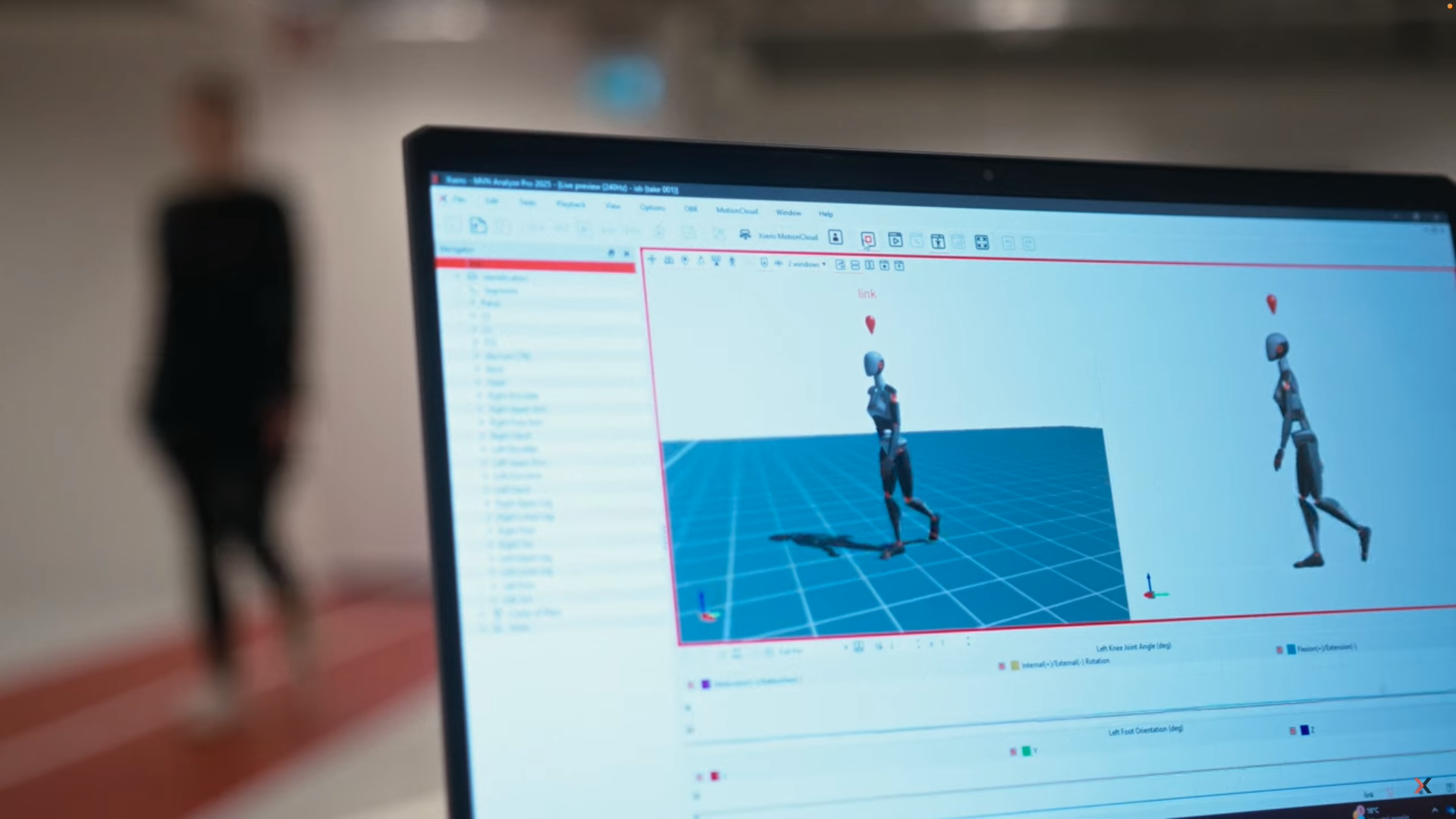
In short, Xsens’ technology makes human movement capture for analysis and animation easy and precise. Allowing professionals to record their movement anywhere, from the lab and studio to the streets and mountains.
In need to update their flagship product: the Xsens Link Motion Capture Suit to stay ahead of competitors, and implement years of customer feedback, they teamed up with Elitac Wearables.


Elitac Wearables' role
While Xsens focused in-house on their new hardware, software, and firmware development, they turned to Elitac Wearables for:
- Wearable technology innovation advice (incl. hardware integration)
- Full-body smart garment & Accessories development
- Product usability
- Organising manufacturing and pricing
We collaborated closely with the Xsens team to develop this advanced Motion Capture (MoCap) suit, combining precision hardware, ergonomic design, and superior usability, to meet their brand promise:
Maximum freedom, unmatched accuracy, endless capture
Contact us
Key design challenges
The project required solving multiple complex challenges:
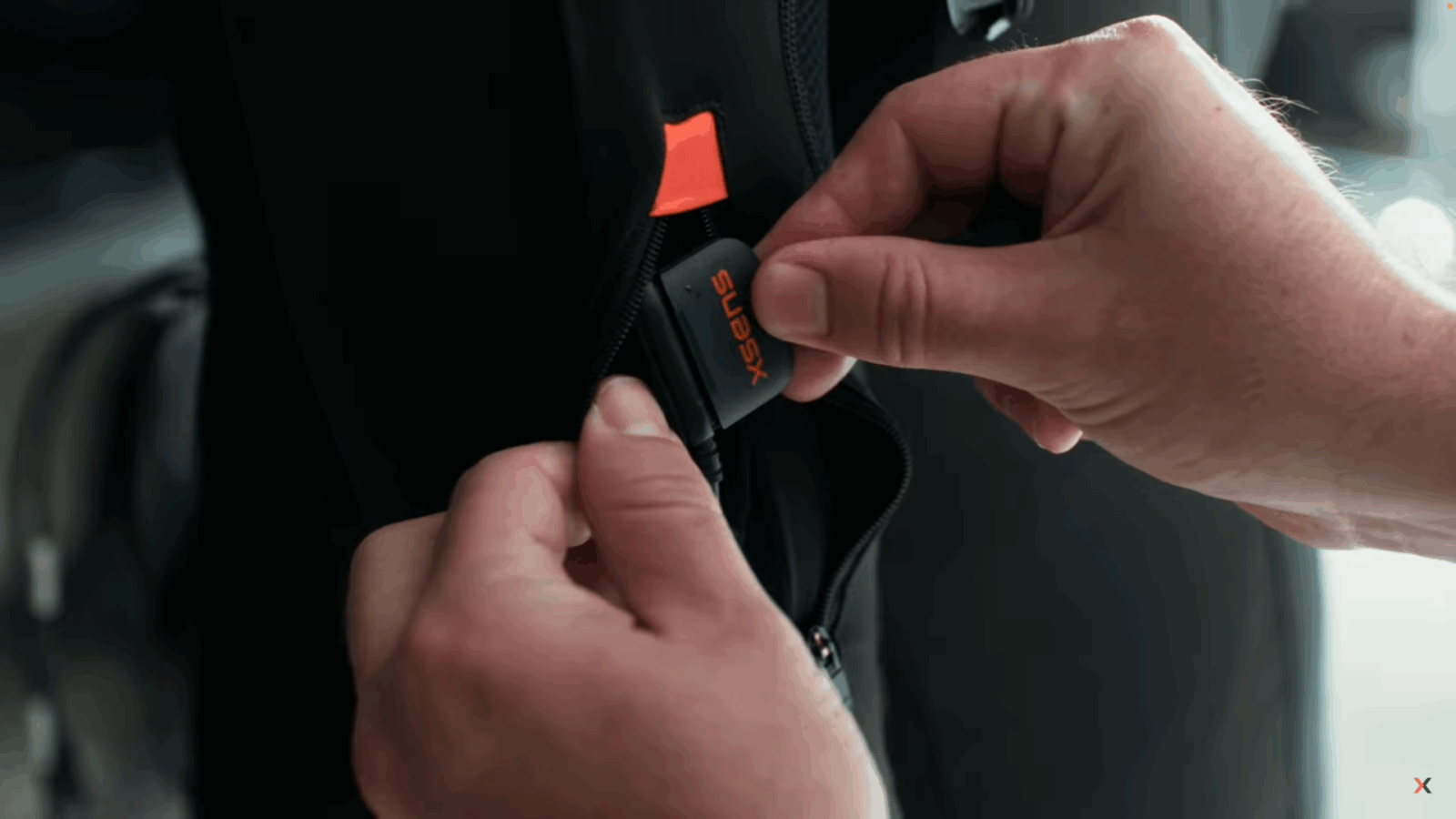
- High accuracy motion capture using IMU sensors placed across the body
- Secure sensor fixation to minimise data artifacts
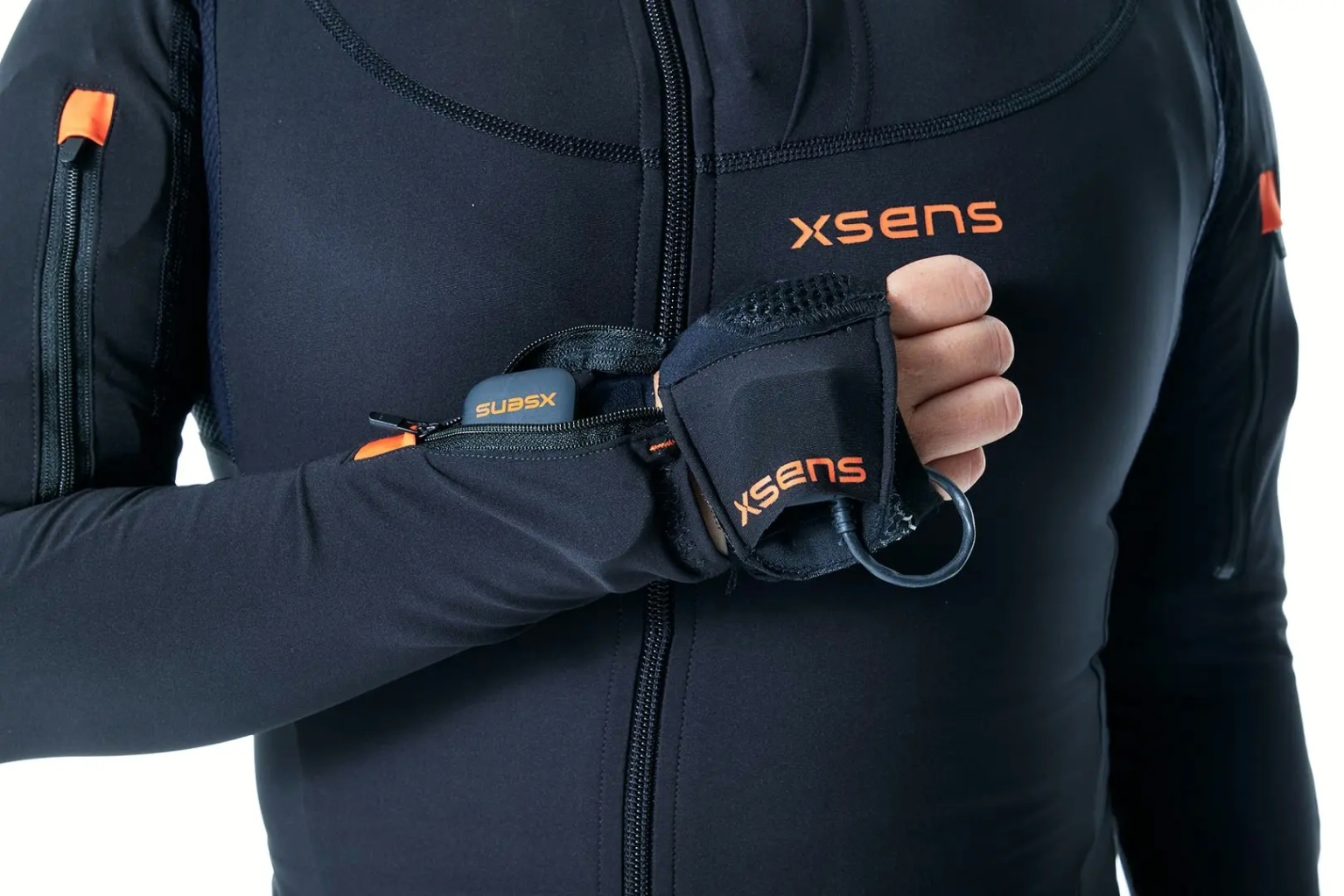
- Extreme cable management for durability and washability
- Freedom of movement and comfort for long sessions
- Scalable production without compromising quality



Working with Elitac Wearables
Leverage our expertise and elevate your wearable development:
Our approach: We started with Workshops
As rooted in our Elitac Wearables development process, we worked hand-in-hand with Xsens in an iterative manner.
Combining intricate hardware, accurate sensor location & fixation, and usability all in one single garment design is not easy. And as a product designed for several markets with their own needs, the decision for each element of the suit had to be made by several stakeholders. This made it crucial to have a structured, collaborative design process.
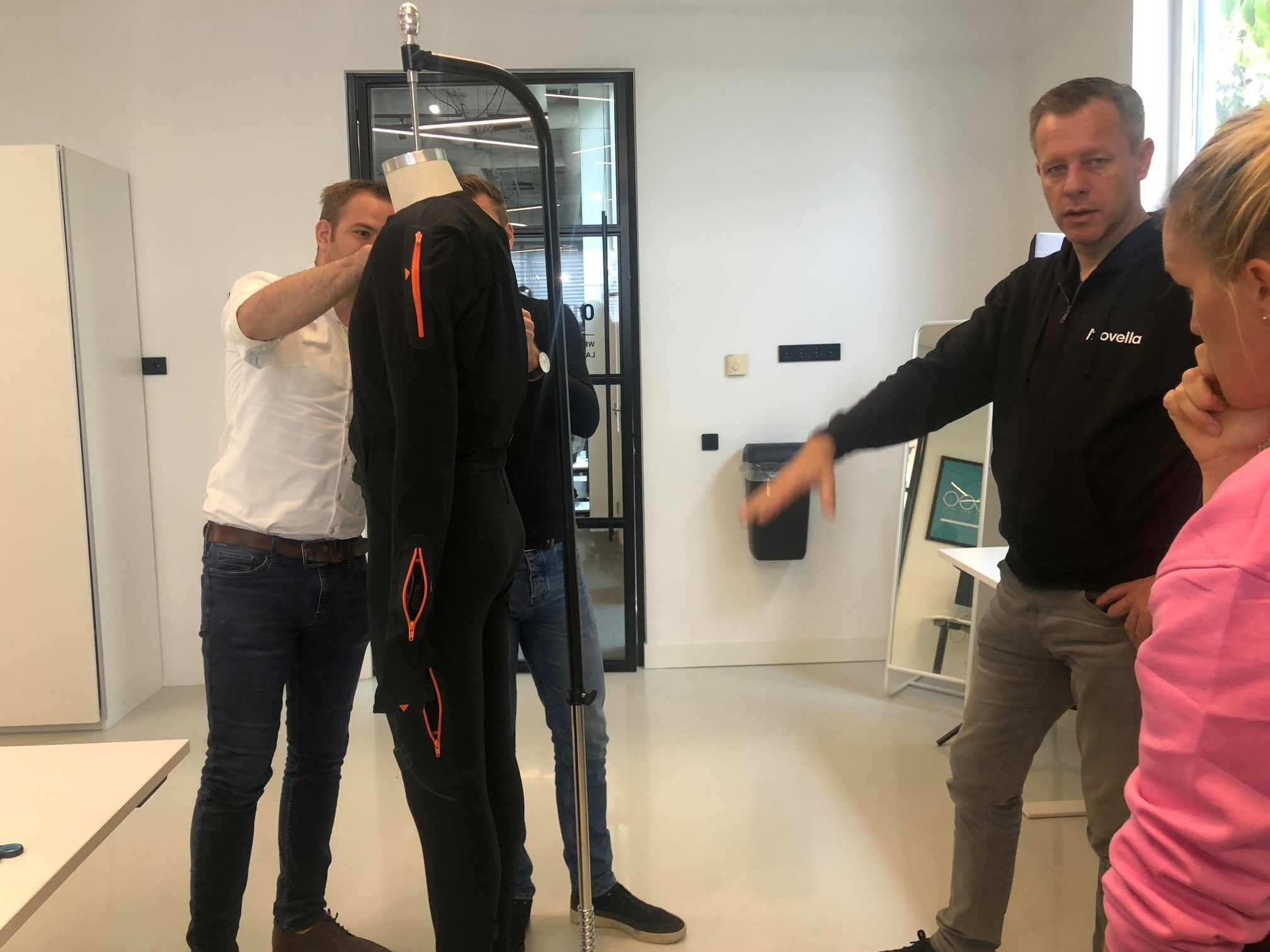
With input from multiple markets and stakeholders, we used structured workshops and rapid prototyping to turn diverse requirements into a clear, unified design direction. The workshop setting was very convenient and insightful. The Elitac Wearables team was also able to quickly visualise or prototype certain ideas to make it clear for all stakeholders.


Design insights:
Inspirational field trips
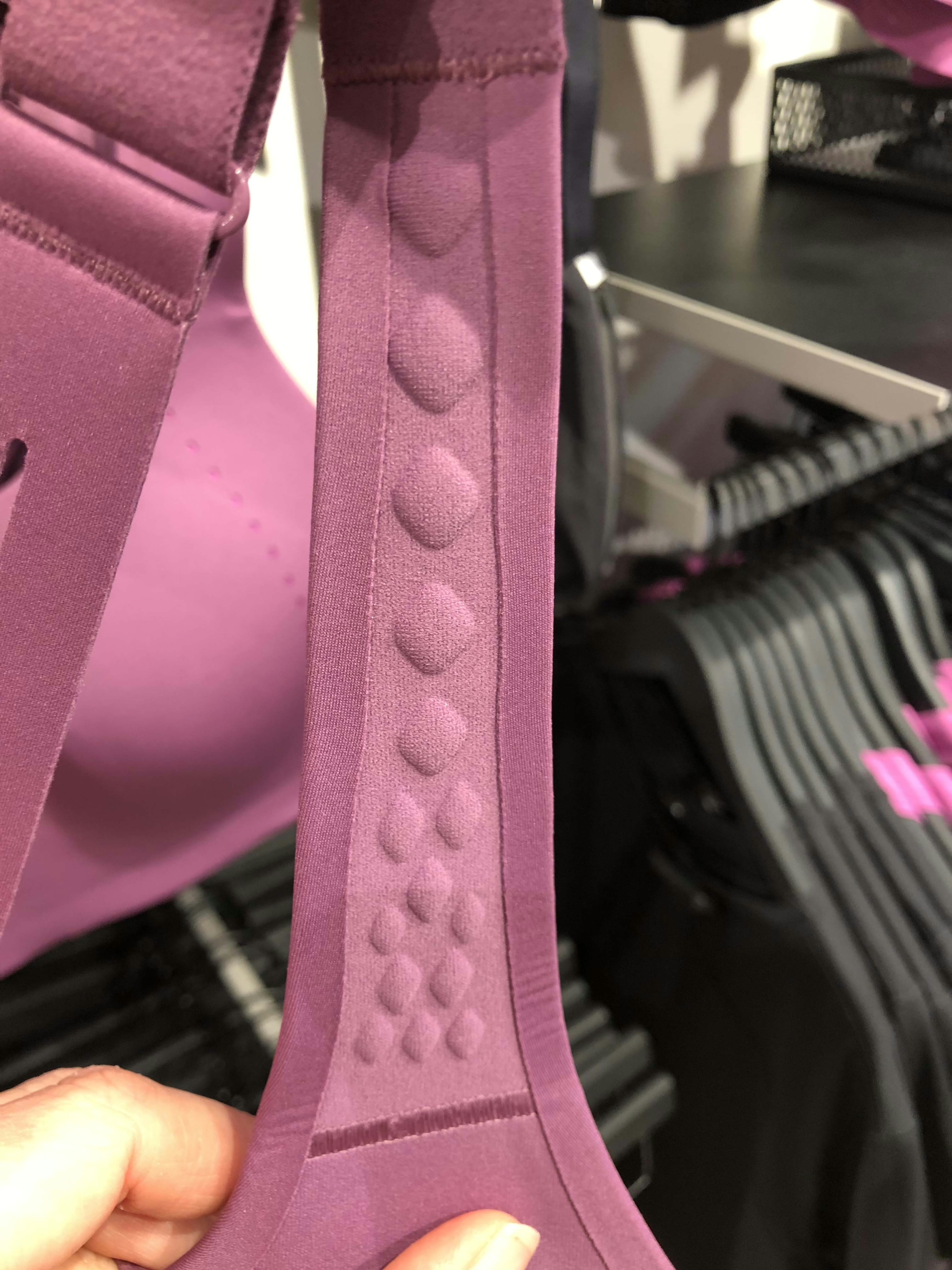
“Get away from your desk, and step into the real world” – is one of the greatest design lessons. We encourage our development team to get inspired by other products in the real world. So we gather samples, (competitor) products, details and more, which we of course keep in our Wearables Lab for future projects and inspiration.
Experiment: become the user
Another great lesson is: “Try it out yourself!”
With input from Xsens teams across multiple markets, there were naturally many ideas and improvement proposals from both sides. We believe in data and actual proof: so we prototyped the most promising ideas to see what really worked.


User feedback & competitor product analysis
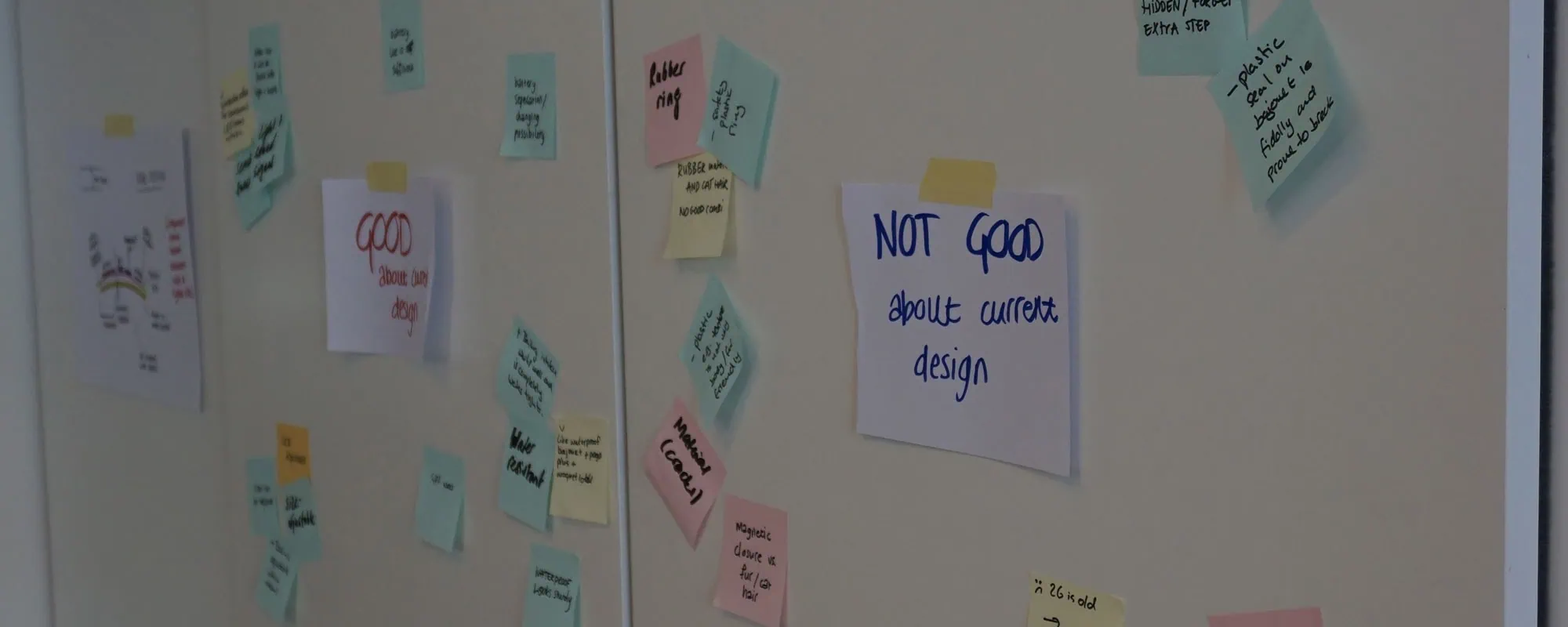
In one of the workshops, we also evaluated and compared competitor and other inspirational products, to get insights and define “do’s and don’ts”.
Another advantage of the workshop setting and having our multidisciplinary team of hardware engineers, usability experts and textile designers present, is that we were able to tackle the design problem holistically (instead of working in silos and creating design problems for other disciplines).
Because of the many client stakeholders, and wide application field for the Link Suit, there were many ideas and improvements proposed by both teams. We believe in data and actual proof: so we prototyped the most promising ideas to see what really worked.
Design thinking: continuous prototyping to evaluate ideas
Because of the many client stakeholders, and wide application field for the Link Suit, there were many opinions, ideas, and improvements proposed by both teams. We believe in data and actual proof: so we prototyped the most promising ideas to see what really worked.
This allows for making educated design choices, but also helps with keeping all stakeholders aligned and involved. This in return helps with keeping the overall development process moving forward.
Contact us


Contacting suppliers early on
It was clear from the start that choosing the right supplier was important. Factors influencing the choice were:
- Highly complex product: many zippers, layers, and extreme use conditions.
- Cost price
- High-end look & feel: abrasion-proof, high quality materials.
- Reliable & small batch production: not compromising delivery and quality.
Because the capabilities of the supplier would influence the design possibilities greatly, including choosing for a woven or knitted base material, we decided to reach out to our network almost from the start. Elitac Wearables showed great added value by being at the manufacturer’s meetings, knowing the ins and outs of the development and production process and knew which important questions to ask for the client to make the best choice.
(It turned out to be a great move, because not only were we able to fine-tune the design to the capabilities of the manufacturer, but it also allowed for extensive time for the client and producer to work out all the contract details.)
Making smart budget/time choices
In every project, the budget is always important. Especially when the final product has to serve several markets with different use cases, all in a single solution, budget management becomes critical.
Not to mention, on the way to the optimal product, we needed to make many prototypes and iterations to cover all requirements.
That is why we came up with 2 practical solutions:
-
Component prototypes
Instead of making a full suit for each step, we prototyped only parts of the design to test a zipper, pocket solution, attachment mechanism, etc., saving time and costs.
-
“Yin-Yang prototypes”
Again, to save time and costs, in cases where we did need to test ‘head to toe’, we decided to split a full-body suit into 2 halves. This allowed us to test 2 total concepts at the same time, in the time we needed to make just 1 full suit.

Flexibility in team scaling
As mentioned before, development is an iterative process. Something can always go differently than expected. In those moments agility is important.
We aligned the garment development with Xsens’ broader roadmap. At key points, we adjusted the pace so that the suit design could fully incorporate the final hardware requirements and parallel projects.
In those moments it is great that we work in sprints, and that we can upscale or downscale resources based on client’s needs.
Accessories
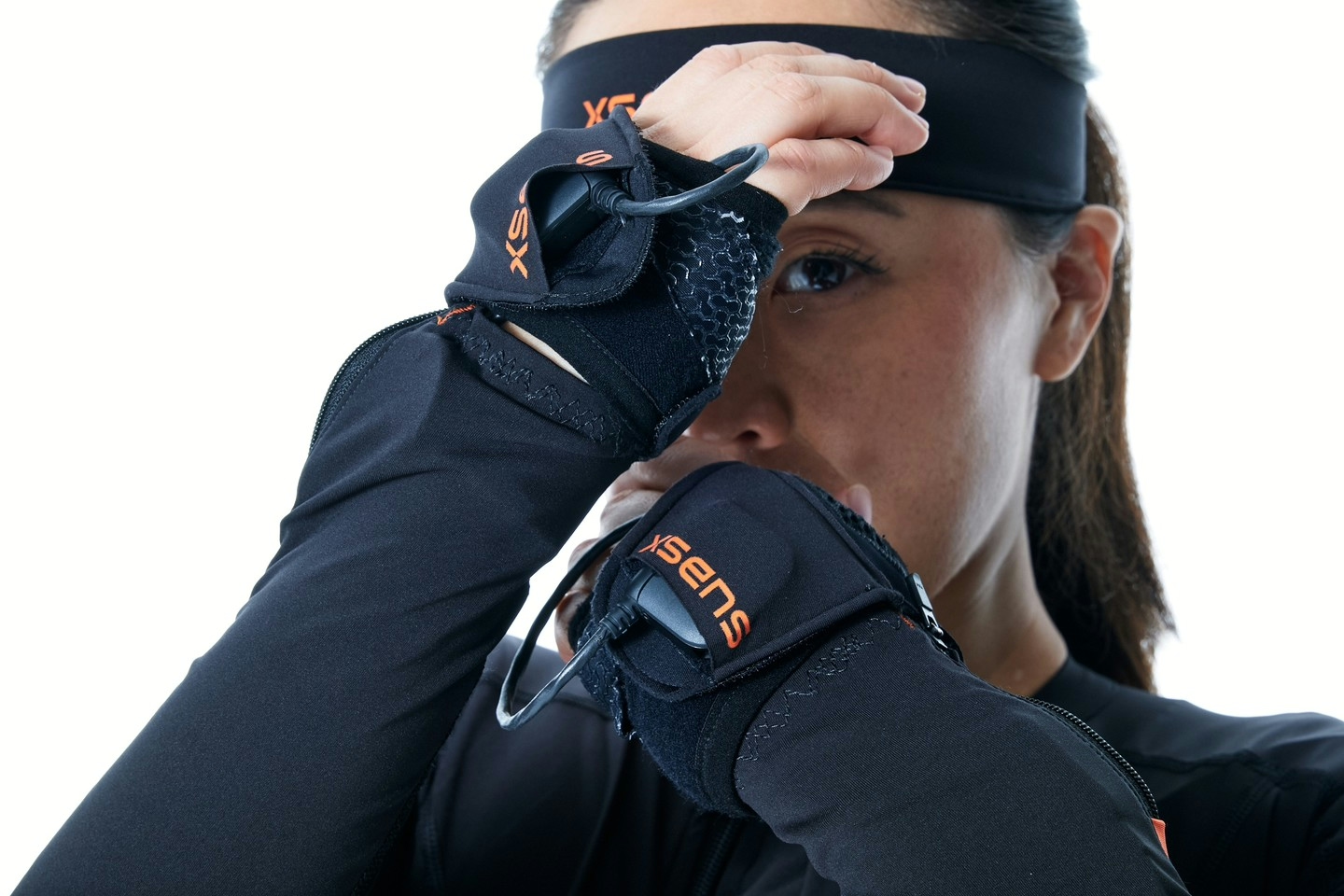
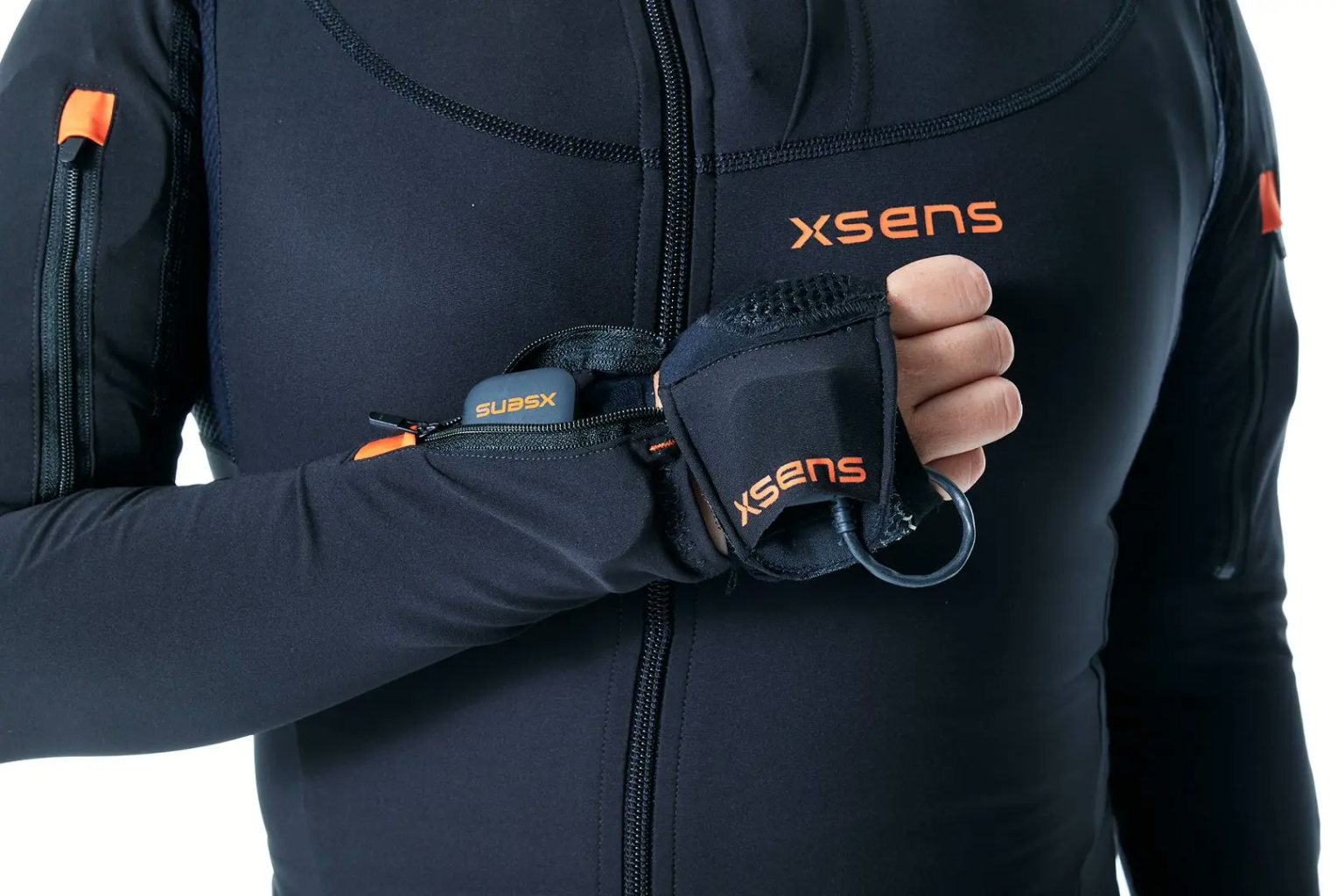
Of course most of our time and attention went to the overall look & feel and engineering of the suit. But that was not all: there were also accessories to design and develop. These accessories are meant to fixate the movement sensors (IMU’s) to the extremities, for full body motion capture.
Here, ease of use, comfort, and reliable positioning of the sensors are important.
The accessories:
- Head-mount strap
- Gloves
- Feet / shoe mounts
- Shorts










Engineering: details and technical documentation
For a smooth design transfer to manufacturers, we create Tech Packs (technical documentation) in which the design is explained in detail. Patterns, product assembly build up, where to stitch or laminate, and example images to further explain the design.
We supported Xsens extensively in the manufacturer selection. Because we knew both the design and the manufacturer well, we guided sample making and quality control. Because of this, the first batch production was a success!
Very inspiring. Our teams have great chemistry. Elitac Wearables showed expertise and an holistic approach, providing us input from all perspectives, and helping us to make strategic design decisions. Especially the difficult ones.
Peter Hartman, Director Product, Xsens | Movella
Do you want a smooth transition to
wearable production too?
From idea to market ready product, or any stage in between. Elitac Wearables makes sure your wearable becomes reality!
Contact us