Military wearables differ significantly across the army, navy, and air force because each service branch operates in a fundamentally different physical environment, under different threat conditions, and with different mission-critical priorities. Ground forces need ruggedised, body-worn systems that survive mud, heat, and sustained physical exertion. Naval personnel face saltwater corrosion, high humidity, and confined shipboard spaces. Aircrew operate under extreme g-forces, altitude pressure changes, and cockpit constraints that no ground-based wearable is designed to handle. The sections below break down exactly how those differences shape every layer of wearable design, from sensors to certification.
What unique physical demands shape army wearable design?
Army wearables are designed around sustained physical load, unpredictable terrain, and extended field operations where resupply is limited. The defining challenge is building a device that survives everything a soldier’s body goes through, including heat, dust, rain, physical impact, and days of continuous use, without adding meaningful weight or restricting movement.
Ground forces operate across the widest range of environmental conditions of any service branch. A soldier may transition from desert heat to cold mountain terrain within a single deployment. Wearables designed for army use therefore need to handle broad temperature ranges, resist dust ingress to IP6X standards, and remain functional after immersion in shallow water. Seams, connectors, and enclosures all become failure points under sustained field stress.
Weight and ergonomics are equally critical. Soldiers already carry significant loads, so any wearable that adds bulk or restricts limb movement is likely to be removed in the field, regardless of its technical value. This pushes army wearable design toward soft, textile-integrated form factors rather than rigid enclosures. The electronics need to flex with the body, distribute across the garment, and avoid pressure points during long marches.
Power management is a persistent problem. Field operations can last days without access to charging infrastructure, which means army wearables must achieve extremely efficient power budgets. Battery life is not just a convenience issue here; it is an operational one. Wearables that die mid-mission create risk. This drives a focus on low-power firmware design, duty-cycling of sensors, and selective data transmission rather than continuous streaming.
The Mission Navigation Belt developed for the Royal Netherlands Army is a direct example of these constraints in action. It delivers silent, screen-free navigation information via haptic feedback, keeping soldiers’ hands, eyes, and ears free, while integrating with existing GPS systems in a lightweight, ergonomic form factor built to survive operational conditions.
How do naval environments change wearable technology requirements?
Naval environments impose corrosion, humidity, and confined-space constraints that are largely absent in ground or air applications. Saltwater exposure is the dominant material challenge: it accelerates corrosion of metal contacts, degrades adhesives, and penetrates enclosures through mechanisms that freshwater does not. Every component selection decision in a naval wearable must account for long-term salt exposure.
Humidity levels aboard ships are consistently high, and condensation inside electronics is a real failure mode. This pushes naval wearable design toward fully sealed enclosures, conformal coating of PCBs, and the use of corrosion-resistant materials throughout. Connector choices matter enormously; standard consumer-grade connectors fail quickly in these conditions.
Shipboard environments also create specific ergonomic constraints. Crew members often work in confined spaces, on ladders, or in machinery spaces where bulky wearables become a snagging hazard. Wearables for naval use need to sit close to the body, avoid protruding elements, and remain secure during the physical demands of shipboard work.
Electromagnetic interference (EMI) is another consideration unique to naval platforms. Ships carry dense arrays of radar, communication, and navigation equipment. A wearable that transmits wirelessly in the wrong frequency band can interfere with shipboard systems, or be disrupted by them. Naval wearable designs typically require careful RF shielding and frequency planning that ground-based devices do not need to the same degree.
For personnel working near machinery or in hazardous areas, wearables may also need to meet ATEX standards for use in potentially explosive atmospheres, adding a certification layer that is rare in army applications but common in naval and industrial safety contexts.
What makes air force wearable requirements different from ground forces?
Air force wearables face a combination of physiological extremes, cockpit spatial constraints, and mission-critical reliability standards that set them apart from any ground-based application. Aircrew experience rapid altitude changes, g-force loading, and pressure differentials that directly affect both the wearer’s body and the electronics on it.
G-force is the most distinctive challenge. During high-performance manoeuvres, sensors worn on the body experience the same acceleration as the pilot. Accelerometers saturate, adhesives shear, and wearables that are not specifically designed for high-g environments produce unreliable data or detach entirely. Components and attachment methods must be validated under the g-loads relevant to the aircraft type.
Altitude and pressure changes affect sealed enclosures differently than ground conditions. A device sealed at sea level may experience pressure differentials at altitude that stress gaskets or push moisture into the housing. Thermal cycling between cold high-altitude air and cockpit heat adds further mechanical stress to solder joints and flexible substrates.
Cockpit real estate is strictly limited. Pilots wear flight suits, anti-g suits, survival vests, and helmets, leaving little room for additional wearable hardware without creating interference or discomfort. Air force wearables are therefore typically ultra-thin, integrated into existing garment layers, or embedded into helmet systems rather than worn as standalone devices.
Reliability standards in aviation are among the highest of any sector. A wearable that monitors pilot physiological status during a mission cannot tolerate intermittent failures. This drives extremely rigorous testing protocols and a preference for proven components over novel ones, even when novel options might offer better performance on paper.
Which wearable sensor types are used across all three military branches?
Several sensor categories appear across army, navy, and air force wearable applications because the underlying physiological monitoring needs are shared, even when the environmental context differs. Heart rate, movement, and physiological stress monitoring are relevant to personnel performance and safety regardless of service branch.
Biosignal sensors
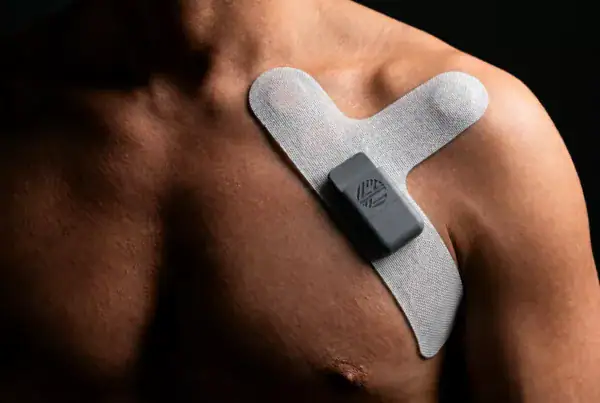
ECG and heart rate monitoring are the most widely deployed biosignal sensors in military wearables. Monitoring cardiac status during high-exertion activities, under heat stress, or during high-g manoeuvres provides actionable data about operator condition. EMG sensors appear in applications focused on fatigue detection and exoskeleton control. EDA (electrodermal activity) sensors are used in stress and cognitive load research, particularly relevant for high-pressure roles across all branches.
Dry electrode technology is essential in military contexts because wet gel electrodes are impractical in field conditions. Dry electrodes that maintain signal quality during high movement are a specific engineering challenge, particularly when the sensor must remain in contact with skin through a textile layer that shifts during physical activity.
Inertial and positional sensors
IMUs (inertial measurement units) and accelerometers are ubiquitous across military wearable applications. In army contexts, they support navigation, fall detection, and gait analysis. In naval applications, they monitor crew movement in confined spaces and support man-overboard detection systems. In air force applications, they track pilot head movement, monitor g-force exposure, and feed into situational awareness systems.
The specific calibration, sampling rate, and range requirements differ significantly between branches. An IMU designed to track a soldier’s walking pace operates in a completely different dynamic range from one designed to capture high-g aircraft manoeuvres.
How does haptic feedback serve different roles in each service branch?
Haptic feedback in military wearables solves a core problem shared across all branches: delivering information to the operator without competing with their visual or auditory attention. The specific application, however, differs substantially depending on what the operator is doing and what information they most critically need in the moment.
In army applications, haptic feedback is primarily used for navigation and spatial awareness. The Mission Navigation Belt is a direct example: it delivers directional cues through vibrotactile patterns on the torso, allowing soldiers to navigate without looking at a screen or listening to audio that could compromise their position. In high-noise or communication-restricted environments, haptic feedback becomes the only viable channel for delivering real-time guidance.
Naval applications tend to use haptic feedback for alerting and proximity warnings rather than navigation. In noisy machinery spaces or during damage control operations, a tactile alert on the wrist or torso can cut through ambient noise and visual clutter in a way that audible alarms cannot. Haptic patterns can also encode urgency levels, allowing crew members to prioritise responses without needing to look at a display.
In air force applications, haptic feedback has been explored extensively for spatial disorientation prevention. Spatial disorientation is a leading cause of aircraft accidents, and tactile cueing systems worn on the torso or limbs can provide pilots with an intuitive sense of aircraft attitude that supplements instrument readings. Research in this area uses vibrotactile arrays that map aircraft orientation directly to body sensation, reducing the cognitive load of instrument interpretation during high-workload phases.
The actuator technology used also varies by application. ERM (Eccentric Rotating Mass) actuators are compact and low-cost but produce imprecise, buzzy sensations. LRA (Linear Resonant Actuator) actuators offer sharper, more localised feedback with better frequency control, making them preferable for complex haptic patterns. Piezo actuators provide the fastest response and highest precision, relevant in applications where timing accuracy matters, such as real-time balance or orientation cueing.
What certification and compliance standards apply to military wearables?
Military wearables must meet a combination of military-specific standards, environmental certification requirements, and, where physiological monitoring is involved, medical device regulations. The exact standards depend on the branch, the country of deployment, and the function the wearable performs.
MIL-STD-810 is the most widely referenced military environmental standard, covering testing for temperature, humidity, vibration, shock, dust, and water resistance. A wearable intended for field use by ground forces will typically need to demonstrate compliance with relevant MIL-STD-810 test methods. Naval applications may additionally reference MIL-S-901 for shock resistance and MIL-DTL-901 for shipboard vibration environments.
Where a wearable monitors physiological parameters and the data is used to inform clinical or medical decisions, medical device regulations apply alongside military standards. In Europe, this means MDR (EU Medical Device Regulation) compliance for Class I or Class II devices. This is particularly relevant for biosignal monitoring wearables used in military medical or rehabilitation contexts. Certification under MDR requires a quality management system, clinical evidence, and technical documentation that goes well beyond typical product testing.
ATEX certification is required for wearables deployed in potentially explosive atmospheres, which applies to certain naval environments, as well as some army engineer and EOD (explosive ordnance disposal) applications. ATEX compliance constrains component choices, enclosure design, and maximum surface temperatures in ways that can significantly affect the overall system design.
Electromagnetic compatibility (EMC) testing is mandatory for any electronic device deployed on a military platform. The relevant standards vary by country and platform type, but the principle is consistent: the wearable must not emit interference that affects other systems, and it must function correctly in the presence of the electromagnetic environment it will encounter in service.
Starting certification planning late in development is one of the most common and costly mistakes in military wearable projects. The certification requirements should inform component selection, PCB layout, enclosure design, and firmware architecture from the earliest stages, not be retrofitted after a prototype already exists.
How Elitac Wearables helps with military wearable development
Developing wearables for military applications is genuinely complex. The combination of extreme environmental demands, strict certification requirements, and the need for haptic or biosignal systems that perform reliably under operational stress puts these projects beyond what most development teams can handle with generalist electronics or textile suppliers.
Elitac Wearables brings the specific capabilities that military wearable projects require, all under one roof:
- Haptic system design: Full haptic feedback development including actuator selection (ERM, LRA, piezo), pattern design, and firmware-level timing, with direct experience delivering the Mission Navigation Belt for the Royal Netherlands Army
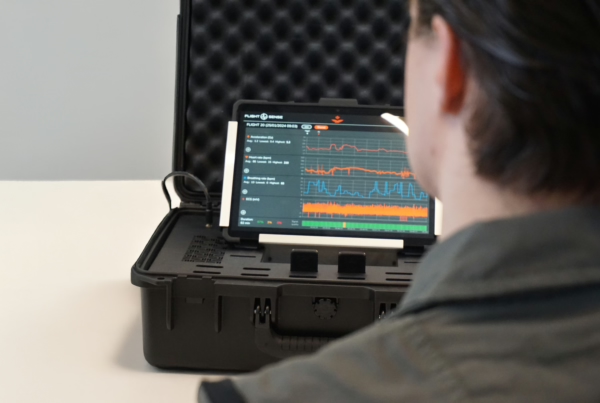
- Biosignal sensing for extreme conditions: Dry electrode selection and motion artefact management for high-movement, high-stress environments, as demonstrated in the Flight Sense System designed for military and extreme-condition use
- Electronics-textile integration: Over a decade of experience integrating electronics into body-worn garments using conductive yarns, printed electronics, and modular attachment methods suited to washable and field-durable applications
- Certification guidance: Hands-on experience with MDR, CE marking, ATEX, and military certification requirements, with certification planning built into the development process from the start rather than treated as a final step
- Battery and power optimisation: System-level firmware and hardware optimisation that has extended battery life by up to 50% without increasing device size, directly addressing the power constraints of field-deployed wearables
- End-to-end development: From feasibility check and proof of concept through to pilot production, with no handoffs between vendors and a single team accountable for the whole system
If you are developing a wearable for military, defence, or safety applications and need a development partner with proven experience in this space, get in touch with the Elitac Wearables team to discuss your project requirements.
Related Articles
- Why is smart textile development so difficult to commercialize?
- How do haptic feedback wearables perform in industrial environments?
- What are the limitations of current haptic feedback wearables?
- How do haptic feedback wearables support accessibility needs?
- What is the future of wearable product development?