
Wearables are becoming essential in modern defence because they give soldiers and commanders access to real-time data, silent communication, and physiological monitoring without adding cognitive load or restricting movement. The shift from bulky equipment toward body-worn technology is being driven by the demand for faster decision-making, better situational awareness, and reduced casualties in complex operational environments. The sections below break down the specific technologies involved, the engineering challenges behind them, and where the field is headed.
What types of wearables are used in modern military operations?
Military wearables in active use today span four broad categories: navigation and communication devices, biometric monitoring systems, exoskeletons and load-bearing assistants, and heads-up display systems. Each category addresses a distinct operational need, from keeping soldiers oriented in GPS-denied environments to reducing musculoskeletal injury during long missions.
Navigation and haptic feedback devices
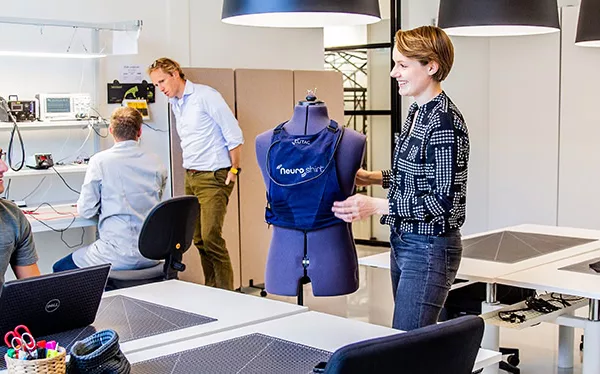
Navigation wearables are among the most tactically significant. Devices worn around the body – torso, head or wrist – can deliver directional cues through vibration patterns, allowing soldiers to receive route guidance without looking at a screen or listening to audio commands. The Mission Navigation Belt, developed in collaboration with the Dutch Ministry of Defence, is a direct example: it delivers silent, screen-free navigation information through haptic signals integrated into a lightweight belt, leaving hands, eyes, and ears fully available for the mission. It can also be used for intuitive threat detection and localisation and improved situational awareness.
Biometric and environmental monitoring systems
Smart garments embedded with biosensors now monitor heart rate, respiration, body temperature, and stress indicators in real time. These systems are designed to detect early signs of heat stress, fatigue, or injury before a soldier is incapacitated. Ruggedised wearable sensor platforms built for military use must also withstand extreme environmental conditions while maintaining signal accuracy during high-movement activities.
Exoskeletons and load-bearing support
Powered and passive exoskeletons are increasingly being evaluated by defence forces to reduce the physical burden of carrying heavy equipment over long distances. These systems redistribute load across the skeletal frame, reducing strain on the lower back and knees during extended operations.
How do haptic wearables improve situational awareness for soldiers?
Haptic wearables improve situational awareness by delivering information through touch rather than sight or sound, freeing the soldier’s visual and auditory attention for the environment around them. In high-noise or low-light conditions where screens are unusable and audio is dangerous, vibrotactile feedback becomes a critical communication channel.
The core principle is straightforward: different vibration patterns, intensities, and locations on the body convey different instructions. A pulse on the left side of a navigation belt signals a left turn. A sustained vibration at the centre signals a stop or threat alert. Because the body processes tactile signals quickly and intuitively, soldiers can respond without consciously translating the information.
Beyond navigation, haptic systems are being developed for threat awareness, formation communication, and equipment status alerts. The advantage over radio communication is significant in stealth operations: haptic signals produce no sound and no visible screen glow. They also reduce reliance on verbal commands in noisy environments such as armoured vehicles or helicopter operations, where communication over radio is already strained.
Designing haptic systems that work reliably on a moving body in variable conditions is technically demanding. Actuator placement must account for body mechanics, clothing layers, and sweat. Vibration patterns must be distinctive enough to avoid misinterpretation under stress. These are not problems that standard consumer haptic components solve.
What are the main challenges of developing wearables for defence use?
Developing wearables for defence use is significantly harder than developing commercial wearables. The operating conditions are more extreme, the failure tolerance is near zero, and the certification requirements are far more demanding. The main challenges fall into three areas: environmental durability, system integration, and regulatory compliance.
Durability and reliability under operational stress
Defence wearables must function reliably in conditions that would destroy commercial devices: extreme temperatures, moisture, dust, physical impact, and electromagnetic interference. Every component, from the enclosure to the firmware, must be selected and tested against military standards. Battery life is a particularly acute problem. A device that runs out of power mid-mission is not just inconvenient; it is a safety risk. Extending battery life without increasing device size or weight requires system-level optimisation across hardware, firmware, and data architecture rather than simply fitting a larger cell.
Electronics-textile integration
Embedding electronics into garments or load-bearing equipment without compromising comfort, washability, or structural integrity is one of the most technically complex aspects of defence wearable development. Conductive yarns, printed electronics, and modular attachment systems each have trade-offs in terms of durability, flexibility, and signal quality. The wrong choice at the design stage creates problems that compound as development progresses.
Certification and procurement requirements
Defence procurement involves rigorous testing and approval processes that differ significantly from medical or consumer product certification. Development teams must design with certification in mind from the earliest stages. Retrofitting a design to meet military standards late in development is expensive and often requires rebuilding core components from scratch.
How does soldier biometric monitoring work in the field?
Soldier biometric monitoring works by embedding biosensors directly into garments or worn devices that continuously measure physiological signals and transmit data to a command system or local display. The sensors capture indicators such as heart rate, heart rate variability, respiration rate, skin temperature, and movement patterns, which together provide a real-time picture of a soldier’s physical state.
The technical challenge is signal quality. Biosensors on a moving body are subject to motion artefacts, which are electrical noise introduced by muscle movement and garment shifting. In a laboratory, wet electrodes attached to clean skin produce clean signals. In the field, soldiers are sweating, moving rapidly, and wearing multiple layers. Dry electrode technology addresses part of this problem by removing the need for conductive gel, but electrode design, placement, and signal processing algorithms must all be optimised for the specific use case.
Data from biometric systems is used in two primary ways. At the individual level, a soldier or medic can monitor physiological status and identify early warning signs of heat exhaustion, dehydration, or cardiac stress. At the unit level, commanders can receive aggregated health data that flags soldiers who may be approaching their physical limits, enabling proactive decisions about rotation, rest, or medical intervention.
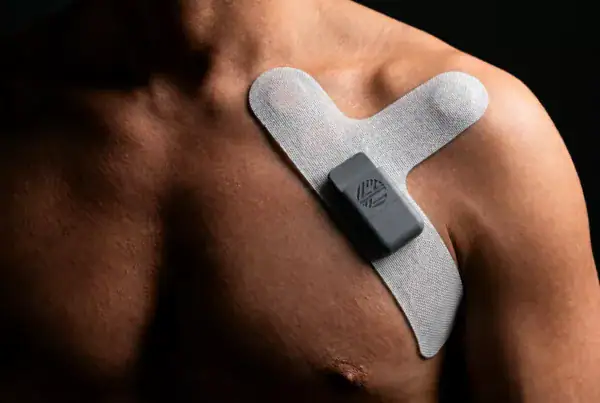
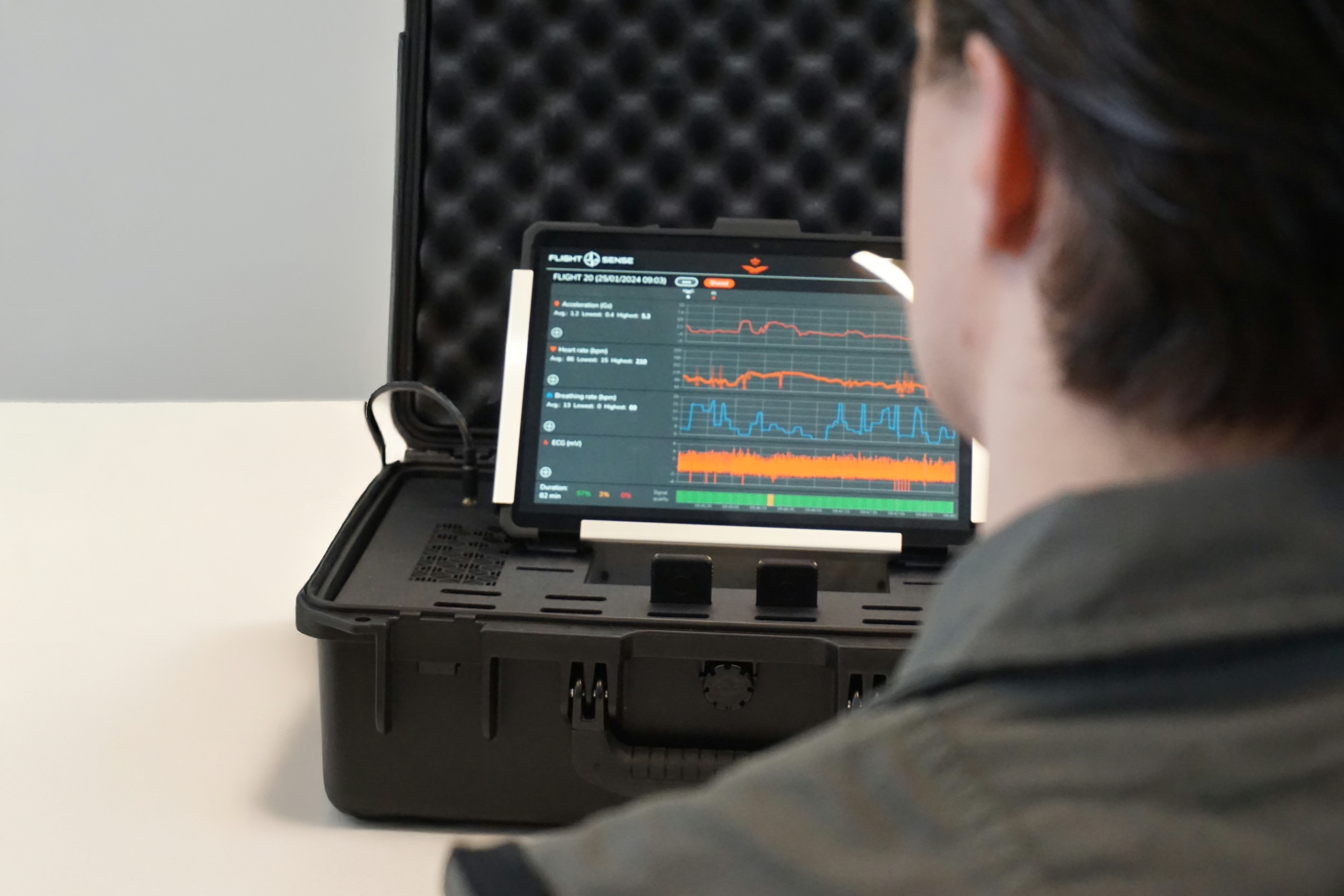
Systems like the Flight Sense System, which measures ECG, heart rate variability, respiration, and acceleration using advanced dry-electrode technology, demonstrate what is possible when biosensor design is built specifically for high-movement, extreme-condition use rather than adapted from clinical equipment.
Which sectors outside defence are advancing military wearable technology?
The most significant cross-sector contributions to military wearable technology come from medical devices, sports performance, and industrial safety. Each sector drives innovation in areas that directly translate to defence applications, often at a faster pace and with more accessible funding than dedicated military R&D.
Medical device development has produced the most transferable advances in biosignal sensing, dry electrode technology, and miniaturised electronics. The rigorous clinical validation processes required for medical wearables also produce reliability standards that exceed many commercial applications, making medical-grade components and methodologies attractive for defence use.
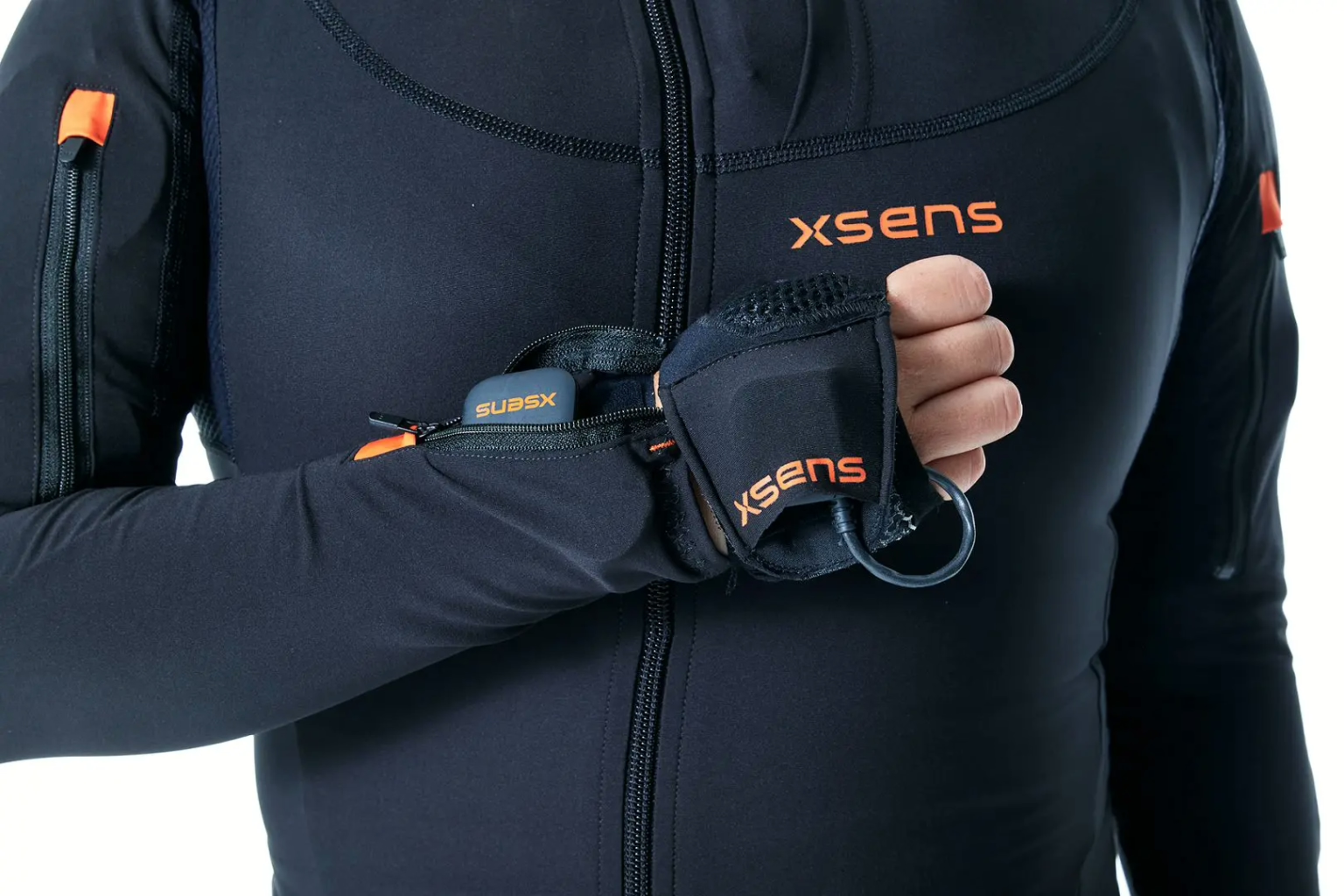
Sports performance technology has pushed the boundaries of motion capture, real-time biometric analysis, and wearable comfort. Motion capture suits developed for professional sports and biomechanical research, including work done with Xsens, have refined the sensor placement and data processing techniques that now appear in military biometric monitoring systems. The demand for lightweight, unobtrusive sensors that do not restrict athletic movement maps closely onto the requirements for combat wearables.
Industrial safety wearables have contributed to the development of environmental sensing, impact detection, and emergency alert systems. Smart PPE designed for hazardous work environments shares many requirements with military wearables: durability, reliable communication under interference, and the ability to function without constant user interaction.
The cross-pollination between these sectors is not accidental. Development teams that work across medical, sports, and defence applications accumulate a breadth of technical experience that accelerates problem-solving in each individual sector.
What does the future of wearable technology in defence look like?
The future of defence wearable technology points toward greater integration, increased autonomy, and deeper physiological intelligence. The next generation of military wearables will not just collect data; they will interpret it, act on it, and communicate it across networked systems in real time.
Several developments are already in progress. Multi-sensor fusion, combining biometric, environmental, and positional data into a single coherent picture, is moving from research into early deployment. Soft robotics and shape-changing textiles are being explored for applications such as adaptive compression, dynamic load redistribution, and even injury protection that responds to impact. Haptic communication systems are becoming more sophisticated, with the potential to convey complex tactical information through layered vibration patterns that soldiers can learn to interpret as intuitively as language.
Power management will remain a central engineering challenge. As devices become more capable, their energy demands increase. The solution is not larger batteries but smarter systems: firmware that manages component activity precisely, sensors that operate efficiently under real-world usage patterns, and hardware designed from the outset with power consumption as a primary constraint rather than an afterthought.
The broader trajectory is toward wearables that function as a seamless layer of the soldier’s operational environment rather than discrete devices to be managed. That requires not just better components but better integration, better firmware, and a development process that treats the human body as the primary design constraint.
How Elitac Wearables helps with defence wearable development
Developing wearables for defence is not a project for generalist electronics firms or single-discipline suppliers. The combination of extreme durability requirements, complex electronics-textile integration, haptic system design, and certification demands requires a team that has solved these problems before, across all disciplines, without handoffs between vendors.
Elitac Wearables brings that capability together under one roof. Working with partners like the Dutch Ministry of Defence on the Mission Navigation Belt and developing the Flight Sense System for extreme-condition biometric monitoring are not peripheral projects; they are the foundation of a technical track record in defence-grade wearable development. The in-house team covers hardware, firmware, textile integration, biosignal sensing, haptic system design, and human factors, supported by the proprietary TacOS firmware platform that reduces development risk and accelerates timelines.
For organisations working on defence wearable programmes, the practical offer is this:
- End-to-end development from feasibility through to a certified, production-ready product
- Deep haptic system expertise, including actuator selection, firmware-level timing, and pattern design for operational use
- Biometric sensor integration optimised for high-movement, extreme-condition environments
- Battery performance optimisation without redesign or size increase
- Electronics-textile integration across conductive yarns, printed electronics, and modular attachment systems
- Certification guidance aligned with military and relevant regulatory standards
If your programme is at any stage from initial concept to a prototype that needs to survive real operational conditions, get in touch with the team to discuss what the right development path looks like for your specific challenge.