

Military wearables are significantly harder to develop than commercial ones because they must perform reliably in conditions that would destroy most consumer devices, while simultaneously meeting stringent certification requirements, protecting sensitive data, and fitting seamlessly into complex operational environments. The technical demands span ruggedisation, power management, cybersecurity, and human factors simultaneously — not sequentially. The sections below unpack each of these challenges in detail.
Why are military wearables harder to develop than commercial ones?
Military wearables are harder to develop than commercial ones because every design decision must satisfy multiple competing constraints at once: extreme environmental durability, operational security, soldier ergonomics, and defence procurement compliance. A consumer fitness tracker needs to survive a dropped phone. A defence wearable needs to survive a combat deployment.
The core difficulty is that military wearable development is not simply commercial development with higher stakes. It is a fundamentally different discipline. Commercial wearables are optimised for one primary variable — usually user experience or battery life — with tolerances that allow for occasional failure. Military wearables have no such tolerance. A navigation device that fails mid-mission, a biosensor that gives false readings under physical stress, or a communication wearable that emits a detectable signal at the wrong moment are not product defects. They are operational risks.
This raises the technical bar across every layer of the product: the hardware must be ruggedised, the firmware must be deterministic, the textiles must withstand abuse, and the entire system must integrate without adding meaningful cognitive or physical load to the person wearing it. Achieving all of this simultaneously — while navigating defence procurement processes — is what separates military wearable development from almost any other engineering challenge in the wearables space.
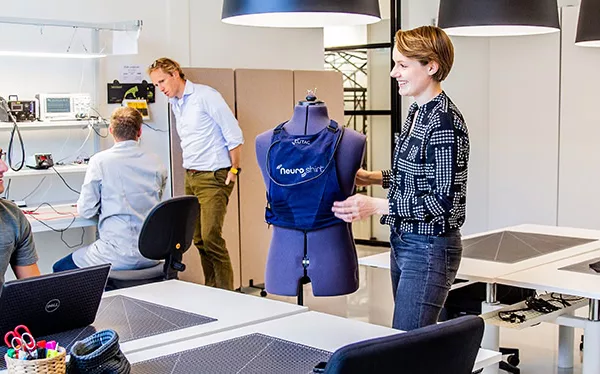
The Mission Navigation Belt, developed in collaboration with the Dutch Ministry of Defence, illustrates this directly. Delivering silent, screen-free haptic navigation to soldiers required integrating GPS compatibility, reliable haptic actuation, and ergonomic design into a single wearable that met military operational requirements — a combination that no off-the-shelf component set could address.
What durability and environmental standards must military wearables meet?
Military wearables must typically meet MIL-STD-810 environmental testing standards, which cover shock, vibration, temperature extremes, humidity, dust, and immersion. Depending on the application, IP67 or IP68 ingress protection ratings are also required. These are not optional enhancements — they are baseline requirements for any device intended for field deployment.
Meeting these standards forces difficult trade-offs at the design stage. Sealing a device against dust and water adds bulk and weight. Reinforcing enclosures against shock affects the flexibility needed for body-worn comfort. Specifying components that operate across a wide temperature range often limits the available component pool and increases cost.
Textiles present a particular challenge. Military wearables are frequently integrated into uniforms, vests, or load-bearing equipment — meaning the electronic and textile layers must survive the same conditions as the garment itself. Repeated washing, abrasion, UV exposure, and mechanical stress from movement all degrade conductive yarns, embedded connectors, and flexible PCBs in ways that standard electronics testing does not capture. Durability validation for military e-textiles requires testing protocols that go well beyond what commercial wearable development typically involves.
The material selection process alone can add significant time to a development programme. Every component — from the actuator housing to the connector interface to the encapsulant protecting the PCB — must be evaluated not just for its primary function but for its behaviour under sustained environmental stress. Getting this wrong early in development typically surfaces as field failures late in the programme, at significant cost.
How does power management affect military wearable design?
Power management is one of the most consequential design challenges in military wearable development because soldiers cannot recharge devices in the field. A wearable that runs out of power mid-mission is worse than no wearable at all. Every milliwatt of consumption must be justified, and battery life targets are typically set in days, not hours.
The instinctive response to battery life shortfalls — fitting a larger battery — is rarely viable in a military context. Larger batteries mean more weight, more bulk, and potential changes to the enclosure that trigger a cascade of redesign work. The more effective approach is system-level optimisation: examining how firmware manages component sleep states, how frequently sensors sample and transmit data, and whether the communication protocol is appropriate for the actual usage pattern.
In practice, the root causes of poor battery performance in military wearables are almost always systemic rather than hardware-related. Firmware that keeps radios active longer than necessary, sensors configured to sample at rates designed for a laboratory rather than a field deployment, and data handling that generates unnecessary processing overhead are all common findings. Addressing these at the firmware and architecture level — rather than reaching for a bigger cell — is the approach that delivers meaningful gains without redesign.
Power harvesting is an active area of research for military applications, with kinetic energy recovery and flexible photovoltaic materials both under investigation. In 2026, these remain supplementary rather than primary power sources for most operational wearables, but they are increasingly relevant for low-power sensing applications where continuous recharging from movement or ambient light can meaningfully extend deployment duration.
What cybersecurity and data risks come with military wearables?
Military wearables that collect biometric data, location information, or communication signals create serious cybersecurity and operational security risks if not designed with security as a foundational requirement. A compromised wearable can expose soldier location, health status, or mission patterns — intelligence that has direct operational consequences.
The threat surface for a military wearable is broader than most development teams initially anticipate. It includes the device itself, the communication channel between the device and any connected system, the data storage architecture, and the software update pathway. Each of these must be hardened independently, because a secure device transmitting over an unencrypted channel provides no meaningful protection.
On-device security requirements
At the hardware level, military wearables often require secure boot processes, encrypted storage, and tamper-evident or tamper-resistant enclosures. Firmware must be designed to prevent unauthorised access and to fail safely if tampered with — meaning the device should not expose data or continue operating in a compromised state. These requirements influence component selection from the earliest stages of hardware design, because retrofitting security into an existing architecture is substantially more expensive and less reliable than building it in from the start.
Communication and data architecture risks
Wireless communication introduces radio frequency emission risks beyond data interception. A wearable that emits a consistent RF signature can be detected and used to locate or track its wearer, even if the data content is encrypted. This makes protocol selection and transmission frequency design decisions with operational security implications, not just technical ones. Minimising transmission intervals, using frequency-hopping where appropriate, and designing for operation in RF-denied environments are all considerations that rarely appear in commercial wearable development but are central to military applications.
How do human factors and ergonomics shape military wearable development?
Human factors and ergonomics directly determine whether a military wearable gets used in the field. A device that adds cognitive load, restricts movement, causes discomfort under load-bearing equipment, or requires attention to operate is a device that soldiers will remove and leave behind. Operational adoption is the ultimate measure of success, and it depends entirely on how well the wearable fits into the physical and cognitive reality of the person wearing it.
Military personnel operate under conditions that amplify every ergonomic shortcoming. Heavy kit, physical exertion, stress, and reduced fine motor control all interact with wearable design in ways that laboratory testing cannot fully replicate. A device that feels comfortable in a controlled environment may become intolerable under a 25kg load pack after four hours of movement. Interfaces that work with bare hands may be unusable in gloves. Displays that are legible indoors may be unreadable in direct sunlight or complete darkness.
Haptic feedback has emerged as a particularly valuable modality for military wearables precisely because it addresses the sensory channel that is least overloaded in operational environments. Soldiers in the field are frequently managing visual and auditory information at capacity. Tactile feedback delivered through a belt or vest — conveying navigation instructions, proximity alerts, or physiological warnings — communicates without competing for the attention channels already under demand. The Mission Navigation Belt operates on exactly this principle: silent, hands-free, eyes-free directional guidance delivered through vibrotactile patterns that soldiers can interpret without breaking their operational focus.
Getting haptic feedback right requires more than fitting a vibration motor. The actuator type, placement on the body, feedback pattern design, and firmware-level timing all affect whether the signal is interpretable under stress. This is a design discipline in its own right, and one that requires iteration with real users in realistic conditions — not just usability testing in a lab.
What certification and procurement hurdles slow military wearable projects?
Military wearable projects are routinely slowed by two distinct but related challenges: the technical certification requirements that govern what can be deployed, and the procurement processes that govern how defence organisations acquire new technology. Both add time and cost that most development teams underestimate at the outset.
On the certification side, military wearables may need to meet a combination of environmental standards (MIL-STD-810), electromagnetic compatibility requirements (MIL-STD-461), and — if they collect biometric or health data — medical device regulations such as the EU MDR. Each of these frameworks has its own testing regime, documentation requirements, and timelines. Designing for certification from the earliest stages of development is not optional if the project has a realistic delivery target; retrofitting compliance into a design that was not built with it in mind is expensive and often requires fundamental rework.
Procurement adds a separate layer of complexity. Defence organisations typically operate through formal acquisition processes with long lead times, strict supplier qualification requirements, and multi-stage evaluation cycles. A technically excellent wearable that cannot be supplied through an approved procurement channel, or that comes from a supplier that has not been through the necessary qualification process, will not reach deployment regardless of its capabilities. Organisations that have not worked in the defence sector before frequently underestimate how much of the development timeline is consumed by procurement preparation rather than technical development.
The practical implication is that military wearable projects require procurement strategy to be considered in parallel with technical development — not after the product is ready. Understanding which procurement frameworks apply, what supplier qualification looks like, and how to structure a demonstrator or pilot programme that fits within existing defence acquisition pathways can determine whether a technically successful project ever reaches the field.
How Elitac Wearables helps with military wearable development
Developing a military wearable means solving every one of these challenges simultaneously, with no room for the kind of iterative failure that consumer product development tolerates. That requires a development partner with direct experience across all the relevant disciplines — not a team that handles electronics and hands off to a textile supplier, or one that builds a prototype and leaves certification to someone else.
Elitac Wearables works as an extension of the client’s team across the full development cycle, from feasibility through to a certified, field-ready product. For defence wearable development specifically, this means:
- Haptic system design with actuator selection, pattern engineering, and firmware-level timing optimised for operational use
- Electronics-textile integration using techniques appropriate for the durability and washability demands of military garments
- Battery performance optimisation at the system level — firmware, hardware, and data architecture — without enclosure redesign
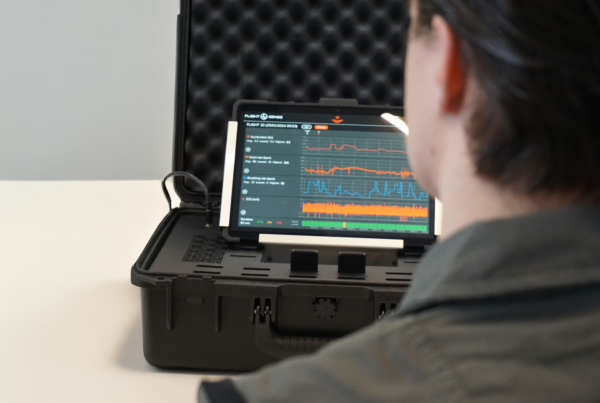
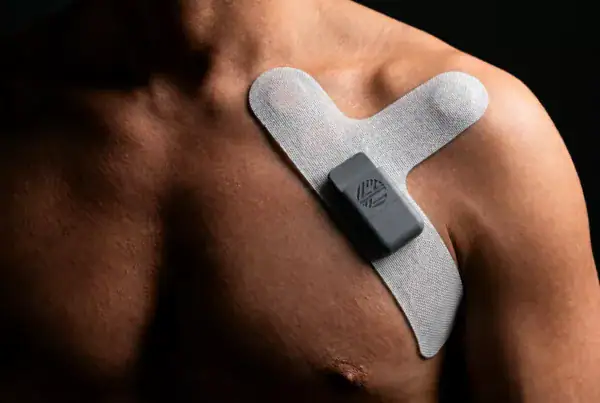
- Biosignal sensing for high-movement conditions, including dry-electrode ECG and IMU-based movement tracking as demonstrated in the Flight Sense System
- Cybersecurity and RF emission design considered from the earliest hardware and firmware decisions
- Certification guidance across MIL-STD, MDR, and CE frameworks, built into the development process rather than added at the end
- Procurement pathway support, drawing on experience working directly with defence organisations including the Dutch Ministry of Defence
If you are working on a defence wearable project and hitting the limits of what your current team can deliver, get in touch with Elitac Wearables to discuss where specialist support would have the most impact.
Related Articles
- What is augmented reality used for in military wearables?
- How does haptic feedback work in wearable devices?
- What is the role of haptic feedback in fitness wearables?
- How do you evaluate the technical readiness of a wearable product before going to market?
- What is the difference between a prototype and an MVP in wearable development?