

The future of military wearable technology is defined by haptic communication, AI-driven biosensing, and ruggedised smart textiles that keep soldiers informed without adding cognitive load or physical burden. These technologies are already moving from research labs into active deployment, with defence agencies investing heavily in systems that free soldiers’ hands, eyes, and ears while delivering more situational awareness than ever before. The sections below address the most pressing questions about where military wearables are headed and what the development challenges actually look like.
How is wearable technology currently used in the military?
Military wearable technology is currently used for navigation, physiological monitoring, communication, and load management. Soldiers today carry GPS-integrated systems, body-worn sensors that track heart rate and fatigue, and ruggedised communication devices embedded into helmets and body armour. The focus is on reducing the information burden on the soldier while increasing command awareness of personnel status in the field.
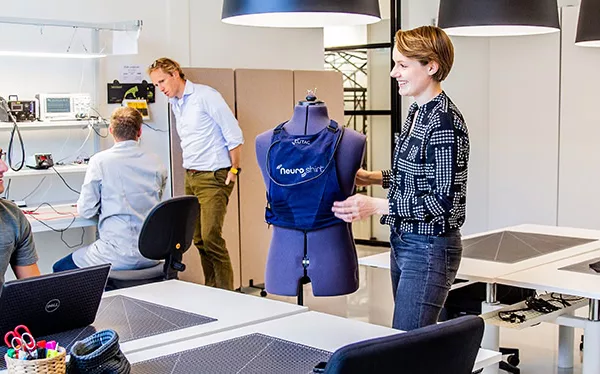
Navigation is one of the most mature use cases. Silent, screen-free navigation tools allow soldiers to receive directional cues without looking at a screen or breaking radio silence. Elitac Wearables developed the Mission Navigation Belt for the Royal Netherlands Army, a haptic feedback belt that delivers navigation instructions through vibrotactile signals to the torso, keeping hands, eyes, and ears fully operational. The first order was delivered in 2020 following a Defence Innovation Competition win in 2013, making it one of the more operationally validated examples of military haptic wearable technology in Europe.
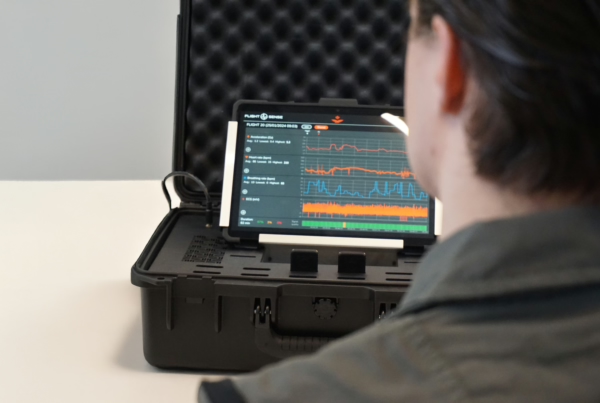
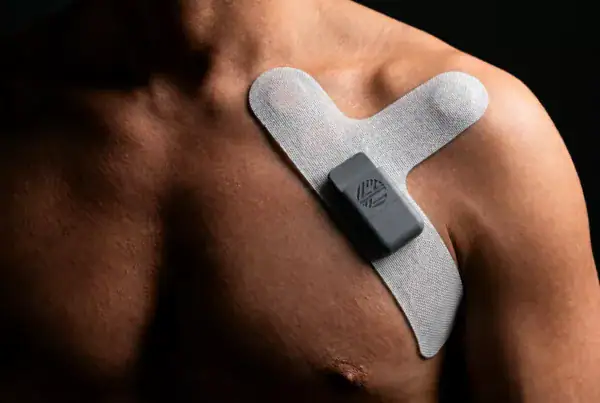
Physiological monitoring is the other major active area. Wearables that measure heart rate, heart rate variability, respiration, and acceleration give commanders real-time insight into soldier readiness and stress levels. Systems like the Flight Sense System, a multi-biosensor wearable designed for extreme conditions, use dry-electrode technology to maintain signal quality during high-movement activities, addressing one of the core technical challenges that has historically made biosensing in the field unreliable.
What are the biggest technology trends shaping military wearables?
The biggest technology trends shaping military wearables are smart textile integration, multi-modal biosensing, edge computing in body-worn systems, and haptic human-machine interfaces. Each of these trends addresses a persistent problem in military operations: delivering more information to the soldier without increasing cognitive load, equipment weight, or vulnerability.
Smart textile integration
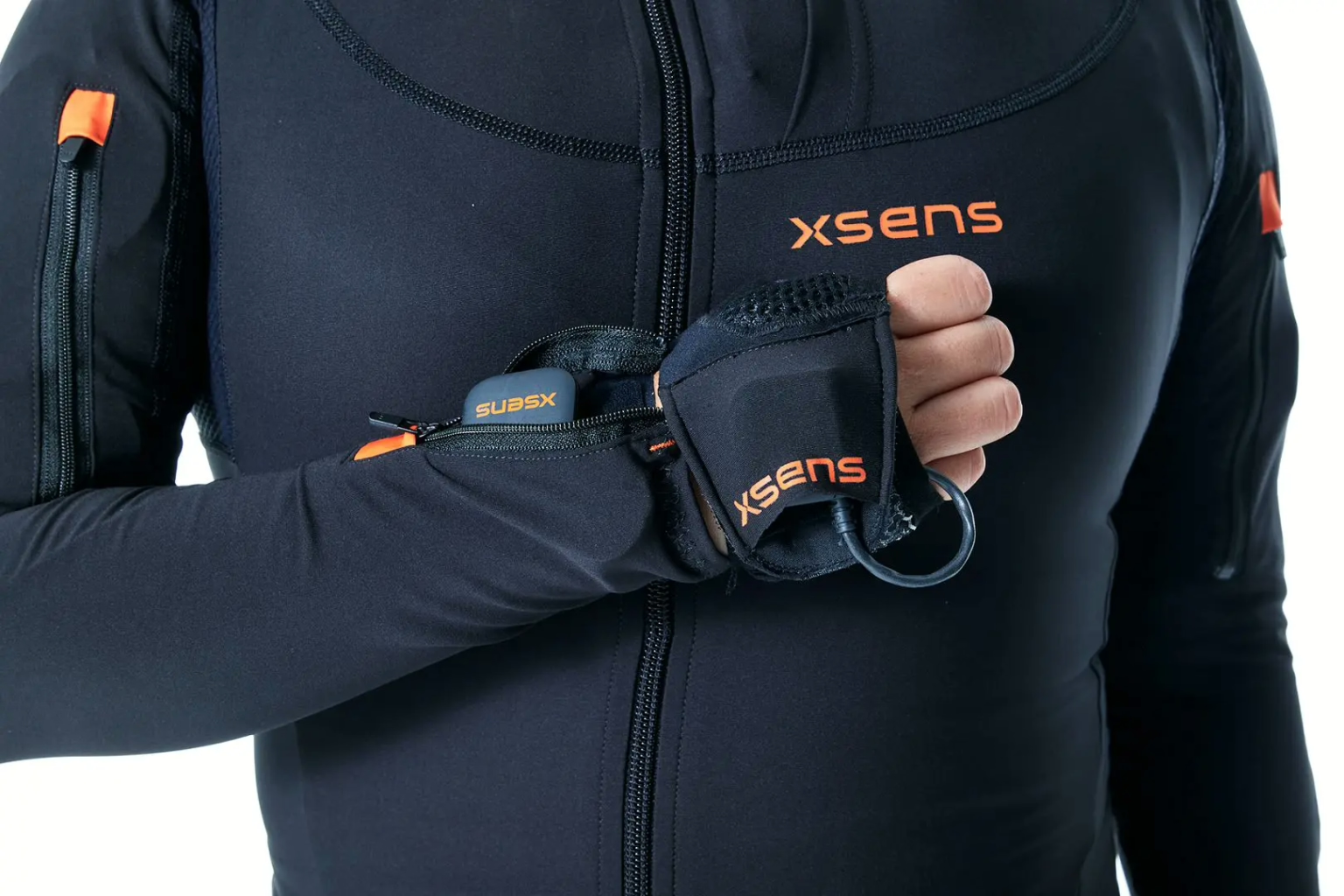
Electronics embedded directly into uniform fabrics, rather than bolted onto them as separate units, reduce weight and bulk while improving comfort and durability. Conductive yarns, printed electronics, and modular attachment systems allow sensors, actuators, and communication components to become part of the garment itself. This shift matters enormously in military contexts where discomfort and equipment interference directly affect performance and mission success.
Edge computing and on-body processing
Processing sensor data on the device rather than transmitting raw data to a remote server reduces latency, power consumption, and radio frequency exposure. For military wearables, this is not just a performance consideration but a security one. On-body processing limits the electronic signature a soldier emits and ensures the system functions in communications-denied environments. Firmware design becomes critical here, and proprietary platforms purpose-built for wearables enable the kind of tight hardware-firmware co-optimisation that off-the-shelf solutions cannot match.
How will haptic feedback change soldier communication on the battlefield?
Haptic feedback will change soldier communication by replacing visual and auditory signals with tactile cues delivered directly to the body, enabling silent, eyes-free information transfer in high-threat environments. Rather than glancing at a screen or listening for an audio prompt, a soldier receives a vibration pattern on their torso, wrist, or vest that communicates direction, alert status, or a command without breaking cover or diverting attention from the immediate environment.
The implications go beyond navigation. Haptic systems can signal threat direction, confirm receipt of a command, indicate a teammate’s position, or alert a soldier to a physiological threshold being crossed, all without sound or light. In environments where radio silence is critical and screen use is tactically dangerous, this represents a genuinely different communication paradigm rather than an incremental improvement on existing tools.
The engineering challenge is significant. Actuator selection, placement on the body, vibration pattern design, and firmware-level timing all determine whether a haptic signal is interpreted correctly under stress and physical exertion. Eccentric rotating mass actuators, linear resonant actuators, and piezo actuators each behave differently against skin, through clothing layers, and during movement. Getting this right in a military context requires the kind of end-to-end haptic system design that integrates hardware, firmware, and human factors from the start rather than treating haptics as a feature added late in development.
What role will AI play in next-generation military wearables?
AI will play a central role in next-generation military wearables by enabling real-time interpretation of biosensor data, adaptive feedback systems, and predictive alerts based on physiological and environmental patterns. Rather than simply recording data, AI-powered wearables will act on it, flagging early signs of heat stress, cognitive overload, or injury risk before they affect performance or safety.
On the sensor side, AI algorithms are essential for separating genuine physiological signals from motion artefacts, a persistent problem in wearable ECG and EMG systems used during physical activity. In military use, where soldiers are running, crawling, and operating in extreme temperatures, motion artefact management is not a minor calibration issue but a fundamental reliability challenge. AI-based signal processing, trained on data from real-world movement conditions, is the most viable path to sensors that remain clinically useful in the field.
At the system level, AI enables wearables to learn individual baseline patterns and detect deviations that would be invisible to a static threshold alert. A soldier whose heart rate variability drops in a characteristic way before exhaustion sets in, for example, can be flagged for rotation before performance degrades, rather than after. This kind of predictive capability requires both high-quality sensor data and the on-body processing power to run inference without a cloud connection.
What are the main challenges in developing military-grade wearables?
The main challenges in developing military-grade wearables are ruggedisation, reliability under extreme conditions, certification, battery performance, and the fundamental difficulty of integrating electronics into textile systems that must survive operational use. Each of these challenges is harder in a military context than in consumer or even medical wearable development.
Ruggedisation means more than an IP rating. Military wearables must survive temperature extremes, moisture, mechanical shock, and sustained physical stress while remaining comfortable enough that soldiers actually wear them. This places conflicting demands on materials, electronics enclosures, and textile construction that require deep cross-disciplinary expertise to resolve.
Battery performance is a persistent constraint. Military operations do not accommodate scheduled charging, and increasing battery size is rarely the right answer since it adds weight and often triggers a cascade of redesign consequences. Optimising battery life across firmware behaviour, sensor duty cycles, radio communication intervals, and hardware component selection is a system-level problem, and one that is best addressed early in development rather than as a late-stage fix.
Certification adds another layer of complexity. Military wearables must meet specific defence procurement standards that vary by nation and application, and any medical monitoring functionality introduces additional regulatory obligations. Navigating these requirements while maintaining development momentum requires teams with direct certification experience, not just general electronics expertise.
Finally, the integration of electronics and textiles remains genuinely difficult. Washability, flexibility, durability, and signal integrity are often in direct tension. Choosing the wrong integration technique early in development can invalidate months of work when the system is stress-tested under real conditions.
Which military sectors will benefit most from wearable technology advances?
The military sectors that will benefit most from wearable technology advances are infantry, special operations forces, medical and casualty care, and logistics and support personnel. Each sector has distinct requirements, but all share a common need for wearables that deliver information without adding operational burden.
Infantry and special operations units stand to gain the most from haptic navigation and silent communication systems. These soldiers operate in environments where conventional communication is a liability, and where situational awareness directly determines survival. Wearables that deliver directional cues, teammate proximity alerts, and threat notifications through tactile channels address a genuine operational gap that no current equipment fully closes.
Military medical personnel will benefit from advances in continuous physiological monitoring. Wearables that track vital signs across a unit in real time, and flag deteriorating soldiers before they become casualties, have obvious value in both combat and training contexts. The challenge is building systems accurate enough to be clinically trusted, which requires the same sensor quality and signal processing rigour applied in medical device development.
Logistics and support roles, often overlooked in discussions of military wearables, present opportunities for exoskeleton-adjacent wearables that reduce musculoskeletal injury from load carrying, and for location and status tracking systems that improve supply chain visibility without requiring soldiers to interact with a device.
How Elitac Wearables helps with military wearable technology development
Developing a military-grade wearable is one of the most technically demanding projects in the wearables sector. The combination of extreme environmental requirements, certification obligations, haptic system complexity, and electronics-textile integration challenges means that fragmented development, where hardware, firmware, and textile work are split across different suppliers, almost always leads to delays, reliability failures, or products that never reach operational use.
Elitac Wearables provides end-to-end wearable development for defence and adjacent sectors, with all disciplines in-house under one roof. The team’s direct experience developing the Mission Navigation Belt for the Royal Netherlands Army means this is not theoretical capability but demonstrated delivery in a demanding military context. Specific capabilities relevant to military wearable development include:
- Haptic system design from actuator selection through firmware-level pattern timing, covering ERM, LRA, and piezo technologies
- Biosignal sensing using dry-electrode technology optimised for high-movement conditions, as demonstrated in the Flight Sense System
- Electronics-textile integration across conductive yarns, printed electronics, and modular attachment, with over ten years of experience in washable and ruggedised contexts
- Battery performance optimisation across hardware, firmware, and data architecture, without requiring enclosure redesign
- Military and defence certification guidance, alongside MDR compliance experience from medical wearable projects
- Rapid demonstrator development, enabling validation of the wearable concept before committing to full production tooling
If you are working on a military wearable challenge and need a development partner with proven field experience, get in touch with the Elitac Wearables team to discuss your project.
Related Articles
- What are the benefits of electronics integrated into textiles?
- What are the latest haptic feedback wearable technologies in 2026?
- How do you maintain competitive advantage when your wearable product is built by a third-party developer?
- How do you future-proof a wearable product during the development phase?
- How do you manage battery life constraints in wearable development?