Modern wearables monitor soldier health in the field by combining multiple biosensors into a single body-worn system that continuously tracks vital signs such as heart rate, ecg, respiration, core body temperature, stress indicators, and (almost) even bloodpressure. These systems transmit data wirelessly to command units, enabling real-time health awareness without requiring soldiers to stop, check a screen, or report verbally. The sections below cover the sensors involved, the data transmission methods, the conditions these systems can detect, and the engineering challenges that make military health wearables fundamentally different from anything available on the consumer market.
What sensors do military wearables use to track health?
Military wearables for soldier health monitoring typically combine electrocardiogram (ECG) sensors, inertial measurement units (IMUs), respiration sensors, skin temperature sensors, and electrodermal activity (EDA) sensors into a single integrated system. Each sensor captures a different physiological signal, and together they build a continuous picture of the soldier’s physical and cognitive state.
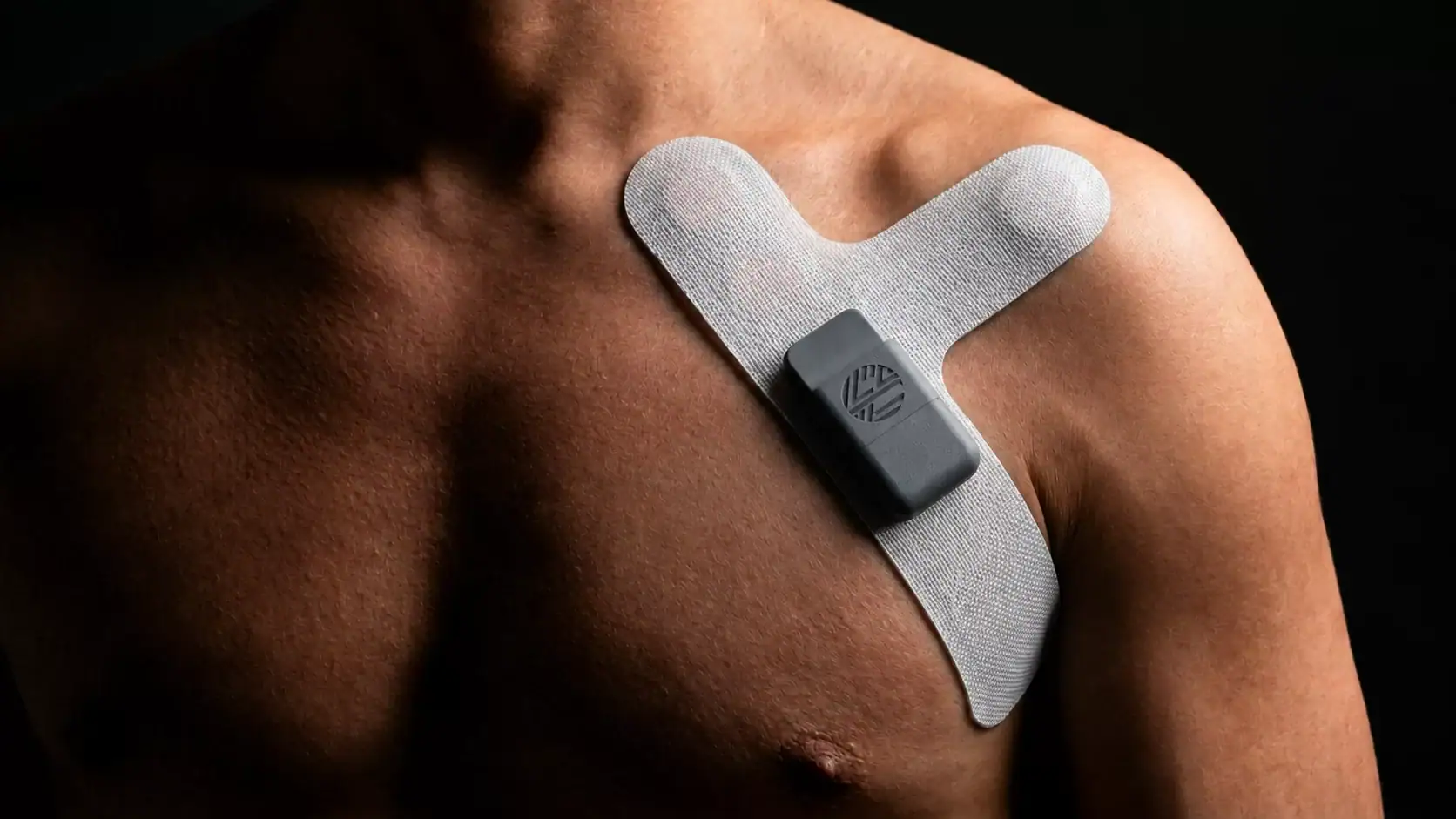
ECG sensors (dry electrodes) measure the electrical activity of the heart, providing heart rate and heart rate variability (HRV) data. HRV in particular is a reliable indicator of stress and fatigue, both of which directly affect decision-making in combat. Respiration sensors track breathing rate and depth, which can signal exertion levels or the onset of respiratory distress. IMUs, which combine accelerometers and gyroscopes, capture movement, posture, and activity intensity. EDA sensors (dry electrodes) detect changes in skin conductance linked to psychological stress.
One of the most significant engineering challenges in this sensor stack is electrode design. Traditional ‘wet’ electrodes, which use adhesive conductive gel to maintain contact with the skin, are impractical in field conditions. Military wearables rely on dry electrodes, which must maintain reliable signal quality through sweat, movement, and variable skin contact. Getting clean biosignal data from a moving body without gel or adhesive is a problem that requires careful sensor placement, material selection, and signal processing, not just component sourcing.
How is soldier health data transmitted in the field?
Soldier health data is transmitted wirelessly using short-range and long-range radio protocols, depending on the operational architecture. Within a squad, Bluetooth Low Energy (BLE) or ANT+ protocols typically relay data from body-worn sensors to a local hub device, such as a rugged handheld or a unit worn on the vest. From there, data is relayed over tactical radio networks to command.
Note:
Oftentimes, wireless communication is not allowed in combat – due to stealth. In these moments, the data can be stored locally on the device, until the soldier is on safer grounds, where wireless communication is allowed again.
The choice of transmission protocol involves tradeoffs between power consumption, range, latency, and security. BLE is energy-efficient and well-suited for continuous low-bandwidth biosignal data, but its range is limited to roughly ten metres without a relay. Tactical radio systems extend range significantly but consume more power and add weight. For covert operations, transmission frequency, timing, and encryption all require careful design to avoid detection or interception.
Power management is inseparable from data transmission. A wearable that transmits health data continuously will drain its battery far faster than one that buffers data locally and transmits in short bursts. Military wearable development teams frequently discover this problem late in the development cycle, when the device is already near its final form and a battery redesign would trigger a cascade of hardware changes. Addressing transmission architecture as a system-level decision from the start, not as an afterthought, is what separates reliable field systems from prototypes that work in the lab.
What health conditions can wearables detect in soldiers?
Military health wearables can detect a range of conditions including heat stress, physical exhaustion, cardiac irregularities, elevated psychological stress, early signs of dehydration, and even bleeding. The detection is not diagnostic in the clinical sense, but it provides actionable health intelligence that allows commanders or medics to intervene before a condition becomes incapacitating.
Physiological conditions
Heat stress is one of the most operationally significant conditions wearables can flag. Core temperature combined with heart rate and activity data can indicate when a soldier is approaching heat exhaustion before symptoms become visible. Similarly, an elevated resting heart rate over time, combined with reduced HRV, signals physical fatigue and reduced recovery, which affects combat effectiveness long before a soldier reports feeling unwell.
Psychological and cognitive states
HRV and EDA data together can indicate acute psychological stress, which is relevant in high-stakes decision environments. Most wearables cannot read cognitive state directly (in a comfortable way during operation), but the physiological correlates of stress, fear, and fatigue are measurable. This data is increasingly used in training environments to understand how soldiers respond under pressure, and to tailor recovery protocols accordingly.
How do military wearables differ from consumer fitness trackers?
Military wearables differ from consumer fitness trackers in environmental durability, sensor accuracy, data security, integration requirements, and the consequences of failure. A consumer device that loses signal during a run is an inconvenience. A military wearable that fails under fire, in water, or in extreme heat can have life-or-death consequences.
Consumer devices are designed for controlled, predictable use cases. They are worn on the wrist, used intermittently, and tolerate occasional inaccuracies because the data is motivational rather than operational. Military wearables must function reliably across the full range of operational conditions: extreme temperatures, submersion, physical impact, electromagnetic interference from other equipment, and continuous multi-day use.
Sensor accuracy requirements are also categorically different. A consumer heart rate monitor that reads two to three beats per minute high is acceptable. A military health monitor that misreads a soldier’s cardiac stress level could lead to a medic being dispatched unnecessarily, or worse, not dispatched when needed. This demands higher-grade sensors, more sophisticated signal processing, and rigorous validation against clinical standards.
Data security is another dimension consumer devices do not need to address. Health data from soldiers in the field is operationally sensitive. Transmission must be encrypted, and the device itself must be resistant to data extraction if captured. These requirements add design complexity that no consumer wearable is engineered to handle.
What are the biggest challenges in building health wearables for soldiers?
The biggest challenges in building health wearables for soldiers are ruggedisation, signal quality on a moving body, power management, system integration with existing military infrastructure, and meeting military certification requirements, and the need for stealth and non-wireless connection at some moments. Each of these is a significant engineering problem on its own. Solving all of them simultaneously, within size and weight constraints, is what makes military wearable development genuinely difficult.
Ruggedisation goes beyond waterproofing. Military wearables must survive mechanical stress from running, crawling, and equipment impact. Electronics embedded in flexible textile substrates face repeated bending, stretching, and compression. The interconnects between rigid electronics and flexible textile layers are a common failure point, and designing those junctions to survive thousands of cycles requires both electronics expertise and deep knowledge of textile mechanics.
Signal quality on a moving body is a persistent challenge. Motion artefacts, which are false signals introduced by movement, contaminate biosensor data during high-activity scenarios, which is exactly when accurate health data matters most. Filtering motion artefacts without discarding genuine physiological signals requires sophisticated algorithms and careful sensor placement, both of which must be validated against real-world movement patterns, not just laboratory benchmarks.
Military certification adds a further layer of complexity. Unlike consumer devices, military wearables must meet formal standards for electromagnetic compatibility, environmental resistance, and operational reliability. These requirements must be considered from the earliest stages of hardware design, not retrofitted at the end of development. Teams that treat certification as a final step regularly discover that their hardware choices are incompatible with the standards they need to meet, triggering costly redesigns.
How is haptic feedback used in soldier health wearables?
Haptic feedback in soldier health wearables delivers silent, tactile alerts that communicate health status or action prompts without requiring the soldier to look at a screen or listen for an audio signal. In high-noise, high-focus environments, a precisely timed vibration pattern on the torso or wrist can convey critical information, such as a warning that physiological stress thresholds have been exceeded, without breaking situational awareness.
The use of haptics in military wearables extends beyond health monitoring into navigation and communication. Elitac Wearables developed the Mission Navigation Belt for the Royal Netherlands Army, a haptic belt that delivers directional navigation cues through vibration, keeping the soldier’s hands, eyes, and ears free. The same principle applies to health alerts: a distinct vibration pattern can signal a medic, prompt a hydration reminder, or indicate that a rest threshold has been reached, all without any visual or auditory output that could compromise operational security.
Designing effective haptic feedback for military use requires more than adding a vibration motor. The actuator type, placement, intensity, and pattern must be engineered for the specific body location, the clothing and armour worn over it, and the operational context. An alert that is clearly felt during a training walk may be imperceptible under full kit during a high-exertion movement. Validating haptic performance under realistic conditions is a non-negotiable step in military wearable development.
How Elitac Wearables helps with soldier health monitoring
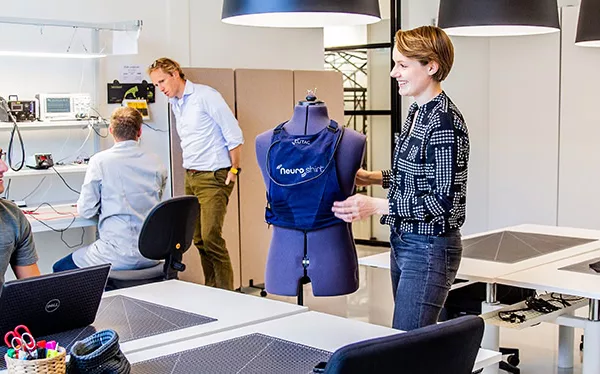
Building a reliable health monitoring wearable for military use means solving multiple hard problems at once: dry electrode biosensing, motion artefact filtering, ruggedised textile integration, power management, haptic feedback design, and military certification. Most development teams have expertise in one or two of these areas. Elitac Wearables brings all of them together under one roof.
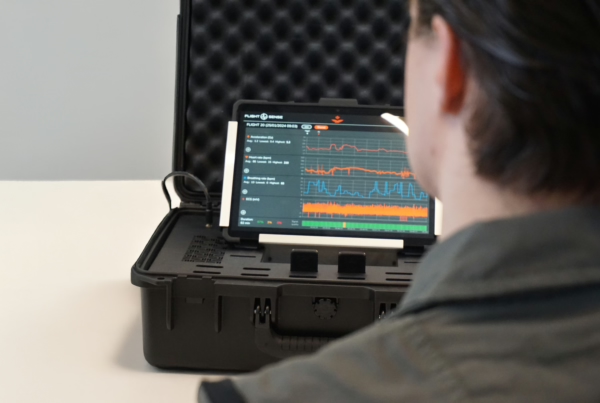
- Biosignal sensing expertise: Elitac’s team specialises in ECG, HRV, respiration, and movement sensing using dry electrodes optimised for high-movement conditions, the exact scenario military wearables must handle. See our Flight Sense System development.
- Haptic feedback integration: From actuator selection to firmware-level timing and pattern design, Elitac engineers haptic systems that work reliably in the field, as demonstrated by the Mission Navigation Belt delivered to the Royal Netherlands Army.
- Electronics-textile integration: With over a decade of experience embedding electronics into body-worn textiles, Elitac designs the interconnects and substrate structures that survive the mechanical demands of military use.
- Power management: Elitac treats battery performance as a system-level problem, addressing firmware, sensor duty cycles, and transmission architecture to extend operational life without increasing device size.
- Certification support: The team has experience with military certification requirements and designs hardware from the start to meet the standards that field-deployed wearables must satisfy.
- End-to-end development: From feasibility check through to first production series, Elitac manages the full development cycle without handoffs between vendors, reducing risk and keeping the project on track.
If you are developing a health monitoring wearable for defence, emergency services, or any high-demand operational environment and need a partner that has already solved the hardest parts of this problem, contact Elitac Wearables to discuss your project.