
Validating a wearable product idea means systematically testing whether your concept is technically feasible, genuinely needed, and viable to build before committing a significant budget to full development. Done well, validation surfaces the assumptions most likely to kill your project early, when course corrections are cheap. The questions below walk through each stage of that process, from identifying real market need to knowing when you have enough evidence to move forward.
What does validating a wearable idea actually involve?
Validating a wearable idea involves testing three distinct layers before committing to a full build: market need, technical feasibility, and user acceptance. Each layer carries its own risks, and skipping any one of them is where most wearable development projects run into serious trouble later in the cycle.
The distinction matters because wearables sit at the intersection of electronics, software, textiles, and human behaviour. A concept that looks commercially compelling on paper can fail because the sensing technology doesn’t work reliably on a moving body, or because the form factor is rejected by the people who would actually wear it every day. Validation is the structured process of stress-testing those assumptions before you invest in custom hardware or tooling.
In practice, validation does not mean a single test or a short survey. It is a staged sequence of activities that progressively reduces uncertainty. You start with desk research and expert consultation, move into low-fidelity physical mockups, then into functional proof-of-concept builds, and finally into controlled user testing. Each stage should answer a specific set of questions before the next stage begins. That sequencing is what separates disciplined wearable product development from expensive guesswork.
How do you know if there’s a real need for your wearable?
You know there is a real need when you can identify a specific group of people who currently have an unmet problem, are actively seeking a solution, and would change their behaviour or pay for something that solves it. Vague interest from a broad audience is not a validated need. Specific, repeated pain described by a clearly defined user group is.
For B2B wearable development specifically, this usually means talking directly to the professionals who would use or procure the device. An EHS manager who describes a concrete gap in their current safety monitoring workflow is a stronger signal than a general market report citing the size of the wearable technology sector. Procurement intent, existing workarounds, and budget allocation are the most reliable indicators that a need is real rather than theoretical.
It is also worth distinguishing between a problem people have and a problem they will pay to solve in wearable form. In medical and occupational health contexts, this often comes down to whether the wearable replaces an existing cost, reduces a clinical burden, or enables something that was previously impossible. If you cannot articulate the specific value exchange clearly, the need has not been validated yet, regardless of how compelling the technology feels.
What’s the difference between a proof of concept and a prototype in wearable development?
A proof of concept (PoC) in wearable development is a basic, functional build that demonstrates a core technical idea using off-the-shelf components. A prototype is a more refined version that replicates the intended form factor, integrates all required features, and is suitable for structured user testing. The PoC answers “can this work?” while the prototype answers “does this work for the people who will use it?”
In practice, the gap between these two stages is where many wearable development projects stall. A PoC might use a rigid enclosure with exposed electronics to prove that a sensor can detect a specific physiological signal on a moving body. A prototype would integrate that same sensor into a textile, miniaturise the electronics, manage power consumption, and present the device in a form that a real user can wear for an extended period without discomfort or interference with their activity.
The cost and time difference between these stages is significant. A PoC can often be delivered within a few weeks using existing building blocks and standard components. Moving from PoC to a functional prototype with the correct form factor, washability requirements, and real-world durability can take several months and requires multi-disciplinary input across hardware, firmware, and textile engineering. Understanding which stage you are actually in is essential for setting realistic expectations with stakeholders and managing development budgets responsibly.
Which technical assumptions should you test before investing in a full build?
Before investing in a full build, you should test the assumptions most likely to invalidate your concept if they turn out to be wrong. In wearable development, these typically fall into four categories: sensor performance on a real body, power budget against real-world usage patterns, integration of electronics into the intended textile or form factor, and wireless data transmission reliability in the target environment.
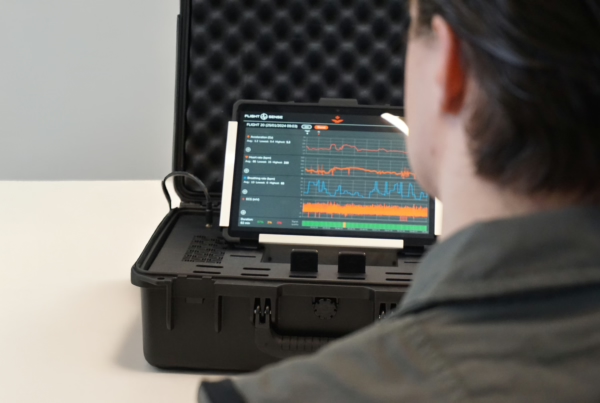
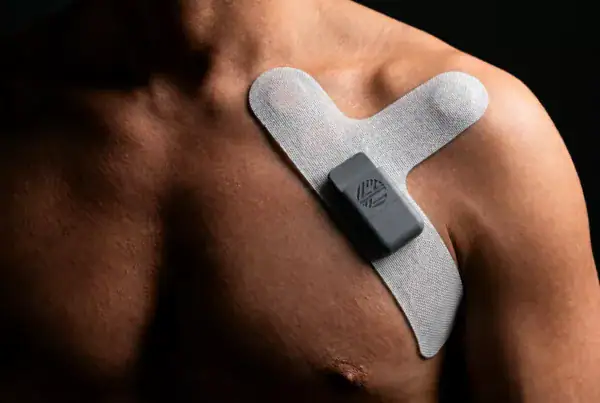
Sensor performance is often the first assumption to challenge. A sensor that works accurately in a lab setting on a stationary subject frequently performs very differently on a person who is walking, lifting, or sweating. Motion artefacts in biosignal sensing, pressure variation in haptic delivery, and signal interference from body movement are all failure modes that appear only when you test on the actual body location and in realistic conditions.
Power consumption is the second critical area. Battery life assumptions made at the component selection stage rarely survive contact with real usage patterns. Firmware that keeps radios or sensors active longer than necessary, inefficient data handling, and hardware components mismatched to actual duty cycles all contribute to a device that runs out of power far sooner than expected. Identifying these issues before committing to an enclosure design or a battery form factor saves significant rework cost.
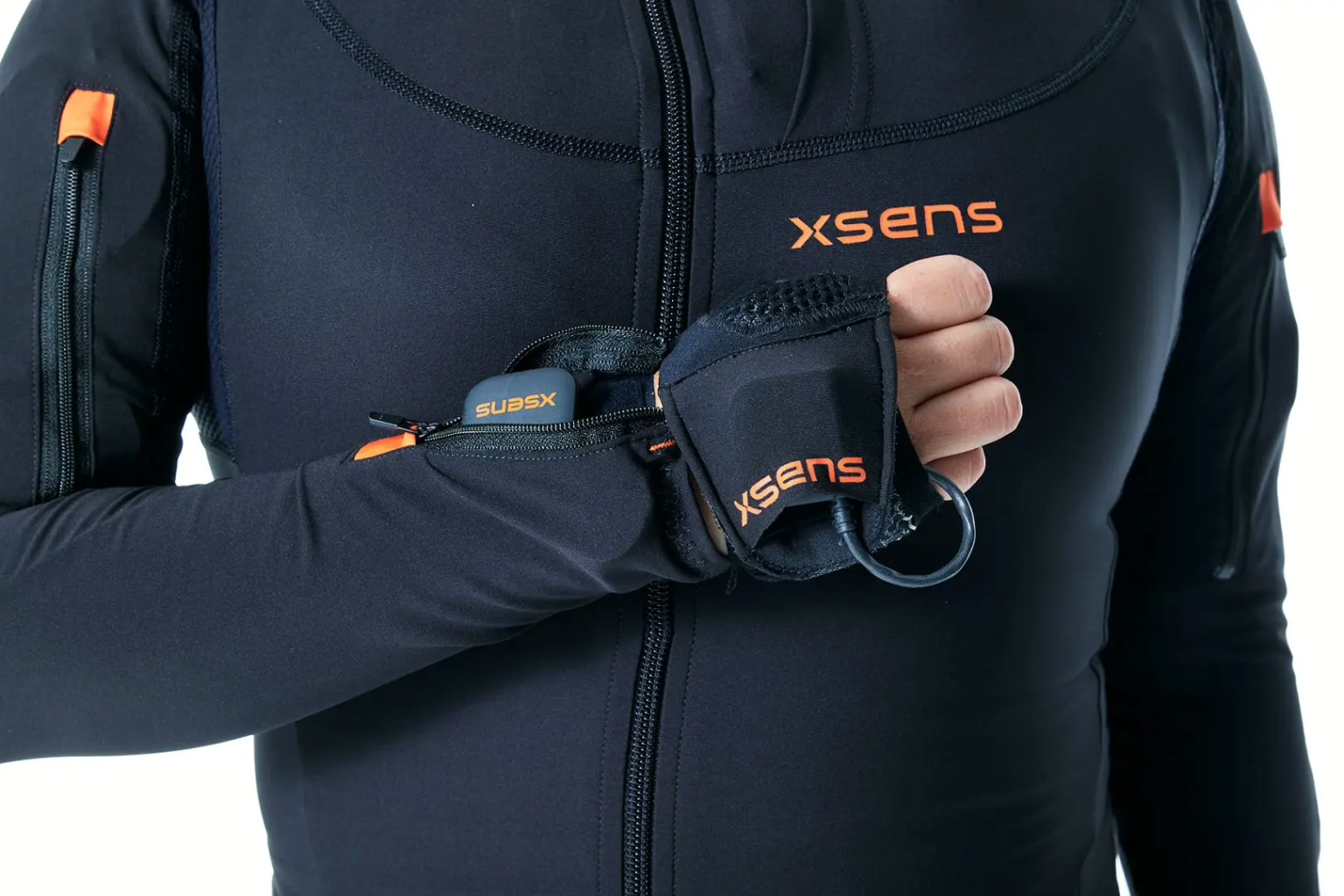
Finally, the integration of electronics into a textile or wearable housing is a technical challenge that is consistently underestimated by teams without specific electronics-textile experience. The connection method, the flexibility requirements, the washability constraints, and the mechanical stress on connections during wear all need to be tested on representative materials before the design is locked. Discovering an incompatibility at the prototype stage is manageable. Discovering it after tooling has been commissioned is not.
How do you test a wearable concept with real users early on?
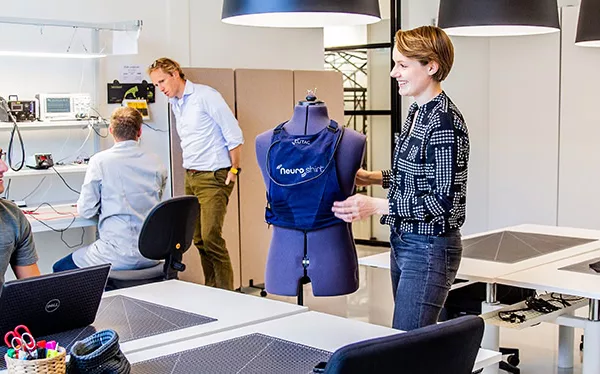
You test a wearable concept with real users early on by creating the lowest-fidelity version that still allows meaningful feedback on the specific question you are trying to answer. For form factor and comfort, that might be a non-functional physical mockup made from foam or 3D-printed parts. For interaction and feedback design, it might be a demonstrator unit that simulates the intended output without full electronics integration.
The goal at this stage is not to impress users with a polished product. It is to surface the assumptions about user behaviour, comfort tolerance, and workflow integration that your internal team has been making without realising it. Users in medical, industrial, and occupational settings will tell you quickly whether a device is compatible with their actual working environment, whether the feedback modality makes sense in context, and whether the form factor creates any safety, hygiene, or compliance concerns.
Structured early user testing also reduces the risk of building to the wrong specification. In custom wearable product development, requirements that seem clear at the briefing stage frequently evolve once a real user interacts with a physical object in their real environment. Running short, focused user sessions with functional demonstrators before finalising specifications is one of the most cost-effective investments in the entire development cycle. It is considerably cheaper to revise a demonstrator than to redesign a prototype.
When is a wearable idea validated enough to move into development?
A wearable idea is validated enough to move into development when you have confirmed that a specific user group has a real, unmet need, that your proposed technical approach is feasible within the constraints of the intended form factor and use environment, and that at least one representative user or buyer has responded positively to a physical or functional representation of the concept.
In practical terms, this means having answers to three questions before committing development budget. First, is there evidence of demand beyond internal conviction? This could be letters of intent, pilot agreements, or documented conversations with procurement leads. Second, has a technical expert confirmed that the core sensing, actuation, or integration challenge is solvable within your constraints? Third, has anyone outside your organisation held or interacted with a physical representation of the concept and responded in a way that confirms the core value proposition?
It is worth noting that validation is not a binary pass or fail. It is a progressive reduction of risk. The point at which it is reasonable to move forward is when the remaining uncertainties are better resolved through building than through further research. If your biggest open questions are around user acceptance of a specific form factor or the performance of a specific sensor in field conditions, a structured prototype phase will answer them faster and more reliably than any amount of desk research.
How Elitac Wearables supports wearable product validation
For organisations that have a wearable concept but need expert help to validate it before committing to full development, Elitac Wearables offers structured support across every stage of that process. The team brings together hardware engineers, firmware developers, textile specialists, and human factors experts under one roof, which means validation activities are grounded in the full technical picture rather than a single discipline’s perspective.
Concretely, this means Elitac can:
- Run a rapid feasibility check to identify the technical assumptions most likely to fail, and test them using existing building blocks and the proprietary TacOS firmware platform
- Deliver functional demonstrators within weeks for early user testing, at a fraction of the cost of a full prototype build
- Advise on sensor selection, actuator choice, and integration technique based on over a decade of hands-on experience across medical, defence, and sports wearable programmes
- Structure the validation process around the six-phase development framework, so clients know exactly what is being tested at each stage and what evidence is needed to progress
- Bring in research partners from a network that includes UMC Utrecht, TNO, and multiple technical universities when clinical or scientific validation is part of the brief
If you have a wearable concept and want an honest technical assessment of what it would take to validate and build it, the right next step is a direct conversation with the team. Elitac works with organisations at every stage of the development cycle, from an early-stage idea through to a certified, market-ready product. Reach out to discuss your project and find out where validation work should start.
Related Articles
- What are the biggest challenges in electronics integrated into textiles?
- What role does firmware play in electronics integrated into textiles?
- Should soldiers have control over their own wearable data?
- How do you scale a wearable product from pilot to mass production?
- What does post-launch wearable product support and iteration actually cost?