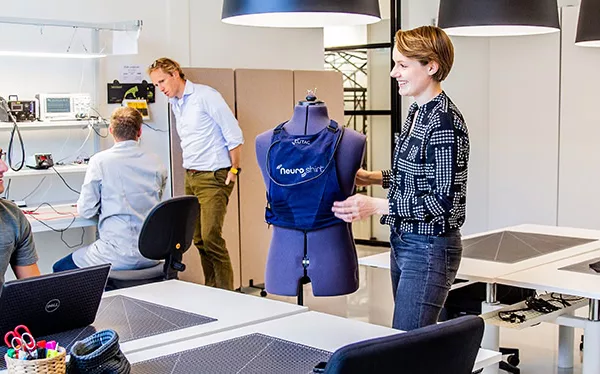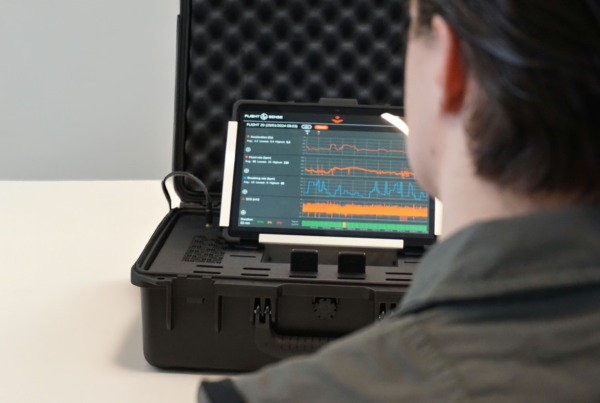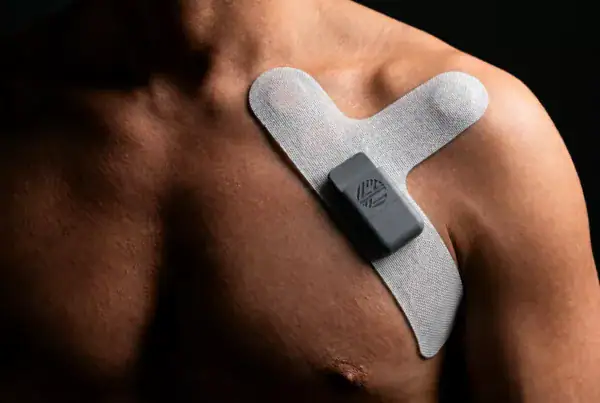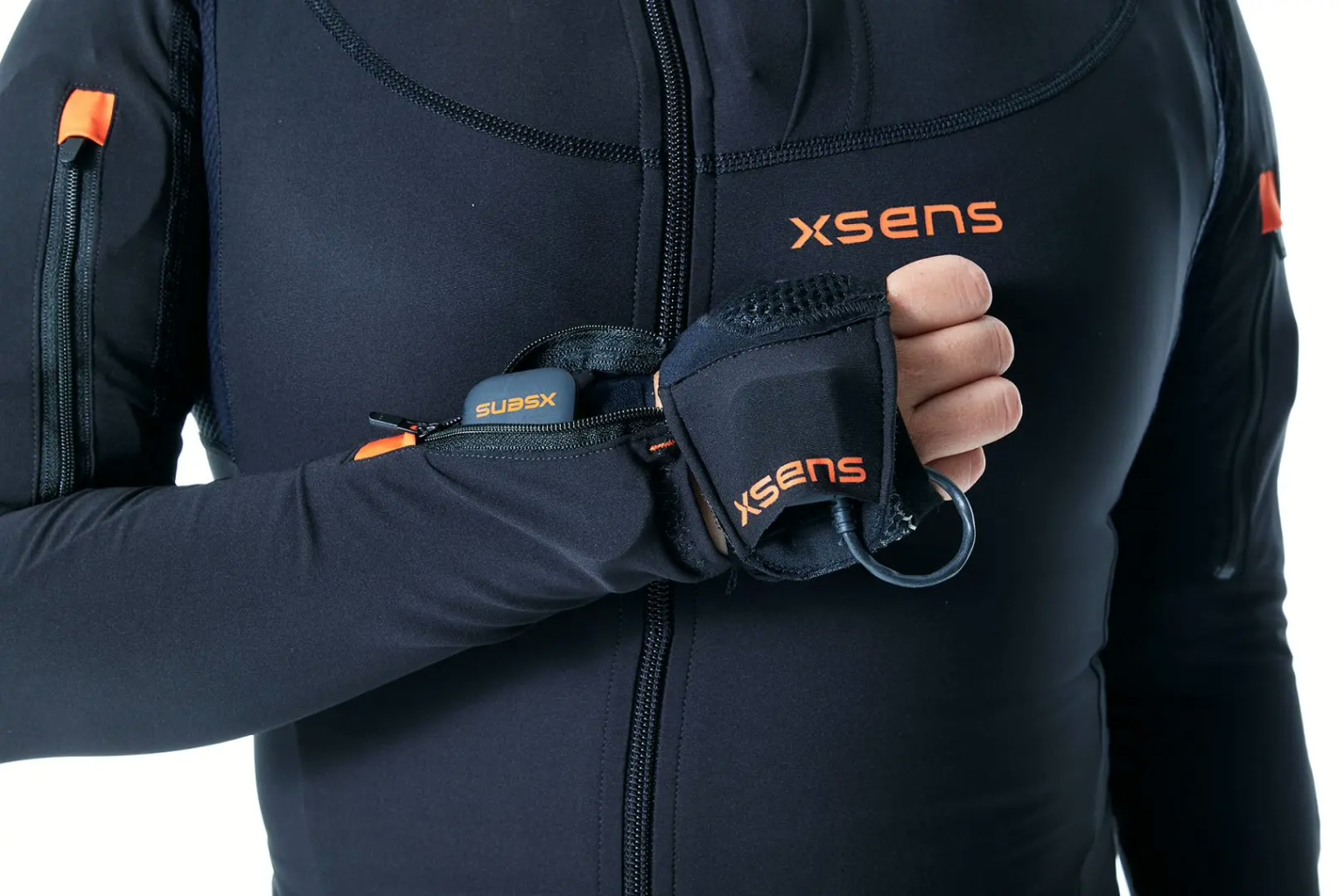

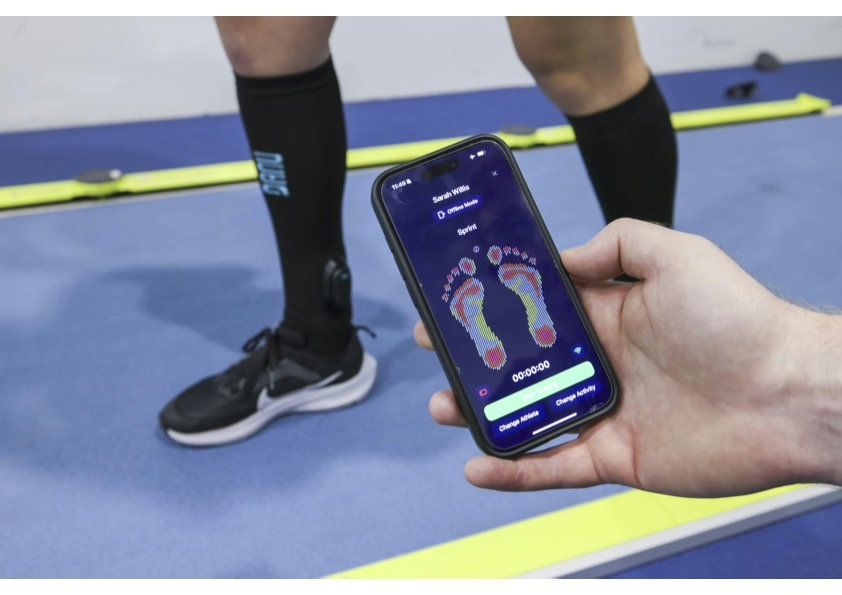
Testing a wearable device before launch requires a layered approach that covers hardware reliability, software behaviour, real-world user fit, and regulatory compliance. No single test is sufficient on its own. The process typically runs in parallel with development rather than at the end of it, and the earlier you start, the less it costs to fix what you find. This article walks through the key testing questions every wearable development team needs to answer before going to market.
What types of testing does a wearable device need to pass?
A wearable device needs to pass several distinct categories of testing before it can launch: hardware and electronics validation, software and firmware verification, real-world user testing, environmental stress testing, and regulatory certification testing. Each category targets a different failure mode, and skipping any one of them is a common reason wearable products stall or fail after launch.
The scope of testing depends on the device’s intended use. A consumer fitness tracker and a medical-grade ECG wearable share some testing categories but differ sharply in how rigorous each must be. For medical devices, regulatory bodies define minimum testing requirements. For industrial or defence wearables, durability and reliability standards are equally demanding. For any body-worn product, user comfort and interaction design must be validated with real people in real conditions.
A practical way to structure the testing landscape is by risk layer:
- Electronics and hardware: Does the device function correctly and safely at the component level?
- Firmware and software: Does the embedded code behave correctly across all operating states?
- System integration: Do hardware, firmware, and any connected app work reliably together?
- Environmental stress: Does the device hold up to heat, moisture, movement, and physical wear?
- User testing: Does the device work for real people in real conditions?
- Regulatory testing: Does the device meet the legal standards required to sell in your target market?
Most development teams underestimate how many of these categories interact. A firmware fix can affect power draw. A textile change can affect sensor contact. Testing in isolation misses the compounding effects that only appear when the full system runs together on a moving body.
How do you test wearable hardware and electronics?
Wearable hardware and electronics are tested through a combination of bench testing, automated functional testing, environmental simulation, and electrical safety verification. The goal is to confirm that every component performs within its specified range under the conditions the device will actually face in use, not just in a controlled lab setting.
Hardware testing for wearables is more demanding than for fixed electronics because the device moves, flexes, gets wet, and operates close to the human body. Standard PCB testing methods apply, but they must be extended to account for wearable-specific failure modes.
Electrical and functional validation
At the component level, testing covers power consumption, signal integrity, sensor accuracy, and communication protocol reliability. For a wearable with biosensors such as ECG or EMG electrodes, you need to verify that the signal chain performs correctly not just in static conditions but under motion. Motion artefacts are one of the most persistent hardware challenges in biometric wearable product development, and they must be characterised early, not discovered during user trials.
Battery performance deserves particular attention. Battery life shortfalls discovered late in development are expensive to fix. Increasing battery capacity triggers a cascade: a larger enclosure, new tooling, revised regulatory documentation, and schedule delays. The better approach is to test power consumption across all operating states from the start, identify which firmware processes or hardware components are drawing more than expected, and optimise at the system level before the enclosure is finalised.
Environmental and durability testing
Wearables face mechanical stress that stationary electronics do not. Flex testing, drop testing, and wash testing are all relevant depending on the product. Connectors between electronics and textiles are a particularly common failure point. Sweat, humidity, and body heat create corrosion and delamination risks that only appear after extended use. IP rating tests (ingress protection against dust and water) are standard for most wearable categories and required for many certifications.
How do you test a wearable on real users?
User testing for a wearable device involves structured trials in which real end users wear and interact with the device in realistic conditions. The aim is to validate comfort, usability, sensor performance on a real body, and whether the device actually delivers the intended benefit. This cannot be replicated in a lab with bench equipment alone.
User testing should begin earlier than most teams expect. Waiting until a near-final prototype to test on users is a high-risk strategy. By that stage, fundamental form factor decisions have been locked in, and discovering that the device is uncomfortable, slides out of position, or generates unreliable readings on real bodies is costly to address.
A phased approach to user testing reduces this risk:
- Early wear trials: Test comfort, positioning, and basic interaction with low-fidelity prototypes. Identify ergonomic issues before electronics are integrated.
- Functional user tests: Verify that sensors and actuators perform correctly on real bodies in controlled conditions. Dry electrodes behave differently on different skin types and body locations. Haptic actuators need to be felt clearly without being distracting.
- Uncontrolled field trials: Test the device in the actual environment it will be used in, whether that is a hospital ward, a factory floor, or a sports training session. Real-world conditions expose failure modes that controlled testing does not.
For medical wearables, user testing is not optional. It feeds directly into the clinical evidence required for regulatory approval. Documenting user testing methodology and outcomes is part of the technical file that regulators review. In custom wearable product development, building this documentation discipline into the testing process from the start saves significant time at the certification stage.
What certifications does a wearable device need before launch?
The certifications a wearable device needs before launch depend on its intended use and target market. For devices sold in the EU, CE marking is the baseline requirement. Medical wearables must also comply with the EU Medical Device Regulation (MDR). Industrial wearables used in hazardous environments may require ATEX certification. Military wearables follow defence-specific standards. Each certification adds cost and time, and the requirements should shape hardware design decisions from the earliest stages of development.
The most common certification paths for wearable devices include:
- CE marking: Required for all products sold in the EU. Covers electromagnetic compatibility (EMC), electrical safety, and radio equipment (RED directive for Bluetooth or wireless devices).
- MDR compliance: Required for Class I and Class II medical devices in the EU. Demands a clinical evaluation, risk management documentation, and a quality management system. Class II devices require a Notified Body.
- ATEX: Required for devices used in potentially explosive atmospheres, such as oil and gas, mining, or certain industrial environments. Significantly increases development and testing costs.
- FCC certification: Required for wireless devices sold in the United States.
- Military standards: Defence wearables may need to meet MIL-STD requirements for shock, vibration, temperature, and environmental protection.
The critical mistake teams make is treating certification as a final step. Certification requirements should inform hardware component selection, PCB layout, enclosure design, and firmware architecture from the start. Redesigning a device to pass EMC testing after the hardware is finalised is an expensive and avoidable problem.
When should wearable testing start in the development process?
Wearable testing should start at the earliest possible stage of development, not at the end. The most effective approach integrates testing continuously throughout the development cycle, beginning with feasibility checks and proof-of-concept validation, and escalating in rigour as the design matures. Testing only at the end of development is one of the most reliable ways to ensure expensive, late-stage failures.
In a structured wearable development process, each phase has its own testing objectives:
- Feasibility phase: Test whether the core technical approach is viable. Can the sensor detect the signal you need? Can the actuator produce the feedback you want? These questions should be answered before significant investment is made.
- Proof of concept: Validate the concept with basic functional tests. Does the system work well enough to justify moving forward? This is also the stage to gather early user feedback on the core interaction.
- Pilot samples: Test features and form factor in controlled user trials. Identify integration issues between electronics, firmware, and textiles.
- Final prototypes: Conduct uncontrolled user testing in real environments. Begin pre-compliance testing for relevant certifications.
- First series: Complete formal certification testing. Validate production consistency and quality control processes.
Industry experience consistently shows that the cost of fixing a problem roughly multiplies at each phase transition. A design issue caught at the proof-of-concept stage costs a fraction of what it costs to address during final prototype development, and a fraction again of what it costs after a product has entered production.
What are the most common reasons a wearable device fails testing?
The most common reasons a wearable device fails testing are sensor performance degradation on a real body, battery life falling short of specifications, firmware instability under real-world conditions, and EMC failures caused by design decisions made without certification in mind. Most of these failures are not random. They trace back to assumptions made early in development that were never validated against real-world conditions.
Understanding the specific failure patterns helps development teams avoid them:
- Sensor performance on real bodies: Sensors that perform well on a bench or a mannequin often produce unreliable data on a moving human. Motion artefacts, variable skin contact, sweat, and anatomical differences between users all affect signal quality. Dry electrode performance in particular varies significantly across body locations and skin types.
- Battery life shortfalls: Battery performance failures are almost always system-level problems, not hardware problems. Firmware keeping components active longer than necessary, sensors polling at higher rates than needed, and inefficient wireless communication intervals all drain battery faster than specifications predict. Optimising across hardware, firmware, and data architecture, rather than simply increasing battery size, is the more effective and less disruptive solution.
- Firmware instability: Embedded firmware for wearables must handle edge cases that bench testing rarely surfaces: intermittent sensor dropouts, unexpected user behaviour, Bluetooth reconnection events, and low-battery states. Firmware that appears stable in testing can fail in the field when real users interact with the device in ways developers did not anticipate.
- EMC failures: Electromagnetic compatibility failures are common when certification is not considered during hardware design. Wireless radios, motor drivers for haptic actuators, and power management circuits can all generate interference that causes a device to fail EMC testing. Catching this late means redesigning the PCB, which is both expensive and time-consuming.
- Integration failures at the electronics-textile boundary: Connections between rigid electronics and flexible textiles are mechanical weak points. Repeated flexing, washing, and body movement cause connector failures, delamination, and signal degradation that only appear after extended use. This is a failure mode that is unique to wearable product development and is frequently underestimated by teams with a background in conventional electronics.
How Elitac Wearables helps you test and validate your device
Testing a wearable device is not a single event at the end of development. It is a continuous discipline that runs through every phase, from the first feasibility check to pre-production validation. Getting it right requires multidisciplinary expertise: hardware engineers who understand what EMC compliance means for PCB layout, firmware developers who know how to profile power consumption at the system level, textile specialists who understand where connections fail under repeated use, and human factors expertise to design and interpret user trials meaningfully.
Elitac Wearables brings all of these disciplines together under one roof, which is the single most important factor in avoiding the fragmented testing failures that stall most wearable development projects. As a specialist in end-to-end wearable product development services, the team works with clients at every stage of the development cycle, including:
- Early feasibility testing to validate core technical assumptions before significant investment
- Functional and environmental hardware testing, including power profiling and battery optimisation
- Real-world user trials with structured documentation for regulatory submissions
- Pre-compliance and formal certification testing support for CE marking, MDR, ATEX, and military standards
- Firmware validation against real-world usage patterns, using the proprietary TacOS platform to reduce embedded software risk
If your wearable development project has reached a point where testing is revealing problems that are expensive to fix, or if you want to build a testing strategy that catches issues before they become costly, speak with the Elitac Wearables team. The earlier you engage a specialist partner in the process, the more options you have.
Related Articles
- How do haptic wearables communicate real-time data to users?
- How do haptic feedback wearables work for navigation?
- What does wearable product development due diligence look like before acquiring or partnering with a vendor?
- What is the difference between wearable and traditional product development?
- How do you start developing a wearable product?