

Yes, military wearables can predict health emergencies before they happen — and this capability is already operational in advanced defence programmes around the world. By continuously monitoring biosignals such as heart rate variability, core temperature, respiration rate, and hydration indicators, these devices can detect physiological warning signs minutes or even hours before a soldier collapses or loses combat effectiveness. The questions below unpack how this technology actually works, what it can and cannot do, and why the engineering behind it is far more demanding than most people assume.
What data do military wearables actually collect from soldiers?
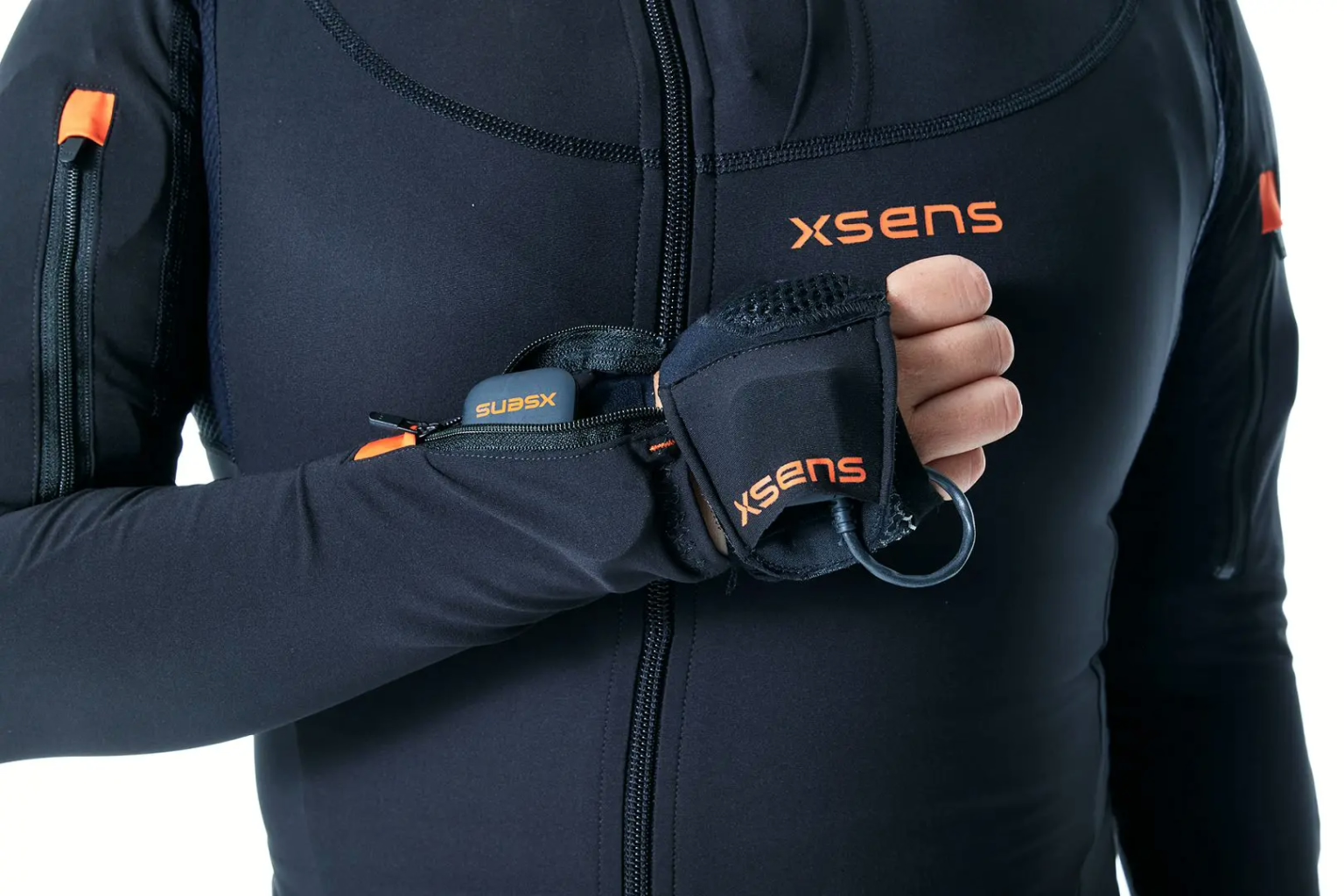
Military wearables collect a broad range of physiological and movement data in real time, including electrocardiogram (ECG) signals, heart rate, heart rate variability (HRV), respiration rate, skin temperature, accelerometry, and, in some systems, galvanic skin response as a proxy for psychological stress. The most advanced platforms combine multiple sensor types into a single body-worn system to build a continuous, multi-dimensional picture of soldier health.
The data categories typically fall into three groups:
- Cardiovascular signals: ECG, heart rate, HRV, and blood oxygen saturation give insight into cardiac load, fatigue accumulation, and early signs of heat stress or dehydration.
- Respiratory signals: Breathing rate and depth indicate exertion level and can flag early signs of respiratory distress or altitude sickness.
- Movement and posture data: Inertial measurement units (IMUs) and accelerometers track gait patterns, fall events, and physical activity intensity, which helps distinguish fatigue from injury.
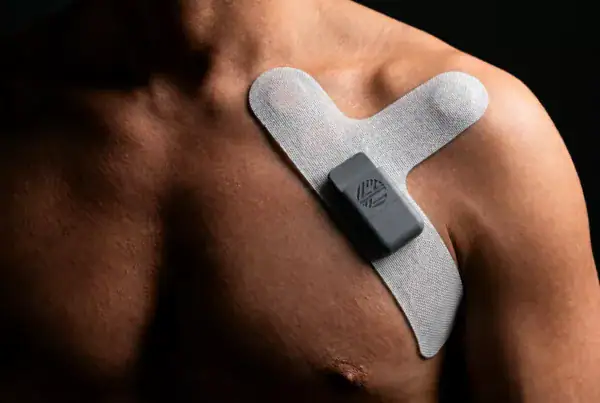
What makes military data collection genuinely difficult is the operating environment. Soldiers move hard, sweat heavily, and operate in extreme heat, cold, and humidity. Each of those conditions introduces noise into biosignal data. Dry electrode technology, which avoids the need for conductive gel, has become the preferred approach for high-movement military wearable applications because it maintains signal quality without requiring preparation time or maintenance in the field.
How does predictive health monitoring work in wearable devices?
Predictive health monitoring works by analysing patterns in continuously collected biosignal data to identify deviations from an individual’s baseline before those deviations become clinically significant. Rather than simply alerting when a threshold is crossed, predictive systems use algorithms to detect trends, combinations of signals, and rate-of-change indicators that precede a health event.
The core mechanism involves three layers:
- Continuous sensing: The wearable captures raw physiological data at a high sampling rate across multiple channels simultaneously.
- On-device processing: Embedded firmware filters motion artefacts, validates signal quality, and applies initial analysis. This is critical in military contexts where connectivity to external systems cannot be guaranteed.
- Pattern recognition: Algorithms compare real-time data against the individual’s established baseline and known physiological signatures of impending events, such as the HRV suppression that often precedes heat exhaustion or the respiratory pattern changes associated with altitude sickness.
The predictive element is what separates modern soldier health technology from simple monitoring. A heart rate reading tells you what is happening now. A downward trend in HRV combined with rising skin temperature and a change in gait regularity tells you what is about to happen. That distinction is the difference between reactive care and genuine prevention.
What health emergencies can military wearables detect early?
Military wearables are currently capable of providing early warning signals for heat stroke and heat exhaustion, cardiac events, dehydration, physical fatigue and overexertion, and psychological stress states that impair decision-making. Some systems under development are also targeting early detection of traumatic brain injury indicators and altitude-related illness.
Heat-related illness
Heat stroke is one of the most significant causes of non-combat casualties in military operations. Core temperature rise combined with HRV decline and changes in sweat response can precede collapse by a meaningful margin. Wearable biosensors that track skin temperature and cardiovascular load can flag soldiers entering a dangerous zone before they lose awareness or the ability to self-report symptoms.
Cardiac stress and arrhythmia
Continuous ECG monitoring allows real-time detection of arrhythmias and abnormal cardiac patterns that indicate the heart is under unsustainable load. In high-exertion scenarios, this data can prevent a soldier from pushing through warning signs that would otherwise go unnoticed until a collapse occurs.
Fatigue and cognitive impairment
Fatigue is not just a performance issue in military contexts, it is a safety risk. HRV is a well-established marker of accumulated fatigue and autonomic nervous system strain. Wearables that track HRV over time can identify soldiers who are physiologically depleted even when they appear functionally capable, enabling commanders to rotate personnel before errors occur.
How accurate are wearable biosensors in high-stress military environments?
Accuracy in military wearable biosensors is significantly more challenging to achieve than in clinical or consumer settings, and it remains one of the most technically demanding problems in the field. Motion artefacts, sweat interference, electromagnetic noise, and physical pressure changes all degrade signal quality. Under real operational conditions, accuracy depends heavily on sensor placement, electrode design, and the quality of the signal processing algorithms running on the device.
Dry electrodes, which do not require gel and maintain contact through pressure rather than adhesion, are the current standard for high-movement military wearables. However, even well-designed dry electrode systems produce noisier signals than clinical wet electrodes. The engineering response is to invest heavily in motion artefact rejection at the firmware level, and to use multi-signal fusion, where data from multiple sensor types is combined to validate readings and reduce false positives.
False positives are a genuine operational problem. An alert system that triggers too frequently loses the trust of its users, and soldiers or commanders who stop responding to alerts because of habituation undermine the entire purpose of the technology. Calibration to individual baselines, rather than population averages, significantly improves specificity. A resting heart rate of 55 bpm is normal for a trained soldier and alarming for someone whose baseline is 75 bpm. Systems that personalise thresholds outperform those that apply generic limits.
What’s the difference between consumer fitness wearables and military-grade health monitors?
The fundamental difference between consumer fitness wearables and military-grade health monitors is the operating environment each is designed for, and the consequences of failure. Consumer devices are built for comfort, aesthetics, and intermittent use in controlled conditions. Military wearables must function reliably under physical stress, extreme temperatures, water immersion, electromagnetic interference, and sustained operational use, often without the ability to charge, recalibrate, or replace components.
The engineering gap between the two categories is substantial:
- Sensor robustness: Military biosensors use dry electrode technology and ruggedised housings rated for environmental exposure. Consumer wearables typically rely on optical sensors that perform poorly under heavy movement or dark skin tones.
- Data fidelity: Military systems capture clinical-grade ECG and multi-channel biosignal data. Consumer devices typically provide heart rate estimates derived from photoplethysmography (PPG), which is less accurate under exertion.
- Certification and validation: Military wearables undergo rigorous operational testing and, where health decisions depend on the data, must meet regulatory standards comparable to medical device requirements. Consumer devices operate under much lighter regulatory scrutiny.
- Integration: Military systems must integrate with existing command infrastructure, GPS platforms, and secure communication channels. Consumer wearables connect to smartphones via Bluetooth.
- Battery and power management: Operational wearables must sustain monitoring over extended missions without access to charging. This requires sophisticated power management at both hardware and firmware level, a challenge consumer devices do not face in the same way.
Who is responsible for acting on health alerts from soldier wearables?
Responsibility for acting on health alerts from soldier wearables is distributed across multiple roles, and defining that chain of responsibility clearly is as important as the technology itself. In most military implementations, the primary responders are the unit medic or combat medical technician, the soldier themselves when the alert is a personal warning, and the commanding officer when the alert relates to mission-critical status or personnel rotation decisions.
The design of the alert system determines how well responsibility is discharged in practice. A system that sends raw data to a central dashboard requires a trained analyst to interpret it. A system that delivers a pre-interpreted, actionable alert directly to the right person at the right moment is far more operationally useful. This is where haptic feedback becomes particularly relevant in military wearables: a silent vibration pattern delivered directly to the soldier or medic communicates urgency without breaking communication silence or requiring visual attention.
The Mission Navigation Belt developed for the Royal Netherlands Army demonstrates how haptic output can carry operationally meaningful information in exactly these conditions, keeping hands, eyes, and ears free while delivering precise directional cues. The same principle applies to health alert delivery: the communication channel must match the operational context.
Data governance is also a live question in military health monitoring. Continuous physiological data from soldiers raises legitimate concerns about privacy, data security, and how health information is used in personnel decisions. Clear protocols around who accesses the data, under what circumstances, and for how long are essential to maintaining soldier trust in the technology.
How Elitac Wearables helps with military health monitoring technology
Building a wearable that performs reliably in military conditions is not a matter of adapting a consumer product. It requires deep expertise across biosignal sensing, dry electrode design, motion artefact rejection, firmware-level power management, and haptic feedback, all integrated into a form factor that survives the field. That is precisely the kind of problem Elitac Wearables was built to solve.
Working with defence and medical clients across Europe, Elitac Wearables brings every relevant discipline in-house:
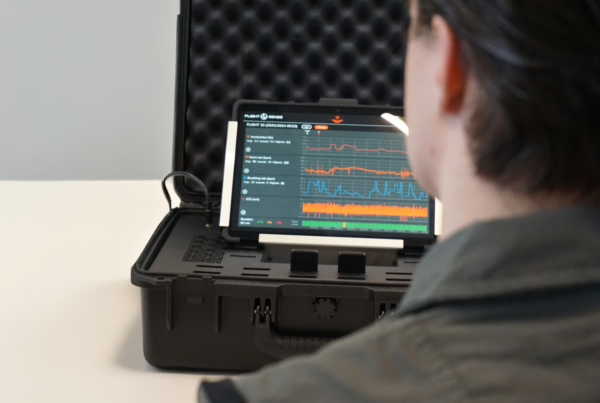
- Dry electrode ECG, HRV, and respiration sensing optimised for high-movement conditions, as demonstrated in the Flight Sense System
- Haptic feedback systems for silent, screen-free alert delivery, proven in the Mission Navigation Belt for the Royal Netherlands Army
- Proprietary TacOS firmware platform that manages sensor power, data processing, and communication efficiently within tight battery constraints
- End-to-end development from feasibility check through to certified, production-ready product, with experience navigating both military certification and medical device regulation
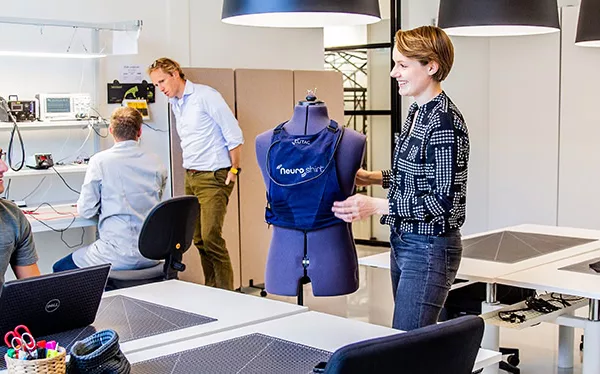
- In-house 180m² Wearables Lab enabling rapid iteration without the delays of external prototyping
If you are developing a soldier health monitoring system, a military biosensor platform, or any wearable that needs to perform where standard solutions fall short, we would like to hear about the challenge you are trying to solve. Get in touch with the Elitac Wearables team to discuss your project requirements and find out how we can accelerate your development.
Related Articles
- How do you choose a development partner for smart textiles?
- What are the biggest challenges in electronics integrated into textiles?
- How do wearables help treat battlefield injuries faster?
- What are the security considerations for haptic feedback wearables?
- How do you maintain competitive advantage when your wearable product is built by a third-party developer?