Soldier surveillance wearables raise serious ethical concerns, including questions about data ownership, informed consent, privacy, and the potential misuse of biometric information in performance evaluations or disciplinary processes. These concerns are not hypothetical. As military organisations adopt increasingly sophisticated wearable technology, from haptic navigation systems to biosignal monitors, the ethical frameworks governing their use struggle to keep pace with the technology itself. The questions below address the most pressing issues that defence institutions, technology developers, and policymakers need to grapple with.
Who owns the data collected from military wearables?
Data collected from military wearables is typically owned by the armed forces or the government institution deploying the technology, not by the individual soldier. However, ownership is rarely straightforward. The device manufacturer, the software platform provider, and the contracting state may each hold rights to different layers of data, creating ambiguity that puts the soldier’s interests last.
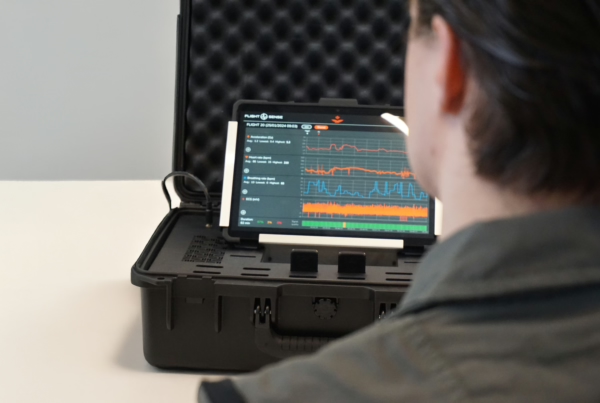
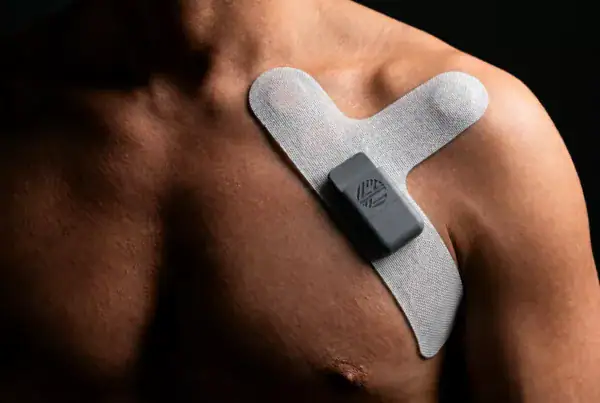
This ambiguity matters because military wearables can collect extraordinarily sensitive information. A biosignal wearable measuring heart rate variability, respiration, and electrodermal activity is not just tracking fitness. It is generating a continuous record of a person’s physiological stress response, fatigue levels, and potentially their psychological state under pressure.
In practice, clear data ownership frameworks are often absent at the point of deployment. Defence procurement tends to focus on capability and reliability rather than data governance. By the time a wearable system is fielded, the question of who controls the data, who can access it, and under what conditions it can be shared is frequently unresolved. This is a structural problem, not just a policy gap, and it needs to be addressed before deployment, not after.
How does continuous biometric monitoring affect soldier autonomy?
Continuous biometric monitoring reduces soldier autonomy by creating a state of persistent observation that shapes behaviour even when no direct action is taken on the data. When soldiers know their physiological state is being recorded at all times, it introduces a form of self-censorship. They may suppress natural stress responses, avoid reporting injuries, or alter their behaviour to appear more capable than they are, all of which can be operationally dangerous.
This is sometimes described as the chilling effect of surveillance. In civilian contexts, research into workplace monitoring has consistently shown that continuous observation changes behaviour in ways that are not always aligned with the goals of the monitoring programme. In a military context, where trust and psychological safety are operationally critical, the stakes are considerably higher.
There is also a subtler autonomy concern. When biometric data is used to make decisions about a soldier’s deployment, rest periods, or medical status without their active input, the soldier is effectively reduced to a data source rather than a decision-making participant. Even well-intentioned systems can erode the sense of agency that is central to effective soldiering. Designing monitoring systems that inform rather than override human judgement is not just an ethical preference. It is an operational requirement.
What are the risks of using wearable data in performance evaluations?
Using wearable data in soldier performance evaluations carries significant risks, including misinterpretation of biometric signals, unfair penalisation of natural physiological variation, and the creation of incentives that undermine honest health reporting. Biometric data is not a direct measure of performance. It is a proxy, and proxies can mislead.
Heart rate variability, for example, can reflect fatigue, dehydration, illness, or simply individual biological difference. Using such metrics to evaluate whether a soldier is performing adequately introduces a layer of pseudoscientific precision that the data does not actually support. A soldier with a naturally lower HRV baseline could be flagged as underperforming or stressed when they are functioning entirely normally for their physiology.
Beyond the technical limitations, there is a more immediate human risk. If soldiers believe their wearable data could negatively affect their career progression, they will be incentivised to hide health problems, push through injuries, or avoid disclosing mental health concerns. This is the opposite of what a responsible military health programme should achieve. Performance evaluation frameworks that incorporate biometric data need to be designed with explicit safeguards against these outcomes, including independent medical interpretation, transparent criteria, and the right to contest data-driven assessments.
Can soldiers consent to surveillance wearables in a military context?
Meaningful informed consent is extremely difficult to achieve in a military context, where the power differential between the institution and the individual soldier is significant and where refusal to comply with equipment requirements may carry professional or disciplinary consequences. This does not mean consent is impossible, but it does mean that simply asking a soldier to sign a form is not sufficient.
True informed consent requires that the individual understands what data is being collected, how it will be used, who will have access to it, and what the consequences of refusal are. In a military setting, the last of these is often the most problematic. If refusing to wear a monitoring device results in being removed from a unit, denied a deployment, or flagged as non-compliant, the consent is coerced rather than freely given.
Some ethicists argue that military wearable surveillance programmes should be treated similarly to medical procedures, requiring independent ethical review, staged consent processes, and robust mechanisms for soldiers to raise concerns without fear of reprisal. Others suggest that collective negotiation through military representative bodies offers a more realistic path to protecting individual interests. What is clear is that the current approach in most defence institutions, which treats wearable adoption as a straightforward equipment decision rather than an ethical one, is inadequate.
What happens to soldier biometric data after a mission ends?
What happens to soldier biometric data after a mission ends is one of the least regulated areas of military wearable technology. In most current deployments, there is no standardised policy governing data retention periods, deletion protocols, or the conditions under which historical biometric data can be accessed or repurposed. This creates long-term risks that extend well beyond the mission itself.
Biometric data collected during active service could theoretically be used years later in insurance assessments, veterans’ benefit disputes, or legal proceedings. It could be accessed by future employers, particularly in security-sensitive roles where past physiological performance might be considered relevant. In the worst case, it could be exposed through a data breach, with consequences that are difficult to reverse because biometric identifiers, unlike passwords, cannot be changed.
The principle of data minimisation, a cornerstone of modern data protection frameworks including the EU’s General Data Protection Regulation, holds that data should only be retained for as long as it is needed for its original purpose. Applying this principle rigorously to military wearable data would require defining that purpose clearly at the outset, setting enforceable retention limits, and establishing secure deletion protocols. Most military wearable programmes have not yet reached this level of governance maturity, and that gap represents a genuine long-term risk to the soldiers whose data is being held.
How should militaries govern ethical wearable surveillance programmes?
Militaries should govern ethical wearable surveillance programmes through a combination of pre-deployment ethical review, transparent data governance frameworks, independent oversight, and ongoing consultation with soldiers and their representative bodies. Governance cannot be an afterthought. It needs to be built into the procurement and development process from the start.
A credible governance framework for military wearable surveillance should address the following areas:
- Purpose limitation: Define precisely what the wearable data will be used for and enforce those boundaries. Data collected for health monitoring should not be accessible for performance management without separate authorisation.
- Data ownership and access rights: Establish clearly who owns the data, who can access it, under what conditions, and with what level of individual notification.
- Retention and deletion: Set enforceable limits on how long data is stored and mandate secure deletion once the retention period ends.
- Independent oversight: Appoint a body with genuine authority to audit compliance, investigate complaints, and recommend changes. Self-regulation by the deploying institution is insufficient.
- Soldier participation: Involve soldiers and their representative organisations in the design of monitoring programmes, not just their implementation.
- Transparency: Ensure soldiers have access to their own data, understand how it is being used, and have a clear process to challenge decisions made on the basis of it.
Technology developers also carry responsibility here. Wearables designed for military use should be built with privacy and governance requirements as core design constraints, not features added at the end. This means considering data minimisation, on-device processing where possible, and robust access controls from the earliest stages of development.
How Elitac Wearables approaches ethical design in military wearable development
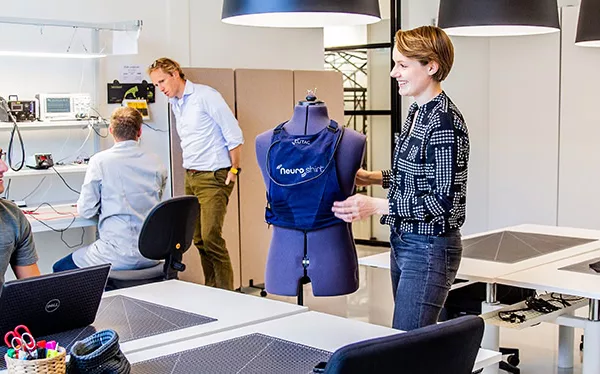
Designing wearables for defence use demands more than technical capability. It requires a development partner that treats ethical considerations as engineering constraints, not compliance checkboxes. Elitac Wearables brings that perspective to every military and high-stakes wearable project it undertakes.
Working closely with the Dutch Ministry of Defence on the Mission Navigation Belt, Elitac Wearables developed a haptic feedback system that keeps soldiers’ hands, eyes, and ears free without requiring continuous biometric monitoring. The design philosophy was deliberately focused: deliver operationally meaningful information through haptics, and collect only what is necessary to achieve that outcome. That is what responsible wearable design looks like in practice.
When organisations approach Elitac Wearables with military or safety-critical wearable projects, the development process addresses the following from day one:
- Defining the minimum necessary data collection to achieve the operational goal
- Selecting sensing technologies and firmware architectures that support on-device processing and limit unnecessary data transmission
- Designing user interaction models that keep the wearer informed and in control
- Advising on certification pathways and governance requirements relevant to the deployment context
- Building for real-world conditions, including the human factors that determine whether a wearable is actually used as intended
If you are developing a wearable for military, safety, or high-stakes professional use and need a development partner that understands both the technical and ethical dimensions of the challenge, get in touch with Elitac Wearables to discuss your project.
Related Articles
- How do children and elderly users experience haptic feedback wearables differently?
- What is haptic feedback in wearables?
- How do haptic feedback wearables support remote collaboration?
- What are the design challenges of building haptic wearables?
- How do you ensure your wearable product integrates with existing enterprise systems?