Yes, wearables can detect soldier fatigue in real time, and the technology to do so reliably is more mature than many defence procurement teams realise. By combining biosignal sensors with intelligent onboard processing, modern military wearables can track physiological markers that correlate directly with cognitive and physical fatigue states. The sections below unpack how that detection works, where the technical challenges lie, and which operational contexts stand to benefit most.
What physiological signals indicate soldier fatigue?
The clearest physiological indicators of soldier fatigue are changes in heart rate variability (HRV), respiration rate, skin conductance, and movement patterns. These signals reflect the body’s shift from alert, controlled function toward a fatigued state, and they can be measured continuously without requiring any action from the wearer.
HRV is particularly valuable. When a soldier is well-rested and mentally sharp, the interval between heartbeats varies in a healthy, adaptive pattern. As fatigue accumulates, that variability decreases in a measurable and predictable way. Respiration rate also climbs as the body works harder to maintain output under load, while skin conductance picks up changes in autonomic nervous system activity that often precede visible signs of exhaustion.
Movement data adds another layer. Accelerometers and inertial measurement units (IMUs) can detect subtle changes in gait, posture, and reaction timing. A soldier whose stride is shortening or whose coordination is degrading is showing fatigue in their movement signature, even if they are not consciously aware of it. Combining these signals, rather than relying on any single one, is what makes real-time fatigue detection credible rather than speculative.
How do wearable sensors collect fatigue data in the field?
Wearable sensors collect fatigue data through continuous, body-worn measurement of physiological and movement signals, typically using dry electrodes for biosignal capture and IMUs for motion tracking. The data is processed onboard, transmitted to a base unit or command interface, or stored locally for post-mission analysis.
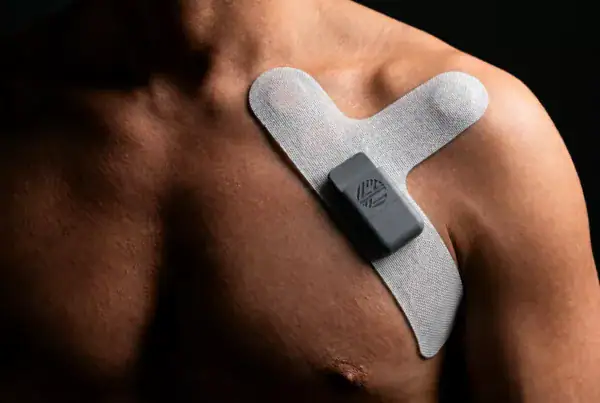
Dry electrode technology is critical in military contexts. Unlike clinical wet electrodes that require gel and careful skin preparation, dry electrodes maintain signal quality during high-movement conditions, sweat exposure, and extended wear. Placing these electrodes on the chest, wrist, or integrated into a garment allows continuous ECG and HRV monitoring without disrupting operational behaviour.
IMUs embedded in the garment or attached to the body capture acceleration and orientation data at high frequency. When combined with biosignal data, they help distinguish genuine fatigue signals from motion artefacts, which is one of the most persistent technical problems in field-deployed biosensor systems. The sensor suite does not need to be large or obtrusive. Advances in miniaturised electronics and textile integration mean that a full multi-sensor system can be built into a vest or undershirt with minimal added weight or bulk.
How does real-time fatigue detection actually work?
Real-time fatigue detection works by running physiological signal data through algorithms that identify patterns associated with fatigue states, then generating an alert or status output when those patterns exceed defined thresholds. The processing can happen on the device itself, at a nearby hub, or in a cloud-connected system, depending on the operational constraints.
The algorithm layer is where the real complexity lives. Raw sensor data is noisy, especially in field conditions. Signal processing filters out artefacts caused by movement, environmental interference, and electrode contact variation. What remains is a cleaned signal that can be compared against the individual soldier’s baseline, established at the start of a mission or during training, and against population-level fatigue models.
Machine learning approaches are increasingly used to improve detection accuracy. By training models on labelled physiological data from soldiers in known fatigue states, these systems learn to recognise the specific combination of signal changes that predicts performance degradation. The output can be as simple as a colour-coded status indicator visible to a commander, or as nuanced as a predicted time-to-impairment estimate that informs rotation and rest decisions.
Haptic feedback adds another dimension. Rather than relying on a screen or audio alert, a soldier or their team leader can receive a discreet vibration pattern that communicates fatigue status without breaking situational awareness. This is the same principle behind silent, screen-free communication systems already deployed in military navigation contexts.
What are the biggest technical challenges in military fatigue wearables?
The biggest technical challenges in military fatigue wearables are signal quality under movement, battery life during extended missions, ruggedisation for harsh environments, and the accuracy of fatigue algorithms when individual variation is high. Each of these can undermine a system that performs well in a lab but fails in the field.
Signal quality and motion artefacts
Biosignal sensors on a moving body pick up electrical and mechanical noise that can mask or mimic the physiological signals they are supposed to measure. A soldier running, crawling, or carrying heavy equipment generates movement artefacts that corrupt ECG and EMG readings if the sensor system is not specifically designed for high-movement conditions. Dry electrode design, sensor placement, and signal processing algorithms all need to be co-developed to address this, not treated as separate problems.
Battery life and power management
A wearable that runs out of power six hours into a twelve-hour patrol is operationally useless. Military missions do not offer convenient recharging opportunities, which means battery performance has to be engineered at the system level. This means optimising firmware to avoid keeping components active when they are not needed, selecting sensors and radios that match actual usage patterns, and designing data handling that does not drain power through unnecessary transmission cycles. Increasing battery size is rarely the right answer because it adds weight and may require enclosure redesign. Structured optimisation across hardware, firmware, and data architecture consistently delivers better results.
Ruggedisation and certification
Military wearables must survive conditions that consumer and even medical wearables are not designed for. Extreme temperatures, water immersion, physical impact, and electromagnetic interference all need to be accounted for in the hardware and enclosure design. Certification for military use adds further complexity, requiring documentation, testing, and compliance processes that must be integrated into the development plan from the start, not bolted on at the end.
How accurate are current wearable fatigue detection systems?
Current wearable fatigue detection systems can achieve meaningful accuracy for detecting significant fatigue states, particularly when using multi-signal fusion and individual baseline calibration. They are less reliable at detecting subtle early-stage fatigue or distinguishing between fatigue types, such as cognitive versus physical exhaustion, without more sophisticated algorithm development.
Accuracy improves substantially when the system is calibrated to the individual rather than relying solely on population averages. A soldier’s resting HRV, baseline respiration rate, and typical movement signature vary considerably from person to person. A system that accounts for individual variation will outperform one that applies a universal threshold, particularly in detecting the early signs of fatigue before performance has visibly degraded.
It is also worth being direct about the current limitations. No wearable system yet provides the kind of fatigue detection accuracy that would support fully automated operational decisions. What current systems do well is flag risk, prompt human review, and provide commanders with objective data to supplement their own observations. That is genuinely valuable, even if it falls short of the precision that continued research and development will eventually deliver.
Which military and defence applications benefit most from fatigue wearables?
The military and defence applications that benefit most from real-time fatigue wearables are extended patrol operations, vehicle and aircraft crew monitoring, special forces mission planning, and training programmes where load management directly affects readiness and injury prevention.
Extended patrols are an obvious fit. When soldiers operate for many hours without rotation, fatigue accumulates in ways that degrade decision-making, reaction time, and situational awareness before any outward sign appears. A wearable system that gives a commander objective, real-time fatigue data enables better rotation decisions and reduces the risk of critical errors at the wrong moment.
Vehicle and aircraft crews face a different version of the same problem. Cognitive fatigue in a tank commander or helicopter pilot may not manifest as physical exhaustion, but it creates the same risk of impaired judgement. Biosignal monitoring adapted for seated, lower-movement contexts can track HRV and respiration continuously, providing early warning without interfering with the crew’s operational role.
Training environments offer perhaps the most immediate opportunity. Monitoring fatigue during exercises allows training programmes to be calibrated to individual soldiers’ physiological responses, reducing overtraining injuries and ensuring that high-intensity training actually builds capacity rather than degrading it. The data gathered during training also helps build the individual baselines that make field-deployed fatigue detection far more accurate.
How Elitac Wearables helps with soldier fatigue detection
Developing a wearable that reliably detects soldier fatigue in real-time operational conditions is not a problem that off-the-shelf components or single-discipline suppliers can solve. It requires dry electrode technology that maintains signal quality under movement, firmware that keeps battery drain manageable across long missions, haptic output that communicates without breaking situational awareness, and a development process that integrates all of these without handing the project across fragmented teams.
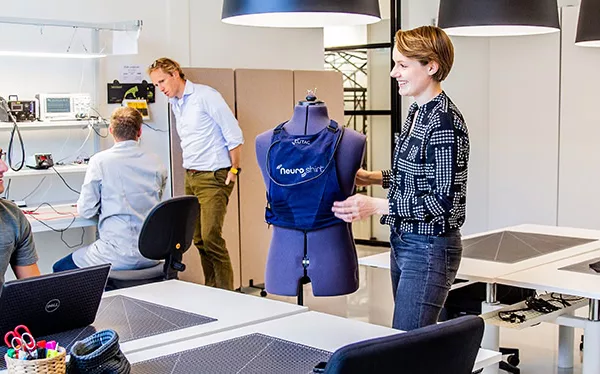
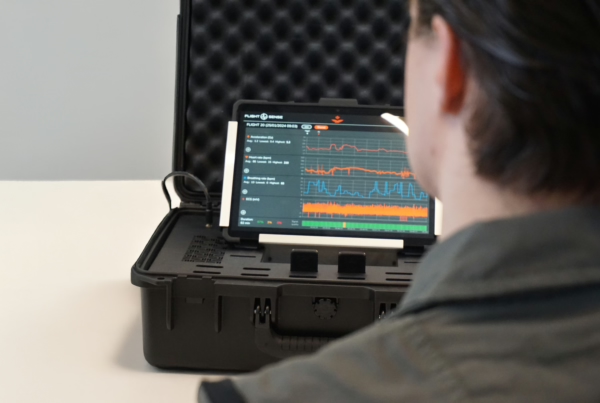
That is precisely where Elitac Wearables operates. With a multi-disciplinary team covering biosignal sensing, embedded hardware, firmware, textile integration, and haptic feedback, we develop military and defence wearables from proof of concept through to a field-ready product. Our Flight Sense System demonstrates this directly: a multi-biosensor wearable built for extreme conditions that measures ECG, HRV, respiration, and acceleration using advanced dry-electrode technology optimised for high-movement environments. Our Mission Navigation Belt, developed in collaboration with the Dutch Ministry of Defence and delivered to the Royal Netherlands Army, shows that wearables built for demanding operational contexts can be discreet, reliable, and genuinely useful under pressure.
If you are working on a soldier fatigue monitoring system or exploring what real-time physiological sensing could do for your defence application, here is what we bring to that challenge:
- Dry electrode biosignal sensing designed for high-movement, field conditions, not clinical settings
- Multi-signal fusion combining ECG, HRV, respiration, and IMU data for more accurate fatigue state detection
- Haptic feedback integration for silent, screen-free status communication in operational environments
- Battery performance optimisation at the system level, extending mission endurance without adding weight
- Military certification guidance built into the development process from the start, not added at the end
- End-to-end development from feasibility check through to first series production, under one roof
If your organisation is developing or evaluating wearable fatigue detection for military or defence use, we are ready to have a technical conversation about what is actually achievable and what it takes to get there. Get in touch with the Elitac Wearables team to start that discussion.
Related Articles
- What is electronics integrated into textiles?
- What is the difference between military and commercial wearables?
- Can haptic feedback wearables be used in medical applications?
- What happens when wearable product development goes over budget, and how do you prevent it?
- What is the difference between a prototype and an MVP in wearable development?