

Smart textiles and traditional wearables are not the same thing, even though both categories put technology on the body. Smart textiles integrate electronic function directly into the fabric itself, using conductive yarns, printed circuits, or embedded sensors woven or bonded into the textile structure. Traditional wearables attach electronic hardware to the body as a separate device, typically housed in rigid or semi-rigid enclosures worn on the wrist, chest, or head. The distinction matters enormously for product designers, because each approach carries fundamentally different engineering requirements, user experience trade-offs, and development challenges. This article unpacks those differences question by question, covering how each technology works, where each performs best, and how to choose between them.
How do smart textiles actually work?
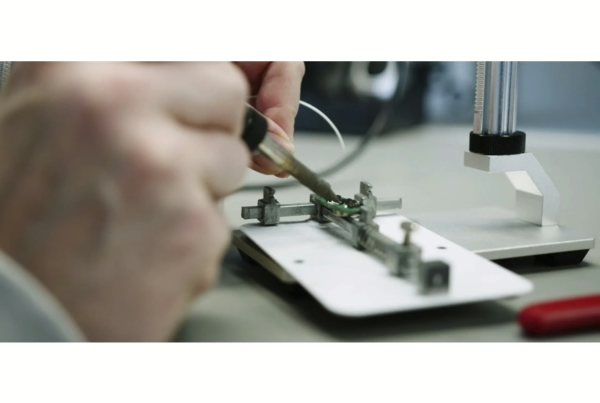
Smart textiles work by embedding electronic functionality into the fabric structure itself, rather than attaching a separate device to clothing or the body. Conductive yarns replace or supplement conventional threads to carry electrical signals, while sensors, actuators, or printed circuit traces are integrated directly into the textile during manufacturing or post-processing. The result is a garment that senses, responds, or communicates as part of its material form.
The specific integration technique chosen depends on the application, the required washability, and the complexity of the electronic function. The three most common approaches are:
- Conductive yarns: Metallic or carbon-based threads woven or knitted into the fabric to create signal pathways or electrode surfaces. Widely used for ECG and EMG sensing in body-worn garments.
- Printed electronics: Conductive inks screen-printed or inkjet-deposited onto textile substrates to form circuits, antennas, or sensor pads. Suitable for flat, low-profile applications where flexibility is critical.
- Modular electronics attachment: Discrete electronic components or modules connected to the textile via snap connectors, flexible PCBs, or overmolded interfaces. This approach makes components removable for washing and replacement.
What makes smart textile engineering genuinely difficult is that textiles are dynamic substrates. They stretch, compress, flex, and absorb moisture. Any electronic element integrated into them must tolerate those mechanical stresses without losing signal integrity or failing mechanically. Selecting the right integration technique for a given body location, movement profile, and washing requirement is one of the most consequential decisions in smart textile development.
What counts as a traditional wearable device?
A traditional wearable device is a self-contained electronic product worn on the body, where the electronics are housed in a rigid or semi-rigid enclosure separate from any clothing or textile carrier. The device attaches to the body directly, via a strap, clip, adhesive patch, or harness, and the fabric or strap serves only as a mounting mechanism, not as a functional electronic component.
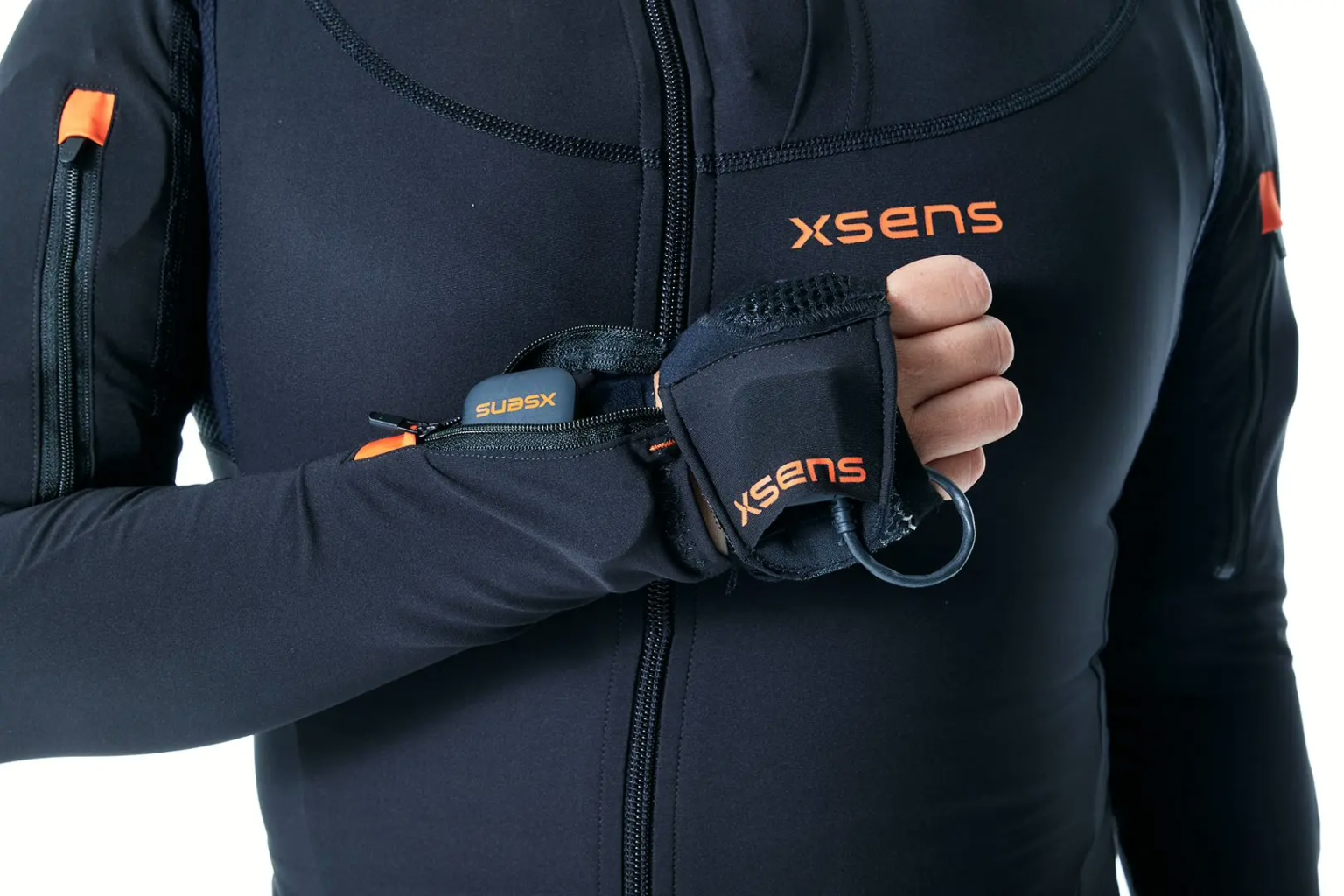
Familiar examples include chest-strap heart rate monitors, GPS tracking units worn on the wrist or arm, hearing aids, and motion capture nodes clipped to a suit. In professional and industrial contexts, traditional wearables include medical-grade monitoring patches, military navigation devices, and industrial safety sensors. Elitac’s Mission Navigation Belt is a strong example: haptic actuators are mounted within a structured belt assembly, with the textile acting as a carrier rather than an active electronic element.
Traditional wearables typically offer advantages in repairability, component replacement, and regulatory traceability, since the electronics are physically discrete and accessible. Their trade-off is bulk, rigidity, and the pressure points or discomfort that can arise when hard enclosures press against soft tissue during extended wear or high-movement activity.
What are the key differences between smart textiles and traditional wearables?
The core difference between smart textiles and traditional wearables is where the electronics live. In smart textiles, electronic function is distributed through the fabric. In traditional wearables, electronics are concentrated in a discrete device. That structural difference cascades into significant divergence across comfort, durability, manufacturing complexity, and development cost.
Form factor and user comfort
Smart textiles conform naturally to body geometry and move with the wearer because the electronic elements are part of the fabric. This makes them well-suited to applications requiring continuous skin contact over large surface areas, such as ECG monitoring across the chest or pressure sensing across a foot. Traditional wearables are more localized and rigid. They can be highly precise at a single measurement point but introduce pressure, friction, and heat at the contact zone during extended wear.
Durability and maintenance
Traditional wearables are generally more robust to environmental stress. The enclosure protects components from sweat, impact, and contamination. Smart textiles face a more hostile environment: conductive yarns can corrode, printed traces can crack under repeated flexion, and wash cycles degrade connections over time. Designing a smart textile for a realistic wash-life of fifty or more cycles requires careful material selection and connection engineering that adds significant development complexity.
Development and certification complexity
Electronics integrated into textiles introduce material interactions that simply do not exist in traditional wearable design. A firmware bug in a traditional wearable is a software problem. A signal artifact in a smart textile might be a firmware issue, a yarn resistance variation, a garment fit problem, or a skin-electrode impedance change caused by sweat. Isolating the root cause requires expertise across electronics, textiles, and signal processing simultaneously. Certification pathways for smart textiles in medical applications also require demonstrating that the textile’s electronic function remains stable across the garment’s expected life, adding to the validation burden.
Which industries benefit most from smart textiles over traditional wearables?
Smart textiles deliver the greatest advantage in applications where continuous, distributed sensing over a large body surface is required, where device visibility or bulk is a problem, or where the garment itself is already part of the use case. Medical monitoring, sports performance analysis, and occupational safety are the sectors where electronics integrated into textiles most clearly outperform traditional wearable approaches.
In medical rehabilitation and monitoring, smart textiles enable continuous ECG, EMG, or respiratory monitoring without the adhesive patches or rigid chest straps that cause discomfort during extended hospital stays or home monitoring programs. Dry-electrode textile garments remove the need for gel preparation and allow clinical-grade data collection during natural daily activity.
In sports performance, compression garments with embedded IMU sensors or pressure-sensitive insoles provide biomechanical data that a wrist-worn device simply cannot capture. Distributed sensing across the limb or foot gives coaches and athletes information about movement quality rather than just aggregate metrics.
In occupational safety and workwear, smart textiles can monitor physiological load, detect hazardous postures, or sense environmental conditions without adding a separate device that workers must remember to charge, attach, or replace. When the garment is already mandatory PPE, embedding the sensing function into it removes the compliance burden entirely.
Traditional wearables remain the better choice where precise single-point measurement, device replaceability, or long battery life are priorities, and where the wearing population is unlikely to tolerate a specialized garment.
What are the biggest technical challenges in developing smart textiles?
The biggest technical challenges in smart textile development are signal integrity under movement, durability through washing and wear, power delivery across a flexible substrate, and the absence of standardized manufacturing processes that electronics engineers can rely on. Each of these problems requires expertise that spans both the electronics and textile disciplines simultaneously.
Motion artifacts are among the most persistent problems in textile-based biosignal sensing. When conductive yarn electrodes move against skin during exercise, they generate electrical noise that can overwhelm the physiological signal being measured. Solving this requires careful electrode geometry, material selection, garment fit engineering, and signal processing algorithms that work together as a system. A purely electronics-led approach, or a purely textile-led approach, will not resolve it.
Washability and connection reliability present a different class of challenge. The interface between the textile electronic elements and any removable electronic module is a mechanical and electrochemical stress point. Snap connectors corrode. Printed traces crack at flex points. Conductive yarns lose conductivity as metallic coatings abrade. Designing a garment that maintains electronic performance across its expected service life requires wash testing, accelerated aging, and iterative material refinement that adds significant time and cost to development.
Power management in a distributed textile system is genuinely difficult. Routing power across a garment without creating hot spots, voltage drops, or electromagnetic interference requires careful conductor sizing and layout. Battery placement must balance energy capacity against weight, comfort, and the need to remove the power source before washing.
Finally, manufacturing repeatability is a challenge that catches many teams off guard. Textile manufacturing tolerances are wider than electronics manufacturing tolerances. A conductive yarn path that works perfectly in a prototype garment may show resistance variation of twenty percent or more across a production batch, depending on tension, stitching density, and fabric stretch during assembly. Designing electronic systems that are tolerant of those variations from the outset is essential.
When should a product use smart textiles instead of a traditional wearable?
A product should use smart textiles instead of a traditional wearable when the application genuinely requires distributed sensing or actuation across a body surface, when bulk or device visibility would undermine user adoption, or when the garment itself is already part of the product concept. If a rigid enclosure can do the job without compromising comfort or compliance, a traditional wearable is often the lower-risk, faster-to-market choice.
The decision is rarely purely technical. It involves user behavior, regulatory pathway, manufacturing readiness, and total development cost. A few practical criteria that point toward smart textiles:
- The sensing or actuation function needs to cover a large or irregular body surface, such as the torso, thigh, or foot.
- The target user group will not tolerate an additional device but will wear a garment that looks and feels like normal clothing or PPE.
- Continuous skin contact is required for signal quality, and adhesive patches or straps are clinically or practically unacceptable.
- The product roadmap includes integration with existing workwear, sports apparel, or medical garments where adding a separate device creates adoption friction.
Criteria that point toward a traditional wearable instead:
- The measurement is localized to a single body point where a small, precise device performs well.
- Battery life requirements exceed what can be packaged into a garment-integrated solution at acceptable weight.
- The regulatory pathway requires a clearly demarcated medical device with defined, replaceable components.
- The development timeline or budget cannot absorb the additional complexity of textile integration.
The honest answer is that many successful products combine both approaches: a garment that positions electrodes or haptic actuators precisely, paired with a removable electronics module that handles processing, storage, and communication. Getting that combination right requires someone who understands both sides of the interface deeply.
How Elitac Wearables helps with smart textile development
Choosing between smart textiles and traditional wearables is only the first decision. Executing the chosen approach without losing months to dead ends is where most teams struggle. Elitac Wearables provides end-to-end wearable development for organizations that need both the textile expertise and the electronics engineering in the same room, working from the same brief.
- Integration technique selection: Conductive yarns, printed electronics, or modular attachment, chosen based on your application, wash requirements, and body location.
- Biosignal sensing in textile contexts: Dry electrode selection, motion artifact mitigation, and signal processing designed for real-world movement conditions.
- Full hardware and firmware development: Custom PCB design, power management optimization, and the proprietary TacOS firmware platform to accelerate development.
- Certification guidance: MDR compliance for medical wearables, CE marking, and military certification requirements built into the development process from the start.
- Rapid demonstrators: Functional prototypes built to validate user interaction and comfort before committing to production tooling.
If your project sits at the boundary between electronics and textiles and standard solutions are not cutting it, get in touch with the Elitac team to discuss where you are in development and what the right next step looks like.