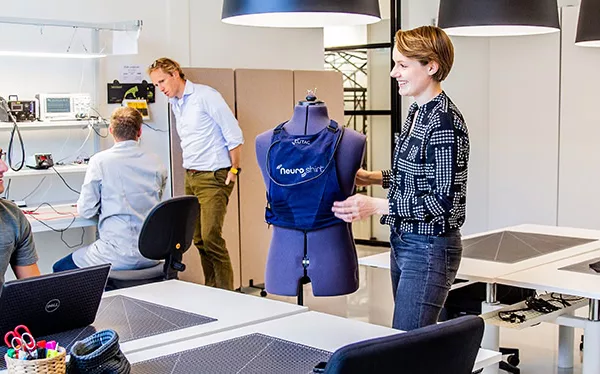


Military wearables collect a broad range of data during operations, including physiological signals such as heart rate, respiration, and core body temperature; location and movement data from GPS and inertial sensors; and environmental readings such as ambient temperature, altitude, and exposure to hazardous substances. The exact data collected depends on the mission profile and the specific system deployed, but modern soldier monitoring technology is increasingly capable of capturing all of these simultaneously. The sections below break down each data category, how it is transmitted, and the security risks that come with it.
What types of sensors are used in military wearables?
Military wearables use a combination of biosignal sensors, inertial measurement units, GPS modules, and environmental sensors. Each sensor type serves a distinct purpose: biosignal sensors monitor the soldier’s physiological state, inertial sensors track movement and orientation, GPS provides positional data, and environmental sensors detect conditions in the surrounding area. Many military-grade systems integrate several of these into a single wearable platform.
The most common sensor types found in military wearable technology include:
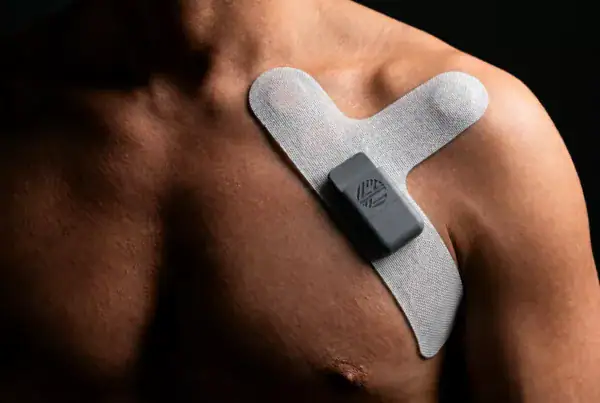
- ECG and heart rate sensors: Measure cardiac activity and stress indicators such as heart rate variability (HRV). Dry electrode configurations are typically used in high-movement military contexts to reduce motion artefacts and eliminate the need for conductive gel.
- Respiration sensors: Track breathing rate and depth, which can indicate fatigue, altitude sickness, or the onset of heat stress.
- Inertial measurement units (IMUs) and accelerometers: Detect movement, posture, orientation, and impact events. These are central to gait analysis and fall detection.
- GPS and GNSS modules: Provide real-time geolocation, route tracking, and position sharing with command units.
- Temperature sensors: Monitor both skin and core body temperature to flag heat exhaustion or hypothermia risk.
- Environmental sensors: Detect ambient conditions including air quality, altitude, barometric pressure, and, in some systems, chemical or radiological exposure.
- Galvanic skin response (EDA) sensors: Measure electrodermal activity as a proxy for stress or cognitive load.
The challenge in military applications is not sensor availability — it is making these sensors work reliably on a moving body, in extreme conditions, while integrated into clothing or load-bearing equipment. Dry electrode technology, robust textile integration, and firmware-level signal processing are what separate functional military biosensors from laboratory prototypes.
What physiological data do military wearables monitor?
Military wearables monitor physiological data including heart rate, heart rate variability, respiration rate, skin and core body temperature, blood oxygen saturation, and electrodermal activity. Together, these signals give commanders and medical personnel a real-time picture of each soldier’s physical and cognitive state during operations.
The primary goal of physiological monitoring in military contexts is early detection of performance degradation before it becomes a safety incident. Fatigue, heat stress, dehydration, and psychological overload all produce measurable physiological signatures before a soldier is visibly impaired. Wearable sensors make it possible to detect these signatures continuously and non-invasively.
Cardiovascular and stress indicators
Heart rate and HRV are among the most informative signals available from a wearable sensor. Elevated resting heart rate combined with reduced HRV is a reliable indicator of physiological stress or insufficient recovery. In operational settings, these signals help identify soldiers who are approaching their physical limits. ECG-capable wearables go further, capturing full cardiac waveform data that can flag arrhythmias or other acute cardiac events in the field.
Thermal and respiratory monitoring
Core body temperature is a critical variable in hot or physically demanding environments. Wearables that estimate core temperature — either through skin sensors combined with algorithms or ingestible thermometers cross-referenced with surface readings — can provide early warning of heat stroke risk. Respiration rate monitoring adds another layer: rapid, shallow breathing is a consistent marker of both physical exertion and acute psychological stress. Combined with heart rate data, respiratory signals help build a more complete picture of a soldier’s real-time physiological load.
How do military wearables track location and movement?
Military wearables track location using GPS or GNSS receivers and track movement using inertial measurement units (IMUs) that detect acceleration, rotation, and orientation. These two systems are typically used together: GPS provides absolute position, while IMU data fills gaps when GPS signal is lost — for example, inside buildings or in GPS-denied environments.
Location tracking in military wearables serves several operational functions. At the individual level, it enables navigation without visual or audio cues — a capability that Elitac Wearables developed directly for the Royal Netherlands Army through the Mission Navigation Belt, which delivers silent, screen-free navigation via haptic feedback, keeping soldiers’ hands, eyes, and ears free. At the unit level, real-time position data allows commanders to monitor troop distribution, coordinate movements, and respond to casualties without radio communication that could compromise operational security.
Movement data from IMUs goes beyond simple step counting. In military applications, IMU data is used to analyse gait patterns, detect falls or impacts, assess fatigue through changes in movement efficiency, and monitor load distribution across the body. When combined with machine learning algorithms, this data can identify behavioural signatures associated with injury risk or cognitive fatigue before the soldier is aware of the change themselves.
Dead reckoning — the use of IMU data to calculate position when GPS is unavailable — is a particularly important capability in urban warfare or underground environments. Accuracy degrades over time without GPS correction, so the firmware managing these systems must balance update frequency against battery consumption, a trade-off that requires careful system-level optimisation.
What environmental and situational data can wearables capture?
Military wearables can capture environmental data including ambient temperature, humidity, altitude, barometric pressure, UV exposure, and, in advanced systems, the presence of chemical, biological, radiological, or nuclear (CBRN) agents. Situational data — such as proximity to other soldiers or acoustic events — can also be integrated depending on the system design.
Environmental sensing adds an important dimension to soldier monitoring that physiological data alone cannot provide. A soldier’s core temperature reading means something different at 45°C ambient heat than at 15°C. Altitude data contextualises respiratory readings. Barometric pressure changes can signal incoming weather or rapid altitude shifts that affect performance and decision-making.
More specialised military wearables incorporate chemical or gas sensors capable of detecting toxic industrial chemicals or warfare agents. These are typically integrated into protective garments rather than standalone wrist-worn devices, given the sensor size and power requirements involved. The textile integration challenge here is significant: the sensor must maintain contact with ambient air while the garment remains sealed against the hazardous environment it is designed to protect against.
Acoustic sensors embedded in wearables can detect gunshots, explosions, or other acoustic events and provide directional information to the wearer — a capability that complements haptic feedback systems. When a directional audio event is detected, the wearable can alert the soldier through vibration patterns that indicate the event’s bearing, without requiring the soldier to look at a screen or listen for a tone.
How is the data from military wearables transmitted and stored?
Data from military wearables is transmitted using short-range wireless protocols such as Bluetooth Low Energy or ANT+ to a body-worn hub, which then relays aggregated data to command systems via encrypted radio or mesh network communication. Data is typically stored locally on the device as a buffer and transmitted in compressed packets to reduce bandwidth and power consumption.
The architecture of military data transmission reflects a fundamental tension: the more data you send, the more power you consume, the more detectable you become, and the greater the risk of interception. Military wearable systems therefore prioritise selective transmission — sending processed summaries or threshold-triggered alerts rather than continuous raw sensor streams.
On-device processing is increasingly common in advanced military wearables. Rather than transmitting raw ECG or IMU data, the wearable’s embedded firmware processes signals locally and transmits only derived metrics — heart rate, fatigue index, or position coordinates. This approach reduces radio frequency emissions, extends battery life, and limits the data exposed if a device is captured. Firmware architecture, including how and when data is buffered, compressed, and transmitted, is a core engineering challenge in military wearable development.
Storage is typically handled in two layers: a local flash memory buffer on the wearable itself, which retains data if connectivity is lost, and a centralised server or tactical cloud system that aggregates data from multiple soldiers. Data retention policies, encryption standards, and access controls at both layers are subject to military security protocols that vary by nation and mission classification.
What are the privacy and security risks of collecting soldier data?
The primary security risks of collecting biometric and location data from military wearables include interception of transmitted data, physical capture of devices containing stored data, and the potential for adversaries to use behavioural or physiological patterns to identify, track, or predict the actions of individual soldiers. Privacy risks relate to the long-term storage and potential misuse of highly sensitive personal health data.
Biometric data collected by military wearables is among the most sensitive data a defence organisation handles. Heart rate patterns, stress responses, sleep quality, and location history combine to create a detailed profile of an individual soldier’s physical and psychological state. If that data is intercepted, it could be used to identify high-stress moments in an operation, predict decision-making patterns, or target individuals for psychological operations.
Device capture is a particularly acute risk. A wearable recovered from a casualty or abandoned position may contain locally stored data that, if not properly encrypted or remotely wiped, could expose mission-critical information. Military wearable systems must therefore implement hardware-level encryption, tamper detection, and remote data destruction capabilities as standard — not as optional features.
On the privacy side, the collection of continuous physiological data raises legitimate questions about consent, data ownership, and post-service use. Soldiers may not fully understand what data is being collected, how long it is retained, or who has access to it. As military wearable technology becomes more sophisticated, governance frameworks around soldier data will need to keep pace with the technical capabilities of the devices themselves.
Transmission security is addressed through encrypted radio protocols and frequency-hopping techniques that make interception difficult. However, the radio frequency emissions from wearables themselves can, in principle, be detected by adversaries with the right equipment — making the decision of when and how often to transmit a tactical consideration as much as a technical one.
How Elitac Wearables helps with military wearable development
Developing a military wearable that reliably collects, processes, and transmits soldier data in the field is a genuinely complex engineering challenge. The sensor selection, textile integration, firmware architecture, power management, and security requirements all interact with each other — and a weakness in any one area compromises the whole system.
Elitac Wearables brings end-to-end military wearable development capability under one roof, including:
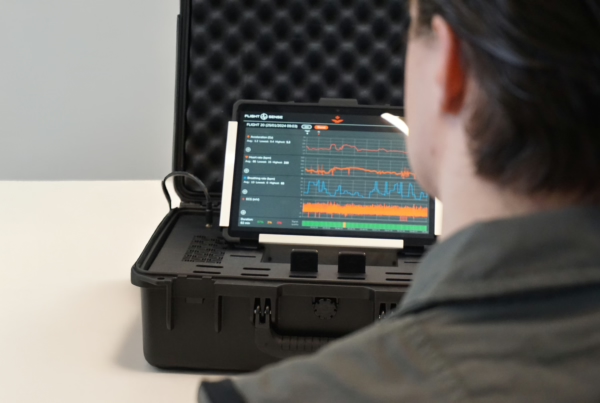
- Biosignal sensing expertise: ECG, EMG, EDA, respiration, and movement sensing using dry electrode technology optimised for high-movement conditions, as demonstrated in the Flight Sense System — a multi-biosensor wearable developed for military and sports use.
- Haptic feedback integration: Silent, screen-free information delivery through vibrotactile systems, proven in the Mission Navigation Belt developed for the Royal Netherlands Army.
- Firmware and power optimisation: The proprietary TacOS operating system manages sensor activity, data handling, and communication intervals to maximise battery life without compromising data quality — a critical capability for extended field operations.
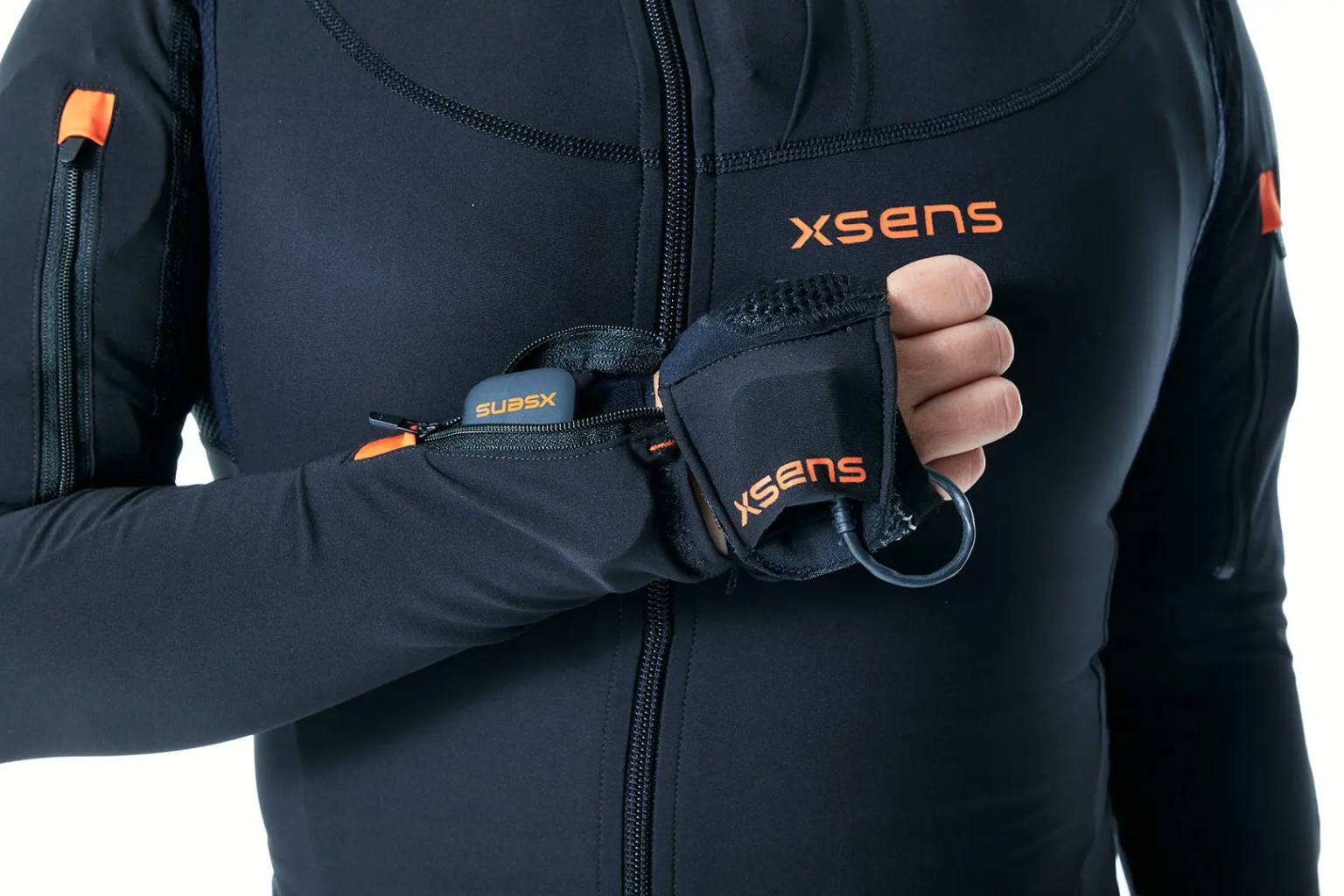
- Electronics-textile integration: Over a decade of experience embedding electronics into body-worn garments across washable, flexible, and ruggedised contexts.
- Military certification guidance: Experience navigating the certification requirements specific to defence applications, alongside CE, MDR, and ATEX standards for adjacent sectors.
If you are developing a soldier monitoring system, a tactical navigation wearable, or any body-worn technology for defence applications and need a development partner with proven field-ready results, get in touch with Elitac Wearables to discuss your project.
Related Articles
- Are electronics integrated into textiles ready for mass-market adoption in 2026?
- How do wearables support soldier situational awareness?
- What is haptic feedback used for in smartwatches?
- How do you choose between building an in-house wearable team versus outsourcing development?
- What questions should you ask a wearable development agency before signing a contract?