
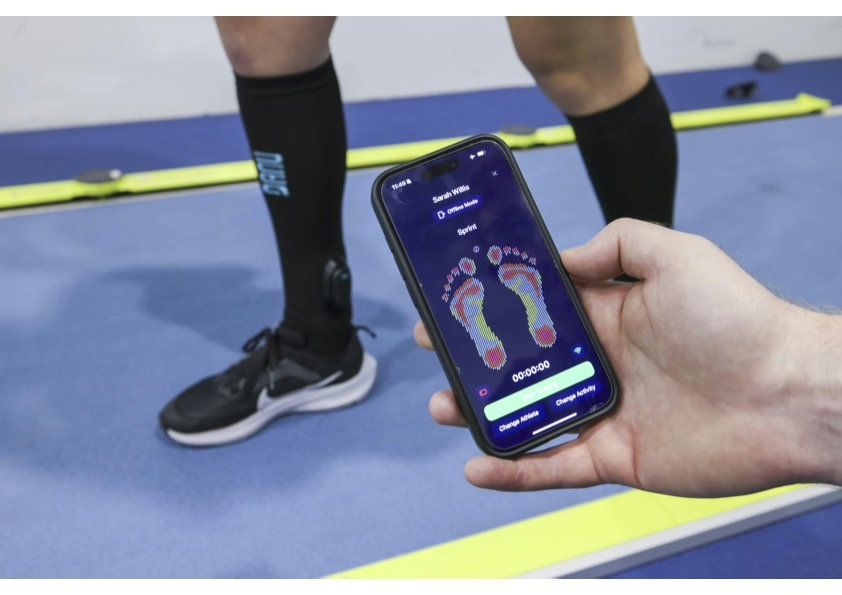
Wearable product development takes significantly longer and costs more than traditional product development because it requires solving multiple engineering disciplines simultaneously rather than sequentially. A conventional electronic device sits in a fixed enclosure; a wearable must flex, breathe, wash, fit diverse body shapes, sense accurately through movement, and meet regulatory standards that traditional consumer electronics never face. The sections below unpack the specific challenges that drive that complexity, from technical integration through to certification and the point at which a specialist development partner stops being optional.
Why does wearable development take longer than traditional product development?
Wearable product development takes longer because it collapses what are normally separate engineering workstreams into a single, tightly interdependent system. Hardware, firmware, textile construction, sensor integration, and human factors all influence each other. A change to the garment structure can invalidate a sensor placement decision; a firmware update can affect battery life in ways that change the physical form factor. Every discipline must iterate together, not in sequence.
In traditional product development, a team can hand a finished PCB to a mechanical engineer who designs an enclosure around it. That handoff is clean. In custom wearable product development, there is no clean handoff. The electronics must be designed with the textile in mind from day one, because the textile is part of the device, not packaging around it.
Several factors compound this further:
- Materials behaviour under wear: Conductive yarns, printed electronics, and flexible substrates behave differently after washing, stretching, and sustained body contact. That behaviour must be tested over time, not just in a lab sprint.
- Body variability: A rigid device fits a fixed space. A wearable must accommodate a range of body shapes, movement patterns, and skin conditions without losing signal quality or comfort.
- Component availability: Miniaturised, flexible, and biocompatible components have a narrower supply base than standard electronics, which introduces procurement risk and longer lead times.
- Iterative validation cycles: Because the product is worn, user testing must happen earlier and more frequently than in traditional development. Each round of feedback triggers cross-disciplinary revision.
End-to-end wearable product development typically runs from six months to three years, depending on complexity. A project starting from a validated proof of concept will move faster than one beginning at the concept stage, but even an accelerated timeline is rarely under six months when certification is involved.
What unique technical challenges do wearables introduce?
Wearables introduce a set of technical challenges that simply do not exist in traditional product development: electronics must survive continuous mechanical stress, sensors must perform accurately through movement and sweat, power must last through real-world usage without adding bulk, and the entire system must remain safe and comfortable against human skin. Each of these is a discipline in its own right.
Electronics-textile integration
Embedding electronics into fabric is not a matter of sewing a PCB into a pocket. The integration technique determines washability, flexibility, durability, and signal integrity. Conductive yarns work well for continuous low-current pathways but are sensitive to abrasion. Printed electronics offer flexibility and a low profile but require careful substrate selection. Modular attachment systems allow for component replacement but add bulk and potential failure points at connectors.
Choosing the wrong integration technique at the outset is one of the most common reasons wearable prototypes fail to reach production. The decision must account for the full product lifecycle, including how the device will be cleaned, how often it will flex, and whether the wearer will notice it at all.
Biosignal sensing through motion
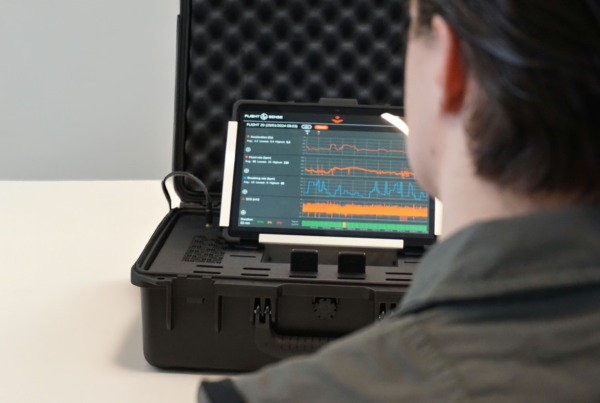
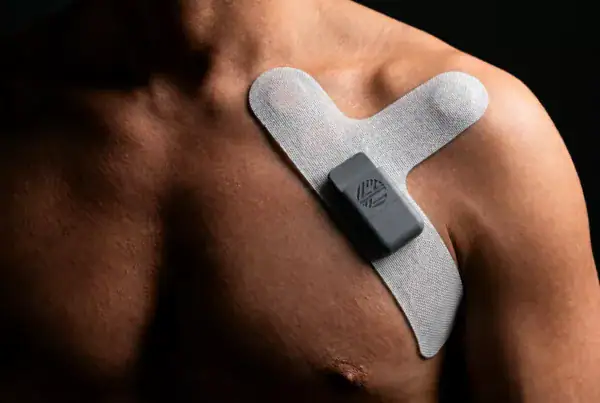
Wearable biosensors face a challenge that bench-top medical equipment does not: the signal source is moving. Motion artefacts are the single largest cause of unreliable data in wearable ECG, EMG, and EDA systems. Dry electrodes, which are necessary for comfort and washability, are more susceptible to motion noise than wet gel electrodes used in clinical settings. Addressing this requires a combination of electrode placement optimisation, signal processing algorithms, and firmware designed to filter artefacts in real time without discarding valid data.
Power management at scale
Battery life is a system-level problem, not a hardware component problem. Firmware that keeps radios or sensors active longer than necessary, sensors polled at intervals that do not match actual usage patterns, and communication protocols chosen for convenience rather than efficiency can each cut battery life by a significant margin. In a wearable, where adding battery capacity means adding weight and volume that the wearer directly experiences, power optimisation must be built into every layer of the stack from the start.
How does user testing differ for wearable products?
User testing for wearables begins earlier, runs longer, and involves more variables than testing for traditional products. Because the product is worn on or against the body, usability cannot be evaluated in a controlled lab session alone. Real-world wear trials are essential, and they reveal failure modes that bench testing never surfaces: garments that shift during exercise, sensors that lose contact when the wearer sweats, or haptic feedback patterns that are clear in a quiet room but imperceptible in a noisy field environment.
Several differences stand out when comparing wearable and traditional product user testing:
- Earlier integration into development: In traditional product development, user testing often follows a near-final prototype. In wearable development, fit, comfort, and sensor placement must be validated from early pilot samples onwards, because late-stage changes to garment construction are expensive and time-consuming.
- Extended wear periods: A single session tells you very little about how a wearable performs. Meaningful data comes from multiple wear sessions across different activities, body temperatures, and environmental conditions.
- Diverse body morphology: A wearable tested on a narrow range of body types will produce results that do not generalise. Testing must include representative samples of the intended user population, particularly for medical or safety-critical applications.
- Subjective comfort alongside objective performance: A device can be technically accurate and still fail in the market because wearers find it uncomfortable after thirty minutes. Both dimensions must be measured and acted upon.
For products targeting medical or defence applications, user testing also feeds directly into regulatory documentation. The structured evidence gathered during wear trials forms part of the clinical evaluation or safety validation required for certification, which means testing protocols must be designed with that end use in mind from the start.
What regulations apply to wearables that don’t apply to traditional products?
Wearables that contact the body, collect physiological data, or make health-related claims are subject to medical device regulations that standard consumer electronics are not. In the European market, this primarily means the EU Medical Device Regulation (MDR), which applies to Class I and Class II wearable medical devices and carries substantial documentation, clinical evaluation, and post-market surveillance requirements. ATEX certification applies to wearables used in hazardous environments, and military wearables face their own procurement and qualification standards.
The regulatory gap between a consumer wearable and a medical or industrial wearable is significant. A fitness tracker that estimates heart rate is a consumer product. A wearable ECG monitor intended to detect arrhythmia is a Class IIa medical device under MDR. The distinction is not always obvious, and drawing the wrong boundary early in development can mean rebuilding documentation, repeating clinical evaluations, and missing market windows.
Key regulatory considerations that affect wearable product development include:
- MDR classification: The intended use of the device, not its technology, determines its classification. Hardware decisions made in early development can raise or lower the regulatory class, with significant cost implications.
- Biocompatibility: Any material that contacts skin must meet biocompatibility standards. This affects textile selection, adhesive choices, and enclosure materials.
- Electromagnetic compatibility (EMC): Wearables with wireless connectivity must pass EMC testing. Body-worn devices present different EMC challenges than devices tested in free space.
- CE marking: Required for all devices sold in the EU. The pathway differs depending on device class and whether the product falls under MDR, the Radio Equipment Directive, or both.
Certification is not a final step to be addressed after development is complete. Hardware and firmware decisions made in the first phases of development directly affect certification cost and timeline. Teams that engage with regulatory requirements late typically face redesign work that could have been avoided entirely.
When should a company use a specialist wearable development partner?
A company should use a specialist wearable development partner when the project requires more than one engineering discipline and no single internal team or supplier can credibly own all of them. Most wearable development failures do not result from bad ideas. They result from fragmented execution: a hardware supplier who does not understand textiles, a software team that does not account for body-worn power constraints, or a manufacturer handed a prototype that was never designed with production in mind.
The case for a specialist partner becomes especially clear in four situations that come up repeatedly in biometric wearable product development and adjacent fields:
- No in-house wearable expertise: If your team builds great medical devices or industrial equipment but has never integrated electronics into a garment, you are not missing one skill. You are missing a stack of interdependent skills that took years to develop in combination.
- Standard components are insufficient: Off-the-shelf modules and single-discipline suppliers can take you to a proof of concept. They rarely take you to a reliable, market-ready product in a body-worn form factor.
- A prototype exists but does not perform reliably: This is one of the most common entry points. A prototype that works in a lab but fails in real-world use is not a small problem. It usually signals a system-level issue that requires cross-disciplinary diagnosis.
- The project is stuck at the transition to production: Moving from final prototype to first series production requires manufacturing documentation, quality systems, and supplier relationships that most development teams have never needed before.
Generalist electronics firms can build hardware. Contract manufacturers can produce at volume. But the gap between a working prototype and a certified, production-ready wearable is where projects most often stall, and it is precisely the gap that demands integrated, end-to-end expertise.
How Elitac Wearables helps with wearable product development
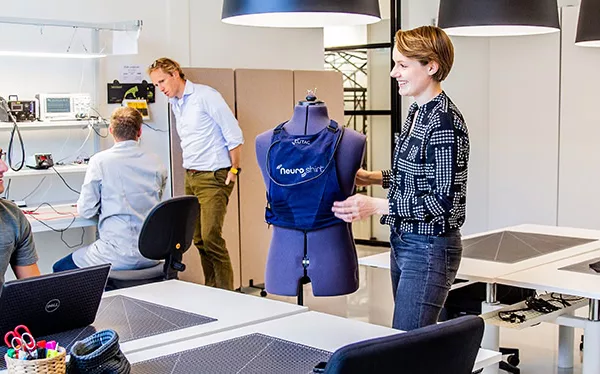
Elitac Wearables is a Netherlands-based development partner that takes wearable projects from initial concept through to a certified, market-ready product without handoffs between vendors. Every discipline the project requires, including hardware design, firmware, electronics-textile integration, biosignal sensing, haptic systems, and human factors, is handled by a single in-house team of 13 specialists operating from a 180m² Wearables Lab in Utrecht.
For product managers, CTOs, and R&D directors evaluating a development partner, the practical implications are:
- One accountable team across the full stack: No coordination overhead between separate hardware, software, and textile suppliers. One team owns the outcome.
- Faster iteration through in-house infrastructure: 3D printers, laser cutters, and permanent software testing rigs mean design changes are tested in days, not weeks.
- Regulatory readiness built in from the start: Experience with MDR, CE marking, ATEX, and military certification means compliance is addressed in hardware and firmware decisions, not retrofitted at the end.
- Proprietary TacOS firmware platform: Elitac’s own wearable operating system reduces firmware development time and lowers risk on projects that require reliable, power-efficient embedded software.
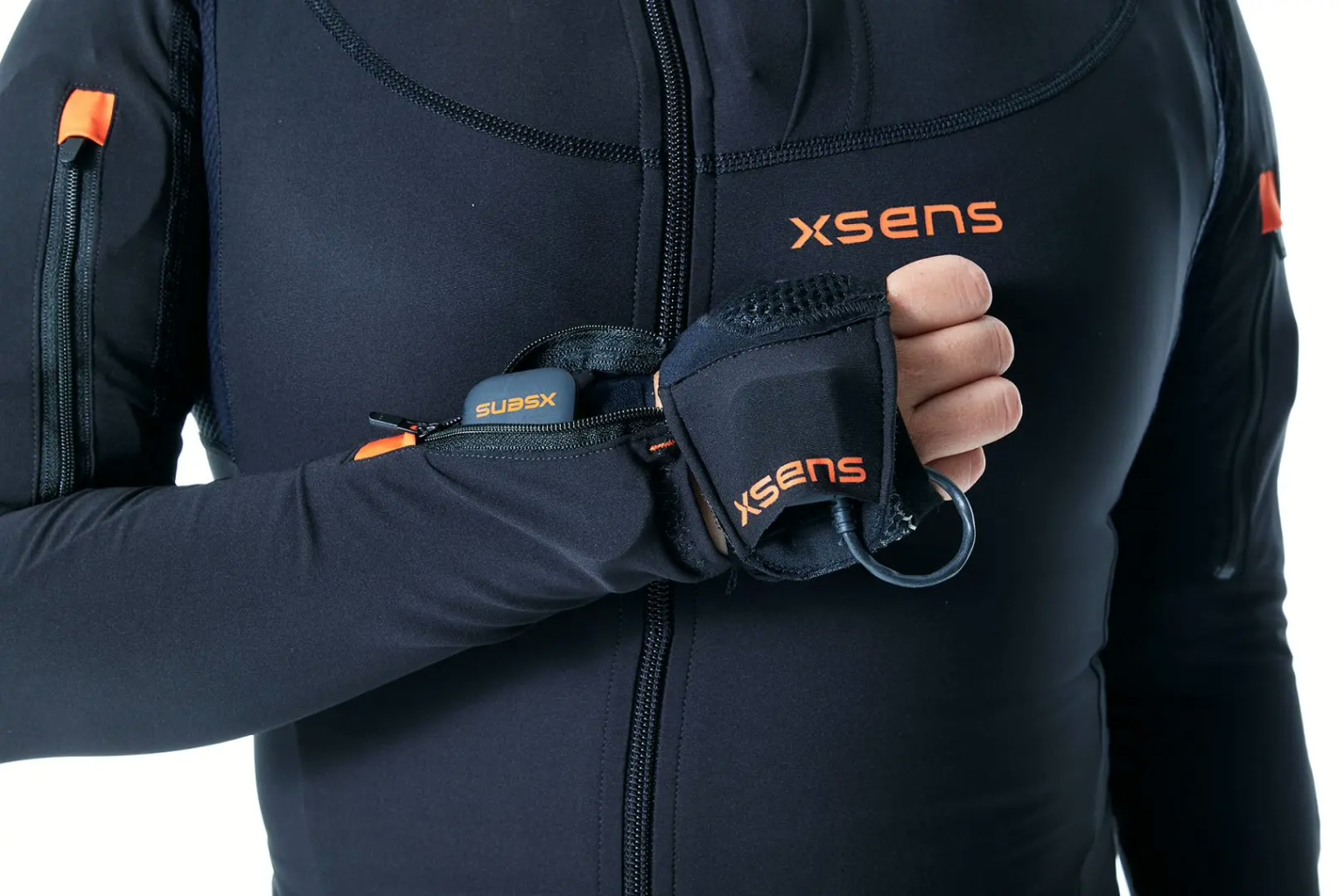
- Proven across sectors: With over 50 products developed across medical, defence, and sports applications, including the Mission Navigation Belt for the Royal Netherlands Army and motion capture suit development for Xsens, the team brings cross-sector experience to every new challenge.
If your organisation is facing a wearable development challenge that standard solutions have not been able to solve, contact Elitac Wearables to discuss your project. The first step is a feasibility conversation with the team that has already solved problems like yours.
Related Articles
- What are the biggest challenges in electronics integrated into textiles?
- What is the future of military wearable technology?
- How accurate is haptic feedback in wearable devices?
- How do you transition a wearable product from development to a sustainable, scalable business?
- What does a wearable product development contract actually need to cover?