

Smart uniforms in military applications work by embedding sensors, electronics, and communication systems directly into the fabric and structure of a soldier’s clothing and gear. Rather than relying on separate handheld devices, the uniform itself becomes an active platform that monitors the wearer, delivers information, and connects to wider battlefield networks. The sections below unpack the specific technologies involved, the engineering challenges behind them, and what it takes to bring these systems to a standard where they can be trusted in the field.
What technologies are embedded in smart military uniforms?
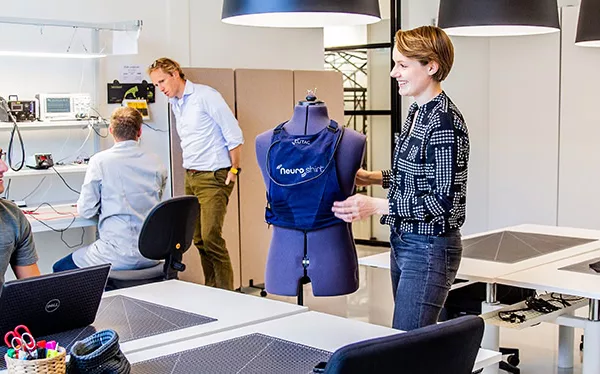
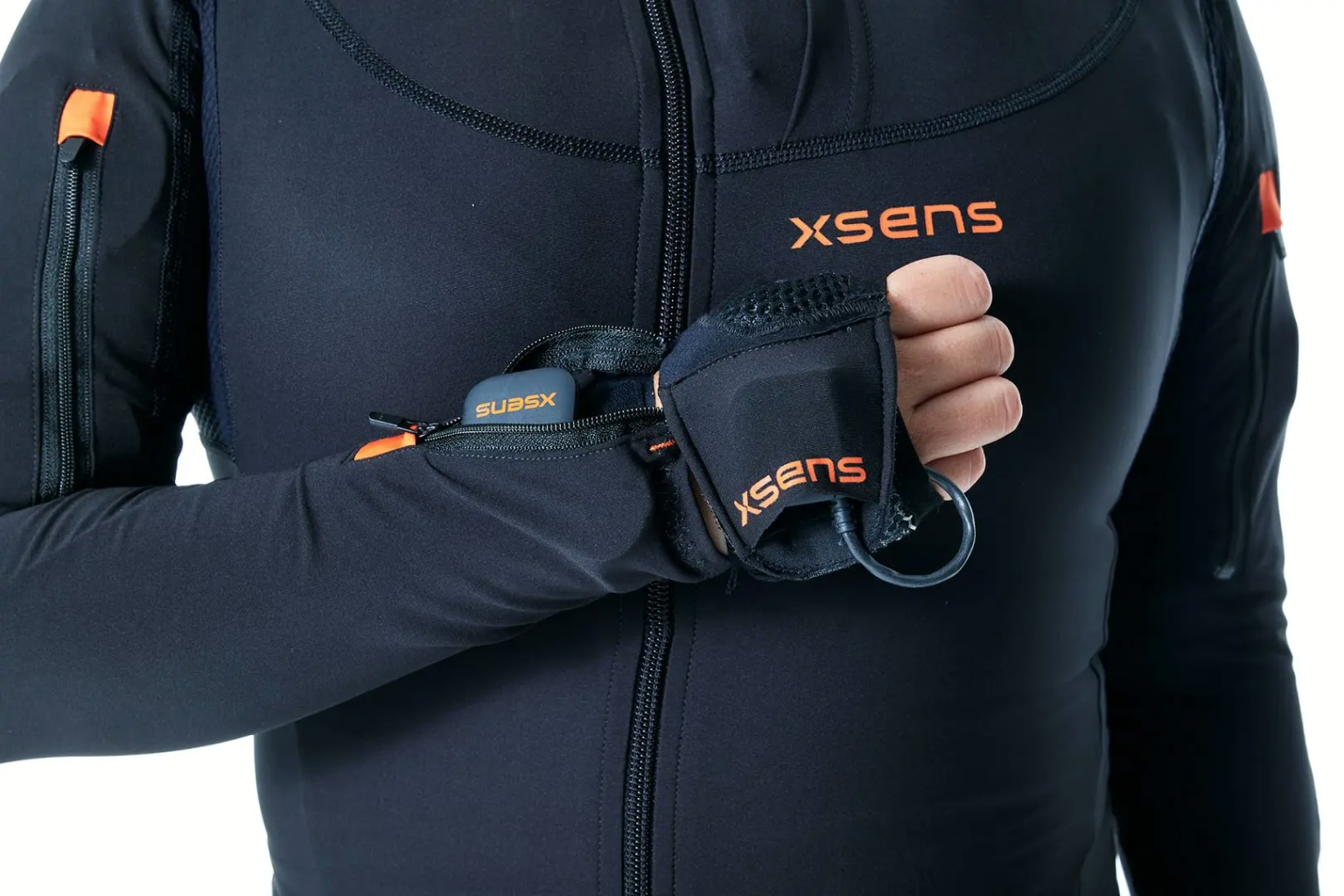
Smart military uniforms integrate a combination of conductive textiles, embedded sensors, miniaturised electronics, and wireless communication modules directly into the garment structure. The result is a wearable system that can monitor the soldier’s physiology, track position and movement, and transmit data without adding significant bulk or restricting mobility.
The core technology categories found in military smart uniforms include:
- Conductive yarns and printed electronics that replace conventional wiring, routing electrical signals through the fabric itself
- Biosignal sensors for monitoring heart rate, respiration, body temperature, and stress indicators in real time
- Inertial measurement units (IMUs) and accelerometers that track movement, posture, and orientation
- GPS and positioning modules integrated into load-bearing elements of the uniform
- Haptic actuators that deliver silent, tactile feedback to the wearer, replacing visual or audio signals
- Short-range and long-range wireless radios for data transmission within a unit or back to command
- Embedded microcontrollers and firmware platforms that manage sensor data, power usage, and communication
The integration technique matters as much as the technology itself. Conductive yarns woven into the base layer, printed conductive inks applied to fabric surfaces, and modular electronics snapped or bonded onto textile substrates each have different trade-offs in terms of washability, durability, and signal quality. In high-movement conditions, the choice of integration method directly affects whether sensors stay in contact with the body and whether signal quality holds up under physical stress.
How do haptic feedback systems function in military gear?
Haptic feedback systems in military gear deliver directional or coded vibration patterns to specific points on the soldier’s body, communicating information without requiring the soldier to look at a screen or listen for an audio cue. The wearer learns to interpret these tactile signals as navigation instructions, alerts, or status updates, keeping hands, eyes, and ears fully available for the task at hand.
The underlying mechanism relies on small actuators positioned against the skin. The three main actuator types used in wearable applications are:
- ERM (Eccentric Rotating Mass) actuators — low cost, widely available, but limited in precision and frequency control
- LRA (Linear Resonant Actuators) — more precise, faster response, better for delivering distinct vibration patterns
- Piezo actuators — very thin, power-efficient, and capable of high-frequency output, making them well suited to textile integration where space and power are constrained
The firmware layer is what makes a haptic system genuinely useful rather than merely functional. Timing, intensity, duration, and the spatial sequence of activation across multiple actuators all determine whether a soldier can reliably decode a message in a high-stress environment. Designing these patterns requires iterative testing with real users under realistic conditions, not just laboratory calibration.
A concrete example of this in practice is the Mission Navigation Belt, developed for the Royal Netherlands Army. The belt delivers silent directional navigation cues through vibration, integrating with existing GPS systems to guide soldiers without any screen or audio output. The first order was delivered in 2020 following development that began with a Defence Innovation Competition win in 2013. The project demonstrates that haptic military wearable technology is not theoretical — it has been operationally deployed.
What data do smart uniforms collect and transmit?
Smart military uniforms collect two broad categories of data: physiological data about the soldier’s health and physical state, and positional or environmental data about where the soldier is and what conditions they are operating in. Both categories can be transmitted wirelessly to squad leaders, medical personnel, or command systems, enabling real-time situational awareness without verbal communication.
Physiological data
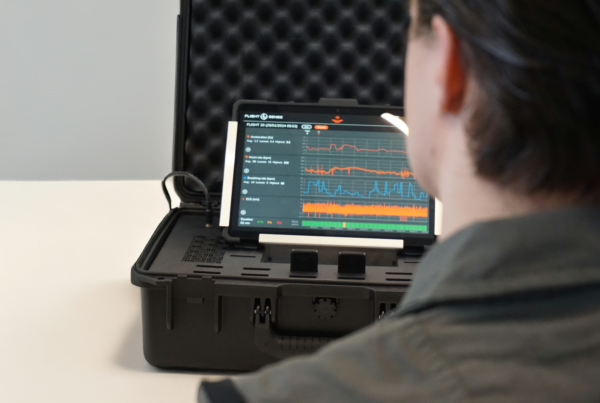
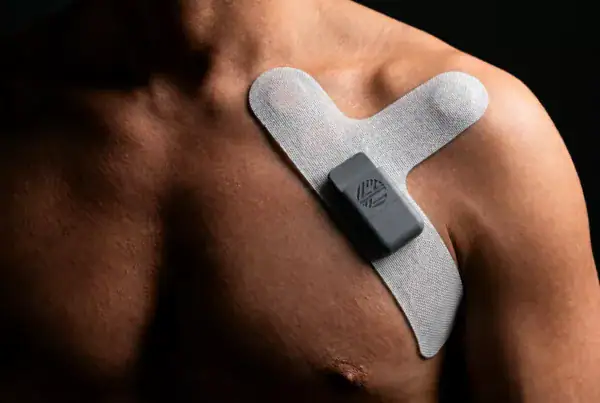
Biosignal sensing in military wearables typically covers ECG (electrocardiogram) for heart health and rhythm, heart rate variability as an indicator of stress and fatigue, respiration rate, and body temperature. More advanced systems also capture EMG (electromyography) data for muscle activity or EDA (electrodermal activity) as a stress proxy. This data allows medical teams to identify a soldier in physiological distress before that soldier can report it themselves.
Dry electrode technology is the practical solution for military biosignal sensing. Unlike wet electrodes, which require gel and are unsuitable for extended field use, dry electrodes can be integrated directly into a garment and maintain contact during high-movement activities. Managing motion artefacts — the signal noise introduced by physical movement — is one of the central technical challenges in making this data clinically or operationally useful rather than just abundant.
Positional and environmental data
IMUs and GPS modules provide continuous movement and location tracking. In GPS-denied environments such as underground structures or dense urban terrain, IMU-based dead reckoning can maintain position estimates using acceleration and orientation data. Environmental sensors can also monitor external conditions such as temperature, humidity, or the presence of hazardous gases, relevant in CBRN (chemical, biological, radiological, and nuclear) scenarios.
Transmission of this data typically uses low-power wireless protocols optimised for short-range intra-squad communication, with longer-range radios handling communication back to command. Minimising transmission frequency and compressing data before sending are standard techniques for managing battery consumption alongside bandwidth constraints.
How are smart uniforms powered in the field?
Smart military uniforms are primarily powered by rechargeable lithium-based batteries integrated into the garment or its load-bearing accessories. Battery placement, capacity, and power management strategy are critical design decisions, because adding more battery capacity increases weight and bulk — two things military wearables cannot afford.
Battery life in field conditions is almost never a hardware-only problem. The most common cause of poor battery performance in wearable systems is inefficiency at the firmware and system architecture level: sensors and radios left active when they are not needed, data transmitted more frequently than the application actually requires, and hardware components selected for peak performance rather than real-world usage patterns. Structured optimisation across firmware, communication intervals, and component selection can extend operational battery life substantially without changing the physical battery or the enclosure.
Emerging approaches to power management in military wearable technology include energy harvesting from body heat, motion, or solar exposure integrated into the uniform surface. These remain supplementary rather than primary power sources in current deployments, but they are actively being developed as a way to extend mission duration without resupply. Modular battery systems that allow hot-swapping in the field are also used in some configurations, ensuring continuous operation during battery replacement.
What are the biggest technical challenges in developing smart military uniforms?
The biggest technical challenges in smart military uniform development are durability under extreme conditions, reliable biosignal acquisition during high-intensity movement, power management in the absence of resupply, and maintaining system integrity across the interface between electronics and textiles. Each of these challenges is harder in a military context than in consumer or even medical wearable development.
Durability requirements are severe. A military wearable must survive immersion, extreme temperatures, physical impact, and repeated laundering while maintaining full electronic function. Conductive yarns and printed electronics degrade differently from conventional wiring, and the failure modes are less predictable. Designing for this requires both materials expertise and systematic accelerated life testing before any field deployment.
Signal quality during movement is a persistent problem. Sensors that produce clean data on a stationary subject generate significant noise when the wearer is running, crawling, or carrying loads. Motion artefact rejection — filtering out noise caused by movement without discarding genuine physiological signals — requires algorithm development tailored to the specific sensor placement and use case, not just off-the-shelf signal processing.
The electronics-textile interface is where many smart uniform projects stall. Electronics and textiles behave very differently under mechanical stress, temperature change, and moisture. Maintaining reliable electrical connections at the point where a rigid electronic module meets a flexible textile substrate is a specialised engineering problem that requires experience across both disciplines simultaneously. Fragmented supply chains, where the electronics team and the textile team work separately with no shared accountability, are a common root cause of failure at this integration point.
Certification adds another layer of complexity. Military wearables must meet rigorous standards for electromagnetic compatibility, environmental resistance, and operational reliability. These requirements need to be built into the design from the beginning, not addressed as a final step before submission.
How are smart uniforms tested and certified for military use?
Smart military uniforms are tested against a combination of environmental, electromagnetic, and operational performance standards before they can be approved for field use. Military certification requirements vary by country and application, but they consistently address durability under physical and environmental stress, electromagnetic compatibility with other military systems, and reliability under the specific conditions the uniform will encounter in service.
Environmental testing typically covers temperature extremes, water and dust ingress, mechanical shock, and vibration. Standards such as MIL-STD-810 in the United States define specific test protocols for each of these conditions, and equivalent standards apply in European defence procurement. Passing these tests requires that the entire system — including the electronics-textile integration points — performs within specification after exposure.
Electromagnetic compatibility (EMC) testing verifies that the wearable does not interfere with other electronic systems in the operational environment and is not itself disrupted by external electromagnetic sources. This is particularly important in military contexts where radio communication and electronic warfare systems operate in close proximity.
Functional reliability testing goes beyond environmental conditions to validate that the system performs its intended function accurately and consistently. For a haptic navigation system, this means testing that directional cues are delivered correctly and interpreted reliably by wearers under stress. For a biosignal monitoring system, it means validating that physiological readings remain accurate during the physical activities the uniform is designed for.
Certification for military use also involves documentation, quality management, and supply chain traceability requirements that extend well beyond technical performance. Organisations developing smart uniform technology need to engage with these requirements early in the development process — retrofitting compliance onto a finished design is significantly more costly and time-consuming than designing for certification from the outset.
How Elitac Wearables helps with smart military uniform development
Developing smart uniforms for military applications requires a team that understands every layer of the problem simultaneously: the textile engineering, the electronics design, the firmware, the biosignal processing, and the certification pathway. When these disciplines sit in separate organisations, integration failures and accountability gaps are almost inevitable.
Elitac Wearables brings all of these capabilities together under one roof, with a track record in defence wearables that includes the Mission Navigation Belt for the Royal Netherlands Army and the Flight Sense System, a multi-biosensor wearable designed for extreme conditions and military use. The team’s work in this area covers:
- Haptic system design, including actuator selection, firmware-level pattern design, and field-validated testing with military users
- Biosignal sensing with dry electrode technology optimised for high-movement conditions, covering ECG, heart rate variability, respiration, and acceleration
- Electronics-textile integration across conductive yarns, printed electronics, and modular attachment methods, with over ten years of experience in washable and body-worn contexts
- Embedded hardware design and firmware development, including the proprietary TacOS operating system built specifically for wearable constraints
- Battery performance optimisation at the system level, addressing firmware inefficiencies and hardware-usage mismatches before they become field problems
- Military certification guidance built into the development process from the beginning, not added at the end
If you are working on a smart uniform or military wearable project and need a development partner with genuine depth across all of these disciplines, get in touch with the Elitac Wearables team to discuss your specific requirements.
Related Articles
- What industries benefit most from smart textile development?
- How do children and elderly users experience haptic feedback wearables differently?
- How do haptic feedback wearables support accessibility needs?
- How do you scale a wearable product from pilot to mass production?
- What are the regulatory risks that can stall a wearable product launch, and how do you mitigate them?