
Medical-grade wearables differ from consumer wearables in development primarily through regulatory compliance, clinical accuracy requirements, biocompatibility standards, and data security obligations. Where a consumer fitness tracker needs to be convenient and engaging, a medical wearable must be demonstrably safe, clinically reliable, and legally approved before it reaches a single patient. The gap between the two is far wider than most product teams expect, and understanding it early is what separates successful medical wearable projects from expensive detours.
What regulatory standards apply to medical-grade wearables?
Medical-grade wearables must comply with formal regulatory frameworks that define them as medical devices, not consumer electronics. In the European Union, this means compliance with the Medical Device Regulation (MDR 2017/745), which classifies wearables as Class I, IIa, or IIb devices depending on their intended use and risk level. In the United States, FDA clearance or approval is required. Consumer wearables face no equivalent obligation.
The practical consequences of MDR compliance are significant. Manufacturers must maintain a technical file, conduct clinical evaluations, implement a quality management system, and appoint a Notified Body for Class IIa devices and above. Every design decision, from the choice of sensor to the firmware update process, must be documented in a way that demonstrates safety and intended performance.
Certification is not a final step you bolt on at the end of development. It must shape hardware choices, software architecture, and testing protocols from the very first phase. Teams that treat regulatory compliance as a post-development task consistently face costly redesigns. The right approach is to let the regulatory pathway define the design constraints before a single component is selected.
ATEX certification applies when a wearable is intended for use in hazardous or explosive environments, such as industrial or defence applications. Military wearables carry their own qualification requirements. Each pathway adds substantial documentation, testing, and time, which is why custom wearable product development for medical or regulated contexts typically costs two to three times more than equivalent consumer-grade work.
How does the development process differ between the two?
The development process for a medical-grade wearable is longer, more structured, and more heavily documented than for a consumer product. Where a consumer wearable might move from concept to market in twelve months, a medical wearable routinely takes two to three years, driven by clinical validation requirements, regulatory submissions, and iterative safety testing at each phase.
Consumer wearable development prioritises speed and user experience. Teams can iterate quickly, release a minimum viable product, and update through software. Medical wearable development requires that every functional version be tested against defined clinical performance criteria before moving to the next phase. A proof of concept is not enough to proceed, you need evidence that the device performs as intended under real-world conditions with the target patient population.
Documentation requirements
Consumer development teams maintain typical engineering records. Medical device development requires a structured technical file that covers risk management (ISO 14971), usability engineering (IEC 62366), software lifecycle documentation (IEC 62304), and clinical evaluation reports. These are not optional additions, they are prerequisites for placing a medical device on the EU market.
Validation and verification
Consumer wearables are tested for function and durability. Medical wearables require formal verification (does the device meet its design specifications?) and validation (does it meet the clinical need it was designed for?). This distinction drives significant additional testing effort, particularly for biosignal sensing devices where signal quality directly affects clinical decisions.
Elitac Wearables structures its six-phase development process to integrate regulatory requirements from the feasibility check onward, ensuring that documentation, component choices, and testing protocols align with the intended certification pathway before costs compound.
What accuracy and reliability standards must medical wearables meet?
Medical wearables must meet clinically defined accuracy thresholds that are validated against reference standards, not simply compared to other consumer devices. A wearable ECG, for example, must demonstrate performance against established clinical electrocardiography standards. The acceptable margin of error is determined by the clinical consequence of a wrong reading, not by what is technically achievable at low cost.
Reliability standards are equally demanding. A consumer step counter that occasionally misses a step creates a minor inconvenience. A medical wearable that produces a false reading during patient monitoring can have direct clinical consequences. This drives requirements for redundancy, fault detection, and defined failure modes that consumer devices simply do not carry.
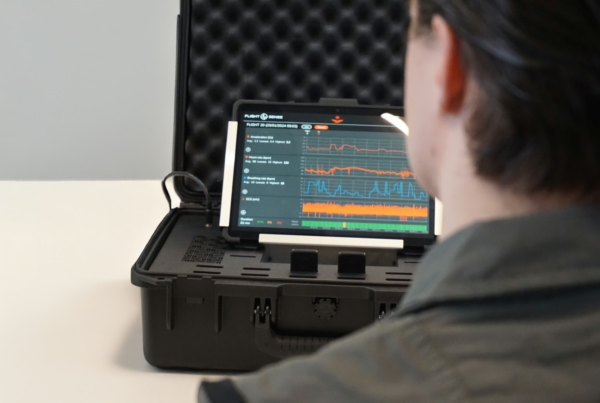
Motion artefact management is one of the most technically demanding challenges in medical wearable development. Biosignals like ECG and EMG are highly sensitive to movement, and a wearable worn on a moving body must separate genuine physiological signals from noise caused by that movement. Dry electrode selection, electrode placement, and firmware-level signal processing all contribute to solving this problem, and getting it wrong is not an option when the data informs clinical decisions.
Battery reliability is another dimension. Consumer wearables can tolerate occasional low-battery shutdowns. Medical wearables used for continuous monitoring must operate predictably within a defined power envelope, with clear low-battery warnings and graceful degradation that does not compromise patient safety.
Why does biocompatibility matter more for medical wearables?
Biocompatibility matters more for medical wearables because they are worn in prolonged, often continuous contact with skin, and in some cases with compromised or sensitive skin. Materials that are acceptable for a healthy adult wearing a fitness tracker for an hour of exercise may be entirely unsuitable for a patient wearing a monitoring device for 24 hours or longer. Regulatory frameworks require formal biocompatibility assessment under ISO 10993 for medical devices.
The materials used in electronics-textile integration, including conductive yarns, encapsulant compounds, adhesives, and housing polymers, all require assessment. Some materials that are standard in consumer electronics are not approved for prolonged skin contact. This affects component selection, manufacturing processes, and the choice of textile substrates.
Washability adds further complexity. Medical wearables that must be laundered between uses need materials that maintain biocompatibility and electrical performance after repeated washing cycles. This is a technically demanding requirement that eliminates many off-the-shelf components from consideration and drives the need for custom material selection and integration techniques.
Consumer wearables typically carry basic skin-safe certifications for their outer surfaces, but the depth of biocompatibility assessment required for a medical device is categorically different. The consequences of getting it wrong extend beyond product recalls to patient harm and regulatory liability.
How does data security and privacy differ between medical and consumer wearables?
Medical wearables handle health data that is legally classified as sensitive personal data under frameworks including the EU General Data Protection Regulation (GDPR) and, in the US, HIPAA. This imposes strict obligations on how data is collected, stored, transmitted, and accessed that go well beyond what consumer wearable manufacturers typically implement. Encryption, access controls, audit trails, and data minimisation are not optional features, they are compliance requirements.
Consumer wearables collect health-adjacent data, step counts, sleep patterns, and heart rate estimates, that sits in a regulatory grey area. Users consent to data collection through terms of service, and while GDPR applies in the EU, the obligations are less prescriptive than those governing clinical health data. Medical wearables that feed data into clinical workflows or electronic health records face the full weight of healthcare data regulation.
Cybersecurity is increasingly a formal requirement for medical devices. Regulators in both the EU and US now expect manufacturers to demonstrate that their devices are resilient to cybersecurity threats throughout their intended lifetime, including post-market software updates. This requires a secure development lifecycle, vulnerability management processes, and clear documentation of the device’s attack surface. Consumer wearable teams rarely face this level of scrutiny.
The architecture of data transmission matters too. A consumer wearable that streams data to a cloud platform via Bluetooth and a smartphone app may be perfectly acceptable for wellness use. The same architecture for a medical device requires formal risk assessment, encryption validation, and documentation of every data pathway.
When should a wearable be developed to medical-grade standards?
A wearable should be developed to medical-grade standards whenever its intended use involves diagnosing, monitoring, treating, or managing a medical condition, or whenever its data will inform clinical decisions. The intended use, not the technology, determines whether a device is a medical device under EU MDR or FDA regulation. If a wearable is marketed to measure a physiological parameter for clinical purposes, it is a medical device regardless of how it looks or where it is sold.
The decision is not always straightforward. A wearable that tracks heart rate for fitness is a consumer product. The same hardware marketed to detect atrial fibrillation becomes a medical device. Product teams sometimes try to avoid medical device classification by limiting their marketing claims, a strategy that can work but requires careful legal and regulatory assessment.
Developing to medical-grade standards when it is not required adds cost and time without regulatory benefit. Failing to develop to medical-grade standards when it is required exposes the manufacturer to enforcement action, product withdrawal, and liability. Getting this determination right at the feasibility stage, before significant development investment has been made, is one of the most valuable decisions a product team can make.
If there is genuine ambiguity about classification, the right move is to seek a formal regulatory opinion early and let that determination shape the development pathway from the start, not after a prototype has already been built to the wrong standard.
How Elitac Wearables helps with medical-grade wearable development
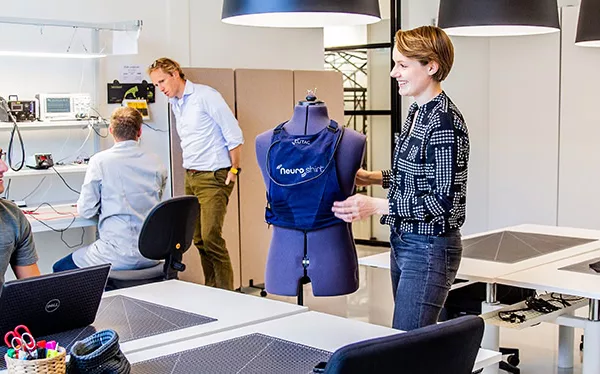
Building a wearable to medical-grade standards requires a development partner that understands both the technical complexity and the regulatory reality from day one. Elitac Wearables works with medical device companies, health technology scale-ups, and research-backed organisations that need every discipline, hardware, firmware, textile integration, biosignal sensing, and certification guidance, coordinated under one roof.
For product managers, CTOs, and R&D leads navigating the gap between a promising concept and a market-ready medical wearable, the key capabilities Elitac brings to the table include:
- Regulatory pathway planning from the feasibility phase, ensuring MDR compliance shapes design decisions before costs compound
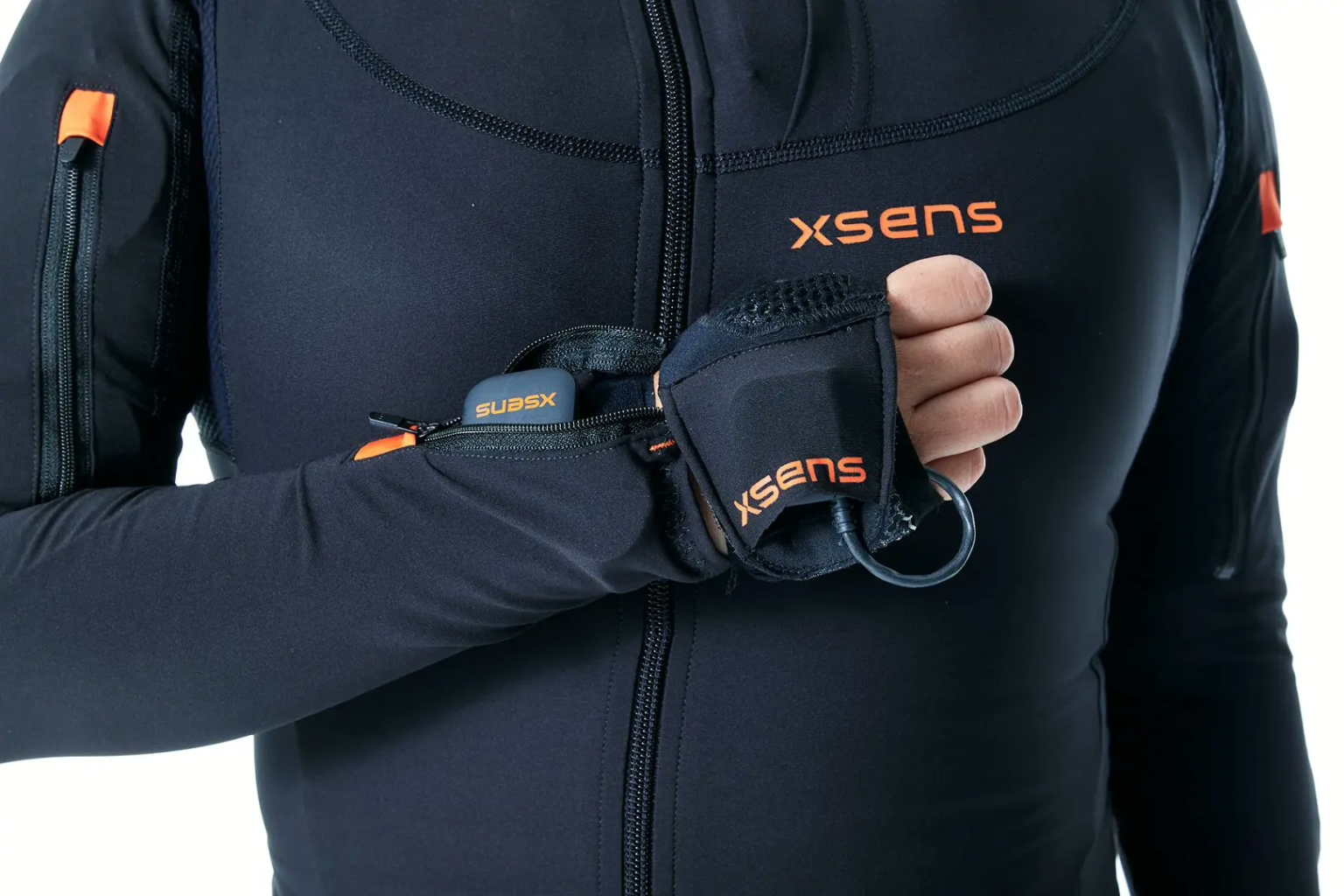
- Biocompatible material selection and electronics-textile integration with over ten years of experience across washable, flexible, and body-worn contexts
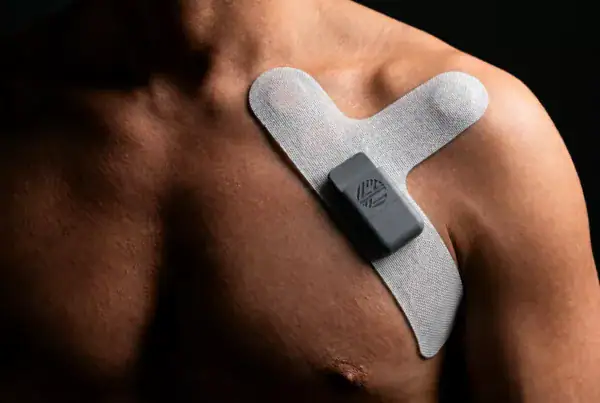
- Biosignal sensing expertise covering ECG, EMG, EEG, EDA, and IMU-based movement, including dry electrode selection and motion artefact management
- Firmware development on the proprietary TacOS platform, designed specifically for wearable power and performance constraints
- A structured six-phase wearable product development process that integrates verification, validation, and documentation requirements at each stage
- Production and certification coordination for Class I and Class IIa medical devices, including CE marking under MDR
The projects that benefit most from this approach are those where standard development houses lack the depth to handle the full complexity, whether that is integrating dry electrodes into a textile substrate, optimising battery performance without a hardware redesign, or navigating the documentation requirements of a first medical device submission. If your wearable project is at that stage, reach out to discuss where you are in the development cycle and what the right next step looks like.
Related Articles
- What is electronics integrated into textiles?
- How are military wearables powered in the field?
- Can haptic feedback wearables replace physical therapy tools for rehabilitation?
- What are the latest haptic feedback wearable technologies in 2026?
- How do you find a contract manufacturer for a wearable device?