

Divide technical decisions by system boundary, not by company specialty. Give one partner ownership of system architecture and every decision that crosses hardware, firmware, textile, and haptics, and let each partner own the decisions that stay inside its own domain. Split ownership of cross-cutting choices and the integration breaks first.
This matters most in wearable product development, where electronics behave differently on a moving body than on a bench. The sections below cover which decisions to keep together, how to assign decision rights, and how to handle disagreement in a multi-vendor wearable project.
Which technical decisions should never be split between partners?
Decisions that determine how the whole system behaves should have a single owner: system architecture, the power budget, the electronics-to-textile interface, and the haptic signal chain. These choices cascade into every other domain, so dividing them between partners creates conflicting assumptions that surface late, when fixes are most expensive.
Four decisions belong with one accountable owner:
- System architecture: where sensing, processing, and actuation happen, and how data moves between them.
- Power budget: battery life is a system-level outcome. Firmware that keeps components awake, radios running at the wrong intervals, and mismatched components all drain the same battery. Splitting these between a hardware vendor and a firmware vendor leaves nobody accountable for the result.
- The electronics-textile interface: connectors, conductive routing, strain relief, and washability define whether a garment survives real use.
- The haptic chain: actuator choice, driver electronics, firmware timing, and body placement determine whether a wearer actually feels the signal.
A useful test: if a change in one domain forces a redesign in another, the decision is cross-cutting and should not be split.
How do you assign decision rights by technical domain?
Assign decision rights with a written framework that names one accountable owner per decision, defines who must be consulted, and sets the boundaries each partner may change without approval. Organize it by domain: hardware, firmware, textiles, haptics, algorithms, and certification. Agree on it before the first design review.
A workable decision rights framework covers three things:
- A decision register. List every major technical choice, its owner, the partners who must be consulted, and who is informed. Keep it short enough that people actually read it.
- Interface specifications. Each partner owns what happens inside its domain. The boundaries between domains, such as connector pinouts, data formats, and mechanical tolerances, are documented, versioned, and owned by the system architecture lead.
- Change thresholds. Define which changes a partner can make freely and which require sign-off. Swapping a firmware library rarely needs a meeting. Changing the battery or the sensor placement does.
Domain ownership should follow demonstrated experience. A textile partner decides on yarns and knit structure. A firmware partner decides on scheduling and sleep states. Nobody should decide on things they cannot validate.
Who should own the haptic and textile integration decisions?
One partner with haptics and electronics-textile experience should own both, because they are coupled. Actuator type, mounting method, fabric stretch, and skin contact together determine whether vibration is felt, localized, and comfortable. Splitting them between an electronics vendor and a textile maker leaves the interface between them unowned.
Haptics is not an add-on that can be bolted onto a finished garment. ERM, LRA, and piezo actuators each behave differently against the body, and the same actuator can feel strong in one fabric construction and vanish in another. Placement, pre-load pressure, and firmware timing and pattern design all shape the perceived signal.
The same logic applies to integration technique. Conductive yarns, printed electronics, and modular electronics attachment each carry trade-offs in washability, flexibility, and cost. The right choice depends on the use case, so the owner needs to understand both the electronics and the textile process. Defence products such as haptic navigation belts, which must work silently and screen-free under field conditions, show why this ownership cannot be fragmented: the signal chain and the garment have to be designed as one.
What happens when partners disagree on a technical choice?
When partners disagree, the decision escalates to the pre-agreed owner in the decision register, who settles it using evidence from a quick test rather than opinion. Without a named owner, disagreements stall the schedule or get resolved by whoever argues loudest, which is how weak compromises enter the design.
A clean escalation path has four steps:
- Frame the disagreement as a testable question. “Will this actuator be felt through this fabric during movement?” can be answered. “Our approach is better” cannot.
- Run the cheapest test that answers it. A bench setup or a functional demonstrator often settles in days what a meeting cannot settle in weeks.
- Let the decision owner decide. Consulted partners give input, and the owner commits.
- Record the outcome. Update the decision register so the same debate does not return at the next milestone.
Validating early also lowers the stakes of being wrong. A demonstrator built for validation rather than production is far cheaper to change than a design committed to tooling.
How do certification and compliance affect who decides what?
Certification requirements should constrain technical decisions from the start, which means whoever owns regulatory strategy gains authority over hardware, materials, and documentation choices. For a medical wearable under MDR, or products needing CE marking, ATEX, or military approval, compliance cannot be retrofitted by a partner who joins late.
In practice this changes the decision map in three ways:
- Component and material choices must be traceable and defensible, so the compliance owner has a veto on substitutions.
- Software and firmware changes in a regulated device need controlled processes, which limits how freely a firmware partner can iterate.
- Documentation such as risk files and design history must be maintained across all partners, so one party needs to own the quality system.
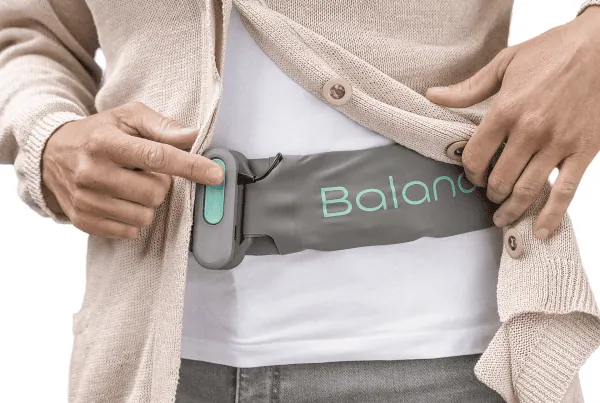
The earlier certification shapes hardware design, the fewer redesigns appear near launch. Projects such as the BalanceBelt, a commercially launched medical wearable, show how much value comes from a team that has already worked through MDR compliance, quality management, and clinical validation as part of development rather than after it.
How can a lead development partner reduce coordination risk?
A lead development partner reduces coordination risk by owning the system architecture, maintaining the interface specifications, and acting as the single point of accountability across all other partners. This replaces many partner-to-partner negotiations with one clear chain of responsibility, so integration problems surface early and have an owner.
The lead partner earns that role through breadth: hands-on competence in hardware, firmware, textiles, and haptics. It does not need to build everything, but it must understand enough of every domain to spot incompatible assumptions before they become physical prototypes. Practical habits include:
- Running integrated builds early, so electronics, firmware, and textiles meet in one prototype instead of three separate ones.
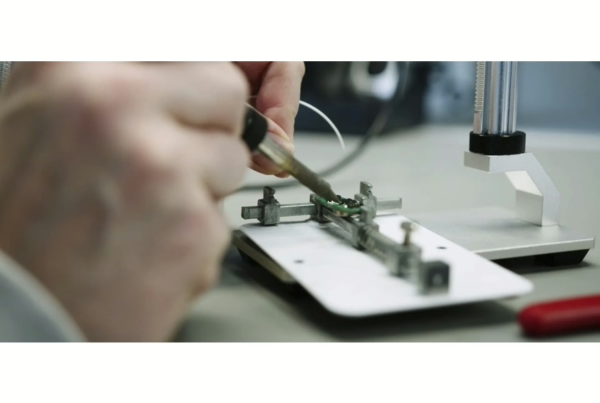
- Keeping prototyping in-house where possible. Fast iteration on 3D printers, laser cutters, and test setups shortens the loop between a decision and its evidence.
- Maintaining one shared test plan so every partner validates against the same wearer scenarios.
- Reviewing the decision register at each project phase, from feasibility check through proof of concept, pilot samples, and first series.
Fewer handoffs mean fewer places for knowledge to get lost. When one team holds hardware, firmware, textile, and algorithm expertise, many coordination problems never form.
How Elitac Wearables helps with technical decision ownership
Elitac Wearables takes the lead development role so technical decisions have one accountable owner from concept to certified product. Hardware, firmware, textile, and haptics specialists work under one roof, and the 180m² in-house Wearables Lab supports prototyping and limited production of up to 100 pieces. For larger volumes, a trusted network of manufacturing partners takes over.
What that means for your project:
- One partner owns system architecture, power budget, and the electronics-textile and haptic interfaces.
- Decision rights are agreed early and documented, following a structured development process across six phases.
- Certification guidance for MDR, CE marking, ATEX, and military requirements shapes design from day one.
- Your own team and other partners stay involved, with clear boundaries on who decides what. See what it is like to start working with us.
If you are planning a multi-partner wearable project and want clear ownership before the first design review, contact our team to discuss your project.
Related Articles
- How do you manage feedback from several organisations testing the same wearable?
- What materials are used in electronics integrated into textiles?
- Why is smart textile development so difficult to commercialize?
- What software platforms are used in wearable product development?
- How does wearable product development work?