

E-textiles and smart textiles are related but distinct categories. Smart textiles is the broad term for fabrics that sense or respond to their environment or the wearer, for example to heat, moisture or pressure, often without any electronics. E-textiles (electronic textiles) are the part of that category that integrates conductive materials and electronic components into the fabric, so the textile itself can sense, transmit or actuate.
The difference matters most when you decide how to build a wearable product, because the two approaches carry very different engineering demands, integration challenges and development costs. This article answers the most common questions, from definitions and types to integration techniques and when to choose which.
Key takeaways
- Smart textiles are the broad category; e-textiles are the part of it that uses electronics.
- Smart textiles are usually grouped as passive (sense), active (sense and react) and ultra-smart (sense, react and adapt).
- Electronics are integrated with conductive yarns, printed circuits or removable modules, often in combination.
- Choose e-textiles when the product must measure, process, communicate or give feedback.
| Smart textiles without electronics | E-textiles | |
|---|---|---|
| What it is | Material reacts to heat, moisture or light | Sensors, conductors or actuators built into the fabric |
| Power | None | Usually a battery |
| Examples | Phase-change liner, shape-memory fabric | ECG garment, haptic navigation belt |
| Expertise | Materials and textiles | Plus electronics, firmware and signal processing |
| Regulation | Textile and product safety | Also CE for electronics; MDR if medical |
What makes a textile ‘smart’ versus ‘electronic’?
A textile becomes smart when it can sense, react to or communicate information about its environment or the wearer’s body. A textile becomes electronic when conductors and active components such as sensors, microcontrollers, radios or actuators are embedded in or attached to the fabric itself.
The distinction comes down to the mechanism of response. A jacket with a phase-change material that regulates body temperature is a smart textile: it responds to heat without any circuitry. The Flight Sense System we develop for fighter pilots is an e-textile: a chest belt with dry textile electrodes that records ECG, respiration and movement during flight, so pilots get physiological feedback afterwards.
Most e-textiles are smart textiles, but not all. A heated jacket with an on/off button is electronic, yet it does not sense anything. At the other edge, fabrics with a fixed property, such as moisture-wicking or UV-protective weaves, are usually called functional textiles rather than smart textiles.
For product developers, this distinction has real engineering consequences. Smart textiles without electronics can often be produced with conventional textile manufacturing and modest tooling changes. E-textiles require expertise in electronics integration, power management, signal integrity and often firmware. The moment you add a sensor, an actuator or a radio to a fabric, you have crossed into e-textile territory, and the development process changes accordingly.
What are the main types of smart textiles?
Smart textiles are commonly grouped into three categories based on what they can do: passive smart textiles sense, active smart textiles sense and react, and ultra-smart textiles also adapt. Each level adds responsiveness and technical complexity. This classification goes back to Tao (2001), Smart fibres, fabrics and clothing.
Passive smart textiles: they sense
Passive smart textiles detect a condition, such as strain, pressure or a biosignal, and report it without acting on it. Examples are a shirt with textile electrodes that logs heart rate, or a knitted strain sensor that tracks breathing.
Active smart textiles: they sense and react
Active smart textiles respond to what they sense. The response can come from the material itself, as in phase-change and shape-memory fabrics, or from integrated electronics, as in a garment that gives haptic feedback based on sensor input.
When electronics are involved, the engineering challenge escalates: the textile must accommodate conductive pathways, a power supply and often wireless communication, while staying comfortable, washable and durable.
Ultra-smart textiles: they sense, react and adapt
Ultra-smart textiles process data and change their behaviour over time, for instance a monitoring garment that learns a wearer’s personal baseline and adjusts its alerts and feedback. They combine biosignal sensing, onboard processing and adaptive actuation in one system. That makes them the most demanding to develop and validate, and they are still found mainly in research and specialised medical and defence programmes.
How are electronic components integrated into e-textiles?
There are three main techniques, each with different trade-offs for flexibility, washability, durability and manufacturing scalability. The right choice depends on the use case, the environmental stresses the product will face and the production volume.
Conductive yarns and fibres
Yarns that carry electrical signals are woven, knitted or embroidered into the fabric, creating soft and flexible pathways for sensing or power. They are well suited to electrodes and wiring. The trade-off is that signal integrity can degrade with repeated washing and mechanical stress, and reliable connections to rigid components require careful design.
Printed electronics
Conductive inks or pastes are applied onto fabric by screen printing, inkjet printing or similar processes. This suits flat, repeatable circuits and scales efficiently to higher volumes. Printed tracks can crack or delaminate in the wash, and the choice of substrate fabric largely decides adhesion and lifetime.
Modular attachment
Electronics sit in a removable housing that clips, snaps or slots into a pocket or channel in the garment. You remove the module before washing, components are easy to replace, and the electronics are protected from textile wear. The points to watch are connector reliability and the size and comfort of the module.
Many professional and medical wearables combine these techniques: textile electrodes and wiring in the garment, with a removable module for the electronics. Encapsulation and overmoulding then protect the connection points between rigid electronics and flexible textile against moisture and mechanical stress. This transition is where most e-textile products fail first.
Selecting the integration technique is one of the earliest and most consequential decisions in wearable development. It shapes everything from the manufacturing process to the certification pathway.
What industries use e-textiles and smart textiles?
E-textiles and smart textiles are used in medical, defence, sports and industrial safety. Each sector has its own requirements, and the most demanding applications, where failure has serious consequences, are found in medical and defence.
Medical and health
- Continuous, non-invasive monitoring of ECG, EMG, respiration and movement in daily life rather than in the clinic.
- Garments with dry electrodes that patients can wear comfortably for long periods.
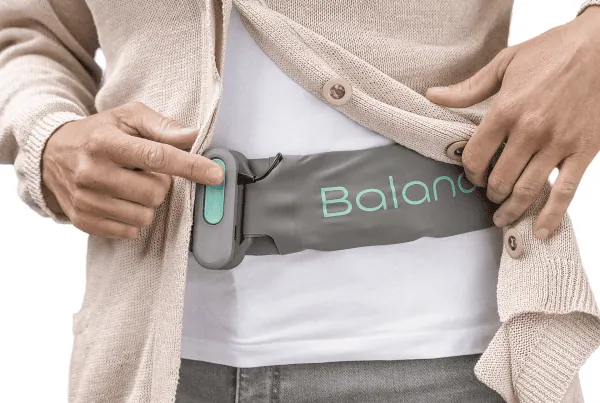
- Balance-correction devices that combine motion sensing with haptic feedback for patients with neurological conditions.
- A medical purpose means compliance with the EU Medical Device Regulation (MDR), plus standards such as IEC 60601-1 for electrical safety and ISO 10993 for skin contact.
Defence and military
- Silent, screen-free navigation through haptic feedback in a belt or vest, keeping soldiers’ hands, eyes and ears free, as in our Mission Navigation Belt.
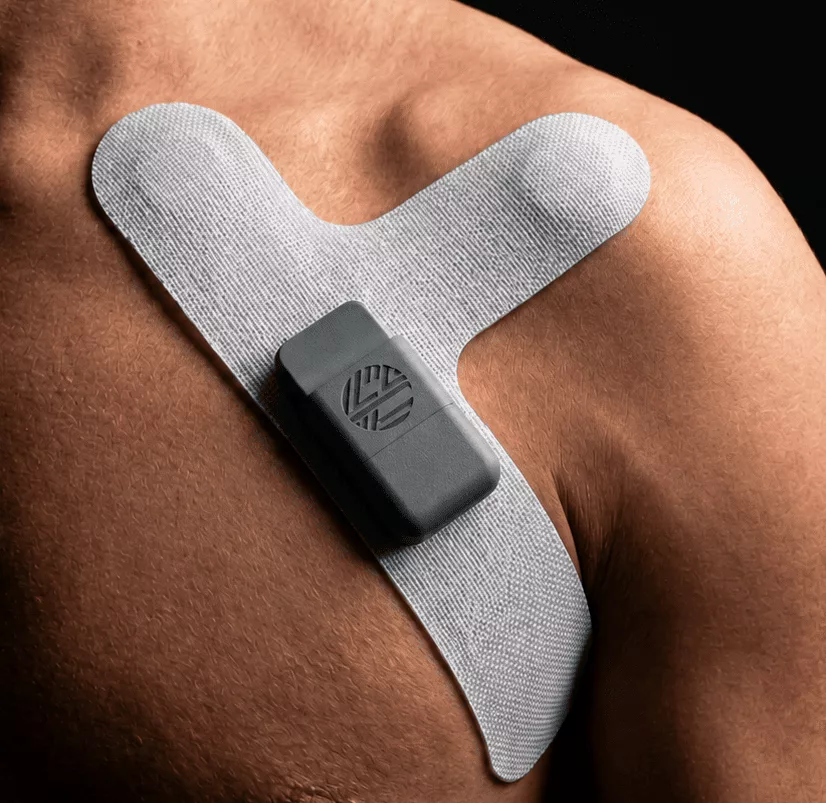
- Physiological monitoring of stress and fatigue in operational conditions, for example with the Soldier Health Patch.
- Ruggedisation, washability and reliability under extreme conditions are non-negotiable.
Sports and performance
- Pressure and IMU sensors in socks, shorts or vests track biomechanics, muscle activation and movement for real-time coaching.
- Speed to market and user experience often take priority over medical-grade requirements, though accuracy and durability remain critical.
- Watch the claims: a product that promises to diagnose or prevent injury can become a medical device.
Industrial safety and workwear
- Monitoring environmental hazards, detecting falls and alerting workers to posture risks.
- Electronics must match the durability and comfort of professional workwear, including industrial laundering; in explosive atmospheres, ATEX applies.
What are the biggest technical challenges in e-textile development?
Four challenges come back in almost every project, and each is harder than it first appears.
Washability and durability
Washability is often underestimated at the concept stage. Conductive yarns can corrode, printed electronics can delaminate, and connections between rigid and flexible parts are especially vulnerable. The solution lies in materials, encapsulation and connection methods chosen for the full product lifespan, and in testing early with repeated wash cycles (for example to ISO 6330) and flex tests, not only in the lab.
Motion artefacts
When a garment moves with the body, electrodes shift on the skin and add noise to ECG, EMG and EDA signals. Dry electrodes avoid the mess and degradation of wet gel electrodes and are more comfortable for long-term wear, but they are more sensitive to movement. Good results require careful electrode selection and placement, stable contact pressure through fit and compression, and signal processing that separates physiological data from movement.
Power management
The battery must be small enough for comfort, yet last long enough to be useful. Firmware that keeps components active longer than necessary, sensors and radios not tuned to actual use, and inefficient data handling all drain it. Treating power as a hardware problem by simply fitting a larger battery typically triggers a cascade of redesign: a bigger enclosure, new tooling, delays and budget overruns. The right approach addresses power at every layer of the system.
Certification
Medical wearables under the MDR, most of which fall in Class I to IIb, need documented evidence of safety, performance and clinical benefit. Wireless products also need CE marking under the Radio Equipment Directive. Define the intended purpose and regulatory route at the start, and build certification into the design process instead of retrofitting it at the end.
When should a product use e-textiles instead of smart textiles?
Use e-textiles when the product needs to actively sense, process or respond to data from the wearer’s body or environment. If the function can be achieved through material properties alone, such as passive temperature regulation or moisture repellence, a smart textile without electronics is often enough, and much simpler to develop and manufacture.
You need e-textile engineering if your product must:
- measure a biosignal such as heart rate, ECG, EMG or breathing;
- detect events such as a fall, a posture or a movement pattern;
- deliver a vibration alert or other feedback;
- transmit or log data, or adapt its behaviour based on sensor input.
There is also a middle ground: hybrid products that combine a passive or minimally smart textile base with modular electronics that can be removed, replaced or upgraded. This is common in medical and defence wearables, where the textile must be washable and the electronics serviceable. It also reduces development risk, because the textile and electronic subsystems can be validated independently before integration.
The decision is rarely purely technical. Production volume, target market, regulatory pathway and budget all play a role. A low-volume medical device with demanding biosignal requirements justifies the full complexity of e-textile development. A high-volume consumer garment with a simple thermal function does not. Getting this call right early prevents significant wasted investment later.
How Elitac Wearables helps with e-textile and smart textile development
Elitac Wearables brings over ten years of hands-on experience with electronics integrated into textiles across medical, defence and sports applications. Design, textiles, electronics, firmware and testing are all in-house, so you work with one team and one point of contact from concept to certified, market-ready product.
- Integration technique selection across conductive yarns, printed electronics and modular attachment, matched to your use case, washability requirements and production volume.
- Biosignal sensing covering ECG, EMG, EEG, EDA and movement, including dry electrode selection for high-movement conditions.
- System-level power management, addressing firmware, hardware and data architecture together.
- Certification guidance for MDR (Class I to IIb), CE marking, ATEX and military standards, built into development from day one.
- End-to-end delivery from feasibility check to first production series.
Working on a wearable development challenge and need a team that understands every layer of the problem? Get in touch with Elitac Wearables to discuss your project.
Frequently asked questions
Are e-textiles and smart textiles the same?
No. Smart textiles is the broad category of fabrics that sense or respond to stimuli. E-textiles are the subset that use integrated electronics.
Can you wash e-textiles?
Many can, if washability is designed in from the start: durable conductive materials, encapsulated connections and often removable electronics. Wash durability should be tested early, not at the end of development.
Are dry electrodes as accurate as gel electrodes?
Gel electrodes still give the cleanest signal at rest. Dry electrodes are more comfortable and reusable for long-term wear, and with good fit and signal processing they deliver reliable data in many applications.
Does a smart garment need medical certification?
Only if it has a medical intended purpose, such as diagnosing, monitoring or treating a condition; then the EU MDR applies. Sports and wellness products with electronics still need CE marking.
Related Articles
- What information is needed when transferring a wearable project to a new partner?
- Should you prototype electronics integrated into textiles in-house or outsource?
- What role does firmware play in electronics integrated into textiles?
- What sensors are used in military wearable technology?
- How do you evaluate the technical readiness of a wearable product before going to market?