

A new wearable partner needs the complete technical package (schematics, PCB files, bill of materials, firmware source, and textile patterns), the full test and certification record, supplier and production details, and clear IP ownership documents. Missing any one of these turns a handover into a partial redesign. Below, we cover what each category must contain and how to structure the transfer.
Why do wearable project handovers often fail?
Wearable project handovers fail because critical knowledge sits in people’s heads rather than in documents. Wearables combine electronics, firmware, textiles, and body-worn behavior, so a gap in any one discipline can stall the whole project. The outgoing partner rarely documents the reasoning behind design decisions.
The most common failure points are specific. Source files exist but nobody can build them. Firmware compiles but depends on a toolchain version nobody recorded. A textile integration technique works on the original supplier’s fabric lot and fails on any other. The new team inherits the output but not the learning, so it repeats experiments the first team already ran and abandoned.
Wearables also punish incomplete documentation more than most products. A sensor that behaves perfectly on a bench behaves differently on a moving body, and the calibration logic, filtering choices, and placement trials that solved this rarely appear in a standard file export. Without that context, the new partner cannot tell which design choices are deliberate and which are accidents.
What technical documentation does a new partner need?
A new partner needs complete, buildable hardware files, firmware source code with its build environment, textile and mechanical specifications, and a design rationale document. “Buildable” is the test: an engineer who has never seen the project should be able to reproduce a working unit from the package alone.
Hardware and electronics
Hand over schematics, PCB layout files, Gerbers, the full bill of materials with manufacturer part numbers and approved alternates, and the assembly drawings. Include the power budget, since battery performance problems are usually system-level and the new team needs the original assumptions. Note any components with long lead times or end-of-life warnings, and record which development boards were used during prototyping.
Firmware and software
Provide the full repository with commit history, not just a final snapshot. Document the toolchain, compiler version, libraries, bootloader, and flashing procedure. For haptic wearables, include actuator drive parameters, timing logic, and pattern libraries, because these define how the product feels and are hard to reverse engineer. Add any companion app code, communication protocols, data formats, and signal processing algorithms with their tuning values.
Textile and mechanical design
Smart textile projects need patterns, material specifications, conductive yarn or printed electronics details, and the exact integration method, such as overmoulding, lamination, or modular attachment. Record fabric suppliers, lot sensitivities, washing and durability results, and the assembly sequence. Photos and short videos of the build process often capture what drawings cannot.
Which test results and certification records should be handed over?
The new partner should receive every test report, validation dataset, and certification document, plus the regulatory strategy behind them. This includes the technical file, risk analysis, test lab reports, and any open findings. Certification evidence is tied to a specific design, so the new partner must know exactly what was tested.
For medical wearables under the EU Medical Device Regulation, the package should include the technical documentation, risk management file, usability and clinical evaluation records, and quality management system references. Also transfer EMC, electrical safety, battery safety, and biocompatibility reports where relevant. Military, ATEX, or other sector approvals need their own records.
Include the engineering test history as well, not only the formal reports:
- Prototype validation results, including failed tests and the fixes that followed
- Wash, wear, and durability test data for textile components
- Sensor accuracy and motion artifact findings from on-body trials
- User feedback, comfort studies, and pilot results
- Firmware test protocols and known bug lists
One warning applies here: any design change after certification can invalidate part of the evidence. The new partner needs to know which elements are frozen and which can change without triggering re-testing. Document this clearly before any modification starts.
What should be documented about suppliers, production and IP?
Document every supplier, production process, quality record, and ownership right attached to the project. The new partner must know who makes each component, under what terms, and who legally owns the design, code, and tooling. Gaps here cause delays that no technical skill can fix.
Suppliers and production
List all component suppliers, contract manufacturers, and textile producers with contacts, lead times, minimum order quantities, and pricing history. Include production work instructions, test jigs, programming fixtures, and end-of-line test procedures. Add yield data, rework records, and known process issues from pilot or series builds. If tooling exists, record who owns it, where it is stored, and its condition.
Intellectual property and contracts
Confirm in writing who owns the hardware design, firmware, algorithms, and textile methods. Identify background IP the outgoing partner brought to the project, such as a proprietary operating system or integration technique, because it may need a license rather than a transfer. List all third-party and open-source components with their license terms. Check confidentiality clauses, non-compete terms, and notice periods in the existing agreement before the transition begins.
How should a wearable project handover be structured?
Structure a wearable handover as a managed, phased process: audit, documentation transfer, knowledge transfer, parallel validation, and formal sign-off. A rushed file dump is not a handover. The goal is for the new partner to reproduce a working unit and explain why it was designed that way.
- Audit the current state. Inventory every file, report, and physical asset. Identify gaps before the outgoing team disengages.
- Transfer documentation and assets. Move files through a controlled repository and ship physical samples, fixtures, and development boards.
- Run knowledge transfer sessions. Have the original engineers walk through design decisions, known issues, and abandoned approaches with the new team.
- Rebuild and verify. The new partner builds units from the documentation alone, flashes the firmware, and compares performance against the original baseline.
- Close with sign-off. Agree on a gap list, resolve it, and record the formal acceptance of the transfer.
The rebuild step is the one teams skip, and it is the most revealing. It exposes missing files, undocumented settings, and hidden dependencies while the original team can still answer questions. Plan for a short period of access to the outgoing team after the transfer, ideally written into the exit terms.
What risks come with switching wearable development partners?
Switching partners carries four main risks: lost tacit knowledge, schedule slippage, certification disruption, and quality drift in production. Each is manageable with preparation, but none disappears. Treat a partner switch as a project in its own right, with its own budget and timeline.
- Lost tacit knowledge. Experience with sensor placement, textile behavior, and haptic tuning rarely survives on paper. The new team may rediscover problems the first team solved.
- Schedule and cost overrun. Onboarding, reverse engineering, and re-validation take real time. Plans that assume the new partner starts at full speed on day one usually slip.
- Certification disruption. Changing components, firmware, or processes can trigger new testing or technical file updates, especially for medical wearables.
- Production drift. A new manufacturer or textile supplier can shift product feel, durability, or sensor performance even when specifications look identical.
Reduce these risks by choosing a partner with end-to-end capability across hardware, firmware, textiles, and certification, so the knowledge does not fragment again. Run a small, scoped first task before transferring the full program, and keep the baseline units from the original design as a reference for comparison.
How Elitac Wearables helps with wearable project transfers
Elitac Wearables takes over wearable projects at any stage, from a stalled proof of concept to a product awaiting series production. Hardware, firmware, textile, and haptics specialists work under one roof and use an in-house 180 m² Wearables Lab, so a technical audit, rebuild, and validation can happen quickly and without handoffs between separate vendors.
- Review of existing hardware, firmware, textile, and certification documentation to find gaps early
- Rebuild and on-body validation of inherited prototypes against the original baseline
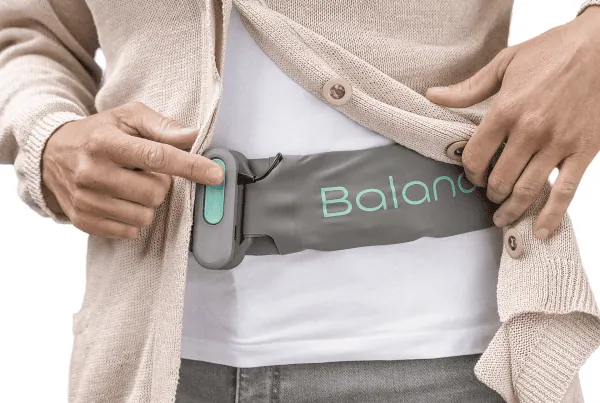
- Haptic feedback, electronics-textile integration, and biosignal sensing expertise proven in products such as the BalanceBelt and the Mission Navigation Belt
- Experience with MDR, CE marking, and military certification requirements
- Limited production in-house, plus a trusted network of manufacturing partners for scale
Want to see how a project handover could work for your wearable? Read how we work, learn more about working with us, or contact our team to discuss your project.
Related Articles
- How do you divide technical decisions between wearable development partners?
- Why is haptic feedback important in wearable technology?
- What should a Head of Product demand from a wearable development partner at each project milestone?
- What role does firmware play in wearable product development?
- What is wearable product development?