

Coordinating wearable development across several specialist companies requires one accountable lead, a written responsibility split, and fixed interface agreements between hardware, firmware, textile and software work. Without a single owner for the integrated product, each partner optimises its own part and the wearable fails where the parts meet. The sections below cover ownership, responsibility splits, interfaces, information sharing, risks and the point where one partner is the better choice.
Who should own overall coordination in a multi-company wearable project?
One party must own the integrated product, not just a workstream. That owner is usually the client’s product lead or a designated system integrator. The role carries authority over requirements, the master schedule, change approval and final acceptance, so no decision falls between two partners.
Splitting ownership across partners is the most common failure pattern. When the textile supplier and the electronics supplier each answer only to their own scope, nobody owns the questions that sit between them: where the sensor sits on the body, how the connector survives washing, how battery size affects garment comfort.
If your organisation lacks wearable systems experience, appoint a technical lead with explicit authority over the system architecture and give them a seat in every partner review. Pair that with a single change log. Every request that touches more than one partner goes through one person, and nothing gets built on an unapproved change.
How do you split responsibilities between hardware, firmware, textile and software partners?
Split responsibilities along clear technical boundaries and write every deliverable down. Hardware owns the electronics, power and enclosure, firmware owns on-device behaviour and timing, the textile partner owns the garment and electrode or conductor integration, and software owns apps, data handling and cloud services. Shared problems need a named owner, not a shared one.
Most disputes arise in the grey zones. Plan for them explicitly:
- Power: battery life depends on hardware component choices, firmware duty cycles and data transmission intervals. Assign one owner for the power budget and require every partner to work within it.
- Signal quality: motion artefacts in biosignals come from electrode placement, textile stretch, amplifier design and filtering. Name one party accountable for end-to-end signal quality.
- Haptic performance: actuator choice, mounting in the textile and firmware pattern timing all shape what the wearer actually feels. Haptics fails when these three are decided in isolation.
- Certification: regulatory requirements such as MDR for medical wearables affect hardware, software and documentation. Decide early who compiles the technical file and who supplies each part of it.
Write a responsibility matrix that lists each deliverable, its owner, its reviewer and its acceptance criterion. Review it at every phase gate.
What interface agreements prevent integration problems between partners?
Interface agreements define exactly how one partner’s output connects to another’s input, before anyone builds. They cover mechanical, electrical, data and environmental boundaries in measurable terms, so that parts built separately fit together the first time they meet.
The agreements worth fixing in writing include:
- Mechanical interface: dimensions, tolerances, attachment method between electronics module and garment, and strain relief at connection points.
- Electrical interface: connector type, pinout, voltage and current limits, and how conductive yarns or printed traces terminate at the electronics.
- Data interface: communication protocol, message formats, sampling rates, timestamps and error handling between firmware and software.
- Environmental envelope: washing cycles, temperature range, sweat exposure and mechanical stress the combined product must survive.
- Test criteria: the measurable pass or fail threshold for each interface, agreed before development starts.
Version every interface document. When one partner needs a change, the revised document goes to all affected partners and gets approved before work continues. Agreements that live in email threads rarely survive the second iteration.
How should partners share prototypes, test results and design changes?
Share everything through one controlled repository, on a fixed rhythm, with physical prototypes moving between partners at defined milestones. Documents, firmware builds, CAD files and test data belong in one versioned location with clear naming, so every partner works from the same current state of the product.
Practical habits that keep distributed teams aligned:
- Hold a short, regular integration review with all partners, ideally every sprint or two, rather than waiting for phase gates.
- Exchange physical samples early. A textile swatch with the real conductive layout tells the electronics team more than any drawing.
- Report test results in a common format with test conditions, sample IDs and raw data, so results from different partners are comparable.
- Tag each prototype with a build number tied to the exact hardware, firmware and textile versions it contains.
- Route every design change through the coordinating owner and record its impact on schedule, cost and certification.
Wearables are physical, body-worn products, so shipping time and sample handling matter. Build that logistics lag into the schedule instead of treating it as an afterthought.
What are the biggest risks when several companies build one wearable?
The biggest risks are integration failures discovered late, unclear accountability for system-level problems, and knowledge gaps at the boundaries between disciplines. Each partner can deliver its scope correctly while the assembled wearable still fails on battery life, comfort, washability or signal quality.
Watch for these specific risks:
- Late integration: if partners only combine their work near the end, defects surface when fixes are most expensive. Integrate early, even with crude versions.
- Blame loops: when a system-level fault appears, each partner can show its own part meets spec. Without a system owner, nobody fixes the whole.
- Certification surprises: a design that ignores regulatory requirements in the textile or electronics stage can force a redesign of both.
- Scope drift at the seams: tasks nobody owned, such as connector reliability or firmware tuning for a specific textile, quietly go undone.
- Validating too late: many wearable prototypes never reach production because user comfort and real-world reliability were tested only after the design was locked.
Mitigate these by integrating early, testing with real wearers, and keeping one party accountable for the whole product.
When is a single end-to-end development partner the better choice?
A single end-to-end partner is the better choice when the wearable needs tight integration across electronics, textiles, firmware and haptics, when your team lacks in-house wearable expertise, or when certification and production readiness are part of the goal. In those cases, coordination overhead and handoff risk outweigh the benefits of picking the cheapest specialist per discipline.
Multi-company models work best when you already have a strong internal systems lead, well-defined interfaces and mature components. They struggle with novel products, where the boundaries between disciplines are still being discovered. A haptic garment is a clear example: actuator placement, textile construction and firmware timing must be designed together, and changing one forces changes in the others.
A practical test: if more than two of your partners’ deliverables depend on decisions you cannot yet make, consolidate. Fewer handoffs mean fewer places for knowledge to leak and fewer parties to reconcile when something breaks.
How Elitac Wearables helps with coordinating wearable development
Elitac Wearables removes most of the coordination problem by keeping hardware, firmware, textile and algorithm expertise in one team, backed by a 180m² in-house Wearables Lab. Where outside specialists are needed, Elitac acts as the accountable system integrator, so you deal with one party for the whole product. You can read more about how we work across the six development phases.
- One accountable team from feasibility check through prototype, certification guidance and first series
- Haptics, electronics and smart textile integration developed together, not handed off
- In-house prototyping and limited production of up to 100 pieces, with a vetted network for scaled manufacturing
- Experience with MDR, CE marking, ATEX and military certification requirements
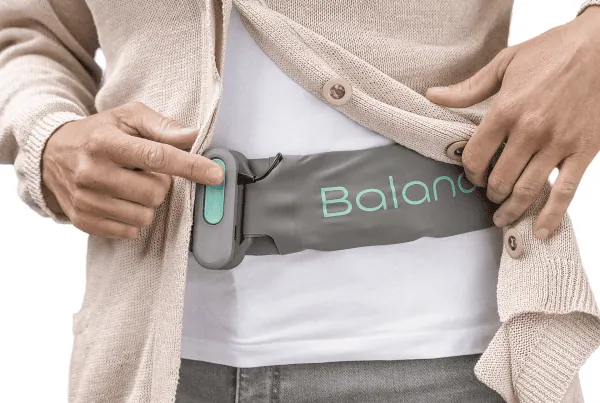
- Proven projects such as the BalanceBelt and the Mission Navigation Belt for the Royal Netherlands Army
If you are weighing a multi-partner setup against a single development partner, contact our team to talk through your project, or see the options for working with us.
Related Articles
- Should soldiers have control over their own wearable data?
- What sensors are used in military wearable technology?
- How do you future-proof a wearable product during the development phase?
- How do medical-grade wearables differ from consumer wearables in development?
- What are the stages of wearable product development?