

Most military wearables designed for operational use are both waterproof and ruggedized, but the level of protection varies significantly depending on the device’s role, the environment it is built for, and how rigorously it was engineered from the ground up. A basic fitness tracker with a rugged casing is not the same as a purpose-built combat wearable designed to survive submersion, extreme temperature swings, and sustained physical impact. The questions below unpack exactly what separates a genuinely field-ready device from one that merely looks the part.
What standards define waterproof and ruggedized ratings for military wearables?
Military wearables are assessed against two primary frameworks: IP (Ingress Protection) ratings for water and dust resistance, and MIL-STD-810 for broader environmental durability. IP ratings are defined under IEC 60529 and use a two-digit code — the first digit covers solid particle ingress, and the second covers liquid ingress. A rating of IP67 means the device is fully dust-tight and can withstand immersion in up to one metre of water for 30 minutes. IP68 extends that to deeper or longer submersion under defined conditions.
MIL-STD-810 is the US Department of Defense environmental engineering standard and covers a much wider range of stressors than IP ratings alone. It defines test methods for temperature shock, vibration, shock, humidity, altitude, salt fog, and more. A wearable that has been validated against relevant MIL-STD-810 test methods has been exposed to conditions that simulate real operational environments, not just a controlled laboratory dip in a water tank.
It is worth noting that these standards are not automatically equivalent across nations. NATO member states and other defence organisations may apply their own national standards or additional certification layers on top of MIL-STD-810. For European defence programmes, STANAG (Standardisation Agreements) often set the baseline requirements that a wearable must meet before procurement consideration.
How do military wearables differ from consumer-grade rugged devices?
The core difference between military wearables and consumer rugged devices is the depth and consistency of the engineering, not just the marketing claims on the packaging. Consumer rugged devices are typically hardened versions of commercial products — the same electronics inside a tougher shell. Military wearables, when built correctly, are designed from the component level upward with the operational environment in mind.
This distinction shows up in several practical areas:
- Component selection: Military-grade devices use components rated for extended temperature ranges, often from minus 40°C to plus 85°C or beyond. Consumer rugged devices typically operate within narrower bands.
- Connector and interface design: Military wearables use sealed connectors or eliminate external ports entirely to prevent ingress. Consumer devices often retain standard charging ports that create weak points.
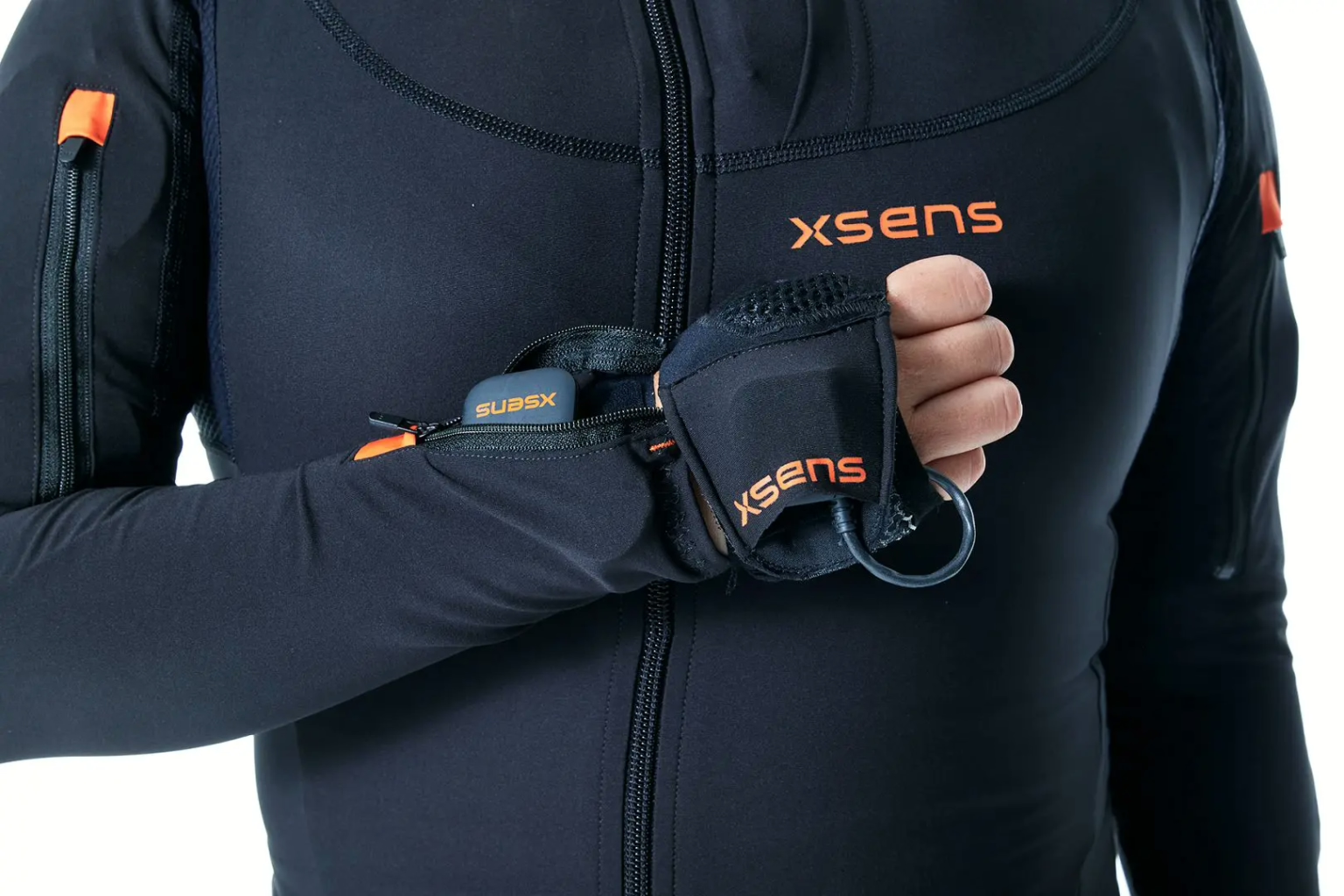
- Textile and housing integration: A combat wearable worn on the body must flex, absorb impact, and remain secure under load. Consumer ruggedized devices are usually rigid enclosures, not body-worn systems designed for sustained movement.
- Electromagnetic compatibility: Military environments involve radio frequency interference from communications equipment, vehicles, and electronic warfare systems. Military wearables must be shielded accordingly — consumer devices are not.
- Repairability and maintenance: Field-serviceable design is a real requirement in defence contexts. Consumer rugged devices are rarely built with this in mind.
The gap is not always visible from the outside. A device that passes a drop test in a showroom can still fail in the field if the seals degrade after two weeks of sweat exposure, or if the firmware crashes under the electromagnetic conditions of a vehicle convoy.
Which components are most vulnerable to failure in harsh combat environments?
In harsh combat environments, the components most likely to fail in a wearable are connectors and seals, batteries, flexible circuit boards, and any sensor that relies on skin contact. Each of these has a specific failure mode that becomes predictable once you understand the operating conditions.
Connectors, seals, and ingress points
Water and dust ingress through connectors, charging ports, and seams is one of the most common causes of field failure. Even devices with high IP ratings can lose their seal integrity after repeated thermal cycling, physical impact, or prolonged exposure to sweat and salt. Sweat is particularly corrosive — it is not clean water, and many IP tests use clean water only. A wearable that passes IP67 in a lab may still fail after extended wear in a hot climate.
Batteries and power management
Lithium-based batteries are sensitive to temperature extremes. Cold environments reduce capacity significantly — a battery that lasts eight hours at 20°C may deliver less than half that at minus 20°C. Heat accelerates degradation over time. In a wearable, the battery is also subject to physical stress from body movement, which can cause internal damage if the cell is not properly secured and protected. Power management firmware that was not optimised for real-world usage patterns compounds the problem by draining the battery faster than necessary.
Flexible electronics and textile integration
Wearables that integrate electronics into textiles face a unique challenge: the junction between rigid and flexible components is a stress concentration point. Every time the wearer moves, bends, or compresses the device, that junction experiences mechanical load. Without careful design of the transition zone, trace cracking and delamination become likely failure modes over time.
Can haptic feedback systems survive the demands of active combat?
Yes, haptic feedback systems can be engineered to survive active combat conditions, but the actuator type, mounting approach, and firmware design all need to be selected with the operational environment in mind. Not all haptic actuators are equal in this regard, and the choice made at the design stage has a direct bearing on field reliability.
ERM (Eccentric Rotating Mass) actuators contain a small rotating mass driven by a motor. They are low-cost and widely used in consumer devices, but the moving mechanical parts make them more vulnerable to shock and vibration than alternatives. LRA (Linear Resonant Actuator) actuators have fewer moving parts and a more controlled vibration profile, making them more predictable and generally more durable under physical stress. Piezoelectric actuators have no moving parts at all, which gives them a significant advantage in high-shock environments — they are solid-state devices that can withstand substantial mechanical load without degradation.
The Mission Navigation Belt developed for the Royal Netherlands Army demonstrates that haptic feedback can work reliably in a defence context. That system delivers silent, screen-free navigation cues to soldiers, keeping hands, eyes, and ears free during operations. The key to its durability lies not just in the actuator selection but in the system-level design: how the actuators are mounted, how the firmware manages timing and intensity, and how the entire assembly is integrated into a wearable form factor that can withstand the physical demands of field use.
Firmware reliability matters as much as hardware. A haptic system that produces inconsistent or incorrect feedback under electromagnetic interference, or that crashes and requires a restart in the field, is worse than no haptic system at all. Rigorous firmware testing under realistic signal conditions is not optional for combat-rated haptic wearables.
What testing is required before a military wearable enters field use?
Before a military wearable enters field use, it must pass a structured validation programme that typically covers environmental testing, electromagnetic compatibility, human factors assessment, and operational trials. The specific requirements depend on the procurement authority and the device’s function, but the general framework is consistent across most defence organisations.
Environmental testing against MIL-STD-810 or equivalent standards covers the physical stressors the device will encounter: vibration from vehicles and helicopters, shock from drops and impacts, temperature extremes, humidity, salt fog, and altitude. Each test method is designed to simulate a specific operational condition, and the device must maintain full functionality throughout and after exposure.
Electromagnetic compatibility (EMC) testing ensures the wearable neither interferes with other military electronics nor malfunctions when exposed to the electromagnetic environment of a combat zone. This is particularly relevant for wearables that incorporate wireless communication, GPS, or active sensing, as these functions can both emit and be susceptible to interference.
Human factors testing is often underweighted in commercial development but is taken seriously in defence procurement. A wearable that works perfectly on a bench but causes discomfort, restricts movement, or confuses the user under stress is operationally useless. User trials with representative end users — soldiers, medics, or logistics personnel depending on the application — are a standard part of military wearable validation.
Finally, operational trials in realistic conditions, often conducted by the end-user organisation itself, provide the final validation layer before full deployment. These trials surface failure modes that laboratory testing cannot anticipate, including the unpredictable combinations of stress, sweat, dirt, and sustained wear that characterise real field use.
Should military wearable projects prioritise ruggedization from the start?
Yes, ruggedization must be considered from the earliest design stages of a military wearable project — not added as a finishing layer once the core electronics are finalised. Attempting to ruggedize a design that was not built with harsh environments in mind almost always results in compromise: added weight, reduced flexibility, increased cost, or persistent failure modes that cannot be fully resolved without a fundamental redesign.
The decisions that determine a wearable’s durability are made at the component selection, PCB layout, and system architecture stages. Choosing the wrong connector type, routing traces through a high-stress flex zone, or selecting a battery chemistry that degrades rapidly under thermal cycling are errors that become very expensive to correct late in development. The further along a project is when these issues surface, the more disruptive and costly the fix.
This is not an argument for over-engineering early prototypes. A proof-of-concept built to explore user interaction and system logic does not need to meet MIL-STD-810. But the design decisions made during prototyping should be made with the eventual ruggedization requirements in mind, so that the path to a field-ready device does not require starting over.
The practical implication is that military wearable projects benefit significantly from having engineers with defence environment experience involved from the feasibility stage. Understanding which materials, components, and integration approaches are compatible with the eventual certification requirements prevents the most common and costly form of rework in this sector.
How Elitac Wearables helps with military wearable development
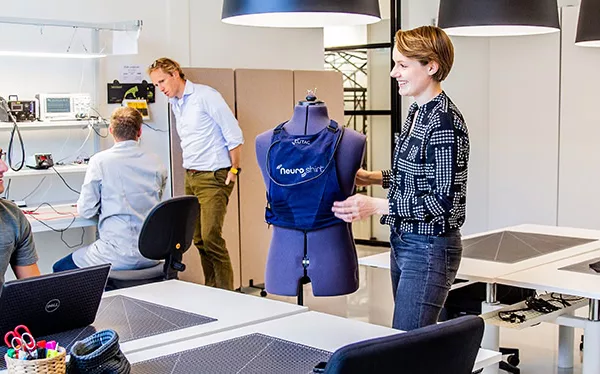
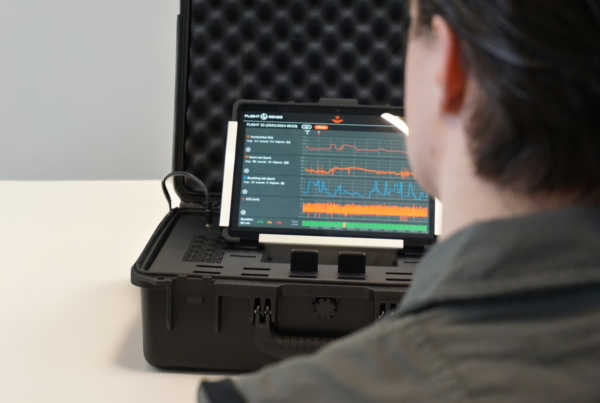
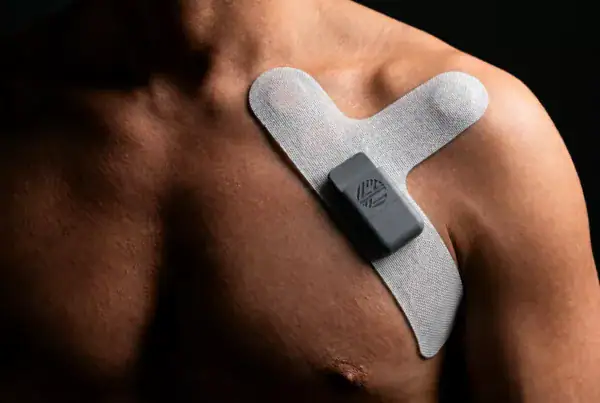
Designing a wearable that performs reliably in a combat environment is one of the most technically demanding challenges in the wearable development space. It requires simultaneous expertise across hardware, firmware, textile integration, human factors, and certification — disciplines that rarely sit under one roof. Elitac Wearables brings all of them together, with direct experience delivering defence-grade wearables including the Mission Navigation Belt for the Royal Netherlands Army and the Flight Sense System, a multi-biosensor wearable built for extreme conditions using advanced dry-electrode technology.
Working with Elitac Wearables on a military wearable project means:
- Ruggedization built into the design from day one, not retrofitted after the fact
- Actuator and component selection informed by real-world defence operating conditions, not just datasheet specifications
- Firmware development on the proprietary TacOS platform, purpose-built for wearables and validated under realistic usage patterns
- Certification guidance covering military and CE requirements, integrated into the development process rather than treated as a final hurdle
- Human factors assessment with end-user centricity at every stage, ensuring the device actually works for the person wearing it under operational stress
If you are developing a ruggedized or combat-ready wearable and need a development partner with the technical depth to take it from concept to field-validated product, contact Elitac Wearables to discuss your project.