

Defence forces use biometric wearables to continuously monitor the physiological status of soldiers in the field, providing commanders and medical personnel with real-time data on heart rate, stress levels, hydration, and physical exertion. These devices move health monitoring from reactive treatment to proactive intervention, catching signs of fatigue, heat stress, or injury before they become mission-critical. The questions below unpack exactly how this technology works, what it measures, and where development is heading.
What types of biometric data do military wearables collect?
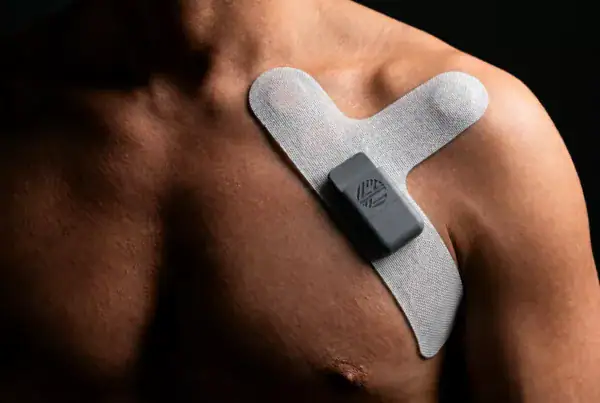
Military biometric wearables collect a broad range of physiological signals, including heart rate, heart rate variability (HRV), electrocardiogram (ECG), respiration rate, skin temperature, electrodermal activity (EDA), and movement data from inertial measurement units (IMUs) and accelerometers. Together, these signals build a real-time picture of a soldier’s physical and cognitive state during operations.
Each data type serves a specific operational purpose. Heart rate and HRV are strong indicators of cardiovascular strain and mental stress. Respiration rate reveals exertion levels and early signs of respiratory distress. EDA, which measures changes in skin conductance, correlates with acute stress responses. Movement data from IMUs captures gait, posture, and activity intensity, which is valuable for detecting fatigue-related changes in how a soldier moves.
More advanced military biometric wearables also integrate EMG (electromyography) to monitor muscle activation, and some platforms are beginning to incorporate EEG-based sensing for cognitive load assessment, though this remains technically demanding in high-movement environments. The challenge is not just collecting these signals but collecting them accurately on a body that is running, climbing, and operating under physical stress. Dry electrode technology is particularly important here, as it maintains signal quality without the gel-based electrodes that are impractical in field conditions.
How do biometric wearables improve soldier performance and safety?
Biometric wearables improve soldier performance and safety by giving commanders and medical teams continuous, objective visibility into each individual’s physical state, enabling faster, better-informed decisions about load management, rest cycles, and medical intervention. Rather than relying on self-reporting, which soldiers often suppress under operational pressure, the data speaks for itself.
The performance benefits operate across several dimensions:
- Fatigue management: Monitoring HRV and movement patterns allows training programmes to be adjusted in real time, reducing overtraining injuries and improving recovery.
- Heat stress prevention: Core temperature proxies derived from heart rate and skin temperature data can flag early heat exhaustion, which is a leading cause of non-combat casualties in hot environments.
- Stress and cognitive load monitoring: EDA and HRV data can indicate when a soldier is approaching a stress threshold that could impair decision-making.
- Injury detection: Changes in gait and movement symmetry, captured by IMU sensors, can signal musculoskeletal strain before a full injury develops.
The safety dimension is equally significant. In high-risk scenarios, a soldier who loses consciousness, suffers a cardiac event, or is incapacitated can trigger an alert to the command chain automatically. This reduces the time between an incident occurring and medical support being dispatched, which in combat medicine is often the difference between a recoverable situation and a fatality.
What is the difference between biometric wearables and tactical wearables?
Biometric wearables monitor the physiological state of the wearer, collecting health and performance data from the body. Tactical wearables, by contrast, are designed to deliver information or capability to the soldier, such as navigation cues, communication systems, or situational awareness tools. The two categories serve opposite directions of information flow: biometric wearables read from the body, while tactical wearables feed information to it.
In practice, the boundary between these categories is narrowing. Modern defence wearable platforms increasingly combine both functions in a single device or system. A chest-worn unit might measure ECG and respiration while simultaneously receiving GPS positioning data and delivering haptic navigation cues to the wearer.
A clear example of a tactical wearable is a haptic navigation belt, which delivers directional cues through vibration patterns so a soldier can navigate without looking at a screen or listening to audio instructions. This keeps hands, eyes, and ears free for the mission. A biometric wearable, by contrast, would be a chest-worn sensor array measuring heart rate and respiration during that same mission. When both functions are integrated into a single platform, the result is a wearable system that both reads the soldier’s condition and responds to it, or shares that data with command.
How are biometric wearables integrated into military command systems?
Biometric wearables are integrated into military command systems through wireless data transmission protocols that relay physiological data from individual soldiers to a centralised monitoring platform, where commanders, medics, or AI-assisted triage systems can view the status of an entire unit in real time. This integration turns individual health data into a shared operational resource.
The technical architecture typically involves several layers:
- On-body sensing: Sensors embedded in clothing, vests, or dedicated wearables collect raw physiological signals continuously.
- Edge processing: A small onboard processor filters, compresses, and interprets the data locally, reducing the volume that needs to be transmitted and enabling immediate on-device alerts.
- Wireless transmission: Processed data is sent via low-power radio protocols to a squad-level hub or directly to a command network, depending on the operational communications infrastructure.
- Command-level visualisation: Aggregated data is displayed on a dashboard that gives medics and commanders a colour-coded status view of each team member’s condition.
One of the significant engineering challenges in this architecture is power management. Continuous biosignal sensing and wireless transmission are both energy-intensive, and a wearable that runs out of battery mid-mission is worse than no wearable at all. Achieving reliable transmission without draining the battery requires careful co-design of firmware, sensor duty cycles, and communication intervals, which is why battery performance optimisation is a critical discipline in military wearable development.
What are the biggest challenges in developing biometric wearables for defence?
The biggest challenges in developing biometric wearables for defence are signal quality in high-movement conditions, ruggedisation for extreme environments, battery life under continuous use, and the certification requirements that apply to body-worn electronic systems used in operational contexts. Any one of these would be demanding in isolation; defence wearables must solve all of them simultaneously.
Signal quality under physical stress
Motion artefacts are the primary enemy of accurate biosignal data in the field. When a soldier is running or carrying heavy loads, the mechanical movement of the body creates electrical noise that corrupts ECG, EMG, and EDA readings. Dry electrode design, sensor placement, and signal processing algorithms must all work together to separate genuine physiological signals from movement-induced interference. This is a non-trivial engineering problem that requires expertise across hardware, firmware, and signal processing simultaneously.
Ruggedisation and wearability
Defence wearables must survive conditions that would destroy consumer-grade devices: extreme temperatures, moisture, dust, mechanical impact, and the physical demands of wearing body armour or carrying heavy packs. At the same time, the device must be comfortable enough that soldiers will actually wear it without it becoming a distraction or a physical burden. Balancing ruggedisation with wearability requires materials expertise, particularly in electronics-textile integration, where the goal is a system that is simultaneously robust and body-conforming.
Power management
Continuous biosignal monitoring consumes significant power. Extending battery life without increasing device size demands system-level optimisation across firmware, sensor duty cycles, and wireless communication intervals. Adding a larger battery is rarely the right answer, since it increases weight and bulk, both of which matter enormously in a defence context.
Certification and data security
Military wearables must meet specific certification standards for electromagnetic compatibility, environmental resilience, and, where health data is involved, data security and privacy frameworks. Navigating these requirements early in the development process prevents expensive redesigns later.
Which defence sectors are adopting biometric wearables fastest?
Special operations forces, military medical units, and training and selection programmes are currently the fastest adopters of biometric wearables within defence. These sectors share a common characteristic: the cost of a poor decision about a soldier’s physical state is extremely high, which makes the investment in continuous physiological monitoring straightforward to justify.
Special operations units operate in high-stakes, often isolated environments where early detection of physical degradation can determine mission success or failure. Military medical units use biometric data to triage casualties faster and monitor patients remotely. Training and selection programmes use wearable monitoring to understand how candidates respond to extreme physical stress, enabling more objective and scientifically grounded selection criteria.
Beyond these early adopters, broader infantry and logistics units are beginning to integrate biometric monitoring as the technology matures and costs decrease. Armoured vehicle crews and pilots are also an emerging application area, where confined environments make wearable integration more straightforward and the cognitive load monitoring use case is particularly compelling. In 2026, the convergence of smaller electronics, better dry electrode technology, and more capable edge processing is making it practical to deploy these systems at unit scale rather than only in specialist roles.
How Elitac Wearables helps with biometric wearables for defence
Developing a biometric wearable that performs reliably in defence conditions requires more than good intentions and off-the-shelf components. It requires deep, simultaneous expertise in biosignal sensing, electronics-textile integration, firmware, and the certification landscape. This is precisely where fragmented development approaches fail.
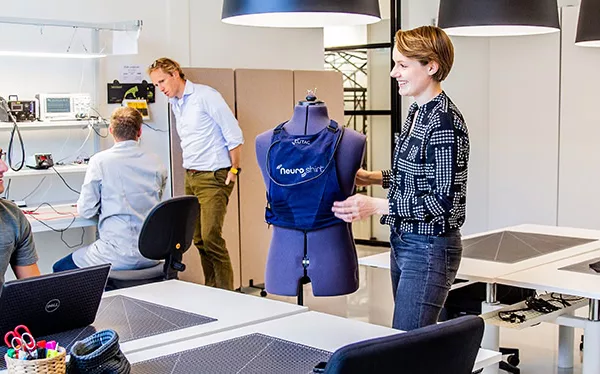
Elitac Wearables brings every one of those disciplines under one roof, which is why organisations operating in defence and adjacent sectors choose us as their development partner. Concretely, we offer:
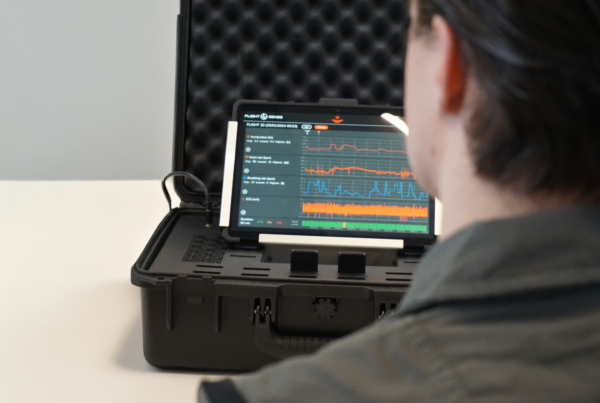
- Dry electrode selection and motion artefact mitigation for accurate ECG, EMG, EDA, and respiration sensing in high-movement conditions, drawing on our Flight Sense System as a proven reference platform for military and extreme-environment biosensing.
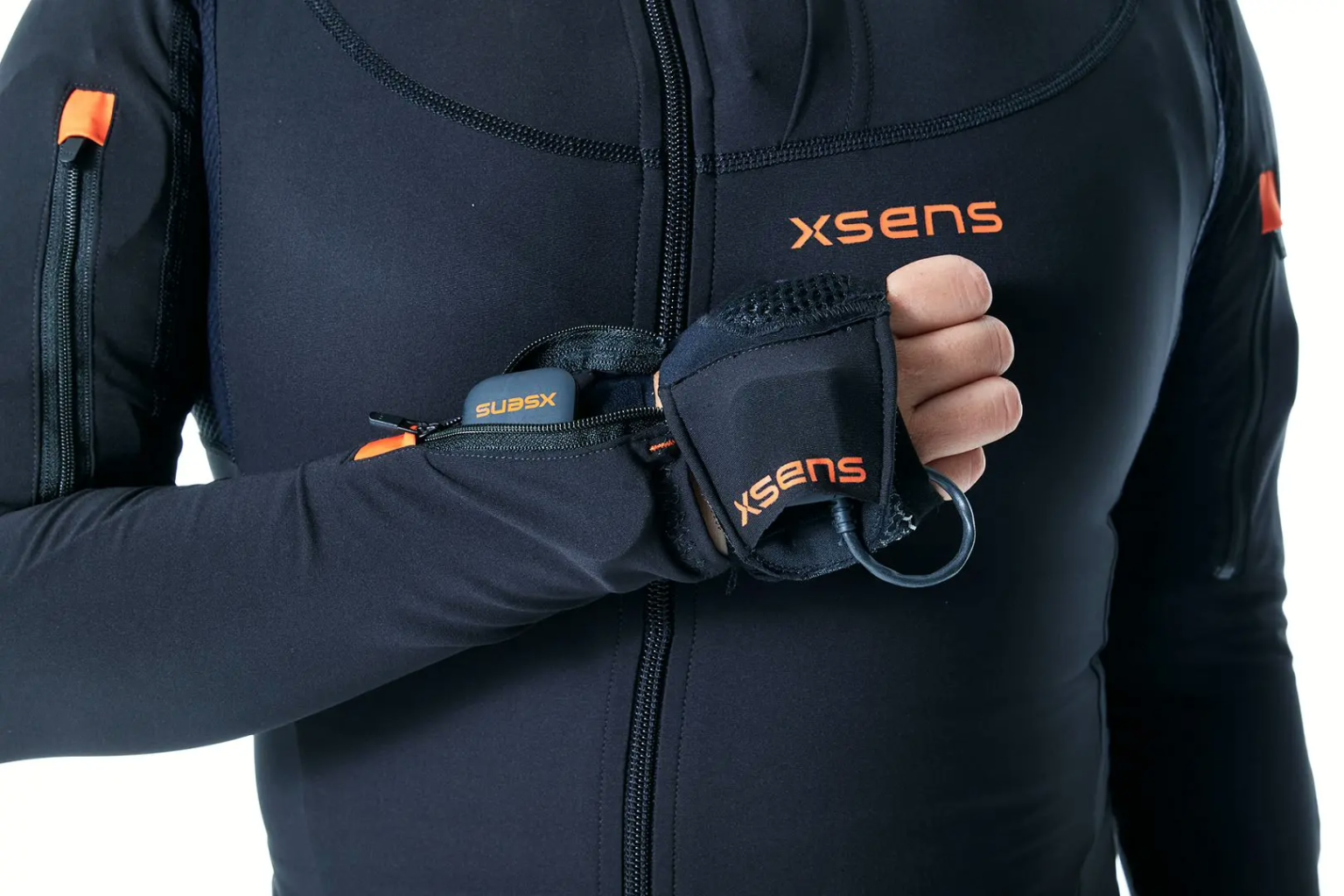
- Electronics-textile integration using conductive yarns, printed electronics, and modular attachment techniques, with over ten years of experience making these systems washable, flexible, and body-conforming.
- Firmware and power management optimisation through our proprietary TacOS operating system, purpose-built for wearables, enabling battery life extension of up to 50% without increasing device size.
- Military and regulatory certification guidance, including experience with CE marking and military certification requirements, integrated from the earliest design stages to avoid costly late-stage redesigns.
- End-to-end development from feasibility check through to first series production, with no handoffs between vendors and no knowledge gaps between disciplines.
If you are developing a biometric wearable for defence or a high-performance professional environment and need a partner who has solved these problems before, get in touch with our team to discuss your project.
Related Articles
- Can wearables detect soldier fatigue in real time?
- How do enterprise wearable products differ in development from consumer-facing devices?
- How do you start developing a wearable product?
- What are the biggest challenges in wearable product development?
- How do you align your wearable product development with your go-to-market strategy?