Night vision wearables work by capturing light that is invisible to the human eye and converting it into a viewable image, either through image intensification (amplifying available ambient light) or thermal imaging (detecting heat signatures emitted by objects and living bodies). The technology is worn on the head, integrated into helmets, or embedded into goggle systems, and is designed to give operators situational awareness in complete or near-complete darkness. This article unpacks how each core technology works, where the hardware challenges lie, and how AI is beginning to reshape what low-light wearable devices can do.
What technology powers night vision in wearable devices?
Night vision wearables rely on one of two core technologies: image intensification or thermal imaging. Image intensification amplifies ambient light, including near-infrared light invisible to the naked eye, and converts it into a visible green-tinted image. Thermal imaging detects differences in heat radiation emitted by objects, producing an image based on temperature contrast rather than reflected light.
Both technologies have existed for decades in military and law enforcement contexts, but the engineering challenge of making them truly wearable, meaning lightweight, low-power, durable, and body-conforming, has driven significant innovation in recent years. Early night vision systems were bulky, power-hungry, and restricted to vehicle-mounted or tripod-based applications. Modern wearable night vision devices must achieve the same optical performance within a form factor that a soldier or first responder can wear continuously for hours.
At the component level, image intensification wearables contain a photocathode tube, a microchannel plate that multiplies electrons, and a phosphor screen that converts those electrons back into visible light. Thermal wearables use an uncooled microbolometer array, a sensor that responds to infrared radiation in the 8 to 14 micron wavelength range. Each approach requires dedicated optics, signal processing electronics, a power management system, and a housing that can withstand operational environments.
What’s the difference between thermal and image intensification wearables?
The key distinction is what each technology detects. Image intensification wearables amplify reflected light, so they require some ambient light source to function and produce detail-rich images similar to daylight vision. Thermal imaging wearables detect emitted heat, so they work in total darkness and through obscurants like smoke or fog, but they show temperature contrast rather than reflected light.
Image intensification: strengths and constraints
Image intensification excels in environments with at least minimal ambient light, such as moonlit terrain or urban environments with residual artificial lighting. The resulting image preserves recognisable visual detail, making it easier to identify faces, read signage, or navigate complex environments. However, performance degrades significantly in total darkness or when the operator moves from a lit area into a dark one, causing temporary blindness while the system adapts. These devices are also sensitive to sudden bright light sources, which can saturate the tube and temporarily blind the user.
Thermal imaging: strengths and constraints
Thermal wearables are independent of light conditions entirely. A person, vehicle, or warm object stands out clearly against a cool background even in absolute darkness. This makes thermal imaging particularly valuable for detecting concealed individuals, identifying heat signatures through vegetation, or operating in smoke-filled environments. The trade-off is image resolution and detail. Thermal images lack the fine texture and contrast that image intensification provides, making close-range identification tasks more difficult. Thermal sensors are also more expensive to manufacture, which significantly affects the cost profile of wearable thermal systems.
In operational practice, many advanced military wearable systems now combine both technologies, fusing the thermal image and the intensified image into a single composite view. This fusion approach gives operators the detection advantage of thermal sensing with the identification detail of image intensification, though it adds considerable complexity to the hardware and software stack.
How do night vision wearables integrate with the human body?
Night vision wearables integrate with the body primarily through head-mounted systems, including helmet-mounted monoculars, binocular goggles, and increasingly, near-eye display modules integrated directly into protective headgear. The integration challenge is not just mechanical mounting but ergonomic balance, optical alignment with the user’s natural line of sight, and minimising the cognitive load placed on the wearer during high-stress operations.
The centre of gravity is a critical ergonomic factor. A device mounted at the front of a helmet shifts weight forward, causing neck fatigue over extended use. Engineers must balance optical component placement with counterweights or redistribute mass across the helmet structure. This is a genuine wearable engineering problem, not simply an optics problem, and it requires close collaboration between mechanical designers, human factors specialists, and the end users themselves.
Beyond head mounting, emerging research is exploring integration into visors, face shields, and even contact lens-scale displays, though the latter remains far from operational deployment. More immediately practical are systems that feed processed night vision imagery into helmet-mounted displays or augmented reality visors, allowing the optical sensor to be positioned separately from the display element. This decoupled architecture gives designers more freedom to optimise sensor placement for performance while keeping the display comfortable and aligned with the user’s visual field.
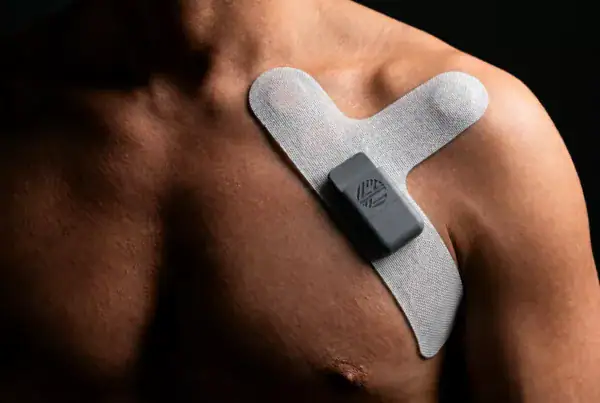
Skin-adjacent wearable integration is less common in night vision specifically, but body-worn sensor platforms that combine night vision with physiological monitoring, such as heart rate, respiration, or cognitive load, are an active area of development for military and elite sports applications. The challenge is that each additional sensing layer adds weight, power demand, and integration complexity.
What are the hardware limitations of night vision wearables?
The primary hardware limitations of night vision wearables are power consumption, weight, thermal management, and durability under operational conditions. These constraints interact with each other in ways that make optimisation genuinely difficult: reducing weight often means smaller batteries, which limits runtime; increasing image quality requires more processing power, which generates heat and drains power faster.
Power consumption is the most persistent challenge. Image intensification tubes and thermal sensors both draw continuous current, and any onboard processing for image enhancement or sensor fusion multiplies that demand. Extending battery life without increasing the size or weight of the power source requires careful system-level optimisation across every component. This is a pattern familiar to anyone who has developed complex wearables: the battery problem is almost never solved by a bigger battery. It is solved by reducing waste across firmware, hardware component selection, and data handling.
Weight and balance directly affect operator performance. Studies in military ergonomics consistently show that head-mounted weight above a threshold causes measurable degradation in neck muscle fatigue and reaction times over extended missions. Every gram added to a night vision wearable must be justified by a proportional performance gain.
Durability requirements in military and emergency service contexts are extreme. Night vision wearables must withstand shock, vibration, water immersion, dust, and temperature extremes that would destroy consumer-grade electronics. Achieving this level of ruggedisation while maintaining the miniaturisation required for a wearable form factor demands careful material selection, enclosure design, and connector engineering. Certification to military standards such as MIL-STD-810 adds further design constraints from the earliest stages of development.
How is AI changing the capability of night vision wearables?
AI is transforming night vision wearables by enabling real-time image enhancement, automatic target detection, sensor fusion, and adaptive display optimisation that would be impossible with traditional fixed-algorithm processing. Rather than simply amplifying or detecting, AI-powered systems interpret what the sensor sees and present the operator with a processed, contextually enriched view of their environment.
The most immediate application is image enhancement. Neural networks trained on large datasets of low-light imagery can denoise, sharpen, and reconstruct detail in ways that traditional signal processing cannot match. This is particularly valuable for thermal imaging, where raw sensor output lacks the fine detail that image intensification provides. AI-based upscaling and contrast enhancement can partially close that gap.
Automatic object and person detection is the next layer. Rather than requiring the operator to visually scan and identify targets manually, AI systems can highlight detected heat signatures, flag anomalous movement, or distinguish between humans, animals, and vehicles in real time. This reduces cognitive load in high-pressure situations and allows operators to process more information faster.
Sensor fusion, combining thermal, intensified, and potentially other sensor data such as radar or lidar into a single coherent image, is an area where AI is enabling approaches that rule-based algorithms cannot achieve. Training a model to optimally weight and blend inputs from multiple sensors across varying environmental conditions is a problem well-suited to machine learning.
The hardware constraint on AI in wearables is significant, however. Running neural network inference on a head-mounted device requires dedicated edge processing chips that are power-efficient enough not to drain the battery in minutes and compact enough to fit within the form factor. This is an active area of semiconductor development, and the gap between what AI can do in a data centre and what it can do on a wearable is closing but has not closed.
How Elitac Wearables helps with night vision wearable development
Building a night vision wearable that actually works in the field means solving problems across optics, electronics, power management, ergonomics, firmware, and certification simultaneously. That is where most development efforts stall, not because the technology is unavailable, but because the disciplines required to integrate it are rarely found under one roof.
Elitac Wearables brings exactly that multi-disciplinary capability to complex wearable development challenges, including defence and military applications like night vision systems. Working as an extension of your team, we contribute expertise across:
- Embedded hardware design, including power management optimisation for high-drain sensor systems
- Firmware and embedded software, with our proprietary TacOS platform enabling faster, lower-risk development
- Human factors and ergonomics, ensuring the device is genuinely wearable for the duration of real operations
- Electronics-textile integration, where body-worn systems require flexible, durable connections between rigid electronics and soft structures
- Military certification guidance, drawing on direct experience with defence procurement requirements
Our Mission Navigation Belt, developed for the Royal Netherlands Army, demonstrates what rigorous, end-to-end wearable engineering for defence applications looks like in practice. If you are developing a night vision wearable or a low-light operational system and need a development partner with the depth to take it from concept to field-ready product, get in touch with Elitac Wearables to discuss your project.