Wearables can support mental health monitoring in defence personnel by continuously tracking physiological signals linked to psychological stress, including heart rate variability, skin conductance, sleep quality, and respiration patterns. These biometric indicators give commanders and medical teams objective, real-time data that traditional screening methods simply cannot provide. The sections below unpack exactly how this works, what the challenges are, and what it takes to build a wearable that actually functions in the field.
What mental health signals can wearables actually detect in soldiers?
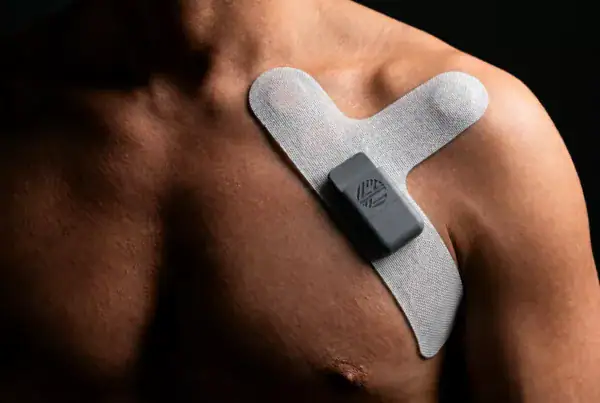
Wearables designed for stress monitoring in soldiers can detect several physiological markers that correlate with psychological state, including heart rate variability (HRV), electrodermal activity (EDA), respiration rate, skin temperature, and sleep architecture. These signals do not diagnose mental health conditions directly, but they provide continuous, objective data that reflects the body’s stress response over time.
HRV is one of the most clinically relevant signals available from a wearable. When the autonomic nervous system is under chronic stress, the variation between heartbeats decreases measurably. A sustained drop in HRV over days or weeks can indicate cumulative psychological load well before a soldier reports symptoms. EDA, which measures electrical changes in the skin driven by sweat gland activity, reflects acute stress responses in near real time.
Sleep data adds another dimension. Disrupted sleep architecture, specifically reduced REM sleep and frequent micro-arousals, is strongly associated with post-traumatic stress and burnout. A wearable that combines movement sensing with heart rate monitoring can generate a reliable picture of sleep quality without requiring clinical equipment.
The practical challenge is not detecting these signals in a lab. It is detecting them reliably on a moving body, in extreme temperatures, under physical exertion, and through layers of military kit. Motion artefacts, electrode contact quality, and power management all become critical engineering problems the moment you move from a controlled environment to a field deployment.
How do wearables differ from traditional mental health screening methods?
Traditional mental health screening in defence settings relies on self-reported questionnaires, periodic clinical interviews, and observation by commanding officers. Wearables differ fundamentally by providing continuous, objective, passive monitoring rather than point-in-time, subjective assessments. This distinction matters enormously in a military context, where stigma and reporting culture actively suppress self-disclosure.
A soldier completing a standardised questionnaire is making a conscious decision about what to report and how to present themselves. The data is retrospective, filtered by memory and self-perception, and influenced by fear of professional consequences. A biosensor wearable collects physiological data continuously without requiring the soldier to engage, reflect, or report anything.
This does not make wearables a replacement for clinical assessment. A trained psychologist or psychiatrist still interprets patterns, contextualises data, and makes diagnostic judgements. What the wearable provides is an early warning layer, flagging individuals whose physiological profile suggests an elevated stress load before a crisis point is reached. In that sense, wearable technology and traditional screening are complementary rather than competing tools.
There is also a temporal advantage. Mental health deterioration in defence personnel often develops gradually over months of deployment. Screening at fixed intervals can miss the trajectory entirely. Continuous monitoring captures trends that a quarterly interview would never detect.
What role does haptic feedback play in mental health wearables?
Haptic feedback in mental health wearables serves a different function than in navigation or training applications. Rather than delivering information, haptic cues in a mental health context are used to prompt physiological regulation, guide breathing exercises, or deliver discreet alerts to the wearer without drawing attention. The mechanism is simple but the implementation requires precision.
Guided breathing is the most established haptic application in stress regulation. A wearable can deliver rhythmic vibration patterns that prompt the wearer to inhale and exhale at a controlled pace, a technique with strong evidence for reducing acute stress responses. The haptic signal bypasses the need for a screen, audio cue, or conscious engagement with an app, which makes it suitable for high-demand operational environments where a soldier cannot look at a device.
Actuator selection matters significantly here. Eccentric rotating mass (ERM) actuators are low cost but offer limited control over timing and intensity. Linear resonant actuators (LRAs) provide more precise, nuanced vibration patterns that can be tuned to feel calming rather than alarming. Piezo actuators offer even finer control and are thinner, which matters when integrating haptics into a garment worn close to the body. Choosing the wrong actuator type produces a wearable that feels intrusive rather than supportive, which undermines compliance.
Firmware-level pattern design is equally important. The timing, duration, and intensity of each haptic pulse must be engineered deliberately. A pattern that works in a quiet room can feel jarring during physical exertion. Testing haptic responses across real usage conditions, not just on a bench, is the only way to validate that the feedback actually produces the intended physiological effect.
What are the data privacy and ethical challenges of monitoring soldiers’ mental health?
Monitoring the mental health of defence personnel through biometric wearables raises serious data privacy and ethical concerns, including the risk of coercive use, data security vulnerabilities, informed consent constraints, and the potential for biometric data to affect a soldier’s career. These are not hypothetical concerns, and any deployment programme must address them explicitly before a device goes near a person.
The most immediate ethical tension is between institutional interest in monitoring and the individual right to privacy. Continuous biometric monitoring in a hierarchical organisation like the military creates a power asymmetry. If physiological stress data can be accessed by commanding officers, it could influence decisions about deployment fitness, promotion, or medical discharge. Soldiers may modify their behaviour, or refuse to wear the device, if they perceive the data as a surveillance tool rather than a welfare resource.
Data security is a parallel concern. Military personnel are high-value targets for adversarial intelligence gathering. Biometric data transmitted wirelessly from a wearable creates an interception risk. Any device deployed in a defence context must meet stringent standards for data encryption, local storage, and transmission protocols. The hardware and firmware architecture must be designed with security as a primary constraint, not an afterthought.
Informed consent in a military context is complicated by the fact that service personnel operate within a command structure where refusal carries social and professional costs. Programme designers must create genuine opt-out mechanisms, establish clear data governance policies, and define strict limits on who can access what data and under which circumstances. Independent oversight, whether clinical, legal, or ethical, is not optional, it is a structural requirement for a programme that will survive scrutiny.
Which defence and military programmes are already using mental health wearables?
Several defence organisations and research programmes have explored or deployed wearable technology for mental health and stress monitoring in military personnel, though large-scale operational deployments remain limited. The field is active at the research and pilot stage, with a growing number of funded programmes moving toward field validation.
The United States Department of Defense has funded multiple research initiatives through DARPA and the Army Research Laboratory exploring wearable biosensors for combat stress detection. These programmes have focused on HRV monitoring, EDA sensing, and sleep tracking in deployed personnel, with the goal of building predictive models for PTSD risk.
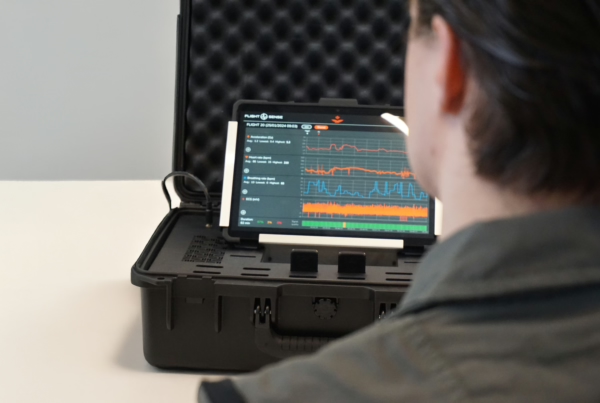
In Europe, defence innovation programmes have similarly explored wearable stress monitoring. The Dutch Ministry of Defence, which has an existing relationship with Elitac Wearables through the Mission Navigation Belt programme, operates within a broader innovation ecosystem that includes biosensor research relevant to personnel welfare. The Flight Sense System, a multi-biosensor wearable developed for military and extreme-condition use, demonstrates what is technically achievable when ECG, HRV, respiration, and acceleration sensing are combined in a single ruggedised garment.
Academic and clinical research institutions have produced promising results in adjacent contexts, including monitoring first responders and emergency services personnel, populations whose physiological and operational profiles share significant overlap with military personnel. These studies consistently demonstrate that continuous biometric monitoring can identify stress trajectories that self-report instruments miss, which is driving increased interest from defence procurement bodies in translating research into operational tools.
What should defence organisations consider when developing a mental health wearable?
Defence organisations developing a mental health wearable need to address five interconnected challenges from the outset: signal reliability under operational conditions, data security architecture, ethical governance, clinical validation, and user acceptance. Treating any of these as secondary considerations will produce a device that fails in the field regardless of its technical specification.
Signal reliability is the first engineering hurdle. Military environments involve extreme physical exertion, temperature variation, dust, moisture, and physical impact. Biosensors that perform well in a clinical setting routinely fail under these conditions. Dry electrode technology, motion artefact compensation in firmware, and ruggedised enclosures are not optional extras, they are baseline requirements. The sensor suite must be validated across the specific activities and environments the device will encounter, not across a generic test protocol.
User acceptance determines whether the device gets worn. A wearable that soldiers find uncomfortable, stigmatising, or operationally inconvenient will be left in a kit bag. Comfort, discretion, integration with existing uniform and equipment, and a clear, soldier-facing benefit all influence compliance. Involving end users in the design process from an early stage, rather than presenting them with a finished product, consistently produces better outcomes.
Clinical validation is non-negotiable for any device that will inform medical or welfare decisions. The physiological signals a wearable captures must be shown to correlate meaningfully with clinical mental health outcomes in a military population, not just in general population studies. This requires structured clinical trials, specialist data analysis, and independent review.
Finally, the development timeline must account for the full complexity of the project. Wearable development for defence applications routinely underestimates the iteration required to move from a working prototype to a field-ready device. Building in structured validation phases, where the device is tested against real operational conditions before committing to production tooling, reduces the risk of expensive late-stage failures.
How Elitac Wearables helps with mental health monitoring in defence
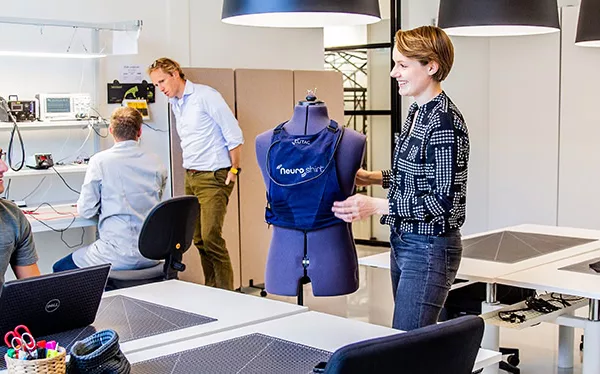
Developing a wearable for military mental health monitoring sits at the intersection of biosignal sensing, ruggedised hardware design, haptic feedback, and defence-grade security requirements. That combination is technically demanding, and it is exactly the kind of problem where a generalist electronics supplier will stall and a specialist wearable development partner makes the difference.
Elitac Wearables brings direct experience in both the defence and biosignal sensing domains. The Mission Navigation Belt, developed in collaboration with the Dutch Ministry of Defence, demonstrates the team’s ability to deliver field-ready wearables that meet military operational requirements. The Flight Sense System extends that capability into multi-biosensor territory, combining ECG, HRV, respiration, and movement sensing in a garment designed for high-movement, extreme-condition use. That is not a theoretical capability. It is a built and tested product.
For organisations at any stage of development, the team offers:
- Biosignal sensing expertise across ECG, HRV, EDA, respiration, and movement, including dry electrode selection for high-movement conditions
- Haptic feedback system design, from actuator selection through to firmware-level pattern engineering
- Electronics-textile integration for garments that are comfortable, washable, and field-durable
- Embedded hardware and firmware development, including the proprietary TacOS platform for faster, lower-risk iteration
- Guidance on certification pathways relevant to both medical and defence contexts
- A structured six-phase development process that validates user fit and clinical signal quality before committing to production investment
If your organisation is exploring wearable mental health monitoring for defence personnel and needs a development partner that has already solved the hardest parts of this problem, get in touch with the Elitac Wearables team to discuss your project.