

Augmented reality is used in military wearables to overlay mission-critical information directly into a soldier’s field of view, enabling faster decisions without breaking situational awareness. Applications range from navigation and target identification to real-time terrain mapping and squad communication. The technology is reshaping how defence forces operate, and the engineering challenges behind it are significant. Below, we unpack how AR military wearables actually work, where they are being deployed, and what it takes to build them properly.
How does augmented reality work in military wearables?
Augmented reality in military wearables works by combining optical display hardware, onboard sensors, and real-time data processing to project digital information onto a soldier’s physical view of the environment. Rather than requiring the user to look away at a screen or device, the system layers relevant data directly into the line of sight, keeping the wearer engaged with the world around them.
The core components of an AR military wearable typically include a transparent or semi-transparent display element, whether integrated into a helmet visor, a monocle-style eyepiece, or a heads-up display unit. Behind that display sits a processing unit capable of handling sensor input, positional data, and communication signals simultaneously. GPS and IMU sensors track the wearer’s position and orientation, while cameras or LIDAR modules can map the surrounding environment in real time.
The system then fuses all of this data and renders it as a coherent visual overlay. A soldier might see a waypoint arrow, a teammate’s position marker, a threat indicator, or a live drone feed projected into their visual field, all while keeping both hands free and both eyes on the environment. The latency between sensor input and display output is critical: any perceptible lag can cause disorientation or, in a high-stakes scenario, a dangerous misread of the situation.
What are the main applications of AR in military wearables?
The main applications of AR in military wearables include navigation, situational awareness, target acquisition, squad coordination, and training simulation. Each of these uses the same underlying principle of overlaying digital data onto the physical environment, but the specific information displayed and the hardware requirements differ considerably by use case.
Navigation and situational awareness
Navigation is one of the most mature AR applications in defence. Rather than relying on a handheld GPS unit or a map, soldiers can receive directional cues and position overlays directly in their visual field. This is particularly valuable in low-visibility conditions, complex urban terrain, or situations where hands must remain on a weapon. Situational awareness extensions build on this by incorporating the positions of friendly units, known hazard zones, and command-layer intelligence into the same display.
Target acquisition and identification
AR wearables can be integrated with weapon sighting systems to assist with target identification and engagement. When linked to an onboard camera or external sensor, the display can highlight objects of interest, flag potential threats, or confirm the identity of targets before engagement. This application demands extremely high processing reliability and extremely low latency, since a misidentification or display error carries life-or-death consequences.
Training and mission rehearsal
Beyond live operations, AR military wearables are increasingly used in training environments to simulate realistic scenarios without the cost or risk of live exercises. Trainees can rehearse building clearances, vehicle intercepts, or medical triage procedures in augmented environments that respond to their actions, with instructors able to introduce new variables or observe performance remotely.
How does AR in military wearables differ from consumer AR?
AR in military wearables differs from consumer AR primarily in the demands placed on reliability, durability, and operational security. Consumer AR devices, such as mixed reality headsets designed for gaming or enterprise productivity, are built for controlled indoor environments and intermittent use. Military AR wearables must perform in extreme heat, cold, humidity, dust, and high-vibration conditions while running continuously for extended periods.
The form factor requirements also diverge sharply. Consumer AR products can prioritise aesthetics and comfort in relatively stable conditions. Military wearables must integrate with existing kit, including helmets, body armour, and communication systems, without adding significant weight or restricting movement. Every gram and every millimetre of additional bulk has tactical implications.
Security is another fundamental difference. Consumer AR devices typically rely on cloud connectivity and commercial operating systems. Military AR wearables must operate in communications-denied environments, store and process sensitive data securely, and resist electronic interception or jamming. This pushes much of the processing onboard rather than into the cloud, which in turn creates significant power and thermal management challenges.
Finally, the certification and testing requirements are categorically different. Military hardware must pass rigorous standards for electromagnetic compatibility, environmental resilience, and operational safety before deployment. A consumer device that crashes inconveniently is frustrating. A military wearable that fails in the field can cost lives.
What are the technical challenges of integrating AR into military wearables?
Integrating AR into military wearables presents a cluster of interconnected technical challenges, including power management, display optics in variable light conditions, sensor fusion accuracy, thermal regulation, and ruggedisation of delicate optical and electronic components. None of these can be solved in isolation, because optimising one typically creates constraints in another.
Power is perhaps the most persistent challenge. Running a high-resolution display, multiple sensors, a communications module, and a real-time processing unit simultaneously drains batteries quickly. Increasing battery capacity adds weight, which conflicts directly with the ergonomic requirements of field equipment. The solution is not simply a larger battery but a system-level approach to power optimisation: firmware that manages component sleep states intelligently, sensors that sample at appropriate intervals rather than continuously, and hardware selected for efficiency as much as performance.
Display optics present a different kind of difficulty. Military operations span dawn, dusk, direct sunlight, and complete darkness. An AR display that is legible in one condition may be washed out or blinding in another. Adaptive brightness and contrast systems help, but they add processing overhead and complexity to an already dense hardware stack.
Sensor fusion, the process of combining data from GPS, IMU, cameras, and other inputs into a single coherent picture, requires careful algorithm design. Each sensor has its own error characteristics, and in dynamic environments where a soldier is running, crouching, or under fire, those errors compound quickly. Achieving reliable positional accuracy under these conditions demands significant investment in both hardware selection and firmware development.
Finally, the mechanical integration of optical components into helmet or eyewear form factors is genuinely difficult. Optical waveguides and micro-displays are fragile by nature. Protecting them against impact, moisture, and temperature swings while maintaining optical clarity requires materials expertise and careful mechanical design that goes well beyond standard electronics enclosure work.
How does haptic feedback complement AR in military wearables?
Haptic feedback complements AR in military wearables by delivering critical information through touch rather than sight, reducing cognitive load on the visual channel and enabling communication in situations where looking at a display is impossible or dangerous. The two modalities work together: AR handles rich, detailed information that benefits from visual representation, while haptics handles urgent, directional, or binary signals that need to reach the wearer instantly.
Navigation is a clear example. A soldier following AR waypoint overlays in a complex environment still has to divide visual attention between the display and the terrain ahead. Adding a haptic signal, such as a vibration pattern on the left or right side of the torso to indicate a turn, means the wearer can receive directional guidance without shifting focus to the display at all. This is the principle behind the Mission Navigation Belt, developed in collaboration with the Dutch Ministry of Defence: silent, screen-free navigation delivered through precisely timed haptic cues to the body, keeping hands, eyes, and ears fully available for the task at hand.
Haptic feedback also provides a redundant communication channel when visual or audio channels are compromised. In high-noise environments where radio communication is difficult and visual displays may be obscured by smoke, dust, or darkness, a coded vibration pattern on the skin can still convey a command or alert. This redundancy is not a luxury in military contexts, it is a design requirement.
The engineering challenge is designing haptic signals that are distinguishable, intuitive, and consistent under stress. A soldier in a high-adrenaline situation will not reliably interpret a complex vibration pattern they have not thoroughly trained with. Haptic UX for military wearables requires the same rigour as any other human factors design: iterative testing with real users in realistic conditions, not just a lab.
What does the future of AR military wearables look like?
The future of AR military wearables points toward tighter sensor integration, AI-assisted data interpretation, improved power efficiency, and deeper fusion between AR displays and other wearable systems including haptic, biosignal, and communication layers. The direction is toward wearables that not only display information but actively filter and prioritise it based on the wearer’s physiological state and operational context.
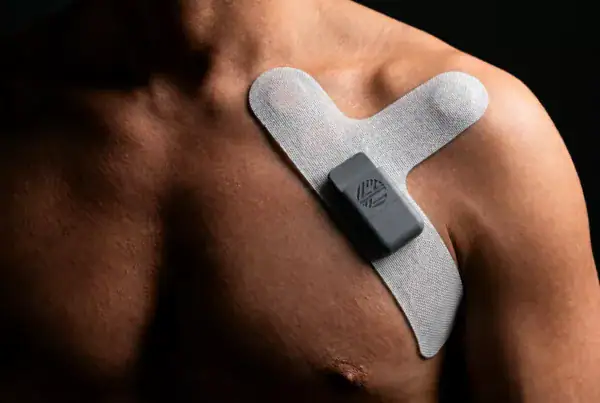
Biosignal monitoring is likely to play a growing role. A wearable that can detect elevated heart rate, stress indicators, or fatigue markers in real time could adapt the information it presents, suppressing non-critical alerts when a soldier is already at cognitive capacity, or escalating a medical alert when physiological signals indicate injury. This kind of adaptive system requires the integration of ECG, respiration, and movement sensing alongside the AR hardware stack, a significant engineering challenge but one that defence programmes are actively investing in.
Edge AI processing, running machine learning models directly on the wearable rather than in the cloud, will become increasingly important as military AR systems need to operate in denied communication environments. Advances in low-power AI accelerator chips are making this more feasible, but the power and thermal constraints remain demanding.
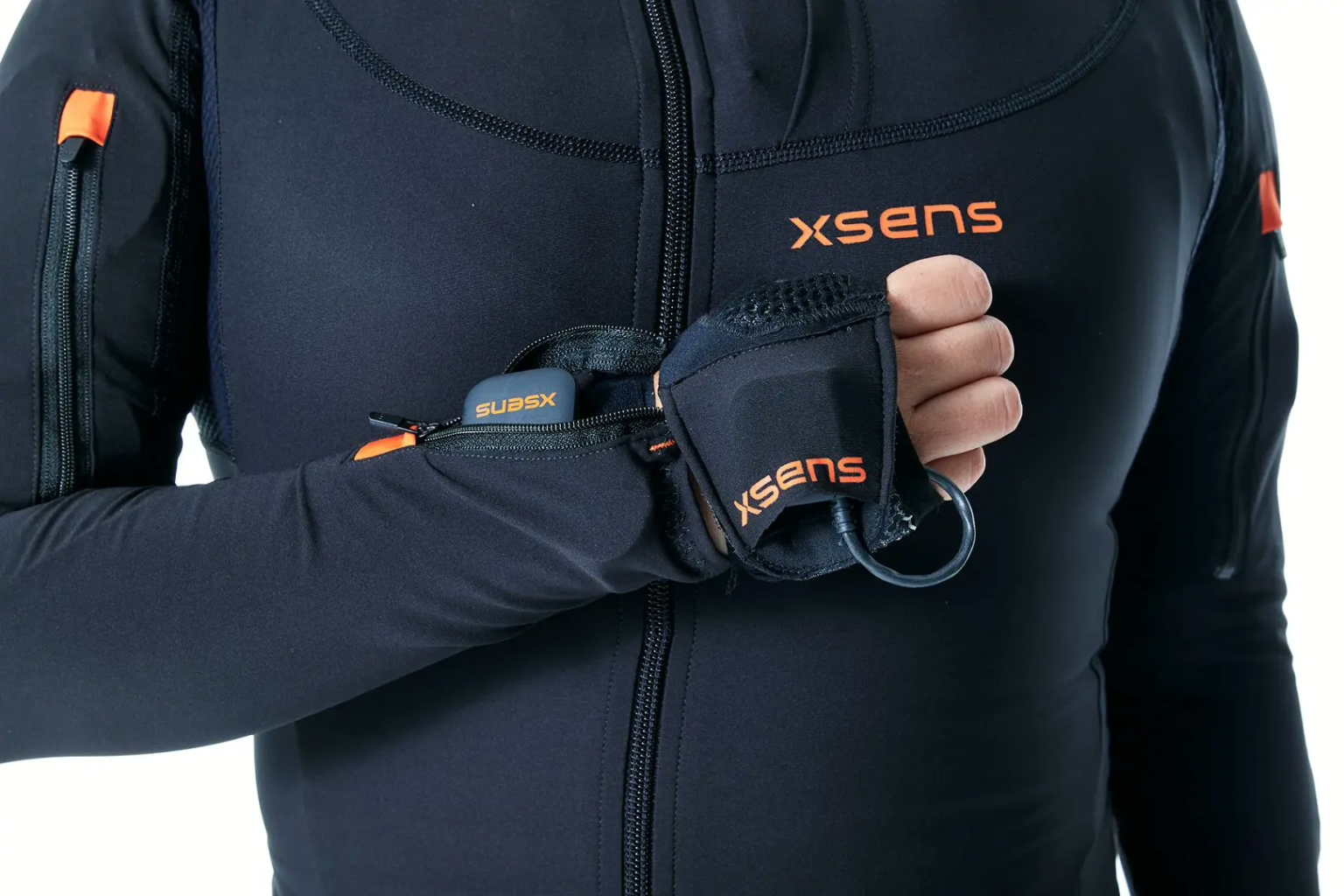
Textile integration is another frontier. Current military AR wearables are largely rigid or semi-rigid devices attached to existing kit. As electronics-textile integration matures, more of the wearable’s sensor and communication infrastructure will migrate into the fabric itself, reducing weight, improving comfort, and distributing the system’s thermal and mechanical load more evenly across the body.
The wearables that will define the next decade of military AR are not being designed by a single discipline. They require hardware engineers, firmware developers, textile specialists, human factors experts, and certification specialists working together from the earliest stages of development, not handed off sequentially between separate vendors.
How Elitac Wearables helps with augmented reality military wearables
Building AR military wearables is not a problem any single-discipline supplier can solve. The integration of optics, sensors, haptics, power management, and ruggedised electronics into a body-worn system that meets military certification requirements demands exactly the kind of multi-disciplinary, end-to-end development capability that most organisations do not have in-house.
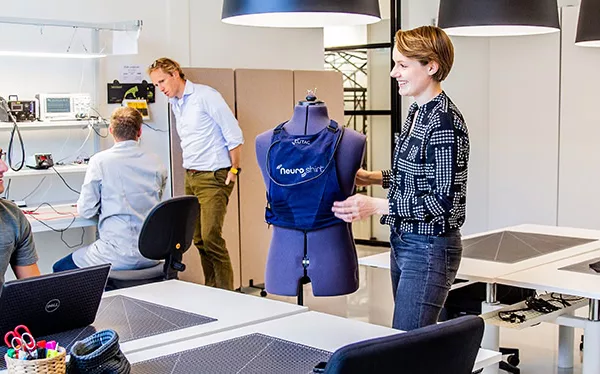
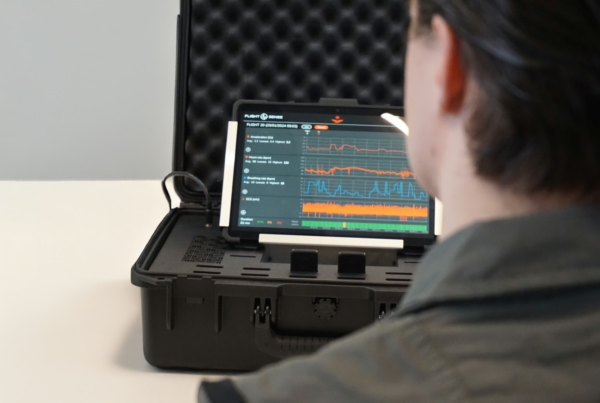
Elitac Wearables works as a development partner for organisations tackling precisely these challenges. From the Mission Navigation Belt for the Royal Netherlands Army to the Flight Sense System for military and extreme-condition biosignal monitoring, we have built the relevant experience that makes complex wearable projects manageable rather than speculative. Our in-house capabilities cover:
- Haptic system design, including actuator selection, firmware-level timing, and field-validated signal patterns for navigation and alerting
- Embedded hardware and firmware development, with our proprietary TacOS operating system purpose-built for wearable power and performance constraints
- Biosignal sensing integration, including dry-electrode ECG and IMU-based movement sensing optimised for high-movement, high-stress conditions
- Electronics-textile integration, drawing on over ten years of experience with flexible, body-worn, and washable systems
- Military and defence certification guidance, ensuring that hardware design decisions account for compliance requirements from day one
If you are developing an AR military wearable and need a partner who can take you from concept to field-ready product without handing you off between vendors, get in touch with our team to discuss your project.
Related Articles
- How do wearables support soldier situational awareness?
- Are haptic feedback wearables suitable for enterprise use?
- How do you manage risk across a wearable product development program?
- What questions should you ask a wearable development agency before signing a contract?
- What is the difference between wearable and traditional product development?