You combine internal product knowledge with external wearable expertise by treating the client team as the owner of the domain, user, and regulatory context, and the external partner as the owner of wearable-specific engineering: textile integration, haptics, sensors on a moving body, and power management. Both sides work as one team with clear roles, structured knowledge transfer, and shared accountability.
Wearables are a different discipline from the devices most product teams already build. Flexible electronics, washable textile interfaces, and sensors that behave differently on a moving body rarely exist in-house, even in strong engineering organisations. The questions below show how to bring the two bodies of knowledge together without slowing the project down.
Which internal knowledge matters most to a wearable development partner?
The internal knowledge that matters most is your understanding of the user, the clinical or operational use case, the regulatory context, and the existing product architecture. An external partner can learn materials and actuators quickly. It cannot reconstruct years of domain insight, so this is what your team must hand over first.
Prioritise the following areas:
- User and use environment: who wears the product, for how long, and under what conditions (clinical, field, sports, industrial).
- Regulatory history: existing MDR classification, test reports, risk files, and any certification constraints that will limit design choices.
- Existing hardware and firmware: interfaces, data formats, communication protocols, and known limitations of your current device.
- Failure history: what has already gone wrong in earlier versions or field use, and why.
- Commercial roadmap: target price, volumes, and the next foreseen development step.
Failure history is the most undervalued item on this list. Teams often share what works and keep quiet about what broke. A partner who knows about the dead ends from day one avoids repeating them.
What does an external wearable specialist bring that internal teams lack?
An external wearable specialist brings experience in the engineering problems that only appear once electronics sit on a body: textile and electronics integration, haptic feedback design, biosignal capture during movement, and battery behaviour in real use. These skills sit between disciplines, which is why single-discipline teams struggle with them.
The gaps tend to show up in four places:
- Integration technique selection: choosing between conductive yarns, printed electronics, and modular electronics attachment depends on washability, flexibility, and production volume. Choosing wrong early is expensive to reverse.
- Haptic system design: selecting between ERM, LRA, and piezo actuators is only the start. Timing, pattern design, and placement on the body decide whether a wearer actually perceives and understands the signal.
- Signal quality on a moving body: dry electrodes and motion artefacts behave very differently from bench conditions. ECG and EMG that look clean in the lab degrade quickly during real movement.
- Power management: battery shortfalls late in development are usually due to system-level inefficiencies in firmware, sensor duty cycles, and data handling, not a sign the battery is too small. Enlarging the battery triggers enclosure redesign, new tooling, and delay.
The practical value is pattern recognition. A team that has built dozens of body-worn products recognises a failing design direction early, often before a prototype confirms it.
How should roles be split between internal and external teams?
Split roles by who holds the knowledge, not by who has spare capacity. Your team owns product vision, user requirements, regulatory strategy, and final decisions. The external partner owns wearable engineering choices and their execution. A named lead on each side and a shared backlog keep the arrangement from drifting into a client-supplier relationship.
A workable division looks like this:
- Internal team: defines requirements and acceptance criteria, supplies user access, owns the quality system and regulatory submissions, and makes go or no-go decisions at each phase gate.
- External partner: recommends and validates technical approaches, builds and tests prototypes, designs the haptic, sensing, and textile layers, and flags risks that fall outside the client’s experience.
- Shared: sprint planning, test protocols, and the risk register.
Phase gates matter here. A structured process that runs from feasibility check through proof of concept, prototype, pilot samples, first series, and scaled production gives both sides natural decision points. Clarity on who decides at each gate prevents the common stall where nobody feels empowered to approve the next step.
How can product knowledge be transferred without slowing the project?
Transfer knowledge in short, focused bursts tied to the work at hand rather than in one large upfront documentation effort. A kickoff workshop with your domain experts, access to existing hardware and test data, and a recurring review rhythm move knowledge faster than weeks of document writing, and they keep engineers building from the start.
Three practices work consistently:
- Run a joint kickoff workshop. Bring your product, clinical, and regulatory people together with the partner’s hardware, firmware, and textile engineers. Questions get answered in the room instead of through email chains.
- Share raw materials, not just summaries. Existing schematics, firmware repositories, test data, and user feedback give a partner more than a polished briefing deck.
- Use short iteration cycles. Agile sprints with regular demos expose knowledge gaps quickly. When a demonstrator behaves unexpectedly, the missing context surfaces immediately and can be supplied in days.
Building early functional demonstrators also transfers knowledge in both directions. The external team learns how your users and product behave, and your team sees what wearable constraints mean in practice. A build-for-validation approach, where early prototypes test interaction, comfort, and perceived value before any production tooling is committed, typically surfaces misunderstandings while they are still cheap to fix.
How do you keep end-user needs central during co-development?
Keep end-user needs central by putting real wearers into the process at every phase, not only at the end. Define wearer-centred acceptance criteria up front, such as comfort over a full wearing period, ease of donning, and clarity of feedback, and test each iteration against them with actual users in realistic conditions.
Co-development can drift toward technical elegance when engineers on both sides enjoy solving hard problems. Counter this with specific habits:
- Test early with the people who will wear it. Soldiers, patients, athletes, and technicians reveal problems no engineering review catches, from strap placement to a vibration pattern that is simply ignored.
- Write requirements as wearer outcomes. “A wearer can recognise a left turn without looking at a screen” is testable. “Actuator amplitude of X” is a design parameter, not a requirement.
- Involve the internal domain experts in user sessions. They interpret feedback in context, and the external team sees the user through their eyes.
- Protect human factors time in the plan. Comfort, interaction design, and real-world behaviour need budget, because they are the usual casualties of schedule pressure.
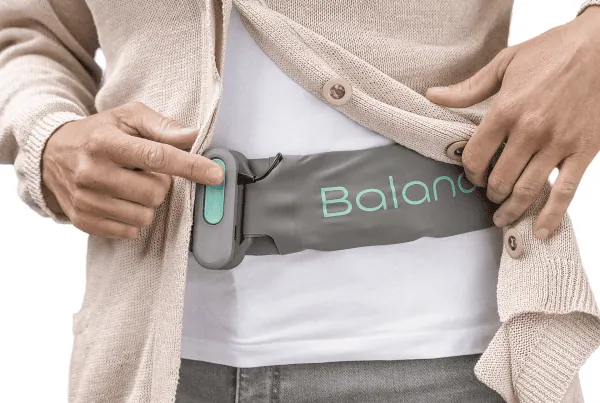
The Mission Navigation Belt illustrates the principle. Developed in close collaboration with the Dutch Ministry of Defence, it delivers silent navigation through haptic feedback so soldiers keep their hands, eyes, and ears free. That requirement came from the user’s situation, not from a technology preference.
How should intellectual property and handover be arranged?
Arrange intellectual property and handover before development starts, in writing. Agree who owns foreground IP created during the project, how background IP each party brings is licensed, and what documentation and source files the client receives at each phase. Settling this early prevents disputes and keeps the path to production open.
Cover these points in the agreement:
- Background versus foreground IP: separate what each party owned before the project from what is created during it. If the partner uses proprietary building blocks or a wearable firmware platform, define the licence terms for your production use.
- Deliverables per phase: schematics, PCB layouts, firmware source, textile patterns, test reports, and risk documentation, each with a defined format and delivery point.
- Certification documentation: for medical or safety products, ensure the technical file contents and design history are structured for your regulatory submissions from the start.
- Manufacturing transfer: specify how production partners receive the design package, and who supports the first series if issues appear.
- Confidentiality and publication: clarify what can be shared with research partners or used in case studies.
Treat handover as continuous rather than a final event. If your team receives documented deliverables at every phase gate, the final transfer to production or to your internal team is a formality rather than a scramble.
How Elitac Wearables helps with combining internal knowledge and wearable expertise
Elitac Wearables works as an extension of your existing team. You bring the domain, user, and regulatory knowledge. Elitac Wearables brings haptics, electronics and textile integration, biosignal sensing, embedded hardware, firmware, and human factors, all in-house and in one team, supported by its 180m² Wearables Lab. The way of working is described on the how we work page.
- Structured six-phase development from feasibility check to production, with clear decision points for your team
- Early functional demonstrators that validate user interaction before you commit to tooling
- Certification guidance for MDR, CE marking, ATEX, and military requirements
- Production coordination through a trusted manufacturing network, with limited series built in-house
Curious how this could work for your project? Read about working with us, or contact our team to discuss where your wearable currently stands.
Related Articles
- Can electronics integrated into textiles be washed safely?
- How do haptic wearables integrate with existing enterprise software?
- Can haptic feedback wearables help people with hearing impairments?
- How do haptic feedback wearables improve user experience?
- What are the limitations of current haptic feedback wearables?