
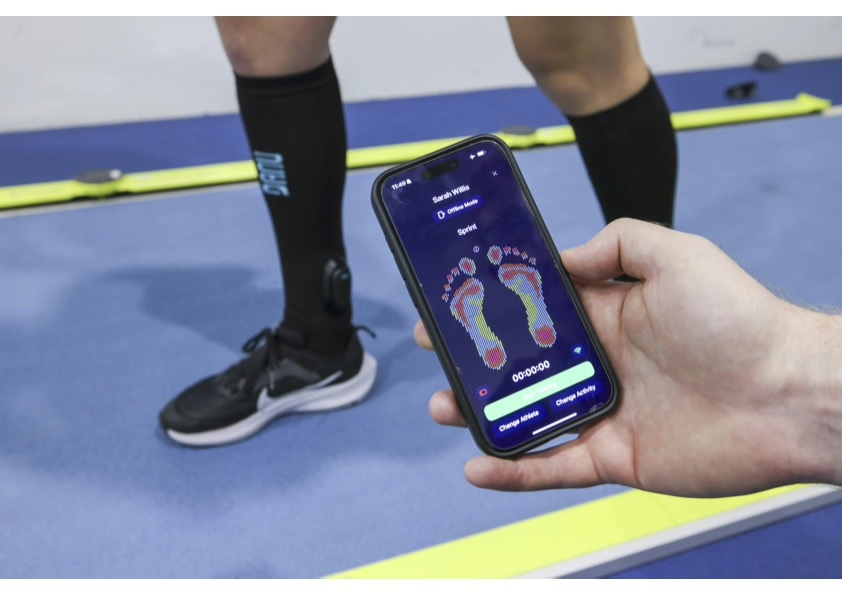
User research for a wearable product requires studying how people interact with a device while wearing it during real physical activity, in real environments, over extended time. Unlike a screen-based product, a wearable must be comfortable, unobtrusive, and reliable under movement, sweat, and variable conditions — all of which can only be evaluated on a body, not in a lab. The sections below address the specific methods, timing, participant selection, and data collection practices that make wearable user research effective.
What makes user research for wearables different from other products?
Wearable user research is fundamentally different because the product is worn on a moving, sweating, variable human body — and that physical reality changes everything. Comfort, fit, skin contact, weight distribution, and how the device behaves during activity are all variables that cannot be tested by observation alone. The body is both the use environment and the interface, which means standard usability methods designed for screens or handheld devices are insufficient on their own.
With a smartphone app, you can watch someone tap through a flow and identify friction points within minutes. With a wearable, the most critical problems often surface after hours or days of wear. Skin irritation from a sensor electrode, haptic feedback that becomes imperceptible when the wearer is moving quickly, a battery that performs well in a controlled test but drains unexpectedly during a long shift — none of these emerge from a short lab session.
There is also a perceptual dimension unique to wearables. Users develop a relationship with something they wear. They notice when it is slightly too heavy, when a seam sits in the wrong place, or when the feedback signal feels intrusive rather than helpful. In custom wearable product development, this means user research must account for both functional performance and the subjective experience of wearing the device across different contexts and durations.
What methods are used to gather user insights for wearable devices?
The most effective wearable user research combines contextual observation, structured wear trials, and self-reported feedback across multiple sessions. No single method is sufficient because wearables must perform across time, movement, and environment — each of which surfaces different types of issues.
The most commonly used methods in wearable product development include:
- Contextual observation: Watching participants use the device in their actual environment — a clinical ward, a factory floor, a training session — rather than a controlled lab. This reveals how the wearable interacts with clothing, equipment, and physical demands that cannot be replicated artificially.
- Extended wear trials: Asking participants to wear the device over multiple hours or days and report on comfort, usability, and any issues that arise. Short sessions miss problems that only emerge with prolonged contact or repeated donning and doffing.
- Think-aloud protocols: Asking participants to narrate their experience while wearing the device during a task. Particularly useful for evaluating feedback signals — for example, whether a haptic cue is interpreted correctly or ignored entirely.
- Structured interviews and questionnaires: Post-session feedback using validated comfort and usability scales, supplemented by open-ended questions. The System Usability Scale and comfort rating tools adapted for body-worn devices are commonly used starting points.
- Sensor data logging: Capturing device-side data during wear trials — such as movement patterns, signal quality, and battery draw — to correlate objective performance with subjective reports. This is especially important for biosignal wearables where motion artefacts affect data quality.
For haptic wearables specifically, perception testing is an additional layer. Participants need to evaluate whether they can reliably detect and interpret feedback signals under realistic conditions — during movement, noise, or cognitive load. This cannot be assumed from bench testing alone.
How do you recruit the right participants for wearable user testing?
Recruit participants who closely match the intended end user in terms of body type, physical activity level, and use context — not just demographic profile. For wearables, physiological and behavioural fit matters as much as age or gender, because fit, comfort, and sensor performance vary significantly across body shapes and movement patterns.
Several principles guide effective recruitment for wearable user testing:
- Prioritise context match over convenience: A wearable designed for use in industrial environments should be tested by people who work in those environments, not office-based volunteers. The physical demands, attire, and cognitive load of the real use context are not replicable with a substitute population.
- Include body diversity deliberately: Wearables that fit well on one body type often fail on another. Recruit across a range of body sizes, limb proportions, and skin tones — particularly relevant for optical sensors and electrode-based biosignal devices, where skin tone and tissue composition affect signal quality.
- Include low-tolerance users: People with sensory sensitivities, skin conditions, or strong preferences around comfort will surface problems that average users may tolerate and not report. Their feedback is disproportionately valuable for identifying design risks early.
- Work with clinical or professional gatekeepers when needed: For medical or occupational wearables, recruiting through clinical partners, occupational health teams, or professional associations ensures participants genuinely represent the target population and that ethical requirements are met appropriately.
Sample size for wearable research does not need to be large in early stages. Five to eight participants in contextual observation can surface the majority of significant usability issues. Wear trials benefit from slightly larger groups — typically ten to twenty participants — to capture variability in comfort and fit across different body types and activity levels.
When should user research happen in a wearable development cycle?
User research should begin before a single component is specified and continue at every major transition in the development cycle. The most costly mistake in wearable product development is treating user research as a validation step at the end — by that point, fundamental decisions about form factor, materials, and interaction design have already been made and are expensive to reverse.
In practice, research should be integrated across the following stages:
- Before concept development: Contextual inquiry and stakeholder interviews to understand the real use environment, existing workarounds, and what the user actually needs the device to do. This prevents building a technically impressive product that solves the wrong problem.
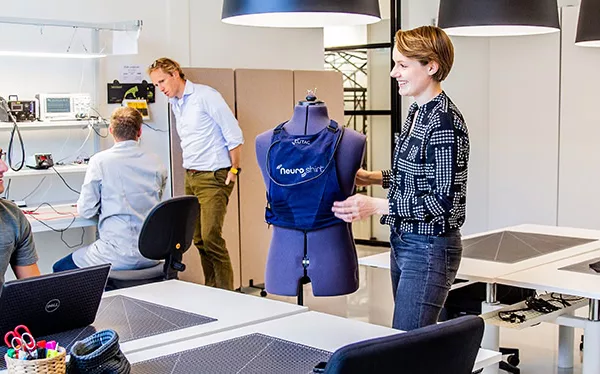
- During proof of concept: Early wear tests using rough physical mockups — even non-functional foam or fabric models — to evaluate placement, weight, and basic comfort before any electronics are committed. This is fast, cheap, and frequently changes the design direction.
- During prototyping: Functional prototypes should go on real users in real conditions as early as possible. This is when haptic feedback perception, sensor placement, and donning and doffing behaviour need to be tested against actual use patterns.
- Before final design lock: A structured wear trial with the near-final prototype, long enough to surface issues that only emerge with extended wear. Changes at this stage are still manageable; changes after tooling are not.
Industry experience consistently shows that wearable projects that delay user contact until late in development face the highest risk of costly redesigns or failed launches. The principle is straightforward: the earlier you put a device on a real person, the cheaper the feedback becomes.
What data should you collect during wearable wear trials?
During wearable wear trials, collect both subjective user feedback and objective device performance data simultaneously. Relying on one without the other produces an incomplete picture — a device can feel comfortable to the wearer while delivering degraded sensor data, or perform technically well while being abandoned because of subtle discomfort the user cannot articulate clearly.
Subjective data from participants
Comfort ratings collected at regular intervals during the trial, not just at the end, reveal how the wearing experience changes over time. Key dimensions to capture include overall comfort, localised pressure or irritation, thermal comfort, perceived weight, and ease of putting the device on and taking it off. Open-ended questions after each session often surface issues that rating scales miss — particularly around how the device interacts with clothing or equipment the participant wears alongside it.
For haptic wearables, perception accuracy data is critical: can participants correctly identify the signal, its direction, or its urgency under realistic conditions? This requires structured tasks, not just general impressions.
Objective data from the device
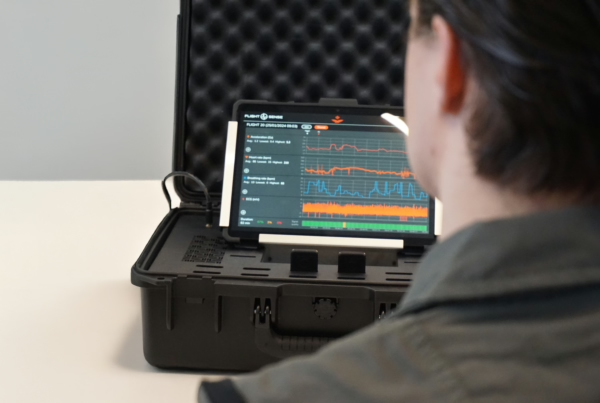
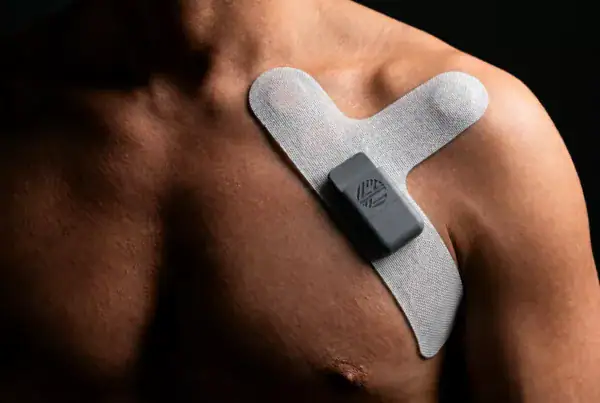
Log sensor data throughout the trial to identify signal quality issues, motion artefacts, and dropout events. Compare device-recorded data against ground truth where possible — for example, comparing a wearable ECG against a clinical reference to identify where movement degrades the signal. Battery consumption logs reveal whether real-world usage patterns match design assumptions, which is frequently where discrepancies emerge. Movement and activity data from an IMU can help correlate periods of activity with comfort complaints or sensor performance drops.
Combining both data streams allows the development team to identify whether a reported problem is a perception issue, a hardware issue, or a software issue — a distinction that determines the correct design response.
How do you translate user research findings into wearable design decisions?
Translate user research findings into design decisions by categorising issues by root cause — comfort and fit, interaction and feedback, sensor performance, or software behaviour — and prioritising them by frequency, severity, and the cost of addressing them at the current development stage. Not every finding requires a redesign, but every finding requires a deliberate response.
The translation process works best when the research team and the engineering team analyse findings together. A comfort complaint about pressure at a specific location might be resolved by a textile change, a hardware repositioning, or a firmware adjustment to reduce device rigidity during movement — and the correct answer depends on engineering knowledge that a researcher alone does not have. Siloed handoffs between research and development slow this process and introduce interpretation errors.
Specific practices that support effective translation include:
- Map findings to design parameters: Every reported issue should be linked to a specific design variable — material, geometry, feedback timing, sensor placement — so the team knows what to change, not just that something is wrong.
- Distinguish preference from requirement: Some feedback reflects personal preference; other feedback reflects a genuine usability barrier. Prioritise findings that affect function, safety, or adoption over those that reflect individual taste.
- Iterate quickly with low-fidelity changes: Before committing to a revised prototype, test candidate solutions using simple physical mockups or firmware adjustments. Fast iteration on targeted changes is more efficient than a full prototype revision after every research round.
- Document rationale, not just decisions: Record why a design decision was made and what user evidence supported it. This is particularly important for medical wearables where regulatory submissions require documented evidence of user-centred design.
The goal is a continuous loop between user insight and design action — not a single research phase followed by a single design phase. Wearable development teams that maintain this loop throughout the project consistently produce devices that perform better in real-world conditions and require fewer late-stage corrections.
How Elitac Wearables supports user research in wearable development
For organisations developing a wearable product without an in-house team experienced in body-worn technology, the user research process is often where the most critical assumptions go untested. Elitac Wearables integrates user research directly into its wearable product development services, treating it as a technical discipline rather than a separate phase bolted on after engineering decisions have already been made.
In practice, this means:
- Wear trials are planned from the earliest prototype stage, with functional demonstrators built specifically for user contact rather than internal validation
- Human factors and comfort evaluation are handled by the same multidisciplinary team responsible for hardware, firmware, and textile integration — so findings translate directly into design changes without handoffs or interpretation gaps
- For medical wearables, user research is structured to generate the documented evidence required for MDR compliance, avoiding the need to repeat studies later in the process
- For haptic wearables specifically, perception testing protocols are built around real-world conditions — movement, noise, cognitive load — not controlled bench scenarios
If you are at the stage where a wearable concept needs to be validated with real users before committing to tooling or production investment, speak with the Elitac Wearables team. The earlier user research is built into the process, the less it costs to act on what it reveals.
Related Articles
- Why is smart textile development so difficult to commercialize?
- What role does firmware play in electronics integrated into textiles?
- What role do wearables play in special forces operations?
- What are the security considerations for haptic feedback wearables?
- Can a startup successfully compete in wearable product development?