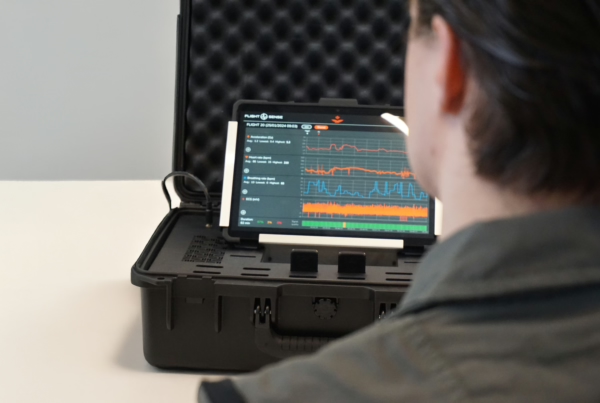
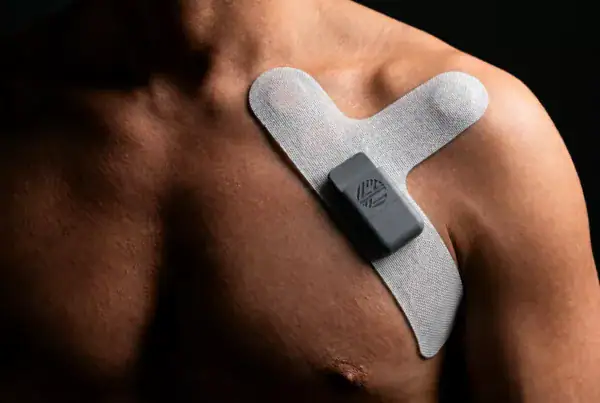
Military wearables carry serious cybersecurity risks. Because these devices collect sensitive biometric, positional, and operational data in real time, a compromised wearable can expose soldier locations, degrade mission coordination, and give adversaries actionable intelligence. The risks span data interception, firmware exploitation, and physical device tampering. The sections below break down exactly where those vulnerabilities lie and what defence organisations can do about them.
What types of data do military wearables collect and transmit?
Military wearables collect a broad range of sensitive data, including GPS location, biometric readings such as heart rate and respiration, movement patterns, and, in some cases, encrypted communications signals. Haptic navigation devices add another layer by transmitting directional and mission-relevant cues. All of this data is transmitted wirelessly, which creates multiple interception points.
The data categories most relevant to military wearable security include:
- Geolocation data: Real-time and historical GPS coordinates that can reveal patrol routes, base positions, and troop movements
- Biometric data: Heart rate, heart rate variability, respiration rate, and stress indicators that can expose the physiological state of individual soldiers
- Behavioural and movement data: Gait patterns, acceleration data, and activity cycles that can be used to infer operational schedules
- Haptic command signals: In navigation and coordination wearables, the signals triggering tactile cues may encode mission-critical instructions
- Device metadata: Connection identifiers, firmware version strings, and communication timestamps that can reveal device types and network topology
The combination of these data streams is what makes military wearable security so demanding. A single biometric reading is relatively low value. A continuous stream of location, physiology, and movement data tied to a specific soldier is a high-value intelligence target.
How can adversaries exploit vulnerabilities in military wearables?
Adversaries can exploit military wearables through wireless signal interception, firmware attacks, man-in-the-middle intrusions on data transmission channels, and physical tampering with the device itself. Because many wearables rely on Bluetooth Low Energy or similar short-range protocols, proximity-based attacks are a realistic threat in contested environments.
The most operationally relevant attack vectors include:
- Passive signal interception: Capturing Bluetooth, ANT+, or proprietary RF transmissions to reconstruct location or biometric data without alerting the wearer
- Firmware exploitation: Injecting malicious code through an over-the-air update mechanism or a compromised supply chain component, altering device behaviour or exfiltrating data covertly
- Replay attacks: Capturing and retransmitting legitimate command signals to trigger false haptic feedback or navigation cues, potentially misdirecting soldiers in the field
- Device fingerprinting: Identifying specific device models from their RF emissions to infer the equipment and capabilities of a unit
- Data aggregation: Combining individually innocuous data points from multiple wearables to build a detailed operational picture of a unit’s activity and health status
Replay attacks on haptic wearables deserve particular attention. A device designed to deliver silent, screen-free navigation cues, like a tactile belt that guides soldiers without requiring them to look at a screen, becomes a liability if an adversary can feed it false directional signals. The soldier trusts the device. That trust becomes the vulnerability.
What makes military wearables harder to secure than standard devices?
Military wearables are harder to secure than standard devices because they must operate reliably in extreme physical conditions while remaining lightweight, power-efficient, and body-worn. These constraints force engineering trade-offs that directly conflict with conventional security hardening, which typically increases processing load, power draw, and hardware complexity.
Several factors compound the challenge:
- Power constraints: Strong encryption and continuous authentication require processing cycles that drain batteries faster. In a device worn for extended operations, battery life is not a convenience issue but an operational requirement
- Form factor limitations: The physical size of a wearable limits the security hardware that can be embedded. Secure enclaves, hardware security modules, and tamper-evident components all add bulk and weight
- Real-time requirements: Haptic feedback and biometric monitoring must respond in milliseconds. Security protocols that introduce latency can degrade the core function of the device
- Textile integration: When electronics are embedded into fabric, physical access controls become more difficult to implement. Tamper detection mechanisms that work on a rigid enclosure may not translate to a flexible, washable garment
- Firmware update complexity: Keeping firmware patched in the field is logistically difficult. Devices may go weeks or months without updates, leaving known vulnerabilities unaddressed
These are not hypothetical constraints. Any team developing a military wearable for real-world deployment will encounter the tension between security robustness and operational practicality from the earliest design stages. Addressing it late, after the hardware architecture is set, is extremely costly.
How does a compromised wearable put a mission at risk?
A compromised military wearable puts a mission at risk by leaking location data that exposes troop positions, degrading the reliability of tactical communication, or feeding false sensory feedback that causes soldiers to make incorrect decisions under pressure. The consequences scale with how deeply the wearable is integrated into operational workflows.
The most serious mission-level risks include:
- Position disclosure: Continuous GPS or movement data from even one compromised device can reveal patrol patterns, rally points, or the presence of personnel in denied areas
- Physiological intelligence: Biometric data showing elevated stress or fatigue across a unit can signal to an adversary that an operation is imminent or that a unit is under strain
- Misdirection via haptics: If a navigation wearable can be fed false signals, soldiers relying on tactile cues for silent, heads-up navigation could be directed toward danger rather than away from it
- Network entry points: A compromised wearable connected to a broader military network can serve as a foothold for wider intrusion into command systems
- Operational pattern analysis: Even without real-time access, historical data from a captured or cloned device can allow adversaries to model unit behaviour and anticipate future movements
What makes this risk particularly acute is the degree of trust soldiers place in body-worn technology. A wearable that delivers navigation cues or health alerts is not a tool that gets questioned in the moment. Its outputs are acted upon. That implicit trust is exactly what makes the security failure consequential.
What security standards apply to military wearable devices?
Military wearable devices are subject to a combination of national defence security frameworks, communications security standards, and, where biometric data is involved, relevant data protection regulations. The specific standards vary by country and procurement context, but several frameworks consistently apply to wearable IoT devices used in defence environments.
Communications and data security frameworks
For devices transmitting data wirelessly in military contexts, TEMPEST standards govern electromagnetic emissions to prevent unintended signal leakage. NATO’s SDIP-27 and equivalent national standards define emission security requirements for equipment used in sensitive environments. Devices transmitting classified or operationally sensitive data may also need to meet COMSEC (communications security) requirements, including approved encryption protocols and key management procedures.
Cybersecurity and IoT-specific standards
The NIST Cybersecurity Framework and NIST SP 800-213 (IoT device cybersecurity guidance for federal systems) provide a structured baseline for securing connected devices in government and defence contexts. In the EU, the Cyber Resilience Act, which comes into full effect in stages through 2027, will impose mandatory cybersecurity requirements on connected products, including wearables. ETSI EN 303 645, originally developed for consumer IoT, is increasingly referenced as a baseline for connected device security in professional contexts as well.
Military procurement processes typically layer additional requirements on top of these standards, often including penetration testing, supply chain security audits, and classified security reviews before a device is cleared for operational use.
How should defence organisations mitigate wearable cybersecurity risks?
Defence organisations should mitigate wearable cybersecurity risks by embedding security requirements into the earliest stages of device development rather than treating them as a post-design compliance exercise. The most effective approach addresses hardware, firmware, communications, and operational protocols as an integrated system rather than separate concerns.
Key mitigation strategies include:
- Security by design: Define threat models and security requirements before hardware architecture decisions are made. Choices about wireless protocols, processing architecture, and memory design all have security implications that become expensive to reverse later
- Encrypted communications: All data transmitted from the device, whether to a base station, a smartphone gateway, or a command system, should use strong, authenticated encryption. Proprietary or obscure protocols are not a substitute for proven cryptographic standards
- Minimal data transmission: Transmit only the data required for the device’s operational function. Reducing the volume and granularity of data in transit reduces the value of interception
- Secure firmware update mechanisms: Over-the-air updates must be cryptographically signed and verified before installation. Unsigned firmware updates are one of the most commonly exploited vectors in connected device attacks
- Physical tamper resistance: Where form factor allows, incorporate tamper-evident or tamper-responsive mechanisms that disable or wipe sensitive data if the device is physically compromised
- Supply chain security: Verify the provenance of hardware components, particularly for devices entering sensitive environments. Compromised components introduced during manufacturing are a documented attack vector
- Operational protocols: Technical controls alone are insufficient. Soldiers and operators need clear protocols for what to do if a device is lost, captured, or behaves unexpectedly
Certification for military use typically requires evidence that these controls have been implemented and tested. Engaging a development partner with experience navigating military certification requirements from the outset reduces the risk of late-stage security failures that delay procurement approval.
How Elitac Wearables helps with military wearable security
Designing a military wearable that is both operationally effective and genuinely secure requires the kind of multidisciplinary depth that most development teams do not have in-house. Security trade-offs touch every layer of the device: the choice of wireless protocol, the firmware architecture, the physical enclosure, and the way data is handled in transit. Getting those decisions right requires hardware engineers, firmware specialists, and security-aware systems thinkers working together from day one.
Elitac Wearables brings that capability to defence wearable projects through:
- End-to-end development ownership: Hardware, firmware, textile integration, and certification handled by one in-house team, eliminating the knowledge gaps that emerge when security is bolted on by a separate supplier
- Proven defence experience: The Mission Navigation Belt, developed in collaboration with the Dutch Ministry of Defence, required navigating exactly the intersection of operational reliability, silent communication, and security that defence wearables demand
- Proprietary TacOS firmware platform: Purpose-built for wearables, TacOS gives the development team direct control over power management, communication intervals, and data handling, the same levers that determine a device’s security posture
- Certification guidance from the outset: Military procurement involves security reviews and certification requirements that must be anticipated in hardware design, not addressed after the fact
If you are developing a wearable for defence or security-critical applications and need a partner who understands both the technical complexity and the operational stakes, get in touch with Elitac Wearables to discuss your project.