

Military wearables are made durable through a combination of high-performance technical textiles, ruggedised enclosures, environmental sealing, and materials selected specifically for the conditions soldiers operate in. The short answer is that no single material makes a military wearable durable — it is the deliberate layering of purpose-selected fabrics, protective housings, and interface treatments that allows a device to survive in the field. The sections below break down each layer of that decision, from base textiles to certification standards.
What makes a material suitable for military wearable use?
A material is suitable for military wearable use when it can withstand mechanical stress, environmental exposure, and repeated physical movement without degrading the function of the electronics or textiles it houses. Suitability is not a single property — it is a profile of combined characteristics that must hold up simultaneously under real operational conditions.
The key properties that define suitability for military-grade wearables include:
- Mechanical resilience: The material must resist abrasion, tearing, and deformation caused by movement, load-bearing equipment, and physical contact with rough surfaces.
- Thermal stability: Military wearables are deployed across extreme temperature ranges. Materials must not become brittle in cold or deform under heat.
- Chemical and biological resistance: Exposure to fuels, lubricants, insect repellents, and decontamination agents is common. Materials must resist degradation from these substances.
- Electrical compatibility: Any textile or substrate that sits near electronics must not interfere with signal integrity or create static discharge risks.
- Weight and ergonomics: Durability cannot come at the cost of wearability. A material that adds excessive bulk or stiffness reduces compliance and, ultimately, mission effectiveness.
What makes material selection genuinely difficult in military wearables is that these requirements often conflict. A material that excels at abrasion resistance may be too rigid for comfortable body-worn use. A highly breathable textile may sacrifice moisture protection. Every material choice involves a trade-off, and those trade-offs must be resolved in the context of a specific device, worn in a specific way, by a specific user profile.
Which fabrics and textiles are used in military wearables?
Military wearables most commonly use high-tenacity synthetic fibres such as Cordura nylon, Dyneema, aramid blends (including Kevlar and Nomex), and technical polyester. These fabrics are chosen for their strength-to-weight ratio, resistance to abrasion, and compatibility with embedded electronics. Smart textile layers may also incorporate conductive yarns for signal routing.
The outer shell of a military wearable typically uses a durable woven or ripstop construction. Ripstop weaves — where reinforcing threads are woven at regular intervals — prevent small tears from propagating across the fabric, which is critical when a device is worn in vegetation-heavy or rocky terrain.
Structural and protective fabrics
Aramid fibres such as Nomex offer inherent flame resistance, making them the material of choice for wearables deployed in environments where flash fire or extreme heat is a risk. Dyneema, an ultra-high-molecular-weight polyethylene fibre, provides exceptional cut and abrasion resistance at very low weight — a combination that is difficult to achieve with traditional materials. Cordura nylon remains widely used for its balance of durability, flexibility, and cost-effectiveness across general military applications.
Smart textile and e-textile layers
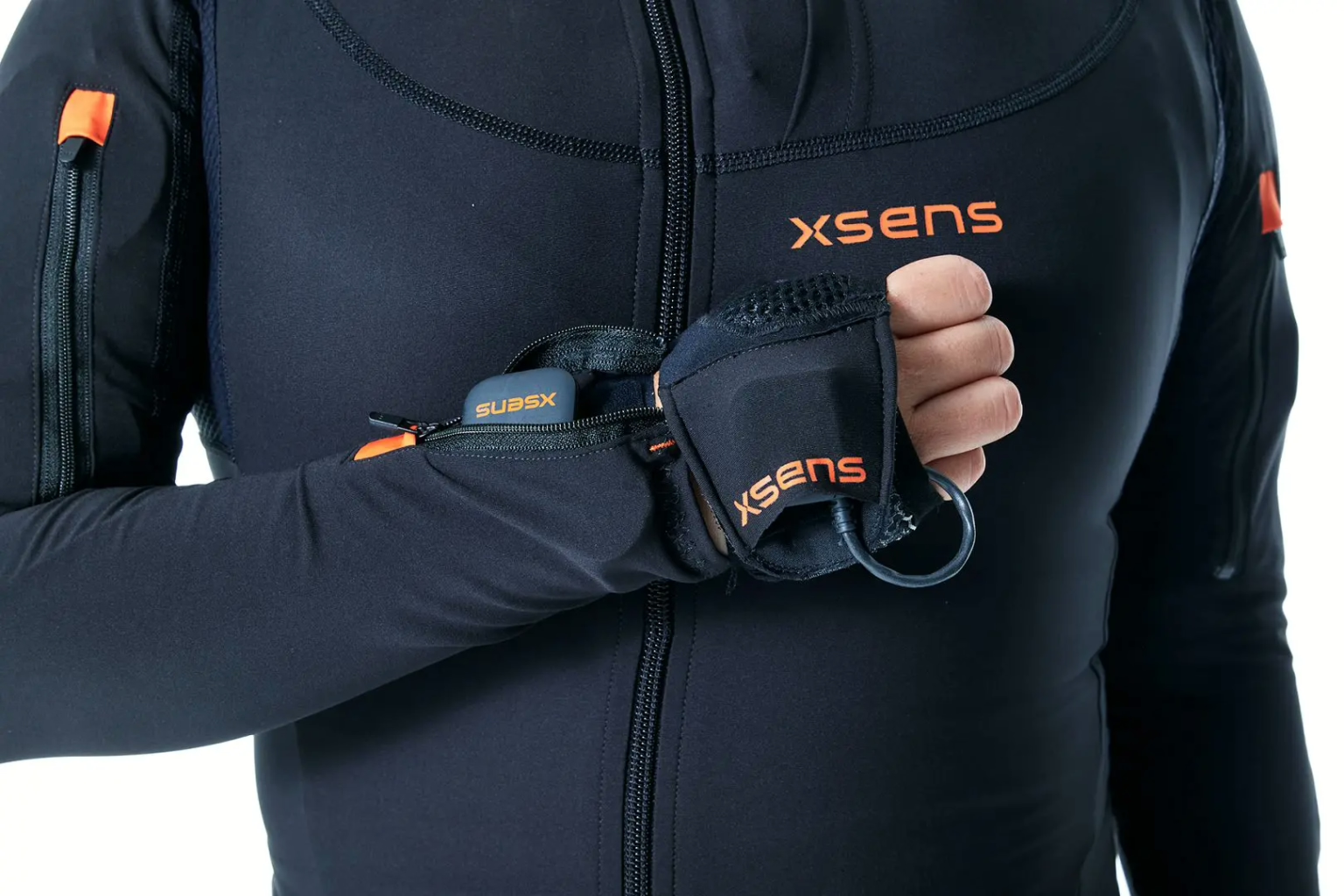
When a military wearable integrates electronics directly into the garment — for biosignal sensing, haptic feedback, or data transmission — the textile substrate must do more than protect. Conductive yarns woven or embroidered into the fabric provide signal pathways without the rigidity of conventional wiring. These yarns must maintain conductivity through repeated flexion, washing, and mechanical stress. The integration technique matters enormously: the wrong yarn or the wrong bonding method can lead to signal degradation or open circuits after relatively limited use. Printed electronics on flexible substrates offer an alternative, particularly where the electronics footprint needs to be distributed across a larger body surface.
What hard materials protect electronics in military wearables?
Electronics in military wearables are typically housed in enclosures made from glass-filled nylon, polycarbonate, thermoplastic polyurethane (TPU), or aluminium alloy. The choice of hard material depends on the required impact resistance, operating temperature, and whether the enclosure needs to flex with the body or remain rigid.
Injection-moulded glass-filled nylon is a common choice for structural enclosures because it combines stiffness with resistance to impact and chemical exposure. It can be moulded to tight tolerances, which is important when the enclosure must form a reliable seal with gaskets or overmoulded sections.
TPU overmoulding is frequently applied to corners and contact zones of enclosures that sit directly against the body. TPU absorbs shock, resists cracking at low temperatures, and provides a degree of vibration damping that protects sensitive components during high-movement activities. It also improves wearer comfort at the contact interface.
For wearables that must survive ballistic or blast-adjacent environments, aluminium alloy housings are sometimes specified. These are heavier but offer a level of structural protection that polymer enclosures cannot match. The trade-off is weight and the need to electrically isolate the conductive housing from internal components.
PCB protection within the enclosure typically involves conformal coating — a thin polymer layer applied directly to the circuit board that protects against moisture, dust, and chemical contamination even if the outer enclosure is compromised. This is a critical secondary barrier in military-grade electronics design.
How do military wearables achieve waterproofing and environmental sealing?
Military wearables achieve waterproofing through a combination of membrane laminates in the textile layers, gasket-sealed enclosures, overmoulded connectors, and conformal coating on internal electronics. The sealing approach must address every potential ingress point — fabric seams, connector interfaces, and enclosure joints — because water will find the weakest point.
In the textile layers, waterproof breathable membranes such as PTFE-based laminates are bonded to the outer fabric. These membranes block liquid water while allowing water vapour to escape, which is essential for a body-worn device where moisture build-up from perspiration would otherwise degrade both comfort and electronics performance.
Enclosure sealing typically follows IP (Ingress Protection) or MIL-STD ratings. An IP67 rating, for example, indicates the device can withstand immersion in up to one metre of water for thirty minutes. Achieving this requires precisely machined sealing surfaces, compressed gaskets (usually silicone or EPDM), and ultrasonic welding or mechanical fastening with defined torque specifications. Any cable or connector that penetrates the enclosure wall must be overmoulded or fitted with a sealed gland.
The challenge in military wearables specifically is that sealing must survive not just static immersion but dynamic stress — the repeated flexion of body movement, pressure changes from altitude variation, and the mechanical shock of physical activity. A seal that passes a static IP test may fail after a hundred hours of operational use if the enclosure design does not account for these dynamic loads.
How do material choices affect haptic feedback performance in military wearables?
Material choices directly affect how haptic feedback is perceived by the wearer. The stiffness, density, and acoustic properties of the materials between an actuator and the skin determine whether a vibrotactile signal is felt clearly, muffled, or not at all. In military wearables, where haptic feedback replaces visual or audio cues that cannot be used in the field, this is not a secondary concern — it is a core performance requirement.
The Mission Navigation Belt developed for the Royal Netherlands Army is a direct example of this challenge. The belt uses haptic actuators to deliver silent, screen-free navigation information to soldiers, keeping hands, eyes, and ears free. The materials between the actuators and the soldier’s body — the textile layers, foam padding, and enclosure walls — all influence the intensity and clarity of the tactile signal that reaches the skin.
Actuator coupling is the key variable. An ERM (Eccentric Rotating Mass) or LRA (Linear Resonant Actuator) mounted in a rigid enclosure that sits directly against the skin will transmit vibration efficiently. The same actuator surrounded by thick foam or mounted in a housing that is not in firm contact with the body will produce a much weaker and less distinct sensation. Military wearables must therefore balance cushioning for comfort and impact protection against the need for consistent actuator-to-skin coupling.
Textile compliance also matters. A stiff outer shell may hold an actuator in position reliably but can create pressure points during extended wear. A highly flexible textile mount keeps the actuator comfortable but may allow it to shift position, changing the haptic signal perceived by the wearer. The solution is usually a purpose-designed mounting structure — neither fully rigid nor fully compliant — that holds the actuator in the correct orientation while allowing the garment to move with the body.
Acoustic crosstalk between actuators is another material-dependent problem. If the substrate connecting multiple actuators is too rigid, vibration from one actuator propagates to adjacent ones, blurring the spatial precision of the haptic pattern. Selecting materials with appropriate damping characteristics between actuator mounting points is part of the system-level design work that determines whether a haptic wearable actually performs in the field.
What certifications define material standards for military wearables?
Military wearables must meet a range of standards depending on their function, the environment they operate in, and the country of deployment. The most relevant frameworks include MIL-STD-810 for environmental testing, ATEX or IECEx for hazardous environments, and STANAG standards for NATO interoperability. These certifications define the test conditions that materials and assemblies must survive, not just the finished product performance.
MIL-STD-810 is the most widely referenced standard for military electronics and wearables. It specifies test methods for temperature, humidity, shock, vibration, altitude, and immersion — essentially the full range of environmental stresses a field-deployed device will encounter. Materials selected for a military wearable must be chosen with these test profiles in mind from the earliest stage of development. A polymer that becomes brittle at minus forty degrees Celsius will fail a MIL-STD-810 low-temperature test regardless of how well the rest of the device performs.
ATEX certification applies when a wearable is deployed in environments with explosive atmospheres — certain industrial or combat engineering contexts where ignition risk must be controlled. ATEX imposes strict requirements on enclosure construction, surface temperatures, and electrical isolation that directly constrain material choices.
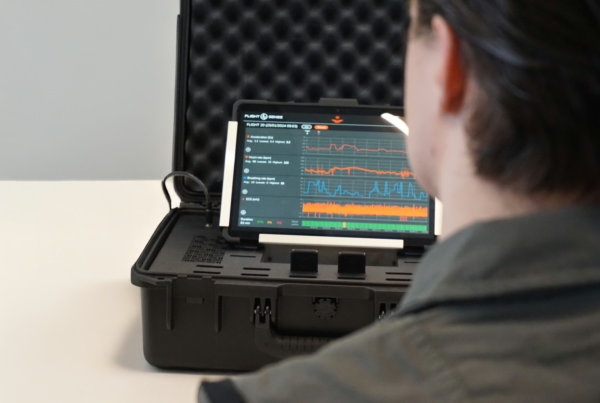
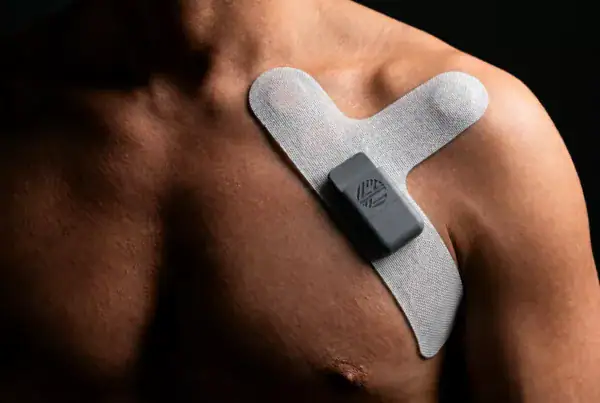
For wearables that also function as medical monitoring devices — such as the Flight Sense System, which measures ECG, heart rate, and respiration for military and medical use — the EU Medical Device Regulation (MDR) adds a further layer of material requirements. Biocompatibility of skin-contact materials must be demonstrated, typically through ISO 10993 testing, which covers cytotoxicity, sensitisation, and irritation.
The practical implication is that certification cannot be treated as a final step. Material choices made early in development determine which certifications are achievable. Changing a housing material late in the development cycle to meet a newly identified standard can trigger a cascade of redesign work — new tooling, new testing, and significant delays. Certification awareness must be built into material selection from the first feasibility phase.
How Elitac Wearables approaches military wearable material development
Selecting the right materials for a military wearable is not a procurement decision — it is an engineering decision that shapes every subsequent phase of development. Elitac Wearables has navigated exactly this challenge on projects including the Mission Navigation Belt for the Royal Netherlands Army, where material choices had to satisfy military durability requirements, haptic performance criteria, and wearer ergonomics simultaneously.
The approach Elitac Wearables brings to military and ruggedised wearable development includes:
- Early-stage material feasibility: Evaluating candidate materials against operational requirements before any prototype investment, preventing costly late-stage changes.
- Electronics-textile integration expertise: Over ten years of experience selecting integration techniques — conductive yarns, printed electronics, modular attachment — for washable, flexible, and body-worn contexts.
- Haptic system design: Engineering actuator mounting, substrate selection, and firmware-level timing together as a system, not as separate components.
- Certification-aware development: Building MIL-STD-810, ATEX, and MDR requirements into the development process from feasibility onward, not as a final compliance exercise.
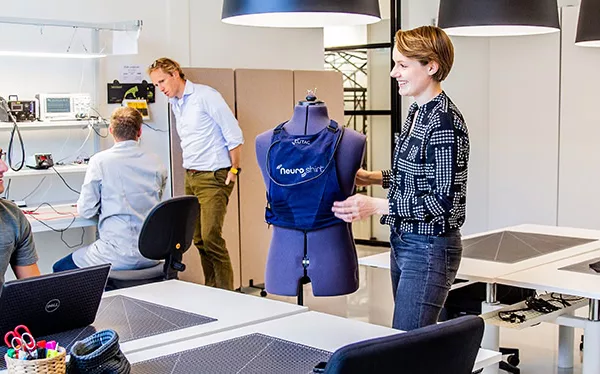
- In-house prototyping and testing: The 180m² Wearables Lab enables rapid iteration on material combinations without external dependency, reducing risk and accelerating timelines.
If you are developing a military or ruggedised wearable and need a development partner with the technical depth to make these decisions well, speak with the Elitac Wearables team about your project requirements.