A wearable company should choose co-development over licensing when its product depends on novel body-worn behavior, such as custom haptics, electronics-textile integration, or medical certification, that no existing technology fully covers. Licensing fits when a proven module meets roughly 80 percent of your requirements as is. If your differentiation lives inside the technology, co-develop.
The decision comes down to where your product’s value sits, how much control you need over the roadmap, and how much unproven risk you can carry. The questions below cover the signals, costs, IP, technical risks, process, and hybrid options.
Which product signals point toward co-development instead of licensing?
Co-development makes sense when your wearable needs custom sensing, haptics, or textile integration that licensed technology cannot deliver without heavy modification. If the technology is your competitive edge, or if certification and real-world body conditions shape the design, a licensed black box will limit you.
Look for these signals in your own project:
- Differentiation lives in the technology. If competitors could license the same module tomorrow, you have no moat.
- The body is part of the system. Sensors behave differently on a moving wearer. Dry electrodes, pressure sensing, and vibrotactile output all depend on fit, skin contact, and motion.
- Your use case is niche. Defence navigation, balance rehabilitation, or hazardous environments rarely match what a general-purpose licensor built.
- You need a roadmap you control. A licensor decides when features ship, and your product waits.
- Regulation touches the hardware. MDR or ATEX requirements are far easier to meet when certification shapes design from the first prototype.
Licensing fits the opposite profile: a commodity function, a mature module, and a product where the wearable element is a supporting feature rather than the core proposition.
How do costs and timelines compare between both routes?
Licensing usually costs less upfront and starts faster, because the technology already exists. Co-development costs more early but often reduces total cost when licensed technology needs repeated adaptation. Fees and royalties also compound over a product’s life, while co-developed technology becomes an asset you own or control.
Licensing front-loads certainty: you pay an access fee, possibly a royalty per unit, and integrate. The hidden cost appears at integration. If the licensed module needs a new form factor, different sensors, or firmware changes, you depend on the licensor’s priorities and pricing for every adjustment.
Co-development spreads cost across phases. A typical wearable programme moves through a feasibility check, proof of concept, pilot samples, a final prototype, a first series, and scaled production. Indicative budgets run from roughly 1K to 10K euros for feasibility, 5K to 20K for a proof of concept, 15K to 30K for pilot samples, and 40K to 100K for a final prototype. Production phases add further spend, and all figures depend heavily on complexity.
Staged phases also give you decision gates. You can stop after feasibility if the numbers fail, instead of committing to a multi-year licence. Validating early matters because industry experience shows many wearable prototypes never reach production, often because teams validate user interaction and comfort too late, not because the technology is infeasible. Tooling can cost anywhere from 100K to 500K euros, so learning before that commitment pays for itself.
Who owns the intellectual property in each arrangement?
In licensing, the licensor keeps ownership and you receive usage rights, usually limited by field, territory, and term. In co-development, ownership is negotiated. Common models give the client ownership of project-specific results while the partner retains its background technology, with a licence granted for the parts you need.
Pay attention to these points in any agreement:
- Background versus foreground IP. Background IP existed before the project. Foreground IP is created during it. Contracts should state who owns each.
- Exclusivity. A licence can be exclusive or non-exclusive. A non-exclusive licence means competitors may access the same technology.
- Improvement rights. If you improve licensed technology, who owns the improvement?
- Exit terms. Check what happens if the licensor is acquired, changes pricing, or stops supporting the technology.
- Freedom to operate. Confirm that using the technology does not infringe third-party patents.
Have counsel draft the IP terms before development starts. Disputes over ownership are far more expensive after a working product exists.
What technical risks make licensed wearable technology fall short?
Licensed wearable technology falls short when it was proven in a different context from yours. The main risks are poor performance on a moving body, battery life that misses your usage pattern, limited access to firmware, and no clear path through certification for your specific product.
Body-worn performance gaps
A sensor that performs well on a bench can fail on a moving wearer. Motion artefacts degrade biosignals, textile flex breaks connections, and washing cycles test every joint. Licensed modules rarely come with data from your exact use case, so you discover limits late.
System-level constraints you cannot change
Battery shortfalls illustrate this well. They are usually system-level inefficiencies rather than a battery size problem: firmware keeping components active too long, radios and sensors not tuned to actual usage, or inefficient data intervals. With licensed firmware you often cannot fix these. Enlarging the battery triggers enclosure redesign, new tooling, and delays. Structured optimisation across hardware, firmware, data handling, and user behaviour can extend battery life substantially without redesign, but only if you have access to every layer.
Certification adds a further risk. Medical wearables under MDR, or products for hazardous environments, need documentation and design control that a third-party black box may not provide.
What does a co-development process with a wearable partner involve?
A co-development process moves from a quick feasibility check through proof of concept, pilot samples, a final prototype, and into first series and scaled production. Each phase has defined deliverables and a go or no-go decision, so you commit budget in steps while risk falls with every stage.
In practice, a strong partnership looks like this:
- Feasibility check (about 1 to 4 weeks). Verify techniques, materials, and the biggest technical unknowns.
- Proof of concept. Build a basic version with off-the-shelf components and proven building blocks to gather early user and market feedback.
- Pilot samples. Test with real users in real conditions and refine the design.
- Final prototype. Lock hardware, firmware, textile integration, and design for certification.
- First series and scaled production. Produce limited batches in-house, then move to manufacturing partners for volume.
The partner should act as an extension of your team and cover hardware, firmware, textiles, and algorithms together. Fragmented supply chains, where electronics sit with one vendor and textiles with another, leave nobody owning the integration. Where speed matters, a build-for-validation approach delivers functional demonstrators early, before you invest in production tooling. Read how a wearable development process can be structured in practice.
Can a hybrid of licensing and co-development work?
Yes. A hybrid model licenses mature, non-differentiating components and co-develops the parts that define your product. This lowers cost and time while keeping control where it matters. Many successful wearables combine a licensed core platform with custom sensing, haptics, or textile integration.
Hybrid arrangements work best when you can draw a clean line between commodity and differentiator. Typical splits include:
- Licensing a proven firmware platform or operating system, and co-developing the application layer and hardware around it.
- Using standard actuators or sensor chips, while co-developing the haptic pattern design and body integration.
- Licensing a validated algorithm, and co-developing the garment or housing that gives it clean input data.
Define interfaces and IP boundaries early. Agree which modules are licensed, which are custom, and what happens to each if the relationship ends. A hybrid also lets you start with licensed technology for a fast proof of concept, then replace parts with custom development as volumes and requirements grow.
How Elitac Wearables helps with the co-development decision
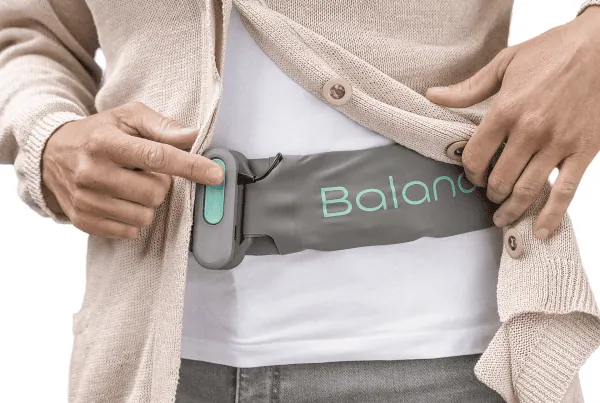
Elitac Wearables works as an extension of your team, with hardware, firmware, textile, and haptics specialists under one roof and a 180 m² in-house Wearables Lab for rapid iteration. Its proprietary TacOS firmware platform supports hybrid approaches, and its experience spans medical, defence, and sports products, including the BalanceBelt and the Mission Navigation Belt.
- A feasibility check that tests whether licensing or co-development fits your product before you commit budget
- Staged development from proof of concept to pilot samples, prototype, and limited in-house production of up to 100 units
- Guidance on MDR, CE marking, and other certification requirements from the first design decisions
- Clear IP structuring and a network of manufacturing partners for scaled production
Not sure which route suits your wearable? Review how to work with Elitac Wearables, or contact the team to discuss your project.
Related Articles
- How do you divide technical decisions between wearable development partners?
- How long does a smart textile development cycle take in 2026?
- Can wearables detect soldier fatigue in real time?
- What happens to haptic feedback wearables after long-term daily use?
- How do haptic wearables communicate real-time data to users?