Wearable co-development is a shared model where client and developer invest, decide, and build together, while contract development is a service model where the client defines the requirements and the developer delivers to that specification for a fee. The real difference lies in who carries risk, who steers technical decisions, and who ends up owning what.
For a haptic or sensor-driven wearable, that choice shapes your budget, your timeline, and your long-term product position. The sections below break down IP, risk, control, and the situations where each wearable development model fits best.
Who owns the IP in each development model?
In contract development, the client typically owns the project-specific IP, because it pays for the work and defines the deliverable. In co-development, ownership is negotiated: each party usually keeps its pre-existing IP, and jointly created IP is split, licensed, or assigned according to the agreement.
The detail that matters most is the difference between background IP and foreground IP. Background IP is what each side brings to the table: a client’s sensor algorithm, or a developer’s firmware platform and integration techniques. Foreground IP is what the project creates. Wearable projects blur this line quickly, because a new electrode layout may rest on the developer’s textile integration know-how while serving the client’s medical use case.
Whatever the model, settle these points in writing before development starts:
- Who owns the final design files, firmware source code, and bill of materials
- Whether the developer may reuse its own building blocks and platforms in other projects
- How improvements to shared components are licensed going forward
- What happens to the IP if the partnership ends before launch
Contract development gives you the cleanest ownership story. Co-development gives you more flexibility, but it demands more careful drafting.
How do cost and risk sharing differ?
In contract development, the client pays for defined work, usually per phase or at a day rate, and carries the commercial risk of the product. In co-development, both parties invest, whether through reduced fees, shared funding, or contributed resources, and they share both upside and downside.
That distinction has practical consequences. A contract model gives you predictable budgets. Wearable development typically moves through staged phases, from a feasibility check and proof of concept to pilot samples, a final prototype, and first series. Each phase has its own cost range and a clear go or no-go moment, so you can stop if the data does not support the next investment.
Co-development shifts part of that exposure to the developer. The developer may accept lower upfront fees in exchange for a stake in the product, royalties, or the right to reuse results. That lowers your cash outlay, but it also means the developer has a say in direction and commercialisation.
Technical risk deserves its own line. Wearables fail in ways that standard electronics do not: sensors behave differently on a moving body, textiles wash badly, and battery life collapses once real-world data traffic begins. Either model works only if someone on the team has already seen those failure modes and designs around them from phase one.
How much control does the client keep?
Under contract development, the client keeps maximum control: it sets the specification, approves each deliverable, and directs priorities. Under co-development, control is shared. Major decisions on architecture, features, and go-to-market are made jointly, which gives the client less unilateral authority.
Control comes with a hidden requirement. A client who directs the work needs to know what to ask for. If your team has deep expertise in medical devices or safety equipment but has never built the wearable layer, a tightly written specification can lock in assumptions that do not survive contact with a real body. Haptic feedback is a good example: the right actuator, placement, and signal pattern often emerge from user testing, not from a requirements document.
Co-development lets the developer challenge the brief. That can improve the product, but it requires trust and a governance structure, such as a joint steering group, agreed decision rights, and regular demonstrator reviews. Without those, shared control becomes slow control.
When does co-development make more sense?
Co-development makes more sense when the product breaks new technical ground, when the client lacks wearable expertise but has a strong domain position, or when both parties gain long-term value from the result. It suits projects where the solution is not yet defined and needs joint discovery.
Look for these signals:
- Research-grade challenges: No standard component or off-the-shelf approach solves the problem, as with novel biosignal sensing in high-movement conditions.
- Complementary strengths: You bring clinical access, user networks, or market reach, and the developer brings haptics, e-textile integration, and firmware.
- Funded programmes: Public research funding often requires consortium-style collaboration with universities, hospitals, or research institutes.
- Platform ambitions: You want a technology foundation that supports a family of products, not a single device.
The trade-off is speed and simplicity. Shared decisions and negotiated IP take more time at the start, so co-development rewards partners who plan for a longer relationship.
When is contract development the better choice?
Contract development is the better choice when requirements are clear, the client wants full IP ownership, and the goal is a defined deliverable on a defined timeline. It fits companies with an existing product roadmap that need external expertise to execute one part of it.
It works well in these situations:
- You have validated the concept and know what the wearable must do
- Regulatory or procurement rules require a single accountable owner of the design, which is common in medical and defence projects
- You need a scoped fix, such as a firmware review, battery optimisation, or a set of functional demonstrators to validate user interaction before committing to tooling
- Your budget is set and you want fixed phase gates
A common pattern is to validate cheaply first. Building demonstrators for validation rather than for production lets you test comfort, interaction, and perceived value before expensive tooling decisions. That staged approach fits the contract model naturally, since each phase has clear inputs and outputs.
How can a wearable project choose between the two?
Choose by testing five factors: how well defined your requirements are, how much IP ownership matters, how much risk you can carry alone, how much wearable expertise you hold in-house, and how long you expect to work with the partner. Clear requirements and strict ownership point to contract development. Open problems and shared ambition point to co-development.
A practical way to decide:
- Define the problem, not the solution. If you can write a solid specification today, contract development is viable. If you cannot, you probably need joint discovery.
- Map your IP priorities. If you must own everything outright for investors or certification, lean toward contract. If you accept shared or licensed IP in return for shared risk, consider co-development.
- Assess your internal gaps. Missing expertise in textiles, haptics, or biosignal processing favours a partner with a voice in the design.
- Check your timeline and funding. Fixed deadlines and fixed budgets suit phase-based contracts. Longer horizons and funded research suit co-development.
- Start small if unsure. A short feasibility check lets both sides test the working relationship before committing to either structure.
Many successful projects blend the two. They begin as co-development during early discovery, then convert to a contract model once the design is frozen and the path to production is clear. Our overview of how we work shows how a phased process supports both approaches.
How Elitac Wearables helps with choosing a wearable development model
Elitac Wearables works with clients under both models, depending on what the project needs. Our multidisciplinary team covers hardware, firmware, textiles, and haptic algorithms, and our 180m² Wearables Lab handles the full cycle from idea to prototyping to limited production. That means no handoffs between suppliers and no gaps in accountability.
- A phased process from feasibility check to scaled production, with clear go or no-go decision points
- Haptic and e-textile specialists who challenge the brief when it needs challenging
- Our proprietary TacOS firmware platform and ready-made integration techniques, which cut development time and cost
- Clear, written agreements on IP and ownership from the start
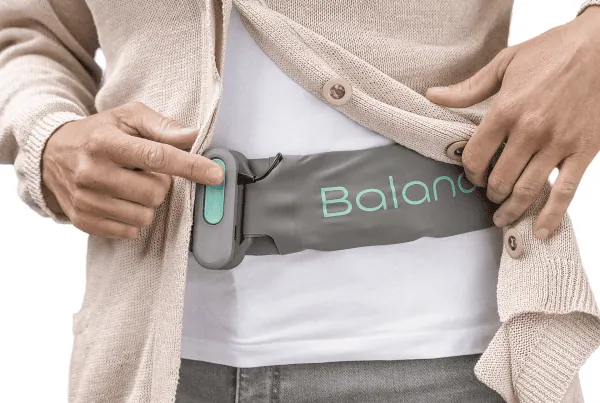
- Experience across medical, defence, and sports projects, from the BalanceBelt to the Mission Navigation Belt
Not sure which model fits your project? Read more about working with us, or contact our team to discuss your wearable idea and the right way to build it.
Related Articles
- How do you prevent gaps between different partners' technical responsibilities?
- How does smart textile development work?
- How do military wearables differ across army, navy, and air force?
- How do haptic wearables enhance virtual reality experiences?
- What is the difference between haptic wearables and traditional wearables?