You prevent gaps between partners’ technical responsibilities by assigning one named owner to every interface, documenting each interface in a controlled specification, and appointing a single party accountable for system integration. Gaps rarely sit inside a partner’s own scope. They sit at the seams between scopes.
In multi-partner development projects, each partner usually delivers its own part well, and the failure appears where electronics meet textiles, firmware meets sensors, or a prototype meets production. The sections below cover where gaps appear, how to close them, and how to catch what slips through.
Where do responsibility gaps usually appear between partners?
Responsibility gaps appear at the boundaries between disciplines, not inside them. The most common seams are electronics to textile, firmware to hardware, data to algorithm, and prototype to production. Each partner assumes the neighbouring partner covers the overlap, so nobody does.
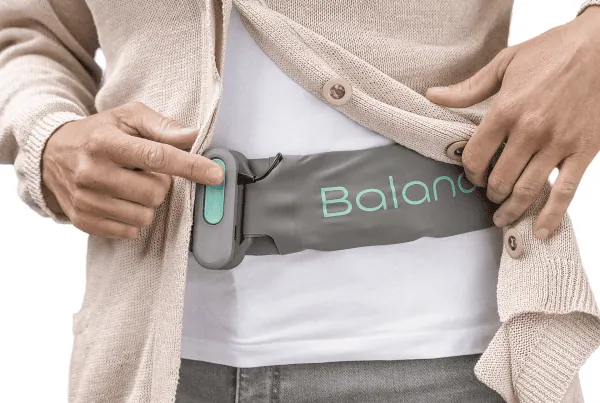
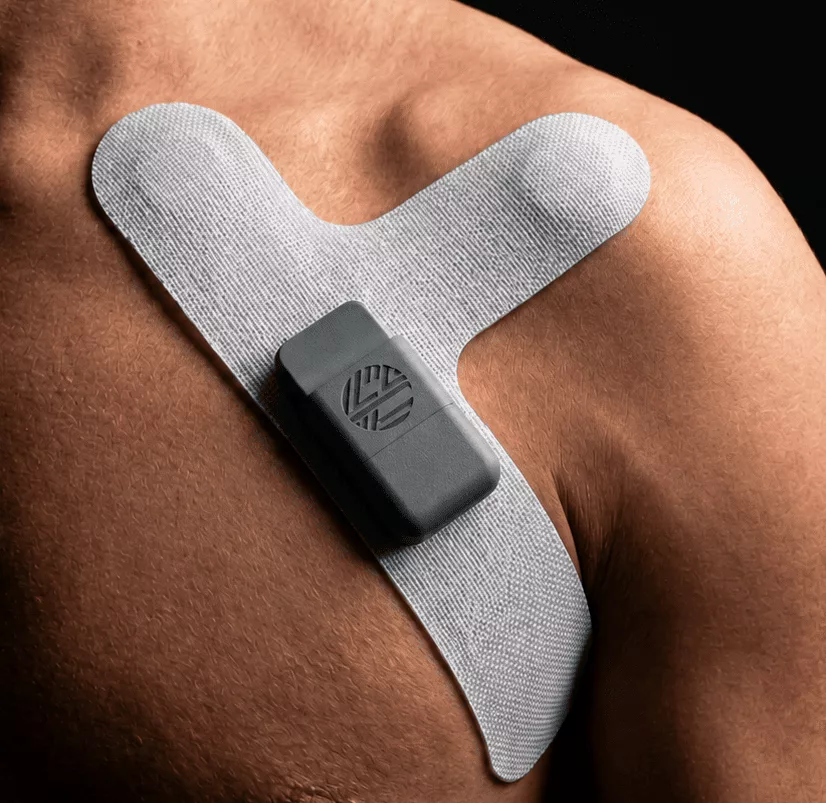
Wearable projects are especially exposed because the product is a system worn on a moving body. A sensor that tests well on a bench behaves differently once it sits on a garment that stretches, folds, and gets washed. Typical gap zones include:
- Connector and cable routing: the electronics partner delivers a module, the textile partner delivers a garment, and nobody owns how the two connect and survive wear.
- Power budget: hardware sizes the battery, firmware sets duty cycles, and no one owns the system-level battery target.
- Washability and durability: each partner tests its own part, but the combined assembly is never tested together.
- Certification scope: compliance is assumed to be someone else’s task until late in the project.
- Test responsibility: who verifies the integrated product, and against which requirements, stays undefined.
These gaps stay invisible during planning because every individual scope looks complete. They only surface when parts meet.
How do you assign ownership of every interface?
You assign ownership by listing every interface in the system, then naming exactly one accountable owner per interface. Where two partners touch the same boundary, one leads and the other contributes. Shared ownership means no ownership, so a single name must appear next to each interface.
Work through it in four steps:
- Draw the system architecture. A block diagram of electronics, firmware, textile, enclosure, power, and data flow exposes the boundaries.
- Number every interface. Each line between two blocks becomes an item that needs a decision.
- Name one owner per interface. The owner defines the interface requirements, approves changes, and answers when it fails.
- Record the decision in the contract or project plan. Ownership that lives only in a meeting is lost by the next sprint.
The owner should usually be the partner with the most to lose if the interface fails or the deepest knowledge of the constraint. For an electronics-to-textile connection, that is often the party responsible for the textile integration technique, because it determines what the electronics must tolerate. Early feasibility work is the right moment to do this, since the system block architecture and key technical risks are already on the table.
What should an interface control document contain?
An interface control document (ICD) defines everything two parts must agree on to work together: physical, electrical, data, and environmental parameters, plus ownership and change rules. It turns an informal assumption into a testable requirement that both partners sign.
A useful ICD for a wearable system contains:
- Interface ID and owner: the unique reference and the single accountable party.
- Physical definition: connector type, dimensions, tolerances, mounting method, and strain relief.
- Electrical definition: voltage and current limits, signal levels, grounding, and power draw.
- Data and protocol definition: message formats, timing, sampling rates, and error handling.
- Environmental conditions: sweat, washing cycles, flex cycles, temperature, and ingress exposure.
- Verification method: how and when each side proves compliance.
- Change control: who may change the interface, who must approve, and how the change is communicated.
Keep it short and living. A ten-page ICD that both partners actually read beats a hundred-page document nobody opens. Version it, and make sure every partner works from the current revision.
Is a RACI matrix enough to prevent gaps?
No. A RACI matrix clarifies who is responsible, accountable, consulted, and informed for tasks, but it does not define technical interfaces. It tells you who acts, not what the boundary between two parts must satisfy. It works well alongside an ICD, not instead of one.
A RACI matrix is strong on activities such as “write firmware” or “run washability tests.” It is weak on the unwritten work between activities. If no row exists for “verify the connector survives 50 wash cycles on the finished garment,” the RACI will look complete while the gap stays open.
Use RACI to settle who does what, and use interface documentation to settle what must be true where parts meet. Then check the RACI against the interface list: every interface should map to at least one accountable row. If an interface has no matching row, you have found a gap before it costs money.
Who should be responsible for overall system integration?
One party should own system integration end to end, and it should be the partner with the broadest technical view across hardware, firmware, textile, and algorithms. That party holds the integrated requirements, runs integration testing, and arbitrates interface disputes. Splitting this role across partners recreates the gap it is meant to close.
The integrator does not need to build every part. It needs authority and competence in three areas:
- Cross-discipline fluency: enough knowledge of each domain to spot an incompatible assumption early.
- Decision rights: the mandate to resolve conflicts between partners without a committee.
- Test ownership: responsibility for verifying the assembled product, not just the parts.
The client can fill this role if it has the wearable expertise in house. Many clients, especially medical device and safety equipment companies with deep domain knowledge but no wearable layer yet, do not. In that case, assigning integration to a development partner that covers hardware, firmware, textiles, and algorithms under one roof removes the largest seam in the project. Fewer handoffs mean fewer places for responsibility to fall through.
How do you catch gaps before they become costly?
You catch gaps by testing the integrated system early with deliberately rough demonstrators, reviewing interfaces at fixed gates, and flagging unknowns at the start of each phase. Cheap early integration exposes seam failures when a fix costs days, not a tooling redesign.
Integrate early with rough demonstrators
A proof of concept that joins electronics, textile, and firmware on one body for the first time reveals mismatched assumptions fast. It does not need custom hardware. It needs all the parts in the same object, so the seams are tested before the design hardens.
Gate decisions on interface readiness
Make signed interfaces a condition for moving forward. Before engineering begins, require that the concept is locked, requirements are signed, producibility is checked, and every interface has an owner. Changing an interface after custom engineering has started costs far more than resolving it at a design freeze.
Two further habits help. First, ask at every phase start whose uncertainty is being resolved: the client’s concept, a partner’s capability, or a genuinely novel technology that carries shared risk. Naming the unknown assigns it. Second, run a short interface review before each gate, walking the ICD list line by line and asking whether anyone would be surprised if this interface failed tomorrow.
How Elitac Wearables helps with preventing gaps between partners
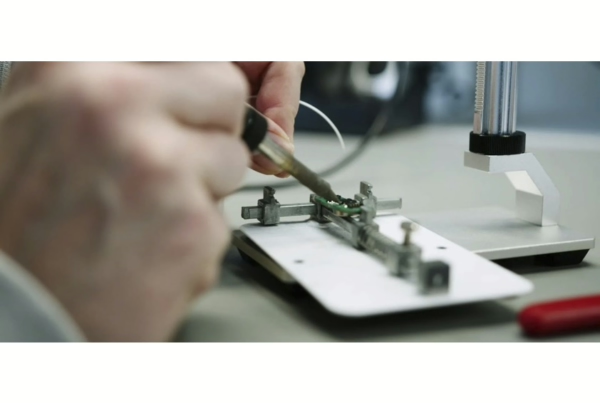
Elitac Wearables removes the biggest source of responsibility gaps by keeping hardware, firmware, textile, and algorithm expertise in one team, backed by an in-house 180m² Wearables Lab where integrated prototypes are built and tested under one roof. Its six-phase development process makes interfaces explicit before engineering begins.
- Feasibility checks that map system architecture, technical risks, and compliance scope up front
- Proof of concept demonstrators that integrate electronics, textiles, and firmware early
- Design freeze gates with signed requirements before custom engineering starts
- A single accountable team from concept through verification, validation, and production
- Support that works as an extension of your existing team, including flexible ways of working together
If your wearable project involves several partners and you want clear ownership of every interface, contact Elitac Wearables to discuss your project.
Related Articles
- How do you coordinate electronics and garment prototype iterations?
- How do you agree on access to specialist testing equipment?
- Why is end-user testing critical in smart textile development?
- What sensors are used in haptic feedback wearable devices?
- What is the difference between haptic wearables and traditional wearables?