

Share test results between wearable development teams by using one structured test report template, one central repository, and a shared vocabulary that hardware, firmware, textile, and algorithm engineers all understand. Each result needs its test conditions, build version, and raw data attached. Without that context, findings lose meaning the moment they cross a discipline boundary.
The hard part is that wearables fail in ways no single discipline sees alone. The questions below cover why results get lost, what a good report contains, which tools help, and when to bring in external partners.
Why do test results get lost between wearable disciplines?
Test results get lost because each discipline records findings in its own format, with its own assumptions, and rarely documents the physical conditions behind them. A firmware engineer logs sensor traces, a textile specialist writes wash-cycle notes, and neither can interpret the other’s data without extra context.
Wearables make this worse than most products. Sensors behave differently on a moving body than on a bench, so a result is only meaningful if you know who wore the prototype, how it fitted, and what movement was performed. A haptic pattern that feels crisp on one wearer can disappear on another because of fabric tension or skin contact.
Common causes of lost results include:
- Siloed formats: spreadsheets, lab notebooks, chat messages, and raw log files that nobody else can open or parse.
- Missing conditions: no record of firmware version, battery state, garment size, or ambient temperature.
- Verbal handovers: findings shared in a meeting but never written down in a retrievable place.
- Unclear ownership: nobody is responsible for turning a raw measurement into a decision.
What should a shared wearable test report include?
A shared wearable test report should include the test objective, the exact prototype build, the test conditions, the method, the results, and a clear conclusion with a next action. Every field must make sense to an engineer outside the discipline that ran the test.
A practical template contains these elements:
- Objective and hypothesis: what you wanted to learn and what you expected.
- Prototype identification: hardware revision, firmware version, textile and integration technique, and serial or batch number.
- Test setup: participants, garment fit, environment, duration, and equipment used.
- Method: the steps performed, precise enough that another team could repeat the test.
- Results: key measurements plus a link to the raw data, not just a summary chart.
- Interpretation: what the result means for the design, and for which discipline.
- Decision and owner: the agreed next step and who carries it out.
For haptic wearable test data, add the actuator type, drive parameters, placement on the body, and the subjective perception score from the wearer. Haptic quality is partly objective and partly felt, so the report needs both.
Which tools work best for sharing test data?
The best tools are the ones your whole team will actually use: a shared document or wiki for reports, a version-controlled repository for raw data and firmware logs, and an issue tracker linking findings to design tasks. Tool choice matters less than consistency and one agreed location.
A workable setup separates three layers:
- Reports and decisions: a wiki or shared document space where every test report lives in the same template.
- Raw data: a shared drive or repository with a fixed folder structure and file naming convention that includes date, build version, and test ID.
- Action tracking: a task or sprint tool where each finding becomes a ticket assigned to a named owner.
Avoid splitting these layers across personal drives and chat threads. If a result cannot be found in under a minute by someone who was not at the test, the system is not working. Permanent software testing set-ups help as well, because they produce data in a consistent format every time instead of depending on whoever ran the session.
How do you make results understandable across disciplines?
Make results understandable across disciplines by translating every finding into its design consequence, using shared definitions for key terms, and pairing numbers with plain language. A textile specialist should not need to read a signal trace to learn that the sensor lost contact during elbow flexion.
Three habits make the biggest difference:
- Write a one-line takeaway first. Lead each report with the conclusion, then support it with data below.
- Agree on a glossary. Terms like “dropout,” “latency,” “motion artefact,” or “comfortable” mean different things to different specialists. Define them once and reuse them.
- Tag findings by affected discipline. Label each result as hardware, firmware, textile, or algorithm-related so teams can filter to what concerns them.
Short joint review sessions also help. A weekly or per-sprint review where each discipline presents its latest results in two minutes surfaces cross-disciplinary issues early, such as a firmware sampling change that affects battery life, or a textile change that shifts sensor contact pressure.
How do you keep test results traceable through iterations?
Keep test results traceable by linking every result to a unique test ID, a specific build version, and the design change it triggered. Traceability means that for any decision, you can trace back to the data that justified it and forward to the change it caused.
To build that chain in practice:
- Version everything. Hardware revisions, firmware builds, and textile patterns each get a version identifier recorded in every report.
- Use unique test IDs. Reference them in tickets, change logs, and design documents.
- Maintain a change log. Record what changed between iterations and which test results motivated it.
- Never overwrite. Archive old results instead of replacing them, so you can compare iterations side by side.
This discipline pays off most in regulated domains. For medical wearables, documented traceability from test result to design decision supports MDR compliance and clinical validation. Teams that build the habit early avoid reconstructing a paper trail under audit pressure later.
When should test results be shared with external partners?
Share test results with external partners as soon as a result affects their scope of work, and always before a design freeze or a handover to manufacturing. Waiting until the final report forces partners to rediscover problems your team already found.
Good moments to share include:
- Before tooling or production decisions, when manufacturers need real data on tolerances, wear, and failure modes.
- When a test exposes an issue outside your expertise, such as a certification risk or a textile durability problem.
- At phase transitions, for example from proof of concept to pilot samples, when new teams inherit the project.
Before sharing externally, clean up the package: strip confidential details, add a short summary, and include the full test conditions so the partner interprets the data correctly. Agree on the format and confidentiality terms upfront, ideally in the contract, so sharing never becomes a bottleneck.
How Elitac Wearables helps with sharing test results across wearable teams
Elitac Wearables works as an extension of your development team, with hardware, firmware, textile, and algorithm specialists under one roof in a 180 m² in-house Wearables Lab. That removes most of the handover gaps where test results usually disappear.
- One multi-disciplinary team that tests, documents, and interprets results together
- Permanent software testing set-ups that produce consistent, comparable data
- Structured, traceable documentation across all six development phases, from feasibility check to scaled production
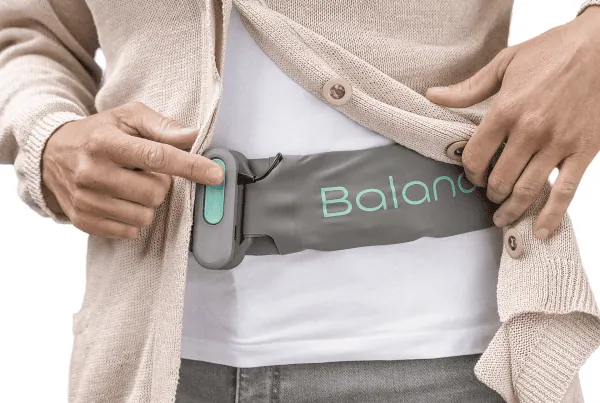
- Experience with MDR compliance and clinical validation, including the BalanceBelt
- A transparent development process that keeps your own team informed at every step
If your test results are scattered across teams or suppliers, see how working with us fits your project, or contact our team to discuss your wearable.
Related Articles
- How do you share design files between wearable development partners?
- Should you prototype electronics integrated into textiles in-house or outsource?
- Are military wearables waterproof and ruggedized for combat?
- How do data privacy regulations affect wearable product development?
- How do you choose the right hardware for a wearable device?