
You avoid dependence on a single wearable development partner by securing IP ownership, demanding complete technical documentation, and structuring the project in phases with portable deliverables. Dependence rarely comes from the partner’s intent. It comes from contracts, undocumented design decisions, and proprietary components that nobody questioned early on.
The risk is highest in wearables because hardware, firmware, textiles, and haptics are tightly coupled. The sections below cover the warning signs, the contract terms, the handover package, project structure, the case for specialists, and how to plan a manufacturing transition.
What are the warning signs of vendor lock-in in wearable projects?
The clearest warning signs are proprietary components you cannot source elsewhere, firmware delivered only as compiled binaries, vague IP clauses, and a partner who resists sharing design files. If you could not hand the project to another team tomorrow, you are already locked in.
Watch for these specific signals during scoping and development:
- Closed firmware: No source code, no build environment, no documented toolchain.
- Custom parts without second sources: Bespoke sensors, actuators, or textile components that only the partner’s supply chain can deliver.
- Unclear IP language: Contracts that say “licensed for use” instead of assigning ownership of project-specific work.
- Bundled production: Manufacturing tied exclusively to the development partner, with no transfer terms.
- Knowledge held by individuals: Critical design rationale that exists only in one engineer’s head.
Wearables amplify these risks because the integration layer, where electronics meet textiles on a moving body, is where the hardest decisions get made and the least gets written down. Ask early where that knowledge lives.
Which intellectual property rights should be secured in the contract?
Your contract should assign ownership of all project-specific IP to you, including hardware designs, firmware source code, algorithms, textile patterns, and test data, while clearly listing any background IP the partner retains and licenses to you. Ambiguity here causes most disputes later.
Separate two categories explicitly:
- Foreground IP: Everything created for your project. This should be assigned to you on payment, covering schematics, PCB layouts, mechanical and textile designs, firmware, haptic patterns, and validation data.
- Background IP: Tools, platforms, and building blocks the partner owned before your project, such as a proprietary firmware platform or integration techniques. The partner will usually keep ownership, so negotiate a perpetual, irrevocable, royalty-free license to use them within your product.
Also address patent filing rights, who may reuse your designs for other clients, and what happens if the partner is acquired or ceases trading. For medical products, include access to the design history and technical file, since you carry the regulatory responsibility as the manufacturer of record. Have an IP lawyer review the final wording. Do not rely on a template.
What documentation should a wearable partner hand over?
A wearable partner should hand over everything another team needs to rebuild, test, certify, and manufacture the product without calling the original developer. That means design files, source code, a bill of materials, test specifications, and process documentation, delivered at every project phase rather than only at the end.
A solid handover package includes:
- Hardware files: Schematics, PCB layouts, Gerbers, 3D models, and enclosure drawings in editable formats.
- Firmware and software: Full source code, build instructions, version history, flashing tools, and a documented architecture.
- Bill of materials: Part numbers, approved suppliers, alternates, and lead times.
- Textile and integration specs: Materials, stitching or lamination methods, overmoulding parameters, and assembly instructions.
- Test and validation records: Test procedures, acceptance criteria, results, and known issues.
- Regulatory documentation: Risk analysis, design history, and standards applied, where certification is relevant.
Insist on a documentation review at each phase gate. A handover test works well: ask an independent engineer to build a unit from the package alone. Gaps surface immediately.
How can a project be structured to stay portable between partners?
Structure the project in discrete phases with defined deliverables, own the key decisions, and use standard components wherever the design allows. Each phase should end with a package that a different partner could pick up, so no single phase creates dependence on the next.
A staged development path makes portability practical. A typical wearable moves through feasibility, proof of concept, pilot samples, final prototype, first series, and scaled production. Treat each transition as a decision point where you can renew, renegotiate, or switch.
Practical measures that keep options open:
- Phase-based contracts: Commit budget one phase at a time rather than signing a single large agreement for the whole journey.
- Standard interfaces: Prefer common communication protocols, off-the-shelf sensors and actuators, and widely supported microcontrollers.
- Escrow or repository access: Hold a copy of source code and design files in your own repository, updated at every milestone.
- Internal technical owner: Name someone on your side who understands the architecture and reviews every deliverable.
- Modular design: Separate the sensing, haptic, power, and textile layers so one can be replaced without redesigning the rest.
Building validation demonstrators before committing to tooling also helps. It lets you test the concept, and the partner, at low cost before the expensive, hard-to-reverse decisions arrive.
Is working with a specialist partner worth the dependency risk?
Yes, for complex wearables, a specialist is usually worth the dependency risk, provided you manage it through contracts and documentation. Generalist suppliers often stall on integration problems, and a stalled project costs more than a managed dependency on a team that has solved those problems before.
Wearables are a different discipline from conventional device engineering. Flexible electronics, textile integration, sensors that behave differently on a moving body, and haptic feedback design all demand experience that most in-house teams and general electronics suppliers lack. Trying to avoid dependence by splitting the work across several single-discipline vendors often creates a worse problem: nobody owns the integration.
Weigh the decision with these criteria:
- Technical barrier: The higher the barrier, as in haptics or e-textiles, the stronger the case for a specialist.
- Transparency: A good partner shares documentation and welcomes a handover test.
- Track record: Look for shipped products, not only prototypes.
- Exit terms: Confidence in a contract’s exit clauses signals confidence in the partner.
The aim is not zero dependence. It is dependence you chose deliberately, with an exit you could actually use.
How should a manufacturing and support transition be planned?
Plan the transition before development ends. Define who manufactures at each volume, transfer the production documentation and tooling rights in writing, qualify the new manufacturer with pilot units, and agree on post-transition support. Starting this late is what turns a handover into a crisis.
Follow this sequence:
- Define volume stages: Development partners often cover limited production runs, while larger volumes go to dedicated manufacturing partners. Decide where that boundary sits for your product.
- Secure tooling and fixtures: Confirm in the contract who owns moulds, jigs, test fixtures, and programming equipment.
- Transfer the production package: Assembly instructions, test procedures, firmware flashing steps, and quality criteria.
- Run a pilot batch: Have the new manufacturer build a small series under the original partner’s supervision, and compare results against the reference units.
- Agree on support terms: Define response times for firmware fixes, component obsolescence, and design changes after transfer.
For regulated products, keep quality management and traceability records continuous across the transition so certification stays valid. Treat any change in manufacturing site or process as a change to be assessed against your regulatory obligations.
How Elitac Wearables helps avoid dependence on a development partner
Elitac Wearables builds partner independence into the way projects run, so you get specialist haptic and e-textile expertise without being trapped by it. Its development process follows six clear phases, from feasibility check to scaled production, and each phase ends with defined deliverables you can evaluate before committing further.
- Phase-based collaboration with cost indications per phase, so you commit budget step by step
- Hardware, firmware, textile, and algorithm expertise in one team, with an in-house 180 m² Wearables Lab for prototyping and limited production up to 100 pieces
- A network of manufacturing partners for larger volumes, so production can scale without redesign
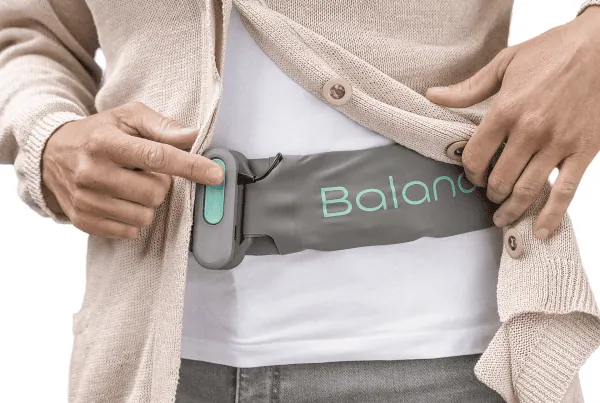
- Experience taking products such as the BalanceBelt and the Mission Navigation Belt through certification and into the market
If you are scoping a wearable and want clear IP, documentation, and exit terms from day one, contact the team to discuss your project.
Related Articles
- How do you manage component changes during collaborative wearable development?
- What are military wearables?
- Can haptic feedback wearables replace physical therapy tools for rehabilitation?
- What are the most common mistakes made in wearable product development?
- What are the stages of wearable product development?