

Wearable technology helps treat battlefield injuries faster by giving medics and commanders real-time physiological data on injured soldiers, enabling faster triage decisions and earlier intervention before evacuation. Sensors worn on the body can continuously monitor vital signs such as heart rate, blood pressure, respiration, and oxygen saturation, flagging deterioration the moment it begins rather than when a medic physically reaches the casualty. The sections below unpack exactly how this works, what the technology can and cannot yet do, and where military wearables are already in active use.
What types of injuries do wearables monitor on the battlefield?
Military medical wearables are primarily designed to monitor the physiological consequences of combat injuries rather than the injuries themselves. The most critical conditions tracked include haemorrhagic shock from blood loss, traumatic brain injury indicators, respiratory failure, cardiac arrhythmia, and severe hypoxia. Wearable sensors worn close to the skin can detect the downstream effects of these injuries through changes in heart rate, blood pressure, blood oxygen levels, skin temperature, and breathing rate.
The categories of injury that wearable sensors are most useful for tracking fall into a few clear groups:
- Penetrating trauma and haemorrhage: Rapid blood loss causes measurable drops in blood pressure and heart rate variability. Wearable sensors placed on the wrist, chest, or torso can detect these changes continuously, even before a soldier loses consciousness.
- Traumatic brain injury (TBI): Changes in EEG signals and physiological markers like heart rate variability and pupil response can indicate neurological stress, though TBI remains one of the harder conditions to assess non-invasively in the field.
- Respiratory compromise: Wearables using respiration sensors or chest-mounted IMUs can track breathing rate and detect abnormal patterns consistent with tension pneumothorax or airway obstruction.
- Environmental stress injuries: Heat stroke, hypothermia, and dehydration all produce measurable physiological signatures that wearable sensors can flag before the soldier becomes incapacitated.
The value is not in diagnosing the injury precisely, but in identifying that a soldier’s condition is deteriorating so that care can be prioritised and dispatched accordingly.
How do wearable sensors detect life-threatening conditions in real time?
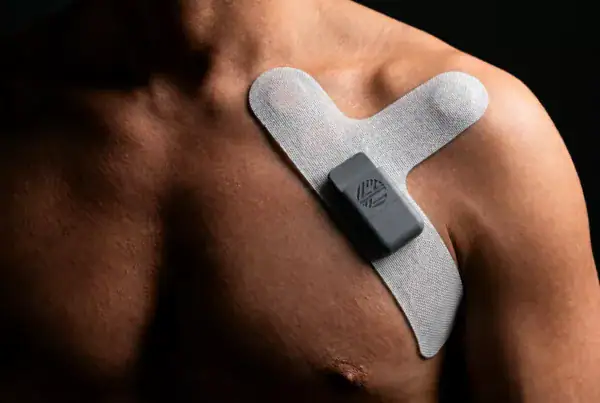
Wearable sensors detect life-threatening conditions by continuously measuring physiological signals and comparing them against established thresholds or learned baselines. When a signal crosses a critical boundary, the system generates an alert. The core sensing modalities used in combat medical wearables include electrocardiography (ECG) for cardiac monitoring, photoplethysmography (PPG) for blood oxygen and pulse, inertial measurement units (IMUs) for movement and posture, and skin temperature sensors for perfusion monitoring.
The technical challenge in a military context is significant. Sensors that work reliably in a clinical setting often fail on a moving, sweating soldier operating under extreme physical and environmental stress. Motion artefacts, poor electrode contact, and electromagnetic interference from communications equipment all degrade signal quality. This is why dry electrode technology has become a focus area for military wearable development. Dry electrodes make stable contact without conductive gel, maintaining signal integrity through movement and sweat in ways that traditional wet electrodes cannot.
Continuous monitoring is what separates wearable sensors from point-in-time assessments by a medic. A soldier’s condition can deteriorate within minutes of a traumatic injury. A wearable system transmitting data to a command or medical hub means that deterioration is visible the moment it begins, not when a medic next checks the casualty. In mass-casualty scenarios, this capability fundamentally changes the triage calculus.
How does haptic feedback help soldiers and medics respond faster?
Haptic feedback helps soldiers and medics respond faster by delivering tactile alerts and navigation cues directly to the body, bypassing the visual and auditory channels that are often overloaded or unavailable in combat. A vibration pattern delivered to the torso or wrist communicates information instantly and silently, without requiring the soldier to look at a screen or listen for an audio tone in a noisy environment.
In medical response terms, haptic wearables serve two distinct functions on the battlefield:
- Alert delivery: When a monitored soldier’s vital signs cross a critical threshold, a haptic alert can be sent to the medic’s wearable device, prompting an immediate response without radio communication that could compromise position.
- Navigation and coordination: Medics and first responders can receive directional cues through haptic patterns, guiding them toward a casualty’s location without consulting a map or device screen. This keeps hands and eyes free for the task at hand.
The Mission Navigation Belt, developed by Elitac Wearables in collaboration with the Dutch Ministry of Defence, demonstrates this principle in practice. The belt delivers silent, screen-free navigation information to soldiers through precisely timed vibration patterns, keeping hands, eyes, and ears completely unencumbered. The first order was delivered to the Royal Netherlands Army in 2020 following a development process that began with a Defence Innovation Competition win in 2013. The same underlying haptic logic applies to medical response: the faster a medic can be directed to a casualty without breaking cover or losing situational awareness, the better the outcome.
What is the difference between military medical wearables and consumer health wearables?
Military medical wearables and consumer health wearables are built for fundamentally different operating conditions and purposes. Consumer devices like fitness trackers are designed for comfort, battery life, and general wellness monitoring in controlled environments. Military medical wearables must function reliably under extreme physical stress, in harsh environmental conditions, and in situations where a failure in data accuracy could cost a life.
The differences run deep across every layer of the product:
- Sensor accuracy under stress: Consumer wearables are typically optimised for resting or light-activity conditions. Military wearables must maintain signal integrity during sprinting, crawling, extreme temperature swings, and high-impact events. Dry electrode technology and advanced motion artefact filtering are requirements, not options.
- Ruggedisation: Military devices must meet environmental standards covering water resistance, dust ingress, shock tolerance, and electromagnetic compatibility with communications equipment. Consumer devices do not face these requirements.
- Data security and communication: Military wearables must integrate with secure, encrypted communications infrastructure. Consumer devices rely on commercial Bluetooth or Wi-Fi protocols that are not appropriate for operational security.
- Certification pathways: Consumer health wearables typically carry CE or FCC marking. Military wearables must meet defence procurement standards and, where they cross into medical device territory, comply with Medical Device Regulation (MDR) requirements as well.
- Form factor constraints: Military wearables must integrate with existing equipment such as body armour, helmets, and load-bearing vests without adding meaningful bulk or restricting movement. Consumer devices are designed for standalone wear.
The result is that military medical wearable development is an order of magnitude more technically demanding than consumer wearable development, which is why off-the-shelf solutions consistently fall short in defence applications.
Which military forces are already using wearable technology in the field?
Several military forces have moved beyond research and into active deployment of wearable technology, though the extent of use varies considerably by application and nation. The United States military, through programmes run by DARPA and the Army Research Laboratory, has been the most active in fielding and testing combat wearables, including physiological monitoring systems designed to track soldier health during extended operations. The Royal Netherlands Army has deployed the Mission Navigation Belt, a haptic navigation wearable developed specifically for silent, hands-free navigation in operational conditions.
Beyond navigation, physiological monitoring wearables have been piloted by several NATO forces for training environments, where continuous data collection helps commanders understand soldier load, fatigue, and recovery. The UK Ministry of Defence and various allied forces have conducted trials of biosignal monitoring systems integrated into body armour or undergarments, with the goal of improving both training outcomes and battlefield medical response.
It is worth noting that many military wearable deployments remain classified or are disclosed only partially through public procurement records. What is publicly visible likely understates actual adoption, particularly in special operations contexts where technology is fielded faster and with less public documentation than in conventional forces.
What challenges still limit wearable adoption in military medicine?
Several genuine technical and operational challenges continue to slow the adoption of wearable technology in military medicine, despite the clear potential. These are not problems that will be solved by incremental improvements to consumer devices. They require purpose-built engineering.
The most persistent barriers include:
- Signal reliability under combat conditions: Maintaining accurate biosignal data from a soldier who is running, under fire, wearing body armour, and operating in extreme temperatures remains technically difficult. Motion artefacts, poor skin contact, and sensor displacement all degrade data quality at the moments it matters most.
- Battery life: Continuous multi-sensor monitoring is power-hungry. Military operations can last days without resupply, and a wearable that runs flat after eight hours provides limited operational value. Extending battery life without increasing device size or weight requires system-level optimisation across hardware, firmware, and data architecture, not simply fitting a larger battery.
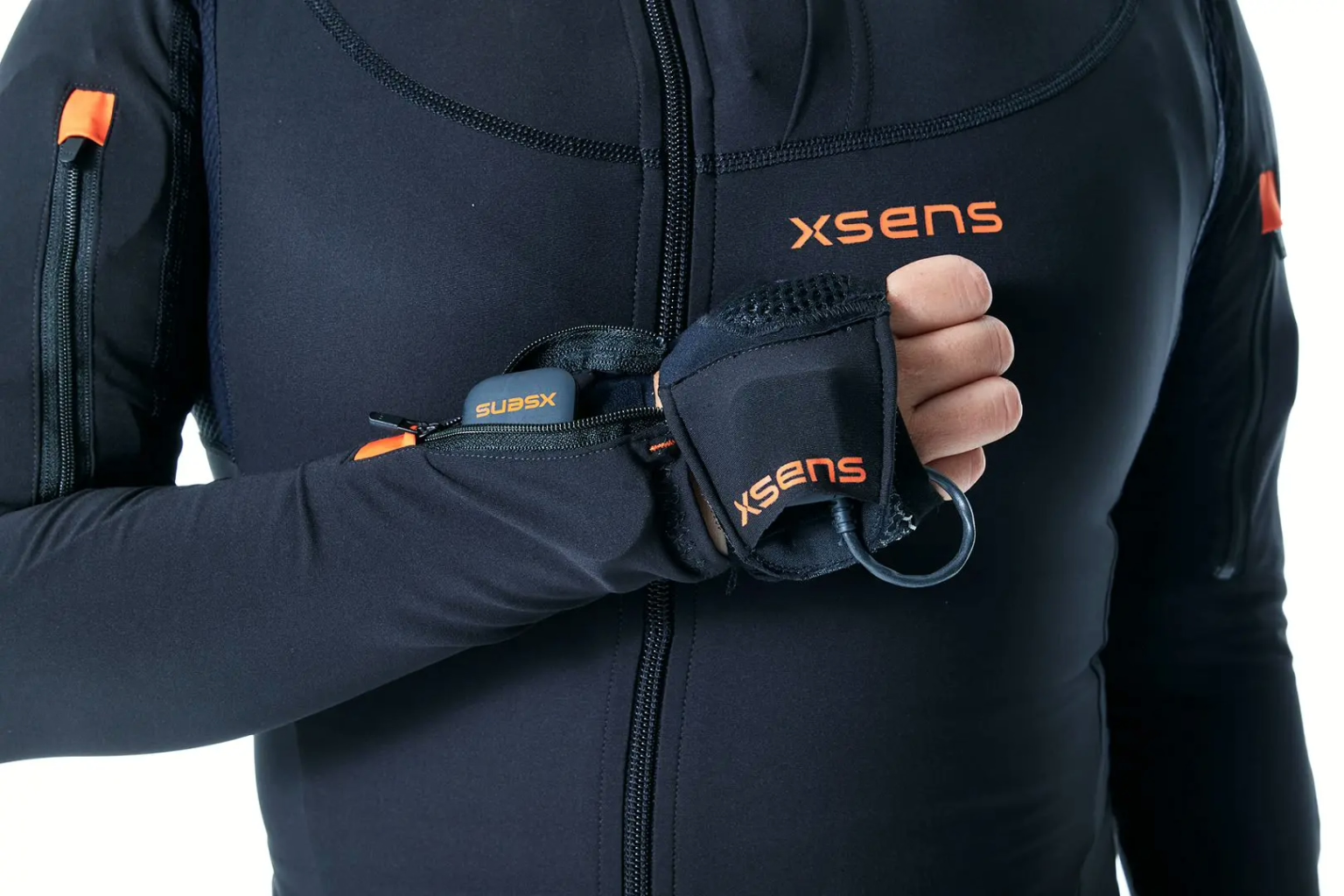
- Integration with existing equipment: Soldiers already carry significant loads and wear complex protective equipment. Any wearable system must integrate without adding meaningful weight, restricting movement, or creating snag hazards. Electronics-textile integration, where sensors and conductors are embedded directly into garments, is one of the most promising approaches, but it introduces its own challenges around washability, durability, and repairability in the field.
- Data overload and alert fatigue: Continuous monitoring generates continuous data. Without intelligent filtering and threshold management, medical personnel can be overwhelmed with alerts, many of which are artefacts rather than genuine physiological events. The firmware and algorithm layer is as important as the sensor hardware.
- Procurement and certification timelines: Military procurement cycles are long, and certification requirements for medical-grade wearables add significant time and cost to development. Projects that begin with genuine operational need can take years to reach a fielded product, by which point the technology has often advanced further.
None of these challenges are insurmountable, but they all require deep, multi-disciplinary engineering expertise. A team that understands only electronics, or only textiles, or only firmware will hit a wall quickly. The problems that limit military medical wearable adoption are precisely the problems that demand every discipline working together from the start.
How Elitac Wearables helps develop military-grade wearable medical technology
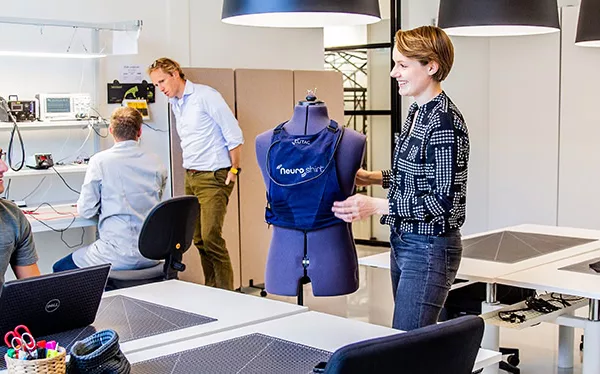
Developing wearable technology that performs reliably in military medical contexts is not a problem that standard development houses are equipped to solve. It requires expertise in haptic feedback, biosignal sensing, dry electrode technology, electronics-textile integration, and embedded firmware, all working in concert from the earliest stages of the project.
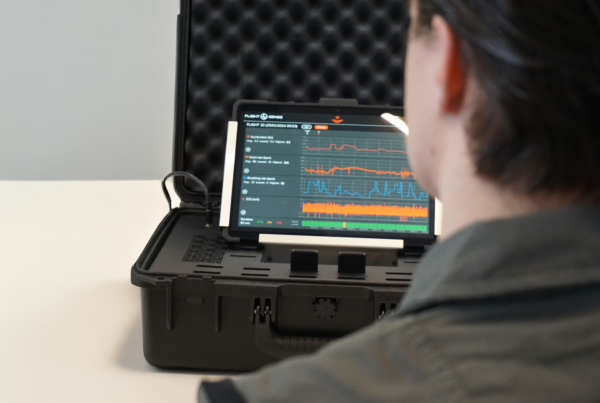
Elitac Wearables brings this capability together under one roof, with a track record that includes the Mission Navigation Belt for the Royal Netherlands Army and the Flight Sense System, a multi-biosensor wearable designed for extreme conditions that measures ECG, heart rate, HRV, respiration, and acceleration using advanced dry-electrode technology optimised for high-movement environments. The team’s work spans:
- Haptic feedback system design for silent, hands-free alert and navigation delivery
- Dry electrode biosignal sensing for reliable ECG and physiological monitoring under movement
- Electronics-textile integration for garment-embedded sensing without bulk or restriction
- Battery performance optimisation to extend operational life without redesigning the device
- Firmware development using the proprietary TacOS platform, purpose-built for wearables
- Certification support across military and medical device regulatory requirements
If you are developing a wearable system for military medical, defence, or emergency response applications and have reached the limits of what your current team can deliver, speak with Elitac Wearables about what end-to-end wearable development looks like for your specific challenge.