

Wearable technology reduces casualties in combat by giving soldiers, medics, and commanders real-time information they could not previously access without stopping, looking down, or breaking cover. Physiological monitoring detects life-threatening conditions before they become fatal. Haptic navigation keeps hands and eyes free in high-threat environments. The sections below break down exactly how each application contributes to keeping soldiers alive.
What types of wearable technology are used in combat?
Military wearable technology currently spans four main categories: physiological monitoring systems that track vital signs, haptic feedback devices that deliver silent navigational or situational cues, motion and position sensors that feed data to command systems, and biosignal wearables that detect stress and fatigue before performance degrades. Each category addresses a different failure point in combat operations.
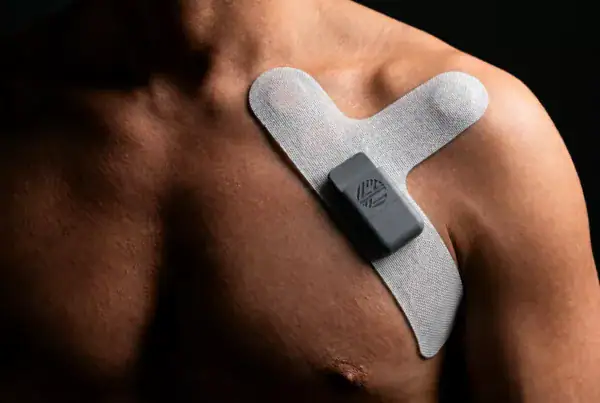
Physiological wearables typically measure heart rate, heart rate variability, respiration, body temperature, and hydration indicators. These systems use dry electrode technology rather than the gel-based wet electrodes found in clinical settings, because soldiers move aggressively and cannot stop to reapply consumable sensors. Dry electrodes tolerate sweat, friction, and high-movement conditions far better, though they introduce their own signal quality challenges that require careful firmware-level compensation.
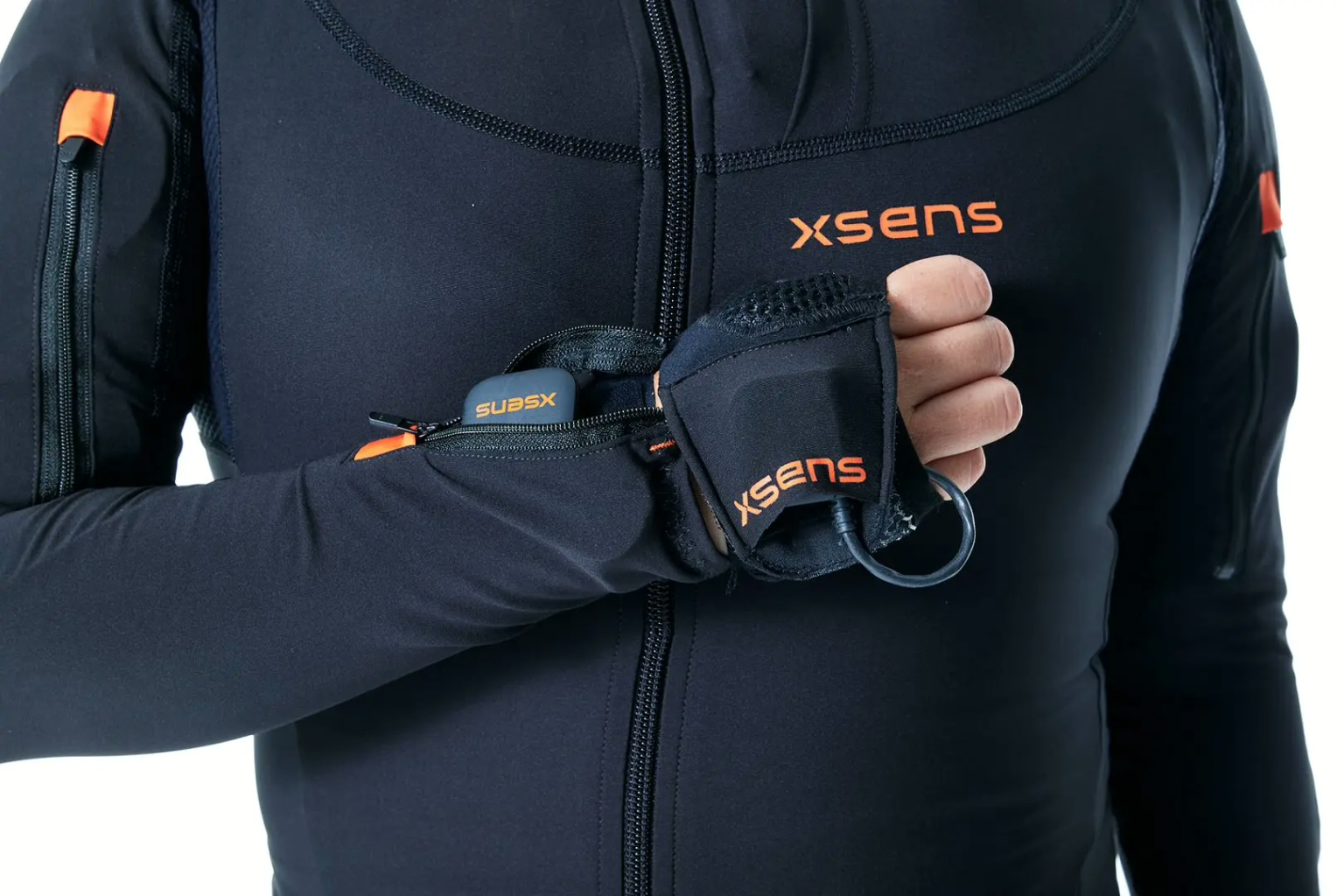
Haptic wearables deliver information through vibration patterns felt on the skin, removing the need for a soldier to look at a screen or listen to audio in a noisy or covert environment. Navigation belts, for example, use precisely timed vibrotactile cues to indicate direction without any visual or auditory output. Motion capture and inertial measurement unit (IMU) systems track body position and movement, feeding data to squad-level situational awareness platforms. Together, these categories form a layered system that addresses the core causes of combat casualties: delayed medical response, poor situational awareness, and communication failures under fire.
How does real-time health monitoring prevent soldier deaths?
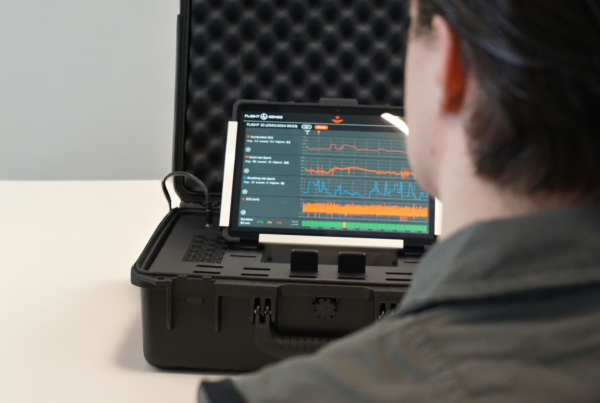
Real-time health monitoring prevents soldier deaths primarily by closing the gap between when a life-threatening condition begins and when a medic can intervene. In combat, casualties often go undetected for minutes or longer because a soldier cannot self-report and teammates cannot visually assess someone under fire. A wearable that continuously streams physiological data to a command or medical network removes that delay entirely.
The most critical metrics for combat casualty prevention are heart rate, blood oxygen saturation, and respiration rate. A sudden drop in heart rate combined with a rise in respiration rate is a strong indicator of haemorrhagic shock, which is among the leading causes of preventable battlefield deaths. When a wearable detects this pattern and immediately flags it to a medic or squad leader, the window for effective intervention widens significantly.
Beyond acute trauma, wearable health monitoring also addresses the slower-moving threats of heat injury, dehydration, and cumulative fatigue. Soldiers operating in extreme climates are vulnerable to heat stroke, which can incapacitate or kill without obvious warning signs visible to others. A wearable monitoring core temperature trends and heart rate variability can alert the wearer and their commander before the condition becomes critical, enabling a tactical decision to rotate the soldier out before collapse.
The technical challenge is substantial. Sensors that perform reliably in a controlled clinical environment behave differently on a moving body under stress. Motion artefacts contaminate ECG and respiration signals. Sweat affects electrode contact. Battery life must last a full operational cycle without recharging. Solving these problems requires system-level thinking across hardware selection, firmware optimisation, and textile integration, not simply attaching a consumer heart rate monitor to a uniform.
How do haptic wearables improve situational awareness in the field?
Haptic wearables improve situational awareness by delivering directional and tactical information through the sense of touch, leaving a soldier’s eyes, ears, and hands completely free for the task at hand. In high-noise environments where radio communication is compromised, or in covert operations where any audible signal is a liability, vibrotactile feedback becomes a genuinely silent communication channel that standard equipment cannot replicate.
The core mechanism is straightforward: actuators positioned around the body, typically in a belt or vest configuration, vibrate in patterns that correspond to specific instructions. A pulse on the left side of the torso means turn left. A pulse on the front means move forward. More complex patterns can encode threat direction, rally points, or status signals. Because the human body is highly sensitive to directional touch stimuli, soldiers can interpret these cues instinctively after relatively short training periods.
A real-world example of this principle applied to military use is the Mission Navigation Belt, developed in collaboration with the Dutch Ministry of Defence. The belt integrates with existing GPS systems and delivers silent, screen-free navigation cues, keeping a soldier’s hands on their weapon and their eyes on the environment rather than on a map or device screen. The first order was delivered to the Royal Netherlands Army in 2020 after development that began with a Defence Innovation Competition win in 2013.
The actuator technology behind haptic wearables is more nuanced than it first appears. Eccentric rotating mass (ERM) actuators are low-cost but produce imprecise, buzzy sensations. Linear resonant actuators (LRAs) offer sharper, more localised feedback that the body can distinguish more reliably at different positions. Piezo actuators provide the highest precision but require more careful power management. Selecting the wrong actuator for a body-worn application undermines the entire system, which is why haptic system design cannot be separated from the firmware that controls timing, intensity, and pattern sequencing.
What role does wearable tech play in preventing friendly fire?
Wearable technology reduces friendly fire incidents by providing real-time identification and positional data that distinguishes allied soldiers from threats, even in low-visibility or high-confusion scenarios. Traditional identification systems rely on visual markers, radio calls, or transponders that can fail, be obscured, or simply not be checked under the stress of close-quarters combat. A wearable that continuously broadcasts encrypted positional data to a shared network gives every member of a unit an accurate, up-to-date picture of where their teammates are.
IMU and GPS-integrated wearables feed positional information into squad-level command systems, allowing leaders to see the real-time location of every soldier on a digital map. When a soldier moves into a sector where another unit is operating, the system can flag the proximity automatically, prompting a challenge-and-response before engagement. This is particularly valuable in complex urban environments where units may converge on the same building from different directions without direct radio contact.
Haptic feedback adds another layer. Rather than relying on a soldier to check a screen, a positional wearable can deliver a vibrotactile alert when a teammate enters a defined proximity zone, or when the soldier is about to cross into a sector occupied by another unit. The alert is silent, immediate, and requires no cognitive load beyond the physical sensation itself, which matters enormously when a soldier’s attention is already saturated by the demands of the environment.
The reliability of these systems under operational conditions is the defining engineering challenge. Electronics that work in a lab may fail when exposed to dust, water, impact, and electromagnetic interference at the same time. Military wearables require certification processes that go well beyond standard consumer or even medical device standards, covering environmental stress testing, electromagnetic compatibility, and durability under conditions that most development teams have never had to engineer for.
How does wearable technology support post-combat medical care?
Wearable technology supports post-combat medical care by providing a continuous physiological record that medics and trauma surgeons can use to understand what happened to a casualty’s body before they arrived. Rather than relying on a wounded soldier’s account or a bystander’s recollection, a wearable data log shows the exact timeline of vital sign changes, the moment of likely injury onset, and how the body responded in the period between injury and treatment.
This data has direct clinical value. A trauma surgeon who knows that a patient’s heart rate spiked and then dropped sharply twenty minutes before arrival can anticipate haemorrhagic shock and prepare accordingly. A medic in the field who can see that a soldier’s oxygen saturation has been declining steadily over the past five minutes can prioritise airway management before other interventions. The wearable transforms the casualty from an unknown quantity into a documented patient with a physiological history.
Beyond acute trauma, wearables also support rehabilitation and return-to-duty assessment. Motion capture systems and IMU-based wearables can objectively measure how a recovering soldier’s gait, balance, and range of motion compare to their pre-injury baseline, removing the subjectivity from fitness assessments. Haptic feedback wearables have also shown promise in balance rehabilitation, with devices like the BalanceBelt demonstrating that precise vibrotactile cues can help people with severe balance disorders regain confident, independent movement, a principle that translates directly to post-injury rehabilitation in military populations.
What are the biggest challenges in developing military wearables?
The biggest challenges in developing military wearables are environmental durability, power management, signal reliability on a moving body, and the complexity of military certification. Each of these problems is genuinely hard on its own. In combination, they make military wearable development one of the most technically demanding categories in the entire wearables sector.
Environmental durability and reliability
Military equipment operates in conditions that consumer and medical wearables are never designed for. Dust, water immersion, extreme temperatures, physical impact, and electromagnetic interference from other military systems can all compromise a wearable that has passed every standard test in a controlled environment. Flexible electronics integrated into textiles introduce additional failure modes: seams that crack, conductive yarns that corrode, and enclosures that delaminate under repeated stress. Designing for these conditions from the start, rather than retrofitting durability after the fact, is the only approach that produces reliable field equipment.
Power management under operational constraints
Battery life is a critical constraint that most development teams underestimate until late in the process. A wearable that needs recharging every four hours is operationally useless if a mission lasts twelve. Increasing battery size is rarely the answer, because a larger battery means a heavier, bulkier device that interferes with movement and load-carrying. The real solution is system-level optimisation: firmware that puts components to sleep when not actively sensing, communication protocols that transmit data efficiently rather than continuously, and hardware component selection matched to the actual usage pattern of the device in the field. Battery performance is almost always a system architecture problem, not a hardware problem.
Certification and procurement complexity
Military wearables must meet certification requirements that go beyond CE marking or MDR compliance. They must demonstrate performance under military environmental standards, electromagnetic compatibility with existing defence systems, and cybersecurity robustness for any device transmitting data on a tactical network. Procurement processes in defence are long, documentation-heavy, and unforgiving of late-stage design changes. Teams that treat certification as a final step rather than a design constraint from day one routinely discover that their hardware choices, connector types, or firmware architectures are incompatible with what the procurement process requires, at a point in development where changes are extremely costly.
How Elitac Wearables helps develop military-grade wearable technology
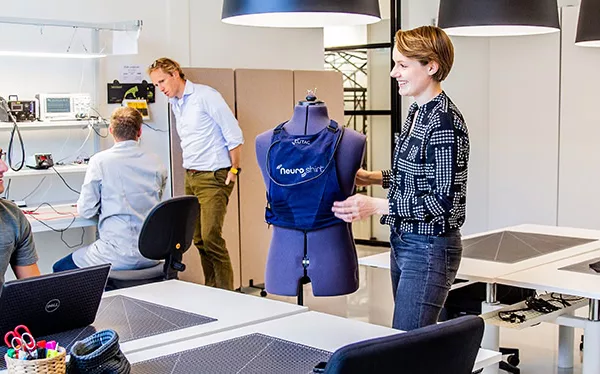
Building a wearable that performs reliably in combat conditions requires the full range of disciplines working together from the first day of the project, not assembled piecemeal as problems emerge. Elitac Wearables brings hardware, firmware, textile integration, biosignal sensing, and haptic system design under one roof, with direct experience delivering military wearables including the Mission Navigation Belt for the Royal Netherlands Army.
For organisations developing soldier wearable technology or exploring haptic wearables for military applications, Elitac Wearables offers end-to-end development support that covers:
- Actuator selection and haptic system design optimised for body-worn military applications
- Dry electrode biosignal sensing engineered for high-movement, high-sweat conditions
- Battery performance optimisation across hardware, firmware, and data architecture
- Electronics-textile integration using conductive yarns, printed electronics, and modular attachment techniques
- Guidance through military and defence certification requirements from the earliest design decisions
- Rapid validation using functional demonstrators before committing to production-phase investment
If you are developing a military wearable and need a development partner with the technical depth to solve the problems that standard suppliers cannot, get in touch with the Elitac Wearables team to discuss your project.
Related Articles
- Why is end-user testing critical in smart textile development?
- What are the cybersecurity risks of military wearables?
- What is the role of haptic feedback in fitness wearables?
- How do you find a contract manufacturer for a wearable device?
- How do you align your wearable product development with your go-to-market strategy?