

Research institutions and companies collaborate on wearable development by splitting the work along the technology readiness scale. Research partners explore new sensing, actuation, and materials concepts at low readiness levels, while companies define the application, fund development, and carry results into certified production. Joint funding and clear agreements hold it together.
The collaboration works best when each side knows where its contribution ends and the other’s begins. The sections below cover roles, funding, intellectual property, the path from lab to product, and how to pick a partner.
What roles does each partner typically play?
Research institutions generate new knowledge, such as novel actuator concepts, biosignal algorithms, or textile sensing methods, and validate it through studies with human participants. Companies contribute a market-defined problem, product requirements, development budget, and the commercial route to customers. A development specialist often bridges the two.
In practice, the roles break down as follows:
- Universities and institutes: fundamental research, access to test participants, ethics approvals, measurement methods, and scientific publication.
- Industry partners: use case definition, clinical or field access, regulatory strategy, manufacturing, and sales.
- Wearable development partners: turning a lab concept into a robust, wearable-ready system covering hardware, firmware, textile integration, and human factors.
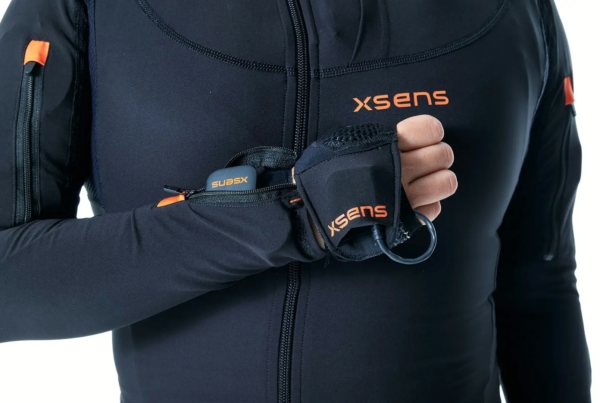
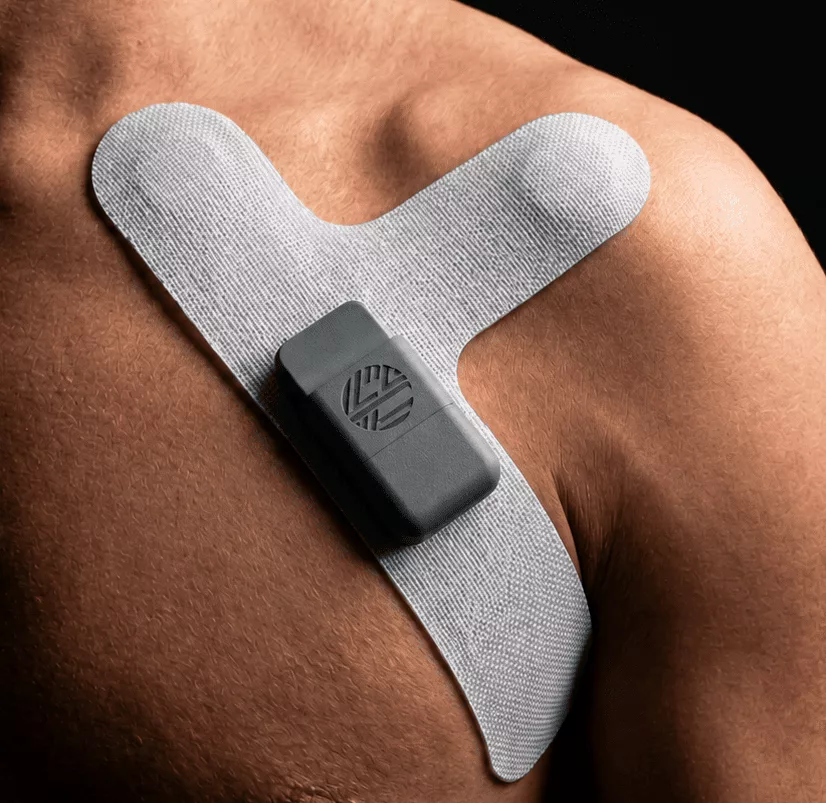
The third role matters more than most consortia expect. A sensor that works on a lab bench behaves differently on a moving body. Flexible electronics, washable textile integration, and dry electrodes that cope with motion artefacts are a distinct engineering discipline. Researchers rarely have the capacity to cover it, and companies rarely have it in-house. Elitac Wearables regularly takes this bridging position in joint R&D projects with research institutes and universities, alongside its work for commercial clients.
How are wearable research collaborations usually funded?
Wearable research collaborations are usually funded through a mix of public grants, direct company contributions, and in-kind support. Public programmes cover the high-risk early phases, while companies fund the stages closest to market. Most consortia combine at least two of these sources to spread risk.
Typical funding routes include:
- National and European research programmes: Horizon Europe calls and national innovation schemes fund consortia of research institutes and companies working on shared challenges, often with a requirement that industry partners co-invest.
- Defence and healthcare innovation competitions: these fund prototype work against a defined operational or clinical need. The Mission Navigation Belt, for example, began with a win in a Defence Innovation Competition in 2013 and reached its first delivery to the Royal Netherlands Army in 2020.
- Direct company funding: a company commissions research or development on a project basis, usually when the application and business case are clear.
- In-kind contributions: lab time, equipment, test participants, and engineering hours counted toward a project’s co-funding share.
Funded programmes bring structure and scientific credibility, but they also bring reporting duties and fixed timelines. Teams should budget for that overhead and keep a realistic view of what a grant covers. A research grant rarely pays for the certification and production work that follows.
How is intellectual property handled between partners?
Intellectual property between partners is regulated in a consortium or collaboration agreement signed before work begins. The agreement separates background IP (what each party brings in) from foreground IP (what the project creates) and defines who owns, licenses, and may commercialise each. Settling this early prevents disputes later.
The key points to agree on are:
- Background IP: each partner keeps what it owned before the project, with access rights granted only as far as the project needs.
- Foreground IP ownership: inventions are commonly owned by the party that made them, or jointly where contributions cannot be separated.
- Licensing terms: companies typically need exclusive or field-specific licences to university-generated IP to justify product investment.
- Publication rights: researchers need to publish, so agreements usually include a review window that lets the company file patents before a paper appears.
- Know-how and software: firmware, algorithms, and design files deserve explicit treatment, since they often hold more commercial value than a patent.
The most common failure here is ambiguity rather than conflict. When a project produces a hybrid result, such as a haptic pattern library built on a university algorithm and a company’s hardware, unclear ownership can stall commercialisation for months.
How does a project move from lab prototype to product?
A project moves from lab prototype to product through staged development: feasibility check, proof of concept, pilot samples, final prototype, first series, and scaled production. Each phase answers a narrower question and raises reliability, manufacturability, and regulatory readiness, so the design is validated before expensive tooling begins.
The gap between a working lab demonstrator and a market-ready product is where many collaborations stall. A lab prototype proves that a principle works. A product must survive daily wear, washing, drift in sensor behaviour, battery constraints, and production variation. Teams that skip this step find that the prototype is not reliable enough for real-world use.
Several practices keep the transition on track:
- Validate with users early. Build functional demonstrators to test comfort, interaction, and perceived value before committing to tooling, which can run into six figures.
- Design for certification from the start. For medical wearables, MDR requirements influence hardware, materials, and documentation choices. Retrofitting compliance is costly.
- Plan the handover. Decide early who owns the design files, firmware, and manufacturing relationships once the research phase ends.
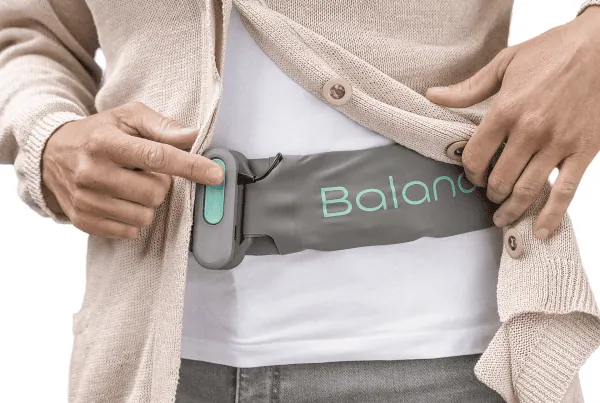
The BalanceBelt followed this route from research concept to a commercially launched medical wearable for people with severe balance disorders. Getting there demanded MDR compliance, quality management, and clinical validation on top of the original sensing and haptic work.
What makes a wearable collaboration succeed or fail?
Wearable collaborations succeed when partners share a clearly defined end-user problem, agree on IP and roles upfront, and keep one party accountable for the integrated system. They fail when disciplines are fragmented across suppliers, validation happens too late, or the project ends at a lab demonstrator with no route to production.
Common reasons collaborations fail
The pattern repeats across sectors. Research goals drift away from commercial needs, so the result is scientifically sound but unmarketable. Electronics, textiles, and firmware are handled by separate parties, and nobody owns the integration. Teams validate assumptions late, after budget has gone into tooling. And a promising prototype stalls at the transition to production because nobody planned for manufacturing, certification, or supply chain.
Common reasons collaborations succeed
Successful projects usually keep the end user at the centre of every stage, so comfort and usability are tested alongside technical performance. They bring hardware, firmware, textile, and algorithm expertise together early rather than in sequence. They also set decision points at each phase, so a concept that will not work is stopped cheaply rather than discovered after tooling.
How should a company choose a research or development partner?
A company should choose a partner by checking proven wearable experience, coverage of every required discipline, a credible path to certification and production, and a clear approach to IP. Prior products on the market say more than a capability list. Ask what the partner has already shipped.
Useful criteria include:
- Relevant track record: products that reached users in your sector, whether medical, defence, sports, or industrial.
- Integrated expertise: in-house hardware, firmware, textile integration, biosignal sensing, and haptics, so handovers between vendors are avoided.
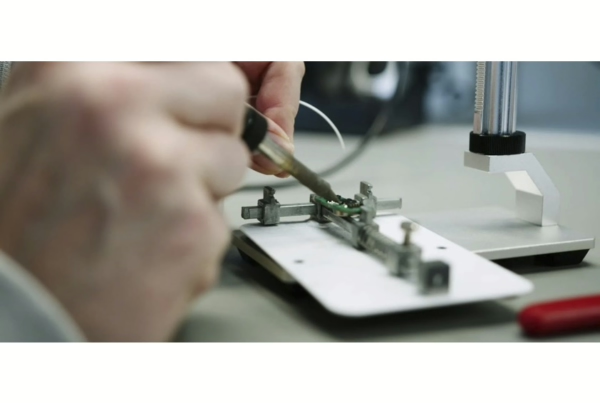
- Prototyping infrastructure: an in-house lab with 3D printing, laser cutting, and software test set-ups shortens iteration cycles and lowers risk.
- Regulatory experience: demonstrated work with MDR, CE marking, or military requirements if your product needs them.
- Network access: relationships with research institutes and manufacturing partners that support both early research and scaled production.
- Transparent budgets: clear cost indications per development phase, so you can plan beyond the first prototype.
Ask how the partner works with your team, too. The strongest setups function as an extension of the client’s own team and bring wearable-specific knowledge to a domain the client already knows well.
How Elitac Wearables helps with wearable development collaboration
Elitac Wearables works as the technical bridge between research and market. With a multidisciplinary team and a 180m² in-house Wearables Lab in Utrecht, we take concepts from research settings through to certified, production-ready wearables. Our development process covers every phase, and working with us can mean a single iteration or full-service development.
- Hardware, firmware, textile integration, haptics, and biosignal sensing under one roof, so nobody drops the integration
- Participation in joint R&D projects with research institutes, universities, and industry partners
- A six-phase process from feasibility check to scaled production, with certification guidance for MDR, CE marking, and military requirements
- Reference products including the BalanceBelt and the Mission Navigation Belt, both taken from concept to deployment
Planning a research collaboration or stuck between lab prototype and product? Contact our team to discuss your project.
Related Articles
- How do you adapt an existing wearable platform for a new application?
- What is the difference between smart textiles and traditional wearables?
- What industries benefit most from smart textile development?
- What are the biggest challenges in developing military wearables?
- How do you transition a wearable product from development to a sustainable, scalable business?