Involve a customer’s engineering team in wearable design reviews by inviting the right specialists to each review, sharing materials in advance, running a structured agenda, and letting them handle a working prototype. Then document every decision and keep them engaged between sessions. Wearables combine electronics, textiles, firmware, and body-worn ergonomics, so no single reviewer sees the full picture.
The customer’s engineers know their domain, their regulations, and their end users. Your job is to make their knowledge usable at the moment it matters. The sections below cover who should attend, how to structure the session, what to prepare, how to evaluate haptics, and how to keep feedback productive.
Which customer engineers should attend each wearable design review?
Each design review needs the customer engineers who own the decisions on the agenda. For a wearable, that usually means a hardware or electronics lead, a firmware or software engineer, a product owner, and a regulatory or quality representative once certification enters the picture. Add a textile or human factors voice when comfort and fit are under discussion.
Match attendance to the development phase rather than inviting everyone every time:
- Feasibility and proof of concept: the product owner and the lead engineer who defined the requirements. These sessions settle what the wearable must do and how success will be judged.
- Pilot samples and prototype: hardware, firmware, and industrial design reviewers, plus someone who represents the end user, such as a clinician or field operator.
- Pre-production and first series: quality, regulatory, and manufacturing contacts, because design choices now affect certification files and tooling.
Keep one named decision maker on the customer side. A review with ten opinions and no owner produces ten action items that contradict each other.
How should a wearable design review be structured for engineers?
A good wearable design review runs 60 to 90 minutes and follows a fixed order: recap of requirements, demonstration of the current prototype, discussion of open risks, hands-on evaluation, and a closing list of decisions and owners. Engineers engage most when they see working hardware early and have a clear role in the session.
A structure that works in practice:
- Requirements recap (10 minutes): restate what was agreed and what changed since the last review. This prevents drift.
- Live demonstration (15 minutes): show the prototype working on a body or a representative test setup, not only in slides.
- Technical deep dive (20 to 30 minutes): walk through hardware, firmware, and textile integration choices, with the open risks stated openly.
- Hands-on evaluation (15 to 20 minutes): let customer engineers wear, test, and challenge the prototype.
- Decisions and actions (10 minutes): record what was approved, what needs rework, who owns each item, and by when.
Be honest about what is not solved yet. Experienced engineers trust a team that names its power budget problem or washability concern before they find it themselves.
What materials should be shared before a design review?
Share a concise pre-read at least two to three working days before the review. It should include the current requirements list, a system block diagram, the open technical risks, any test results since the last session, and the specific decisions you need from the customer. Engineers who arrive prepared give sharper feedback.
A useful pre-read package typically contains:
- System architecture and block diagram, including power and connectivity
- Updated bill of materials with flagged long-lead or risky components
- CAD views or renderings for fit and enclosure discussions
- Firmware status, including any timing or pattern definitions for actuators
- Test data, such as battery runtime, sensor signal quality, or wash test results
- A short list of questions marked “decision needed”
Keep it short. A 30-page deck sent the night before gets skimmed. A five-page brief with clear questions gets read. For smart textile design reviews, add material swatches or a physical sample whenever possible, because conductivity, stretch, and hand feel are impossible to judge from a screenshot.
How can engineers evaluate haptic feedback during a review?
Engineers evaluate haptic feedback by wearing the device, feeling defined test patterns in realistic conditions, and rating them against the requirements. Haptics cannot be judged on a bench or in a slide. Perception depends on actuator type, placement, skin contact, clothing layers, and body movement, so the review must put the prototype on a body.
Build a short, repeatable evaluation protocol:
- Test distinct patterns: play a set of signals, such as different intensities, rhythms, and locations, and ask reviewers to identify them without being told which is which.
- Test in motion: have reviewers walk, sit, and move their arms. A signal that is clear at rest can vanish during activity.
- Test with layers: repeat with a jacket, a base layer, or protective gear if the use case requires it.
- Compare actuator options: ERM, LRA, and piezo actuators feel and behave differently. Letting engineers feel them side by side prevents later disputes.
- Record the results: note recognition accuracy, comfort, and any fatigue or desensitisation after repeated use.
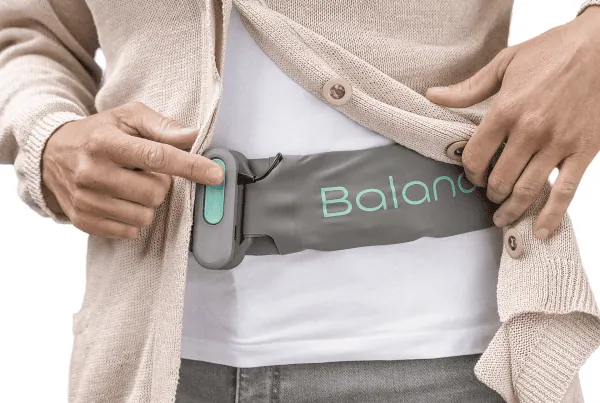
Projects such as the Mission Navigation Belt showed why this matters: silent, screen-free guidance only works if the wearer can interpret the signal instantly while moving and carrying equipment. Ask customer engineers to judge the haptics against the real task, not in the abstract.
How do you handle conflicting feedback from customer engineers?
Handle conflicting feedback by tracing each opinion back to a documented requirement, then asking the customer’s designated decision maker to resolve what the requirements cannot. Never average two opposing opinions into a compromise nobody wanted. Conflicts usually signal an unclear or unstated requirement, and fixing that fixes the argument.
A practical approach:
- Log every comment with the name of the engineer and the underlying concern.
- Separate preference from constraint. “I would prefer a smaller enclosure” differs from “the enclosure must fit under a flight suit sleeve.”
- Test it when possible. A quick demonstrator or A/B sample often settles a debate faster than discussion, especially for comfort and haptic questions.
- Escalate to the decision maker when the trade-off affects cost, schedule, or certification scope.
- Update the requirements document so the decision does not resurface in the next review.
Hardware and firmware engineers often pull in opposite directions, for example, on battery size and runtime tuning. Lay out the system-level trade-off, including downstream effects like enclosure redesign and tooling, so both sides see the full cost of each option.
How do you keep the customer’s engineers involved between reviews?
Keep customer engineers involved between reviews with short, regular touchpoints: a weekly written update, a shared issue tracker, access to test data, and occasional short working sessions on specific problems. The goal is that no review contains surprises. Engineers who follow progress continuously give earlier, cheaper feedback.
Several habits make this work:
- Send a one-page weekly status covering progress, blockers, and upcoming decisions.
- Use a shared tracker where customer engineers can see open issues, comment, and confirm closures.
- Share intermediate builds or short videos of the prototype in action rather than waiting for the next formal review.
- Run focused 30-minute calls on one topic, such as electrode placement or firmware timing, with only the relevant engineers.
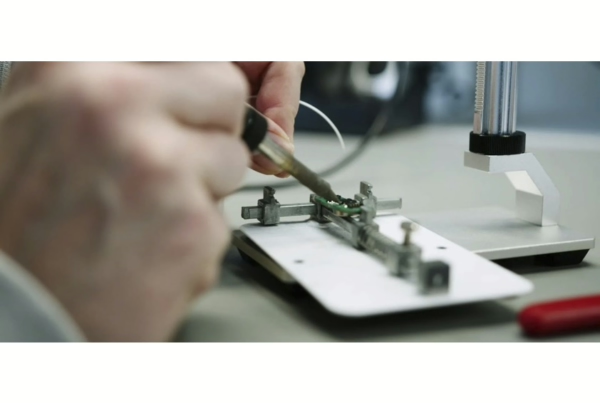
- Invite engineers to the lab when physical testing matters. Seeing the integration techniques and handling samples builds shared understanding quickly.
Respect their time. These engineers have day jobs and their own product roadmaps. Ask for input only when it changes something, and close the loop by showing how their feedback shaped the next iteration.
How Elitac Wearables helps with wearable design reviews
Elitac Wearables builds customer engineers into the development process from the first feasibility check, so design reviews confirm decisions rather than reopen them. Hardware, firmware, textile, and haptics specialists sit in the same team and the same 180m² Wearables Lab, which means customer engineers can see, wear, and test real prototypes during every review.
- A six-phase process from feasibility check to scaled production, with clear deliverables and decision points at each stage
- In-house prototyping with 3D printers, laser cutters, and permanent software test setups for fast iteration between reviews
- Haptic system design covering actuator selection, firmware timing, and pattern design
- Experience with medical, military, and sports wearables, including certification requirements such as MDR
Want to see how this works on your project? Read about how we work, learn what it is like on the working with us page, or contact our team to discuss your wearable.
Related Articles
- How long does a smart textile development cycle take in 2026?
- Should you prototype electronics integrated into textiles in-house or outsource?
- Are military wearables waterproof and ruggedized for combat?
- How is GPS integrated into military wearable devices?
- Can haptic feedback wearables be used in medical applications?