Special forces units use wearable technology to gain real-time operational advantages — from silent navigation and physiological monitoring to encrypted communication and environmental sensing. These are not consumer fitness trackers adapted for the field; they are purpose-engineered systems built to survive extreme conditions while keeping operators informed and combat-ready. The sections below address the most pressing questions about how wearables are shaping modern special operations.
What types of wearable technology do special forces currently use?
Special forces currently use a range of wearable devices, including haptic navigation systems, multi-biosensor garments, heads-up displays, GPS-integrated communication platforms, and smart body armour. Each device serves a specific operational function — reducing cognitive load, preserving situational awareness, or monitoring the physical state of the operator in real time.
The most operationally significant categories include:
- Haptic navigation wearables: Vibrotactile belts or vests that deliver directional cues through the skin, allowing soldiers to navigate without looking at a screen or listening to audio instructions. The Mission Navigation Belt, developed for the Royal Netherlands Army, is a field-deployed example of this approach.
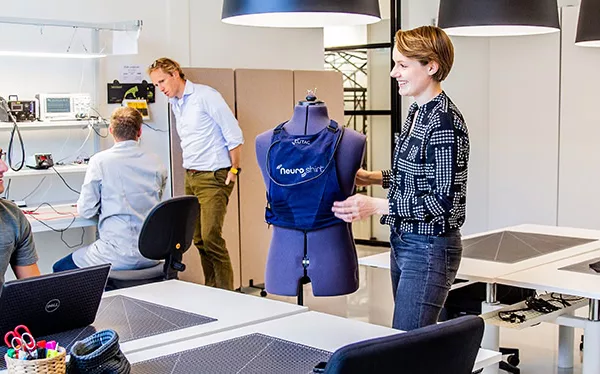
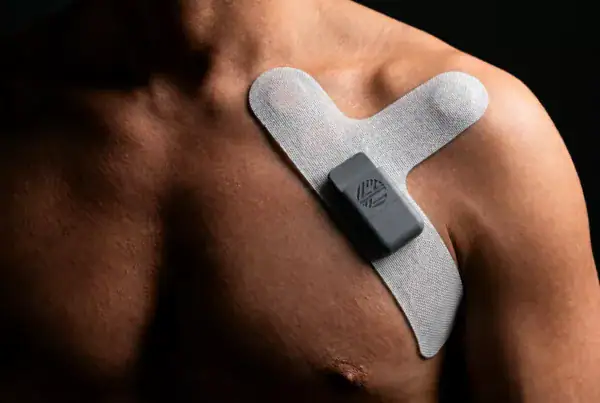
- Biosensor garments: Smart garments or vests embedded with dry-electrode ECG, respiration sensors, and inertial measurement units (IMUs) that continuously track heart rate, heart rate variability, and movement. These systems feed data to commanders or medical personnel in real time.
- Tactical heads-up displays: Helmet-mounted or eyewear-integrated displays that overlay maps, target data, or team positions onto the operator’s field of view.
- Smart communication rigs: Wearable radio systems with integrated sensors for voice, location, and biometric data sharing across a unit.
- Environmental sensing wearables: Devices that detect chemical, biological, or radiological threats and alert the wearer without requiring manual monitoring.
What unites all of these is a shared design constraint: they must work reliably in conditions that would destroy a consumer device, without adding meaningful weight or restricting movement. That constraint is what makes military wearable technology a genuinely distinct engineering discipline.
How does haptic feedback improve situational awareness in the field?
Haptic feedback improves situational awareness in special forces operations by delivering information directly through the sense of touch, leaving the operator’s eyes, ears, and hands free for the task at hand. In high-noise or low-visibility environments where screens are unusable and audio cues would compromise position, vibrotactile signals become the most reliable communication channel available.
The mechanism is straightforward: actuators embedded in a belt, vest, or wristband generate precisely timed vibration patterns that the wearer learns to interpret as directional commands, alerts, or status updates. Because the skin can distinguish between different vibration intensities, durations, and locations on the body, a well-designed haptic system can convey surprisingly nuanced information without a single spoken word or visual prompt.
In navigation specifically, this matters enormously. A soldier following haptic cues can maintain full visual contact with their environment rather than glancing down at a GPS device. They receive the equivalent of a tap on the shoulder saying “turn left” — and they respond instinctively, without a conscious processing delay. At the unit level, this reduces the cognitive load on every individual operator, which directly improves decision-making quality under stress.
Haptic feedback also has strong potential for non-verbal team coordination. Coded vibration sequences can signal “halt,” “regroup,” or “threat detected” across a unit without radio transmission that could be intercepted. In environments where electronic emissions need to be minimised, that capability has real strategic value.
What are the biggest technical challenges in military wearable development?
The biggest technical challenges in military wearable development are ruggedisation under extreme environmental conditions, battery life at operational tempo, reliable electronics-textile integration, and the need to meet stringent military certification requirements — all simultaneously. Each of these problems is difficult in isolation; solving them together within a wearable form factor is where most development projects stall.
Ruggedisation and environmental resilience
Military wearables must function in temperature extremes, high humidity, mud, water immersion, and physical impacts that would disable commercial-grade electronics. Flexible circuits and textile-embedded components introduce failure points that simply do not exist in rigid enclosures. Connectors, seams, and electrode interfaces must maintain electrical integrity across thousands of movement cycles — a requirement that demands extensive materials testing and design iteration before anything approaches field readiness.
Power management and battery life
Battery life is consistently one of the most underestimated problems in wearable development. Military operations run for hours or days without access to charging infrastructure. A device that performs well in a lab setting for eight hours may last three hours in the field once sensors, radios, and firmware are running at full operational load. Solving this requires system-level optimisation across hardware component selection, firmware power states, data transmission intervals, and real-world usage patterns — not simply fitting a larger battery, which creates a cascade of redesign problems.
Electronics-textile integration
Embedding electronics into garments that soldiers actually wear introduces a set of engineering problems that neither pure electronics teams nor textile manufacturers are equipped to solve alone. Conductive yarns, printed electronics, and modular attachment systems each carry different trade-offs in flexibility, washability, durability, and signal quality. Getting this integration right for a high-movement, high-sweat operational environment requires deep cross-disciplinary experience — and it is one of the primary reasons military wearable projects fail to progress from prototype to production.
Certification and regulatory compliance
Military wearables must meet defence-specific certification standards that go well beyond CE marking. Electromagnetic compatibility, operational security requirements, and environmental testing protocols add significant time and cost to any development programme. Teams that do not plan for certification from the earliest design stages typically face expensive redesigns late in the process.
How do wearables support soldier health monitoring during missions?
Wearables support soldier health monitoring during missions by continuously measuring physiological indicators — including heart rate, heart rate variability, respiration rate, and body temperature — and transmitting that data to medical personnel or commanders without interrupting the operator. This enables early detection of heat stress, dehydration, cardiac events, or fatigue before they become mission-critical failures.
The challenge in military health monitoring is that standard biosensor approaches break down in high-movement conditions. Wet gel electrodes used in clinical ECG equipment cannot survive sustained physical activity, sweat, and rough handling. Military biosensor wearables rely on dry electrode technology specifically engineered to maintain signal quality during movement — a technically demanding requirement that requires careful electrode material selection, placement optimisation, and motion artefact processing in firmware.
Beyond cardiac monitoring, inertial measurement units embedded in garments can track gait patterns, detect falls or impacts, and flag abnormal movement signatures that may indicate injury. When this data is processed at the device level and transmitted selectively — rather than streaming raw sensor output continuously — the system can provide meaningful health intelligence without draining battery life or overwhelming a command network with data.
The operational value is significant: a commander who can see that a team member’s heart rate variability has dropped sharply over the past twenty minutes has an early warning signal that would otherwise be invisible until the individual collapsed. Wearable health monitoring shifts the medical response from reactive to proactive.
What is the difference between consumer wearables and military-grade wearables?
The fundamental difference between consumer wearables and military-grade wearables is the operating environment and the consequences of failure. Consumer devices are designed for comfort, convenience, and everyday use. Military-grade wearables are engineered to function reliably in conditions that would destroy consumer hardware — and where device failure can directly cost lives.
The distinctions run across every layer of the product:
- Durability standards: Military wearables must meet MIL-STD environmental specifications covering shock, vibration, temperature range, and water resistance that consumer devices are never tested against.
- Sensor accuracy under stress: A fitness tracker’s heart rate reading can be off by 20% during intense exercise without meaningful consequence. A biosensor monitoring a soldier in a high-stress environment needs to maintain clinical-grade accuracy under conditions of heavy sweat, movement, and electromagnetic interference.
- Power architecture: Consumer wearables are designed around daily charging cycles. Military wearables must sustain multi-day operations with no access to power infrastructure, requiring fundamentally different power management design.
- Security and emissions: Consumer Bluetooth and Wi-Fi protocols are entirely unsuitable for tactical environments. Military wearables use encrypted, low-probability-of-intercept communication protocols that consumer devices do not support.
- Integration with existing systems: Military wearables must integrate with established command and control infrastructure, GPS systems, and communication networks — not a smartphone app ecosystem.
The development process is also categorically different. Consumer wearables are optimised for cost and time to market. Military wearable development prioritises reliability, certification, and operational suitability — a process that takes significantly longer and requires specialist expertise that consumer electronics development teams rarely possess.
What will wearable technology look like in future special forces units?
Future special forces wearable technology will move toward full-body sensor integration, AI-assisted data interpretation, and seamless human-machine interfaces that reduce cognitive burden without adding physical load. The direction of travel is toward wearables that are indistinguishable from standard-issue clothing while delivering continuous physiological, navigational, and environmental intelligence.
Several development trajectories are already underway in defence research programmes:
- Smart textile platforms: Garments with embedded conductive structures that eliminate discrete sensor modules entirely, distributing sensing capability across the fabric itself.
- Edge AI processing: On-device machine learning that interprets sensor data locally — identifying stress signatures, injury risk patterns, or threat indicators — without transmitting raw data to a remote server.
- Multi-modal haptic feedback: More sophisticated vibrotactile systems capable of conveying complex situational data through the body, potentially replacing or supplementing heads-up displays in environments where visual attention cannot be spared.
- Energy harvesting: Wearables that supplement battery power by harvesting energy from body heat, movement, or solar exposure — extending operational endurance without increasing carried weight.
- Closed-loop health intervention: Systems that not only monitor physiology but actively respond — delivering compression, thermal regulation, or pharmacological assistance based on detected physiological states.
The core engineering constraint will not change: everything must work reliably on a moving human body, in hostile conditions, without adding burden. The teams that will deliver these next-generation systems are those with deep cross-disciplinary expertise in electronics, textiles, firmware, and human factors — not those adapting consumer technology after the fact.
How Elitac Wearables helps with military and defence wearable development
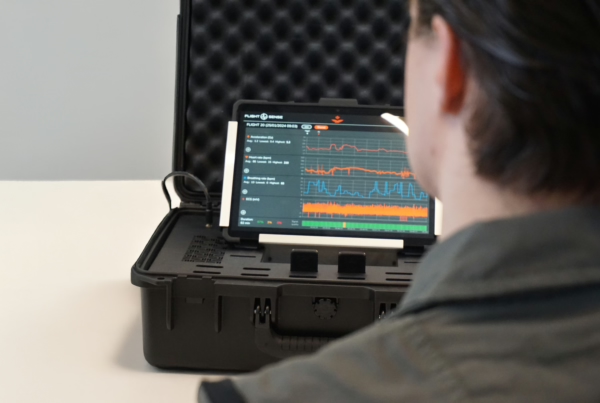
Developing wearables for special forces and defence applications demands a level of technical rigour that most development partners are not equipped to provide. Elitac Wearables brings together the full range of disciplines required under one roof — haptic feedback engineering, electronics-textile integration, biosignal sensing, embedded firmware, and certification guidance — with a track record that includes the Mission Navigation Belt for the Royal Netherlands Army and the Flight Sense System for military and extreme-condition use.
For defence and security organisations exploring wearable technology development, Elitac Wearables offers:
- End-to-end development from feasibility check through to a certified, production-ready product
- Deep expertise in haptic feedback systems, including actuator selection, firmware-level timing, and field-validated pattern design
- Dry-electrode biosensor integration optimised for high-movement, high-stress operational conditions
- Military certification experience and guidance from the earliest design stages
- In-house 180m² Wearables Lab for rapid prototyping and iteration without third-party delays
- TacOS, a proprietary wearable firmware platform that accelerates development and reduces integration risk
If your organisation is developing a wearable system for defence, safety, or high-performance applications and needs a development partner with proven experience in exactly this domain, get in touch with the Elitac Wearables team to discuss your project requirements.
Related Articles
- What data do military wearables collect during operations?
- What does post-launch wearable product support and iteration actually cost?
- What should a Head of Product demand from a wearable development partner at each project milestone?
- What should a CTO look for when evaluating a wearable development partner?
- What are the stages of wearable product development?