You define interfaces between hardware, firmware and textile teams by writing a shared interface control document that fixes mechanical, electrical, signal and environmental boundaries, assigns one named owner to each boundary, and treats every change as a versioned, reviewed event. The goal is that no connection point belongs to “everyone,” because that means it belongs to no one.
Wearables punish vague boundaries more than rigid products do. A body moves, sweats, flexes and gets washed, so a connector, a conductive trace or a sensor reading behaves differently on a wearer than on a bench. The sections below cover where teams collide, what to specify, who owns what, and how to keep interfaces stable while the design keeps changing.
Where do hardware, firmware and textile responsibilities usually collide?
Responsibilities collide wherever one team’s output becomes another team’s input: the connection between a rigid PCB and a flexible textile trace, the power budget that firmware must honor, and the sensor signal that depends on how fabric sits on skin. These are the points where assumptions stay unwritten until something fails.
Three collision zones appear in almost every project:
- Electromechanical attachment: The hardware team designs a connector or pad layout, while the textile team decides how conductive yarn, printed tracks or a modular attachment will meet it. Pitch, strain relief, and washability rarely get defined from both sides at once.
- Power and timing: Hardware sets the battery and component choices, but firmware decides how long sensors and radios stay active. Battery life is a system-level result, so neither team can fix it alone.
- Signal quality on the body: Firmware filters and interprets data, but motion artifacts, electrode contact and fabric tension originate in the textile. A firmware team that never sees the garment will filter the wrong problem.
Haptic wearables add a fourth zone. Actuator placement, preload against the skin and the vibration path through fabric all affect what the wearer actually feels, which ties actuator drive firmware directly to garment construction.
What should an interface specification between wearable teams include?
An interface specification, often called an interface control document, should list every physical, electrical, data and environmental parameter that crosses a team boundary, along with tolerances, test methods and an owner. If a value can change the behavior of another team’s work, it belongs in the document.
A workable specification covers:
- Mechanical: Connector type, pad geometry, enclosure dimensions, attachment method, allowed strain and bend radius.
- Electrical: Voltage and current limits, contact resistance targets for conductive textile paths, grounding and shielding approach.
- Signal and data: Sampling rates, bus protocols, message formats, expected noise levels and timing constraints.
- Power: Peak and average consumption per mode, wake and sleep behavior, and the budget each subsystem may use.
- Environmental: Washing cycles, sweat exposure, temperature range, and the compression and stretch the part must survive.
- Verification: The test that proves each parameter, who runs it, and the pass criterion.
- Regulatory flags: Anything affecting certification such as MDR, CE marking or ATEX, so compliance does not surface late.
Keep each entry measurable. “Durable connection” is a wish; “connection resistance stays below an agreed value after a defined number of wash cycles” is a specification.
Who owns each interface in a multidisciplinary wearable project?
Each interface should have exactly one accountable owner, usually the team whose design is hardest to change later, with the neighboring team as a named reviewer. A project lead or system architect owns the document as a whole and arbitrates when two teams disagree.
A practical split looks like this:
- Hardware owns the electrical interface and connector definition, since the PCB and component choices are the least flexible once tooling starts.
- Textile owns the conductive path, garment construction and attachment points, because the textile defines what is physically manufacturable and washable.
- Firmware owns the data and timing interface, including power states and communication intervals, and reports consumption back to hardware.
- The system architect owns cross-cutting items such as the power budget, the test plan and the change log.
Ownership does not mean working in isolation. It means one person answers the question “who decides?” in under a minute. Projects with fragmented suppliers often stall exactly here: electronics sit with one party, textiles with another, and nobody owns the integration.
How do you validate interfaces before full prototypes exist?
You validate interfaces early by building small, deliberately rough test articles that exercise one boundary at a time, using off-the-shelf parts and quick garment mockups. The aim is to learn whether the interface works on a moving body before committing to custom PCBs or final textiles.
Effective early methods include:
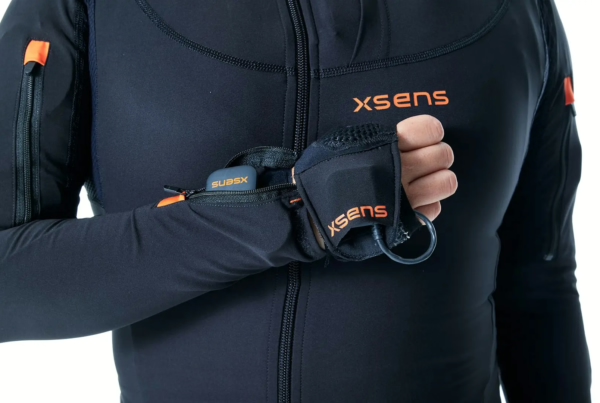
- Development boards on a base garment: Wire a standard module to a sourced garment to check signal quality, sensor placement and comfort.
- Coupon testing: Make small textile samples with the intended conductive path and run wash, flex and stretch cycles to measure resistance drift.
- Firmware stubs: Write minimal sketches that exercise the data interface and log timing and power draw, long before production firmware exists.
- Wired before wireless: Remove radio variables first so you can isolate textile and signal issues.
This staged approach mirrors how a phased development process de-risks a concept: feasibility first, then a rudimentary proof of concept, and only then custom hardware. Every interface assumption you test cheaply is one you do not discover after tooling.
How do you manage interface changes during iteration?
Manage interface changes by versioning the specification, routing every change through a short impact review with all affected teams, and recording the reason and the date. A change that one team treats as minor can break another team’s work, so no interface edit should be silent.
A lightweight change process usually works better than a heavy one:
- Raise the change against the specific parameter in the document, not as a general request.
- Assess impact on the other two disciplines: does it alter the power budget, the attachment, or the signal chain?
- Decide with the owner and, if needed, the system architect.
- Update the version and rerun the affected verification tests.
- Communicate the change in a place all teams actually read.
Freeze the interfaces that are expensive to reverse, such as connector footprints and enclosure dimensions, earlier than the ones that are cheap to adjust, such as firmware message formats. Iteration stays fast when the costly boundaries are stable and the cheap ones remain open.
When should the textile team be involved in electronics design?
The textile team should join at the very start, during concept and feasibility, before component selection and board layout are fixed. Textile constraints on washability, stretch, comfort and conductivity shape the electronics, so involving them late forces expensive redesigns.
Early textile input changes concrete decisions. It affects board size and shape, connector choice, where rigid parts can sit on the body, how many conductive paths are realistic, and whether the design needs a removable module. It also flags risks such as biocompatibility, sizing and cleaning requirements while they are still cheap to address.
The same applies in reverse. Electronics and firmware engineers should review garment concepts early, since fabric tension, electrode contact and actuator preload decide whether the signal or the haptic effect works at all. Treat the textile specialist as a co-designer of the system, not a supplier of a cover for finished electronics.
How Elitac Wearables helps with defining interfaces between wearable teams
Interface problems disappear when hardware, firmware and textile expertise sit in one team with shared accountability. X works this way: electronics, firmware, textile integration, haptics and human factors are developed under one roof, in a dedicated 180m² Wearables Lab, so boundaries are tested on real garments from the earliest phase instead of being negotiated between suppliers.
Here is what that means in practice:
- A phased process from feasibility check to proof of concept, so interface assumptions are validated before custom hardware is built
- Over 10 years of experience integrating electronics into washable, flexible, body-worn textiles using conductive yarns, printed electronics and modular attachment
- TacOS, a proprietary wearable operating system, plus ready-made building blocks that speed up early prototypes
- One accountable team from first idea through certification guidance and production coordination, with no handovers between vendors
If your project is stuck at the point where electronics, firmware and textiles meet, see how to work with us or contact the team to discuss your wearable.
Related Articles
- When should a wearable company choose co-development over licensing existing technology?
- Can a wearable development partner support just one part of a project?
- How do you plan a wearable development partnership beyond the first prototype?
- Should you prototype electronics integrated into textiles in-house or outsource?
- How do medical-grade wearables differ from consumer wearables in development?