
Wearable device testing before launch is not one test at the end. It is a layered process that covers hardware, firmware, user fit, durability and regulatory compliance, and it runs alongside development from the very first phase. The earlier you test, the cheaper it is to fix what you find. This article explains which tests a wearable needs, when to do them, and why products most often fail.
In short:
- Test seven layers: electronics, firmware, system integration, environment, users, market fit and regulation.
- Start testing in the feasibility phase and increase rigour with every phase.
- Test on real bodies early: sensors, comfort and fit behave differently on people than on a bench.
- Plan certification from day one; late EMC or safety failures mean costly redesigns.
What types of testing does a wearable device need to pass?
A wearable device needs hardware and electronics validation, firmware verification, system integration testing, environmental and durability testing, user testing, product-market fit and user acceptance testing, and certification testing. Each targets a different failure mode, and skipping one is a common reason wearables stall or fail after launch.
How rigorous each layer must be depends on the intended use. A consumer fitness tracker and a medical ECG wearable share test categories but differ sharply in depth. Medical devices follow regulatory requirements; industrial and defence wearables have demanding durability and reliability standards; every body-worn product must be validated with real people in real conditions.
| Test layer | Key question |
|---|---|
| Electronics and hardware | Does every component work correctly and safely? |
| Firmware and software | Does the code behave correctly in all operating states? |
| System integration | Do hardware, firmware, textiles and app work together? |
| Environment and durability | Does it survive heat, sweat, water, flexing, washing and drops? |
| Users | Does it fit, feel right and deliver the benefit for real people? |
| Market and acceptance | Is there product-market fit, and will users accept and adopt it? |
| Regulation | Does it meet the legal requirements of the target market? |
These layers interact. A firmware fix can change power draw; a textile change can change sensor contact. Testing in isolation misses effects that only appear when the full system runs on a moving body.
How do you test wearable hardware and electronics?
Wearable hardware is tested with bench tests, automated functional tests, environmental simulation and electrical safety checks. The goal: every component performs within spec under the conditions it will face in use, not just in the lab. Because wearables move, flex, get wet and sit against the skin, standard electronics testing must be extended with wearable-specific tests.
Electrical and functional validation
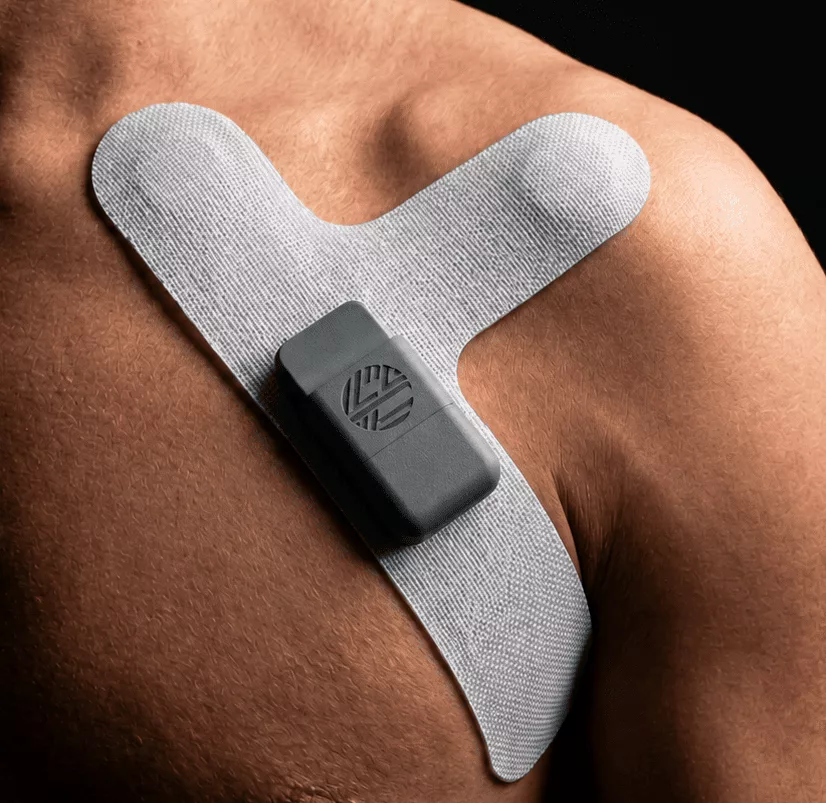
Test power consumption, signal integrity, sensor accuracy and wireless reliability. For biosensors such as ECG or EMG electrodes, verify the signal chain during movement, not only at rest. Motion artefacts are one of the most persistent challenges in biometric wearables and must be characterised early.
Battery life needs special attention. A shortfall found late often means a bigger battery, a bigger enclosure, new tooling, updated documentation and delays. Measure power in every operating state from the start and optimise across hardware and firmware before the enclosure is frozen. See also the battery impact of haptic feedback.
Environmental and durability testing
Wearables face flex, drop and wash tests, plus sweat, humidity and body heat that cause corrosion and delamination over time. Connections between electronics and textiles are a common failure point. IP testing (ingress protection against dust and water) is standard for most wearables and is often required by customer specifications or product standards, for example for home-use medical devices.
Skin contact and battery safety
Two wearable-specific checks are easy to forget. Materials touching the skin may need biocompatibility testing (ISO 10993 for medical devices). Lithium batteries need safety testing (such as IEC 62133) and UN 38.3 testing before they can be shipped.
How do you test a wearable on real users?
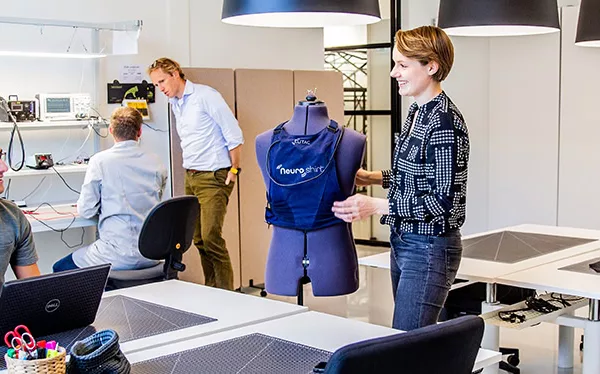
User testing means real end users wear and use the device in realistic conditions, to validate comfort, usability, sensor performance on a real body and the intended benefit. This cannot be replicated on a bench.
Start earlier than most teams expect. If you wait for a near-final prototype, form factor decisions are already locked, and discovering that the device slides, chafes or gives unreliable readings becomes expensive. A phased approach reduces this risk:
- Early wear trials: test comfort, positioning and basic interaction with simple mock-ups, before electronics are integrated.
- Controlled user tests: verify that sensors and actuators work on real bodies, with a moderator present. Dry electrodes behave differently on different skin types and body locations; haptic cues must be clear without being distracting.
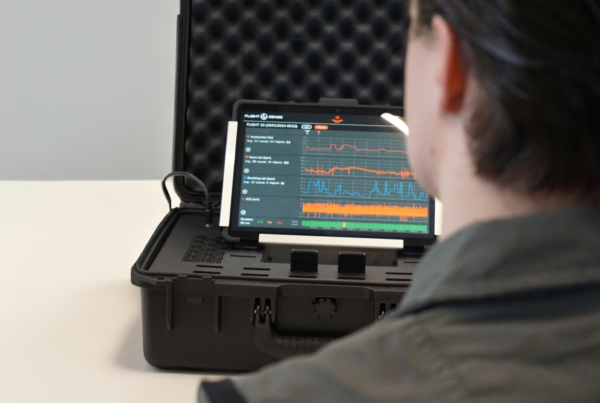
- Uncontrolled field trials: test without a moderator in the real environment, such as a hospital ward, factory floor, training ground or cockpit. Elitac’s Mission Navigation Belt was field-tested by Dutch and German forces on foot, on water and in vehicles, and the Flight Sense System was tested in flight in a T-38 jet trainer.
For medical wearables, user testing is part of the regulatory evidence. Usability engineering (IEC 62366-1) and clinical evaluation must be documented in the technical file, so build that documentation discipline in from the start.
How do you test product-market fit and user acceptance?
A wearable can pass every technical test and still fail in the market. Two extra tests close that gap: product-market fit testing (does the market want it, at this price?) and user acceptance testing (do the intended users accept it and keep using it?).
Product-market fit testing
Start in the feasibility phase, long before engineering. Check the market and competitors, set a target cost price and retail price, and test the value proposition with real buyers. Show the proof of concept and concept samples to potential customers, and look for hard signals such as pilot agreements, letters of intent or pre-orders. If the business case does not hold, it is far cheaper to find out now than after tooling.
User acceptance testing
User acceptance testing confirms that the product works for the people who will use it, in their own routine, and that they want to wear it. Acceptance criteria are agreed early, in the project brief, and tested in the uncontrolled user tests of the engineering phase and in pilots with the first series. Typical criteria: comfort over a full day, ease of putting on and charging, clarity of feedback, social acceptability and willingness to keep using it.
“Technically right is not enough. It has to be wanted, and worn.”
What certifications does a wearable device need before launch?
It depends on the intended use and target market. In the EU, most electronic wearables need CE marking; medical wearables must also comply with the Medical Device Regulation (MDR). Requirements should shape hardware design from the first phase.
- CE marking: for wireless wearables usually under the Radio Equipment Directive (RED), which covers radio, EMC and safety, plus RoHS. Since August 2025, internet-connected radio equipment must also meet RED cybersecurity requirements (EN 18031).
- MDR: for all medical devices in the EU (Class I, IIa, IIb and III). It requires clinical evaluation, risk management (ISO 14971) and technical documentation. All classes above basic Class I need a Notified Body, and so do Class I devices that measure, are sterile or are reusable surgical instruments. Medical electrical wearables are typically tested to IEC 60601-1, and medical software follows IEC 62304.
- FCC: for wireless devices sold in the United States.
- ATEX: for devices used in potentially explosive atmospheres, such as oil and gas or mining.
- Military standards: defence wearables often need MIL-STD-810 (environment) and MIL-STD-461 (electromagnetic compatibility).
The critical mistake is treating certification as the last step. Requirements should inform component choice, PCB layout, enclosure design and firmware from the start. Read more about our certification guidance and requirements and certification check.
When should wearable testing start in the development process?
Testing should start in the first phase and grow in rigour with every phase. At Elitac Wearables, testing is built into our six-phase development process. Each phase answers one question and ends with a gate, so you only invest in the next phase when the previous answer is clear.
“De-risk the concept fast and cheap, before you commit budget to engineering.”

| Phase | Question it answers | What is tested | Gate |
|---|---|---|---|
| 1. Feasibility check (~2 weeks) | Is it possible, and worth pursuing? | On paper: technology, risks, requirements, compliance scope, market and target price | Go / No-Go |
| 2. Proof of concept (~4 weeks) | Can this work? | The riskiest assumptions, with a quick physical demonstrator in the lab | PoC review |
| 3. Concept development and lock (~6 weeks) | Which direction do we build? | Concept variants in controlled user tests; form and function | Concept lock |
| 4. Engineering and validation (12–16 weeks) | Did we build it right, and does it work in real life? | Custom hardware and firmware, pre-certification tests, uncontrolled user tests | Design freeze |
| 5. Certification and first series (12–16 weeks) | Is it ready for the market? | Formal certification, production consistency, user acceptance in pilots | Production release |
| 6. Scaled production (ongoing) | Can we make it better and cheaper at scale? | Production quality, post-market feedback | – |
Lead times are indicative; component lead times and certification lab scheduling can extend phases 4 and 5. For teams used to hardware industry terms: phase 4 covers EVT and DVT (engineering and design validation tests), and phase 5 covers PVT (production validation test).
A common rule of thumb: the cost of fixing a problem multiplies at each phase transition. A design issue found in the proof of concept costs a fraction of the same fix during engineering, and far less than after production has started.
“Know what to build, before engineering begins.”
Verification vs validation: what is the difference, and when do you do it?
Verification asks: did we build the product right? It checks the design against the requirements, mostly on the bench and in the lab. Validation asks: did we build the right product? It checks whether the product works for real users in their real environment.
You need both, at different moments:
| Phase | Verification (built it right?) | Validation (built the right thing?) |
|---|---|---|
| 2. Proof of concept | Lab test of the core working principle | Client review: is this what you meant? |
| 3. Concept development and lock | Quick functional checks of concept variants | Controlled user tests with a moderator |
| 4. Engineering and validation | Design verification against requirements: functional, signal quality, power, durability and pre-certification tests (EVT/DVT), closed by the design freeze | Uncontrolled user tests in the real environment, without a moderator |
| 5. Certification and first series | Formal certification tests at accredited labs; production validation (PVT) | Pilots, clinical studies and first market feedback |
| 6. Scaled production | Production quality control | Post-market feedback and surveillance |
For medical devices, both are mandatory and must be documented: design verification and design validation are separate steps in ISO 13485, and both feed into the technical file for MDR.
“A sensor is not proven on the bench. It is proven on a moving body.”
How do Design Thinking and Agile (Scrum) improve wearable testing?
Our way of working is rooted in Design Thinking and Agile/Scrum. Both put testing at the centre, not at the end.

- Design Thinking starts from the user: understand the problem, ideate, prototype and test, then repeat. That is why we build quick physical prototypes and put them on real people from the first phases, instead of perfecting designs on paper.
- Agile and Scrum split the work into short sprints, each ending with something that can be tested and reviewed with the client. Test results feed straight into the next sprint, and priorities can shift without losing control of budget and planning.
Combined with the phase gates above, this gives both flexibility and predictability: fast learning within a phase, and clear decisions between phases. Read more about how we work.
What are the most common reasons a wearable device fails testing?
Most failures are not random. They trace back to early assumptions that were never tested in real conditions:
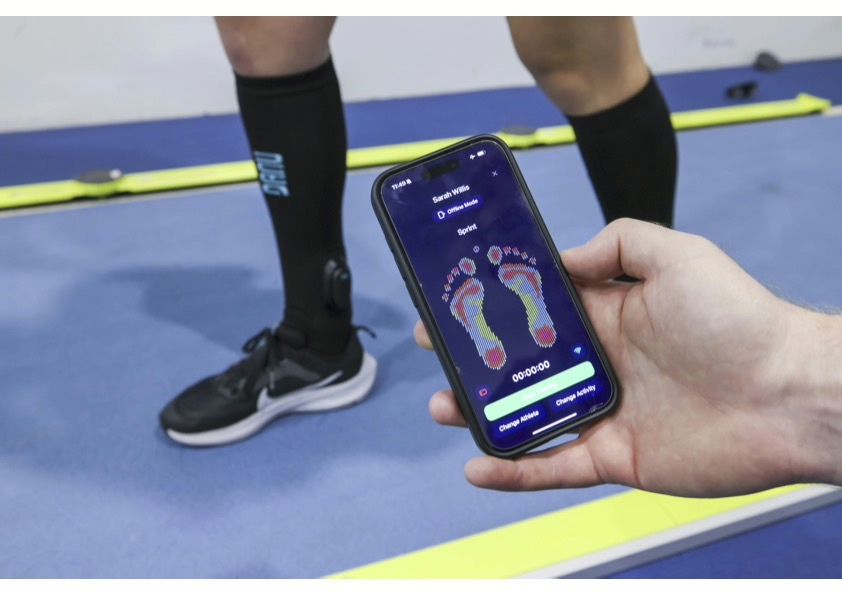
- Sensor performance & signal quality on real bodies: sensors that work on a bench or mannequin often give unreliable data on a moving person, due to motion, skin contact, sweat and body differences.
- Battery life shortfalls: usually a system problem, caused by firmware keeping components awake, high sampling rates or inefficient wireless communication. Optimise the system before reaching for a bigger battery.
- Firmware instability: field use brings edge cases bench tests rarely show, such as sensor dropouts, Bluetooth reconnections, low-battery states and unexpected user behaviour.
- EMC failures: radios, motor drivers for haptic actuators and power circuits can cause interference. Found late, this often means a new PCB layout.
- Durability: electronics-textile connections: repeated flexing, washing and movement cause connector failures and delamination that only show after extended use, a failure mode unique to wearables.
How Elitac Wearables helps you test and validate your device
Testing a wearable is a continuous discipline that needs hardware, firmware, textile, biomedical and human factors expertise working together. Elitac Wearables brings these disciplines into one team, and has developed medical, defence, sports and industrial wearables since 2012, such as the Mission Navigation Belt, the Flight Sense System and the Xsens Link motion capture suit.
Hardware & firmware reviews
An independent review of your electronics and embedded code, to catch risks before they become costly.
Design reviews
A fresh look at your product design, usability and producibility.
Feasibility check
Test whether your idea is technically and commercially viable, before big investments.
Technology readiness check
Find out how mature your technology is and what it takes to reach the market.
Signal quality tests
Biosignals such as ECG and respiration, electrode-skin contact and motion artefacts, measured on real bodies in motion.
Biomedical tests
Skin contact, comfort and biocompatibility of materials for medical wearables.
Functional, environmental & power tests
Durability, flexing, washing, IP and battery life.
User trials
Controlled and uncontrolled tests with end users, documented for regulatory use.
Pre-compliance & certification guidance
Preparing for CE, MDR and military standards, together with accredited labs.
Firmware validation
Validation on our TacOS platform to reduce embedded software risk.
Is testing revealing expensive problems, or do you want a test strategy that catches them early? The earlier we get involved, the more options you have.
Contact us about testing your wearableFAQ
How long does it take to test a wearable device?
Testing runs throughout development. In our process, from feasibility check to certified first series typically takes several months, with phases 4 and 5 each around 12–16 weeks, depending on complexity and certification.
What is the difference between verification and validation?
Verification checks whether you built the product right, against the requirements. Validation checks whether you built the right product, for real users in real conditions.
Do all wearables need CE marking?
Almost all electronic wearables sold in the EU need CE marking, usually under the Radio Equipment Directive if they are wireless. Medical wearables also need to comply with the MDR.
When should user testing start?
As early as possible: simple wear trials with mock-ups can start in the proof-of-concept phase, long before the electronics are final.
Related Articles
- What is the difference between smart textiles and traditional wearables?
- Are electronics integrated into textiles ready for mass-market adoption in 2026?
- How do wearables support soldier situational awareness?
- What sensors are used in haptic feedback wearable devices?
- How do haptic feedback wearables work for navigation?