

The development partner should usually own system integration in a wearable co-development project, with the client owning requirements, domain data, and final product decisions. Integration spans hardware, firmware, textiles, and power, and one accountable party must hold it together. Splitting it across teams without a named owner is where most wearable projects stall.
The right split depends on who has wearable experience and what the product must be certified against. The sections below cover what breaks, who should hold which tasks, and how ownership shifts from prototype to production.
What goes wrong when no one owns integration?
When no one owns integration, problems fall into the gaps between disciplines. Electronics, textile, and firmware teams each deliver parts that meet their own specifications, yet the assembled wearable fails on the body. Nobody is accountable for the system, so defects surface late, when fixes are most expensive.
Wearables punish this gap more than rigid devices do. Sensors behave differently on a moving body, flexible interconnects fatigue, and a textile choice can change signal quality or haptic perception. A PCB supplier cannot see the washing cycle. A garment maker cannot see the firmware duty cycle that drains the battery in three days instead of seven.
Typical symptoms of missing integration ownership include:
- Interfaces between electronics and textiles that were never specified, so each side assumes the other absorbs the tolerance
- Battery life shortfalls that trace back to firmware and sensor settings, not battery size, and surface only in late testing
- Enclosure or tooling redesigns triggered by problems that a system-level view would have caught earlier
- Finger-pointing between suppliers when the assembled prototype fails a test
- Certification evidence that does not connect hardware, firmware, and materials into one technical file
These failures rarely come from lack of talent. They come from nobody being responsible for how the pieces behave together.
Which integration tasks can a client keep in-house?
Clients can keep tasks that depend on their own domain knowledge: product requirements, user and clinical context, application software, cloud and data platforms, regulatory strategy, and final acceptance criteria. They should hand over tasks that depend on wearable-specific experience, such as electronics-textile joining, haptic system design, and body-worn sensor integration.
A client with a strong device background, such as a medical or safety equipment company, usually holds deep expertise in certification, quality systems, and end-user needs. Those assets are hard to outsource and should stay in-house. Typical client-owned tasks include:
- Defining the intended use, user groups, and performance targets
- Owning the quality management system and regulatory submission
- Developing the companion app, backend, and data analysis
- Running clinical or field validation with real users
- Making commercial decisions on scope, volume, and launch timing
The hard line sits at the body-worn layer. If the client has never integrated conductive yarns, overmoulded electronics, or dry electrodes into a garment, keeping that work in-house usually costs more time than it saves. Teams that know their domain well but lack wearable experience gain the most from sharing this layer with a specialist.
When should the development partner lead integration?
The development partner should lead integration when the product combines electronics, textiles, and haptics or biosensing, and the client lacks in-house experience in at least two of those areas. Lead ownership also makes sense when the project must move quickly from concept to a certifiable design with few iterations.
Several conditions point toward partner-led integration:
- Multiple disciplines meet in one product. A haptic garment needs actuator selection, driver electronics, firmware timing, and textile construction to work together. Splitting these across vendors multiplies interfaces.
- The client’s team is stuck on the wearable layer. Strong hardware and firmware teams often hit a wall when the device must sit on a moving body, survive washing, or stay comfortable all day.
- Medical or defence requirements apply. Regulations such as MDR and military standards demand traceable links between design choices and evidence. A single integrator keeps that thread intact.
- Speed matters. An integrator with its own lab can iterate on materials, enclosures, and firmware in days instead of waiting on supplier cycles.
Partner-led does not mean client-excluded. The client still approves requirements, reviews each milestone, and keeps visibility into design decisions. The partner holds accountability for making the parts work as one system.
How do you split responsibilities in a shared model?
In a shared model, define one integration owner per interface and document it. The common pattern gives the client product definition, application software, and validation, while the partner owns hardware, firmware, textile integration, and the interfaces between them. A written responsibility matrix prevents assumptions from becoming defects.
A workable split often looks like this:
- Agree on the system architecture first. Both sides sign off on block diagrams, interfaces, power budget, and data flow before detailed design begins.
- Name an integration lead on each side. One technical contact per party handles cross-boundary questions, so decisions do not drift across email threads.
- Assign every interface an owner. Firmware-to-app protocol, sensor-to-textile attachment, battery-to-enclosure: each gets a named responsible party and a written specification.
- Run joint integration tests early. Test assembled prototypes against agreed criteria at each phase, not just individual components.
- Use a shared change log. Any change to an interface triggers review by both owners.
Certification deserves its own line in the matrix. The client typically owns the regulatory strategy and the legal manufacturer role, while the partner supplies design documentation, test evidence, and early guidance on how hardware choices affect compliance. Settling this split early avoids late redesigns that follow from certification surprises.
How should contracts and IP reflect integration ownership?
Contracts should mirror the responsibility matrix: they should state who is accountable for integrated system performance, who owns resulting IP, and how background and foreground IP are separated. Vague clauses create disputes exactly where integration work happens, at the interfaces between client assets and partner technology.
Points worth defining in the agreement include:
- Accountability for system performance. If the partner leads integration, the contract should tie acceptance to measurable system-level criteria, not just delivery of components.
- Background versus foreground IP. Each party keeps what it brought to the project. New designs created for the client typically transfer to the client, while the partner’s existing building blocks and tools stay with the partner under a usage licence.
- Firmware and tooling rights. Clarify who holds source code, how a proprietary firmware platform is licensed, and what happens if the relationship ends.
- Documentation duties. Require design files, test records, and interface specifications in a form the client or a future manufacturer can use.
- Change control and liability. State how interface changes are approved and who bears the cost when a client-side change breaks a partner-side design.
Involve legal counsel early, because IP terms differ by jurisdiction and project type. The goal is simple: nobody should discover at scale-up that a critical design element is licensed rather than owned.
Does integration ownership change from prototype to production?
Yes. Early phases favour a single integrator with fast iteration, while production shifts weight toward the client and manufacturing partners. The partner typically leads integration through feasibility, proof of concept, and pilot samples, then transfers more responsibility as the design freezes and volume grows.
Across the usual development phases, ownership evolves like this:
- Feasibility and proof of concept. The partner leads. The aim is to validate interaction, comfort, and technical risk quickly, building for validation rather than for production.
- Pilot samples and final prototype. Ownership becomes more shared. The client brings in certification, supply chain, and quality teams while the partner keeps design authority over the integrated system.
- First series. The partner supports production setup, test fixtures, and process definition, while the client takes over quality control and supplier management.
- Scaled production. Manufacturing partners run volume. The design owner remains responsible for engineering changes, since a material or component swap can ripple through the whole system.
Plan this handover from the start. Choose components, materials, and test methods that a production partner can reproduce, and keep documentation current at every phase. Integration knowledge that lives only in one engineer’s head becomes a production risk.
How Elitac Wearables helps with system integration
Elitac Wearables takes accountability for the integration layer so clients can stay focused on their product and market. Hardware, firmware, textile, and haptic specialists work under one roof in the Utrecht Wearables Lab, which removes handoffs between suppliers and shortens iteration cycles from idea to certified product.
- Full end-to-end development, from feasibility check to pilot samples, final prototype, and first series
- Electronics-textile integration, haptic system design, and biosignal sensing handled by one team
- In-house prototyping and limited production up to 100 pieces, with a manufacturing network for larger volumes
- Guidance on MDR, CE marking, and other certification routes from the earliest design decisions
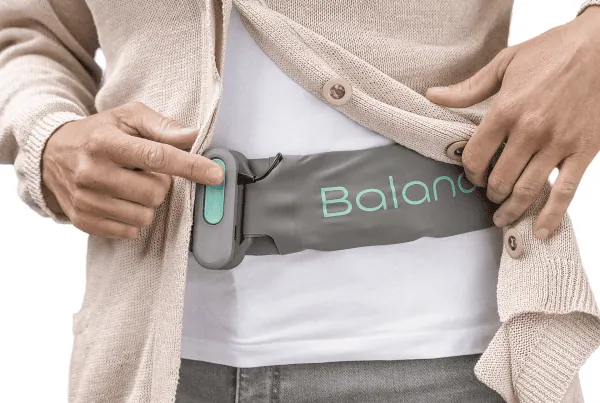
- Experience from projects such as the BalanceBelt and the Mission Navigation Belt
Want to see how this works in practice? Read how we work, explore working with us, or contact our team to discuss who should own integration in your project.
Related Articles
- Can a wearable development partner support just one part of a project?
- How do you avoid dependence on one wearable development partner?
- How do allied forces share data through wearable devices?
- How do military wearables communicate with command systems?
- How do you validate a wearable product idea before building it?